Trends

Gathering meaningful, real, honest information via Trump television is virtually impossible. A few news outlets, most are on the Internet, go to great lengths to report untainted news and news that is actually important; the only two television news outlets mariner can recommend are NEWSY and BBC, found on cable and Roku among several other sources.

Nevertheless, the world marches on and important trends are at stake in the coming months. Here are just a few:

֎ Roe v. Wade may be nearing the end of its influence. Justice Kennedy has retired and Justice Kavanaugh has replaced him. A significant abortion challenge will be heard by the court in a few weeks (June Medical Services v. Russo). Further, 39 senators and 168 representatives from 38 states are represented by counsel at Americans United for Life, a “life-affirming” law and policy nonprofit. They think the high court should overrule the landmark 1973 case Roe v. Wade.

֎ Global recession is imminent in 2020. The potential for a recession is the main topic at a forthcoming G20 meeting. The Hong Kong and Shanghai Banking Corporation (HSBC) which is one of the world’s largest banking and financial services organizations has cut its global growth forecast from 2.5 to 2.3. Further, MIT says a major downturn could be only six months away. That means it could hit before the U.S. presidential election.

֎ As important as defeating Donald may be, the nation can’t begin repairing itself until the republican Senate is overturned. In the coming election, 22 republican senators must run for reelection. At the moment, the following States have republican US Senate seats open:

Tom Cotton of Arkansas

Cory Gardner of Colorado

David Perdue of Georgia

James Risch of Idaho

Joni Ernst of Iowa

Pat Roberts of Kansas

Mitch McConnell of Kentucky

Bill Cassidy of Louisiana

Susan Collins of Maine

Cindy Hyde-Smith of Mississippi

Steve Daines of Montana

Ben Sasse of Nebraska

Thom Tillis of North Carolina

James Inhofe of Oklahoma

Lindsey Graham of South Carolina

Mike Rounds of South Dakota

Lamar Alexander of Tennessee

John Cornyn of Texas

Shelley Moore Capito of West Virginia

Michael Enzi of Wyoming

If the reader lives in a state on this list, that is important news to follow – almost as important as the Presidential election! Check local news outlets, communicate with party representatives.

֎ Another nation in South America joins violent rebellion along with Venezuela, Columbia and Brazil: Chile. Mariner has mentioned concern about losing South America as a grand, joint economic future for North and South America. In fact, economically the two continents could outperform China’s Belt and Road plan. However, Russia has a quasi-permanent toehold in Venezuela and China is an active Free Trade partner with Chile. While South America may not be a domestic headline, its future is linked to the future of the United States. Foreign policy with the Caribbean (even Puerto Rico) and South America has been dismal and self-serving. At the least, the US should be nice to avoid Russian nuclear weapons on the continent. Does the reader remember the Cuban missile crisis during the Kennedy administration? Well, they’re back . . . in Venezuela.

Ancient Mariner


Nationalism under 5G

5G?

Fifth-generation wireless (5G) is the latest iteration of cellular technology, engineered to greatly increase the speed and responsiveness of wireless networks. With 5G, data transmitted over wireless broadband connections can travel at multigigabit speeds, with potential peak speeds as high as 20 gigabits per second (Gbps) by some estimates. These speeds exceed wireline network speeds and offer latency of 1 millisecond (ms) or lower for uses that require real-time feedback. 5G will also enable a sharp increase in the amount of data transmitted over wireless systems due to more available bandwidth and advanced antenna technology.

– – – –

A big conference will be held in Germany soon. Its primary speakers are the foreign ministers of China, Japan, India and South Korea. There is concern in Europe that the nations of Europe will never have 5G independence. Germany’s cybersecurity chief struck a pessimistic tone at a pre-Munich cyber conference: “If you talk about digital sovereignty, we don’t have it. And we’ll never have it.” There will be presentations by Pelosi, Pompeo and Zuckerberg as well. [Politico]

The idea of sovereignty may undergo significant political transformation if, as feared, whole nations are just uplinks to a few communication systems owned and operated by a few nations like China and the US. National privacy, very much like personal privacy, may not be available. In the old days the spy business used to be a face-to-face transaction but with China manufacturing its technical equipment and the US eavesdropping, no nation will have secrets.

The US already is pushing back on China for a number of manufactured items used in smartphones and cloud-based games. The US asked the European Union not to install Huawei hardware but, said the EU, what else is there? The US is behind China in 5G development.

Nations, just as with a person’s decision making, will be influenced by 5G operators who already know what the target nation is thinking, what its economic conditions are and where its vulnerabilities lie. What will this do to traditional diplomatic relationships? Will a robot wearing suit and tie replace Pompeo?

A current model may provide insight. At the turn of the millennium there were 12 significant stock exchanges around the world. The differences in time zone meant that transactional business for a given stock exchange was local and finished before other stock exchanges opened. Today, that is not the case. An investor can issue trades to any exchange in the world at any time of day. An investor doesn’t have to miss daily opportunities that would be gone had the investor had to wait until the exchange opened for business the next day.

Continuous access has the effect of leveling the monetary value of daily interactions between exchanges. It also reduces the range of highs and lows relative to other exchanges.

Applying these causes and effects to nations using 5G, the positive side may be the prevention of surprises that lead to political or military conflict. The downside may be a new form of authoritarianism – similar to the direction AI is taking with US citizens.

Ancient Mariner

Ways to Improve the Political Campaign

Give Bernie a puppet for his right hand.

Only allow Donald to talk while he’s chewing a cheeseburger.

Insist that Pete wear shorts.

Give Elizabeth a wampum necklace

Insist that Joe insert a black tooth

Give Tom a jacket made of solar cells.

Insist Mike wear a suit with a dollar bill pattern

Give Amy a whip.

Give McConnell a piece of lettuce.

Insist that Nancy wear a bill cap backwards.

Ancient Mariner

Where Forth Labor Unions?

Nevada is one state where unions still play a significant role in political negotiations. A number of news outlets have published articles in lieu of the Nevada primary. The point was made that Mike Bloomberg has never publicly backed unions. It is true that as corporations gained political power during the end of the twentieth century, state governments in particular pushed hard to defund union membership, impose right-to-work legislation and otherwise paint bad images of unions.

Unions are no less saintly than politicians and corporate conservatives. All of them are aggressive in defending their perceptions of economic purpose. However, in this age where citizens no longer participate in the profits of the Gross Domestic Product (GDP), where salaries linger at a small fraction of what they should be, where corporations are trying to drop benefits of any kind, having a union fight for a fair share for the workers may not be a bad idea. But unions represent only 1 in 10 hourly workers – down from 1 in 3 in 1955. State legislation in most states would have to go through a philosophical, highly opinionated and greatly resisted battle to reverse the disadvantages imposed over four decades.

Mariner wrote a post “About Labor Unions” (August 28 2019) that suggested the familiar union organization that has prevailed since the 1930s may not work in this new age of automation, rapid data learning and the ability for corporations to move operations anywhere in the world.

As corporations have become an economic force across governmental boundaries, it is difficult for unions to sustain equally flexible membership given location and nationality. Even more problematic, governments have difficulty managing corporations. In this campaign season where ‘socialistic’ ideas are being touted, union leaders may consider joining the national noise of the campaign to back a new national strategy for unionism.

Trying to maintain the traditional ‘local’ organization will not be influential enough to tackle market issues that cross national boundaries. In the recent post mariner suggested the ACLU organizational model. Further, mariner feels that a governmental agency (a new version of the Labor Department) could set regulatory policy similar to the Environmental Protection Agency today – Donald’s interference notwithstanding. The new labor department could negotiate treaties similar to the Trans Pacific Partnership (TPP) except with a fair set of rules for workers.

In any case, righting the economic ship is more than just fixing taxes. It is setting new protective rules for workers in an age where moving from job to job may be the new norm and sustaining economic viability in unemployed neighborhoods may have to be part of the agreement language.

Ancient Mariner


On the Tech Front

֎ It was China who hacked into Equifax’s credit history data recently. China now has the credit history of most Americans. May as well ask China for one’s latest credit score.

֎ The first ‘no-cash’ all electronic bank was approved by the Federal Deposit Insurance Corporation (FDIC). The bank’s name is Varo. No tellers required. It isn’t exactly the Kenya model but it’s an app on the smartphone. The ‘buyer beware’ element is that a person never holds income in their own hands; the asset value of income is disappearing. Oh well, most people can’t afford to buy houses, build savings or pay for health and retirement anyway.

֎ Senator Josh Hawley (R-Mo) said:    “Google and Facebook have acquired hundreds of companies in the last two decades, yet the FTC never once intervened to try to block any of these acquisitions.”

֎ Amazon Prime Day has become a top-notch shopping holiday, up there with Black Friday.

It occurs to mariner that the world is fragmenting. On the one hand, wealth is accumulating at increasing speed to those of the oligarchical class; on the other hand, lower and middle class people are having a bankruptcy experience; on the other hand, artificial intelligence is taking over the role of shaping society; on the other hand, corporate influence is replacing government influence as the source of economic oversight; on the other hand, dozens of nations will cease to exist as global warming takes its toll on land, water and economy.

Okay, millennials and Zs, it’s your turn.

Ancient Mariner

Changing Times

Mariner made the mistake of watching Empire Games on Netflix. It is an excellent documentary series about how power abused the citizenry and how power exchanged hands from one king to another (assassination).

It was a mistake because mariner also is investigating the current transition from the industrial age to the computer age (Reagan Administration in 1981 to a time toward the end of the twenty-first century. The elimination of labor jobs in the United States caused by the NAFTA agreement in 1993 is comparable to the introduction of textile machinery that caused the Luddite revolt in 1811, considered the beginning of the industrial age).

Disturbingly, there are similarities between power transitions in the age of empires and power transitions today. Don’t rule out assassination:

Anybody here seen my old friend Abraham . . .

Anybody here seen my old friend John . . .

Anybody here seen my old friend Martin . . .

Anybody here seen my old friend Bobby . . .[1]

Anybody here seen my old friend John Lennon . . .

And almost, anybody here seen my old friend Ronald.

Every one of these assassinations is related directly to shifts in political power or shifts in economic direction. It turns out there is a pattern common between emperors and today’s leaders: accumulate political power – force change to culture – accumulate wealth – citizen rebellion – accumulate political power, etc. For emperors, accumulate wealth meant waging war to increase territory and economy. Today war has many manifestations.

Improved weaponry, communications and transportation in the twentieth century have allowed ‘accumulate wealth’ to be a global event. Wars in the computer age have newer methods; everybody wants to join in – even if, in the last decade, old-time explosives aren’t as important.

For example, in the old days of emperors, wealth was acquired through military action. Today, wealth is acquired through corporations. Even so, the procession to rebellion is similar. The proletariat is abused (just two examples: disappearance of steel manufacturing and Google); in a corporate sense, nations are colonized in pursuit of wealth; eventually the disadvantaged people revolt (note Brexit, Donald’s base, and Venezuela). As far as battle between ideologies and cultures, the computer and Internet are the weapons of choice. During WWII, planes dropped leaflets or nations broadcast radio programs. Today, advocates insert propaganda into social media. Today, in the computer age, the procession to rebellion can be provoked by inciting rebellion without firing a bullet or even having to travel to the target nation.

While the procession to rebellion has not changed for the moment, three significant events have curtailed military violence: the invention of nuclear weapons, acquiring wealth through corporations and the ease of invasion using just a smartphone. In effect, militaristic war is being pushed back to the days of parochial conflict.

– – – –

The other significant similarity between the age of emperors and the age of computers is economics. Setting aside for the moment the egomaniacal dictators and those who dream of being king, quality of life is a major provocation for rebellion.

The relationship between accumulating wealth and general quality of life is not absolute. For example, global weather cycles, plagues, and significant planet activity have nothing to do with the procession to rebellion but greatly affect quality of life. Still, lack of citizen quality can be interpreted as economic dissatisfaction.

The computer age brought with it a new economic engine: computers allowed corporations to become international. Manufacturing no longer was constrained by slow information or relatively high labor costs. Corporations found it more profitable to loosen the fiduciary laws of investment and become less accountable in their role as supporters of society. The transition to investment and away from manufacturing began in the Reagan administration during the 1980s. Since then labor has suffered as better paying jobs moved to more lucrative foreign labor markets; ignoring the role of supporting society has led to wage suppression in order to improve corporate profits; corporations aren’t sharing their profits. So much for trickle-down.

It is now forty years later. The proletariat suffers on every economic front from sustainable income to job security to housing to less than adequate health care. As the stock market rises to new heights, the economic challenge to the man on the street grows more intense. The time is ripe for the procession to rebellion to rise. Indeed it has started in the name of Donald’s base.

Just as in every stressed rebellion, those who can manipulate political advantage rise to power. Too often, these economic saviors have little empathy; they are eager to move to changing the culture and accumulating wealth for the powerful rather than the citizens.

There is a happy ending, sort of. The United States has been a democracy from its inception. That democracy, especially now, is far from perfect but it has allowed the nation – so far – to avoid the ravages of nations like Greece, Turkey, Brazil, Poland, Columbia, Venezuela and the entire Middle East to succumb to collapse and allow despotic leaders to shut down free society. Mind you, with the likes of Donald, these are scary times. Another term and the nation will join Turkey and the others.

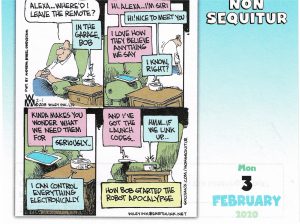
As to how the procession to rebellion will occur in the future –
Ancient Mariner

[1] Dion DiMucci album released 2001

Whoever wins Wisconsin wins the Presidency

Well, so much for a racing start out of Iowa. Democratic candidates look more like campers looking for blueberries than running robust campaigns.

In previous posts, mariner proposed Biden based on his popularity in polls in the key swing states, one of which is Wisconsin. The whole presidential campaign boils down to four or five states and which democratic candidate can have the most influence in those states for the general election.

The next two paragraphs are from the Madison Magazine:

“If you line up the states where Trump is more popular than he is in Wisconsin, it does not add up to an Electoral College majority. And if you line up all the states where he’s less popular than he is in Wisconsin, it’s also not an Electoral College majority,” says Ben Wikler, chair of the state Democratic Party. “Wisconsin is the tipping-point state in the Electoral College.”

Mark Graul, a GOP strategist who was George Bush’s state director in Wisconsin for the 2004 campaign, sums it up: “If Trump can’t win Wisconsin, he can’t be president. That’s what’s different this time.”

So keep an eye on polls in Wisconsin, Pennsylvania, Michigan and Florida – especially Wisconsin. An excellent website for anything poll is Nate Silvers’ website at fivethirtyeight.com.

As to Donald’s popular vote, virtually all pundits believe he again will lose the popular vote. This assumption is based on polls indicating that Donald hasn’t expanded his base, remaining close to 42 percent his entire presidency. Nevertheless, Donald is an aggressive snake oil salesman; polls in the last two weeks show him creeping close to 50 percent. Iowa didn’t help and the Senate vote frees Donald like a dog without a leash.

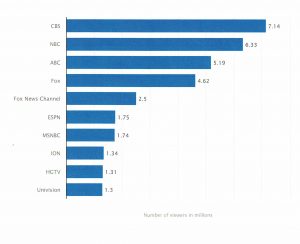
The big TV news outlets will milk viewer’s anxiety for all its worth. On the following chart are the viewer comparisons in millions of readers for 2019. To track Donald’s success, an indirect statistic will be Fox’s popularity in 2020.

Mariner does not view political news on TV except for a morning briefing from NEWSY, available on cable, ROKU, etc. Mariner explores more civil and accurate websites for the ‘real’ news without suffering angst. He recommends the same for the reader. Track the four swing states including Wisconsin. Track Donald’s popularity at fivethirtyeight.com. This approach should keep the reader sane as well as knowledgeable.

Ancient Mariner


Iowa Caucus

Mariner attended his democrat caucus tonight. After each voter selected their favorite candidate, the votes were counted for each candidate. Of 76 voters in attendance, 29 voters had their choice rejected. Either switch their vote to a ‘viable’ candidate or go home. (Viability meant a candidate had at least 12 votes) Votes for Klobuchar, Steyer, Warren, and Sanders were disallowed. Only Buttigieg and Biden had enough votes to be considered viable. If a voter were disallowed of their first vote, they could switch, if they chose, to another candidate’s group. Given this chance, Steyer voters chose to change their votes to Klobuchar – which made Klobuchar’s group a third viable candidate.
Mariner is reminded of voter suppression in Dixie. The only difference is there are not many blacks in Iowa; however, the suppression is the same.
Mariner watched MSNBC to learn the outcome of the Iowa Caucus. At ten past midnight, results still were not available. Interestingly, the pundits had two opinions about the caucus procedures: Coverage had shown caucus voters being friendly and collegial in renegotiating their preferred candidates. Some pundits warmed to the collegiality saying the examples are how democracy should work; two other pundits called for one person, one private vote – a typical primary.
Lawrence O’Donnell described the caucus correctly. “It isn’t democracy,” he said. “It’s politics; it’s how the Senate works to negotiate legislation. Swap and trade ideas and language until you have enough votes.” He further clarified that the Iowa caucus was designed for rural Iowa elections and was never intended as a platform for national politics.
Mariner accepts Lawrence’s wise interpretation but still does not understand how one person, one vote – the bedrock act of democracy – is served by disallowing that very act.
Ancient Mariner

One person one vote – Hah!

The following paragraph is copied from the fivethirtyeight.com newsletter:

As much as we try to remind you all about how uncertain elections can be — pleas that sometimes fall on deaf ears — it’s important to keep in mind in advance of the Iowa caucuses. To begin with, primaries are much harder to poll than general elections, and caucuses are even harder to poll than primaries, as they introduce a number of complications. Caucuses require a long time commitment, which can make turnout harder to predict. They aren’t a secret ballot, so voters can literally try to persuade their neighbors to change sides. And Iowa Democrats employ a viability check — we’ll talk about that more before the caucuses on Monday — that asks voters to switch candidates if their first choice doesn’t clear a certain threshold, usually 15 percent of the vote at that caucus site. That makes second choices important, and even opens up the possibility of strategic alliances between the candidates.

In the last presidential caucus mariner and his wife were not allowed to cast their vote for a qualified candidate. Mariner was quite unhappy about this injustice and threatened to leave the Democratic Party if it ever happened again. The time is nigh.

– – – –

A few bloggers and political pundits have made the case that it isn’t democrat versus republican, its status quo versus everyone else, ergo, Biden will lose just like Al Gore. Those who believe this have not studied campaign polls in depth and have forgotten that Al was the ‘progressive’ compared to W. True, the younger voters prefer the progressives but the real weight class is the millennials – voters in their forties and fifties; voters who fear that their economic stability will disappear; fear that a burdened retirement will be made worse by shrinking federal discretionary programs (Social Security, Medicare, etc.); fear that artificial intelligence will decimate the careers of their children and may even cut their own jobs.

One polling statistic is undeniably clear: Donald has not improved his popularity beyond his base and conservative republicans during his entire tenure. He still is vulnerable to defeat by the national vote. It is the battle at the state level that threatens the democrats. Status quo or not, if six states return to the Electoral College with Donald winning the popular vote again, Donald will win a second term.

Finally, many more voters can see the elephant in the room: global warming. Even heartless corporations are modifying their investment strategies to accommodate global warming. Donald, of course, up to his hips in fossil fuel interests, frequently calls global warming a hoax.

Ancient Mariner


It is time to pick

The final nomination for president is growing close. Virtually all the democratic literature flowing profusely into citizens’ mailboxes make the case for each candidate based on differences in policy or what ‘lane’ the candidates are in; race and age are tossed about. The Democratic Party has a way of defeating itself as presidential campaigns enter later stages of the process. There is a tendency toward this because the Democratic Party is a true umbrella party with many facets of the political spectrum represented.

Ever heard the phrase ‘herding cats’? Mariner thinks it may be time to shape the battleground rather than chase cats. True, with so many candidates, voters still have not decided which cat to catch but the statistics in all the polls suggest there are only four left. Mariner suggests voters ask one question by which to decide the democratic nominee: Who will win the most states – especially the states that unexpectedly voted for Donald?

In the 2016 election, the list below represents four states where the popular vote unexpectedly went to Donald. Donald won the emboldened states by 2 percent or less. The total number of votes by which Donald won the 3 can fit in a stadium – 107,330. Donald won Michigan by less than 12,000 votes.

Florida   29 electoral votes for Donald

Michigan 16 electoral votes for Donald

Pennsylvania 20 electoral votes for Donald

Wisconsin 10 electoral votes for Donald

Donald stole six electoral votes from states where Hillary won the popular vote.

How are the 4 states doing today vis-à-vis the top four democrats?

Florida   Biden by 20 points

Michigan Biden by 6.5 points

Pennsylvania Biden by 11 points

Wisconsin Biden by 4 points

Given Donald’s razor thin wins in these states, states where policy wars don’t seem to be important, perhaps the Democratic National Committee needs to focus on states that switched or almost switched to Donald. All told that includes 11 states that are called ‘battleground’ states:

Colorado, Florida, Iowa, Michigan, Nevada, New Hampshire, North Carolina, Ohio, Pennsylvania, Virginia and Wisconsin.

Most agree the remaining 39 states always are true to their color – red or blue. Looking at many other states, the fact comes home that the reason to vote is to beat Donald; there is time later to talk about policy.

If, indeed, Joe is the favorite in many of the 11 battleground states, perhaps the DNC should focus on raising his profile. For example, Joe doesn’t inspire like Warren; he doesn’t cogitate like Buttigieg; he doesn’t rant like Bernie. Face it – Joe is a compromise. The DNC should roll out a national platform to help deal with the policy issues; perhaps toss around some Cabinet names; help Bloomberg spend his billions in Senate races.

It seems Joe sells comfort and lack of surprise more than anything else – something about which the whole umbrella can agree – certainly as an alternative to Donald.

Ancient Mariner