Where is Amos, Where is Chicken Little, and Where is John Malthus?

The mariner is Amos. The mariner is Chicken Little. The mariner is John Malthus. Woe will be cast upon us! The Lord shall end the days of Israel! The sky is falling! There will be no food!

It seems no one cares that the Holocene extinction will end the existence of humans within the lifetime of three or four generations. As spoken before, the mariner is befuddled. Perhaps Stanford University, world class environmental scientists, Food and Water Watch, World Wide Fund for Nature and dozens of similar organizations around the world are wrong. Perhaps 90% of the world’s scientists are wrong. Perhaps 400 ppm of carbon in the atmosphere is nothing more than an empty fact. Perhaps the warmest decade since records began is good fortune. Perhaps the rising seas, rising at Fibonacci speeds every decade, are good for sea life. Perhaps depleted aquifers will be good for life in general. Perhaps longer droughts, especially in the US, will provide more sunny days for picnics.

The mariner suspects imminent extinction is too big a pill for mankind to swallow. The event is beyond imagination. It is more surreal than the silliest science fiction movie. Extinction is a confrontation that has no answer except to wait and see. And so we shall wait and see. And it will be too late.

Ancient Mariner


Civilization’s Link to Global Climate

In his effort to imagine what the experience of approaching extinction would be, that is, how and why seemingly stable cultures collapse; the mariner began looking for reasons why significant societies had failed in the past. Quickly, after reading studies from climatologists, anthropologists and language historians, he first had to learn what permitted societies to emerge.

The common opinion from many experts in many disciplines, is that modern humans (Homo sapiens) were stuck in Africa because of the ice age. Paleoclimatologist J.P. Steffensen in the January 7, 2002 issue of The New Yorker Magazine commented: “You can ask, why didn’t human beings make civilization fifty thousand years ago? You know that they had just as big brains as we have today.

When you put it in a climatic framework, you can say, “Well, it was the ice age. And also, this ice age was so climatically unstable that each time you had the beginning of a culture they had to move. Then came the present interglacial– ten thousand years of very stable climate. The perfect conditions for agriculture. If you look at it, it’s amazing. Civilizations in Persia, in China, and in India start at the same time, maybe six thousand years ago. They all developed writing and they all developed religion and they all built cities, all at the same time, because the climate was stable. I think that if the climate would have been stable fifty thousand years ago it would have started then. But they had no chance.”

The nuance of Steffensen’s comment is that, all along, humans were as dependent on global climate as any other creature. The advancement of human society through nomadic, agricultural, industrial, and modern periods has always been taught with the nuance that humans grew in sophistication and it was their independent intelligence that lifted them from the past ages. Steffensen implies that it was simply a stable global climate in which to have the human experience.

One would think that our brains should not have taken 10,000 years to move from grubbing for roots to growing roots, to canning roots, to making altered roots. However, there were those distractions:  war, predation, unlimited population growth, not replacing parts of the Earth we borrowed like water, dysfunctional environments left behind, lust, and unbeknown, thereby disrupting the global climate – the real reason our species is in trouble. 10,000 years was long enough to forget our place in the Earth’s command of life.

Heavy stuff. The mariner will continue another time.

Ancient Mariner

Befuddlement

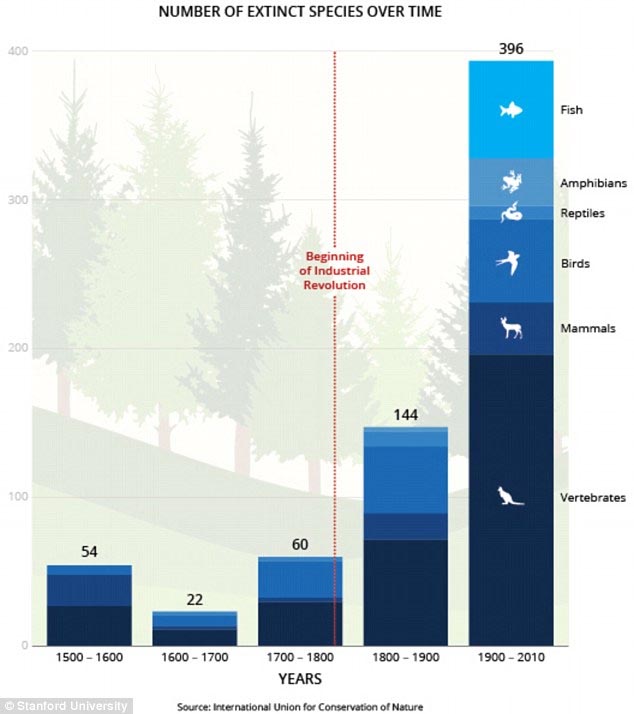
On Friday, Stanford University released a study by internationally prestigious scientists that declared planet Earth is well into the sixth mass extinction (Holocene). The report has charts and other references that indicate the fabric of the planet’s ecosystem is collapsing at an ever increasing rate. The report predicted the collapse would occur in about three human lifetimes (315 years+or-). The report further suggested that humans will be one of the earlier extinctions because of human dependence on so many environmental and specie services, e.g., naturally cleaned water, pollination by bees, and stable weather patterns for vegetation.

The mariner is befuddled that no television outlet grabbed this issue. If the reader hadn’t come across an article on a few websites, the reader would never know that extinction of Homo sapiens has become a statistical reality – near enough that today’s elementary school children will have their lives disrupted in significant if not fatal ways. Despite what the Bible says about Armageddon, it will not occur in one day. It will occur faster and faster over time. For the most part, symptoms will involve starvation, disease, economic collapse, vandalism and true anarchy as governments will not have the resources to quell the collapse of rule by law.

There is a book on this subject published recently by Naomi Klein, This Changes Everything: Capitalism versus the Climate. (The mariner’s town library has a copy as well as a copy of The Sixth Extinction by Elizabeth Kolbert). Klein has written several books on the subject of economic greed destroying the planet. Following is an excerpt from the New York Times book review for This Changes Everything:

“Klein diagnoses impressively what hasn’t worked. No more claptrap about fracked gas as a bridge to renewables. Enough already of the international summit meetings that produce sirocco-quality hot air, and nonbinding agreements that bind us all to more emissions. Klein dismantles the boondoggle that is cap and trade. She skewers grandiose command-and-control schemes to re-engineer the planet’s climate. No point, when a hubristic mind-set has gotten us into this mess, to pile on further hubris. She reserves a special scorn for the partnerships between Big Green organizations and Immense Carbon, peddled as win-win for everyone, but which haven’t slowed emissions. Such partnerships remind us that when the lamb and the lion lie down together, only one of them gets eaten.

In democracies driven by lobbyists, donors and plutocrats, the giant polluters are going to win while the rest of us, in various degrees of passivity and complicity, will watch the planet die. “Any attempt to rise to the climate challenge will be fruitless unless it is understood as part of a much broader battle of worldviews,” Klein writes. “Our economic system and our planetary system are now at war.”

The point is, there is a mountain of resistance to change – especially on capitalist philosophy and the ingrained demand for ever increasing profits. How long will it take Earth’s humans to break the most successful profit engine in history? The Mass Extinction report implies that everything must be corrected in two lifetimes to prevent full collapse of the environment.

The mariner includes one chart from the report that ties the development of the mass extinction, or conversely, the destruction of the global environment, back to the beginning of the industrial age.

extinct animals

An easy to read article is available at the following link:

http://www.washingtonpost.com/blogs/wonkblog/wp/2014/02/11/there-have-been-five-mass-extinctions-in-earths-history-now-were-facing-a-sixth

As Naomi Klein pointed out (and Pogo), our own perceptions of what is good, better and best for each human, each of all species, and the planet environment itself, is a myth. We do not have a model of human behavior that matches the reality around us – nor will reality accept it. Yet, humans are delinquent and tardy in how they manage their own place on the planet.

How many years will it take for humans to eliminate arrogance and hubris and recognize that we are not the reason for the Earth to exist?

How many years will it take for core cultural values to recognize that Homo sapiens is not, by a high count, the superior species. We are more dependent on many other species than they are on us.

How many years will it take to dismantle capitalism and nationalism? If history serves correctly, once a nation has cured its unstable situation of war and abuse, it won’t be until the third generation thereafter before that nation will have leaders unscarred and unbiased in their decisions about national policy and culture.

The mariner will have more on the Holocene as matters develop. He presents only high level concepts and ideas in this post; he depends on the reader to pursue links and news sources that will add more substance to this issue.

Ancient Mariner

The Sixth Extinction has Begun

An irrefutable and respected report was just published in the Science Advances journal. A blue ribbon team of scientists working at Stanford University, headed by Paul Ehrlich and lead researcher Gerardo Ceballos, a professor of conservation ecology at the National Autonomous University of Mexico and a visiting professor at Stanford University, predicts that humans could be extinct in three lifespans. Three lifespans is three generations each separated by about 25 years plus the average lifespan of each generation – assume 80 years. 75 years plus 240 years = 315 years.

We wouldn’t all expire together at the last moment. Starvation would increase day by day as water, food and environment would take their toll faster and faster over time. The mariner was amazed that this report didn’t take over the news media in every quarter. Other than the browser results, there was no mention of the coming extinction of humans – in only three generations.

The mariner strongly urges that the reader browse “sixth mass extinction” and read the news article on.MSN.com or other news websites.

Ancient Mariner

Red Brain, Blue Brain

The following information was published in the PLoS ONE journal on February 13, 2013:

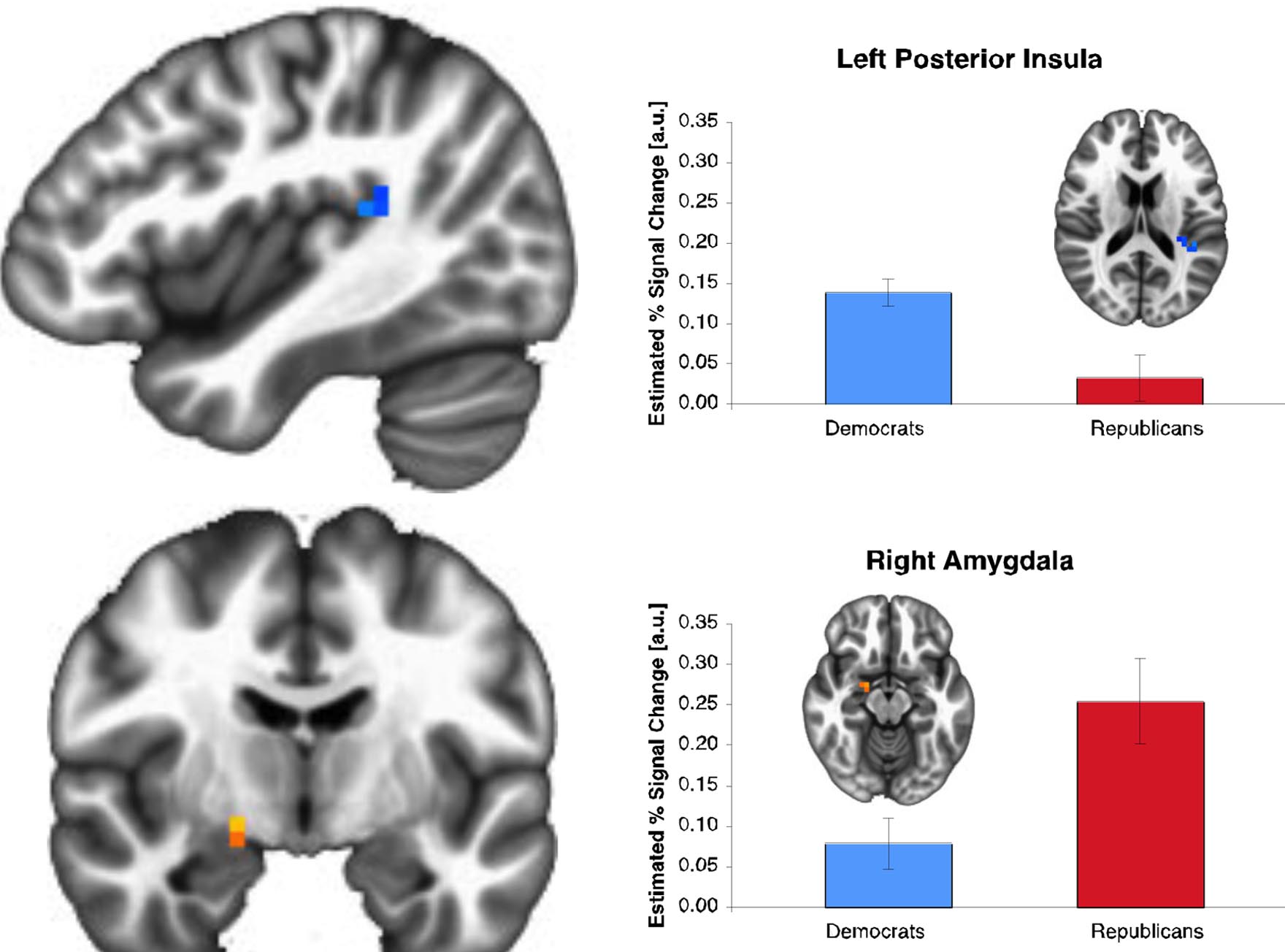
“Red Brain, Blue Brain: Evaluative Processes Differ in Democrats and Republicans

Liberals and conservatives exhibit different cognitive styles and converging lines of evidence suggest that biology influences differences in their political attitudes and beliefs. In particular, a recent study of young adults suggests that liberals and conservatives have significantly different brain structure, with liberals showing increased gray matter volume in the anterior cingulate cortex, and conservatives showing increased gray matter volume in the in the amygdala.

Here, we explore differences in brain function in liberals and conservatives by matching publicly-available voter records to 82 subjects who performed a risk-taking task…. Although the risk-taking behavior of Democrats (liberals) and Republicans (conservatives) did not differ, their brain activity did. Democrats showed significantly greater activity in the left insula, while Republicans showed significantly greater activity in the right amygdala….. These results suggest that liberals and conservatives engage different cognitive processes when they think about risk, and the results support recent evidence that conservatives show greater sensitivity to threatening stimuli….. Conversely, liberals had stronger responses to situations of cognitive conflict than conservatives.”

Red brain art

The mariner apologizes for the scientific journal lingo – rather dry reading. He will paraphrase while contemplating what this means in the world of politics and beliefs in general. His comments easily can be interpreted too literally; the reader should consider the mariner’s informal interpretations as parables.

Republicans orient attention to external cues. What this means is Republicans find it less important to understand how they feel inside; more important is their control of potential risk outside.

On the other hand, Democrats orient attention to perceptions of internal feelings – how they feel about the external cues. This orientation also borders the temporal-parietal junction, and may reflect the perceptions of internal feeling and motivation in others as well.

Now the reader has a clear and firm understanding of the difference between a Republican and a Democrat. The mariner perceives this may not be true. Let’s take a real example but remember that simply saying something for clarity may be overstated and may not be wholly true in the first place.

Republicans are good managers because they are risk averse. Republicans are sensitive to anything that blocks their range of decisions in dealing with risk. Therefore, Republicans do not like labor unions because labor unions have the ability to limit what the Republican may want to do regarding job profiles and salary – risk-laden issues in any business. This does not mean Democrats aren’t good managers, too. Remember the statement in the journal lingo: “Although the risk-taking behavior of Democrats (liberals) and Republicans (conservatives) did not differ….” In other words, a good manager will deal with risk appropriately – liberal or conservative.

The Democrat manager, however, is sensitive to his/her feelings about jobs and salary and, because the temporal-parietal junction is nearby, empathy may play a role in how the risk is perceived. As long as labor unions play by fair rules, the Democrat is more likely to accept why being in a union is important to the employees’ perception of risk.

How are we doing? Maybe one more example. But to keep it simple, no elected government folks are allowed:

Bah, Humbug! People have nothing to do with global warming! Republican or Democrat? We don’t really know for certain but several surveys show that this is a Republican. Global warming is nothing if it is not constrictive, behavioral (the right amygdala doesn’t know about behavioral) and interferes with profit strategies across the board. A Republican would run from the restrictive regulations that cure global warming. The same is true of the fossil fuel industry, the banking industry and a myriad of other corporate interests that do not want to be curtailed in their decision making regarding risk to profit.

What is the future of humanity if it all boils down to Left Posterial Insula versus right amygdala?

Ancient Mariner

NASA Website

A very interesting place to visit once in a while is the website of the National Aeronautics and Space Administration (NASA). There are many articles shedding light on global conditions around the planet. The mariner lists three to whet the reader’s appetite:

(NASA) released a study of the Earth’s aquifers using new satellite technology that studied the 37 largest aquifers from 2003 to 2013. The study reported that one-third of the aquifers are stressed. The most stressed are in heavily populated and frequently poor areas. To see map and report go to:

http://www.nasa.gov/jpl/grace/study-third-of-big-groundwater-basins-in-distress

Another study reported that it would take 11 trillion gallons of water to replenish California’s loss during the four-year drought. Go to:

http://www.nasa.gov/press/2014/december/nasa-analysis-11-trillion-gallons-to-replenish-california-drought-losses

Study shows increasing carbon emissions could increase US droughts. Droughts in the U.S. Southwest and Central Plains during the last half of this century could be drier and longer than drought conditions seen in those regions in the last 1,000 years, according to a new NASA study. Two very good videos are available showing the drought regions:

http://www.nasa.gov/press/2015/february/nasa-study-finds-carbon-emissions-could-dramatically-increase-risk-of-us

There are many more NASA reports about the condition of the Earth. It’s worth a visit once in a while.

Ancient Mariner


Carbon Dioxide in the Atmosphere

The mariner was reading one of his touchstone websites http://esciencenews.com/ when he came across an article about the effect of carbon dioxide in the atmosphere. It turns out that there is little trace of dinosaurs in the tropics. The only life in the tropics was small predecessors of alligators and crocodiles.

This was due to the high fluctuations in weather, going from extended periods of drought and devastating fires to extended periods of wetness. Most dinosaurs were unable to survive the variability and stayed away from the tropics.

The carbon in the atmosphere was six times what it is now. For reference, that is 2,400 parts per million 200 million years ago and 400 parts per million today. Nevertheless, we have an insight as to how weather patterns will slowly change as carbon levels increase. The Amazon rain forest is in the tropics….

A closer analysis that comes from current data suggests that energy in the atmosphere will continue to grow in coming decades. This means weather will have more severe differences between high pressure systems and low pressure systems. Further, big storms like hurricanes, monsoons and shear wind speeds (along with the accompanying tornadoes) will occur more frequently and more intensely.

The weather in Texas and Oklahoma (where much fossil fuel is produced – is there poetic justice here?) this year is not a measure of long term consequences. Individuals often mistake one year’s activity as a trend (consider Jim Inhofe throwing a snowball in Congress, suggesting that global warming is a myth).

But the warning flags are up. It will take a long time to bring together enough nations to control Big Oil. It will take decades. All the while, carbon builds in the atmosphere. Even if we humans can live with it (have you seen news clips that show Chinese citizens wearing breathing masks?), the creatures in the oceans cannot. Carbon Dioxide is absorbed from the atmosphere by the ocean. The ocean can only absorb so much Carbon Dioxide before acidity becomes a destructive environment. Coral reefs already are dying at an alarming rate; reefs are the source of life for literally millions of creatures in the oceans.

The mariner, a lover of the ocean and all that is in it, fears the indifference of Homo sapiens. He knows if the oceans die, humans will be extinct. Don’t let computers and technology fool the reader – the Earth is in charge.

Ancient Mariner

Po Pouree

Know Thyself – Read the Comics

Today, Sunday May 24, 2015, the mariner’s local newspaper defined him, in his entirety, with only two comic strips, one following the other on the same page. The first strip was Peanuts, a rerun from 1968; the second was Dilbert.

The mariner has maintained throughout his life that comic strips and single-pane cartoons are the most important section of the newspaper. The comics have a sly way of slipping through one’s prejudice, ignorance, and lack of emotional maturity to plant the seed of a new insight. Think for a moment how comics reflect basic angst that often affects each of us. Think for a moment how comics can reflect an entire segment of our culture in one cartoon. Think for a moment how narrow minded we would be if we could not laugh at ourselves. Simultaneously, comics are irreverent, biased, simplistic, insightful, hilarious and wise.

Each of us is a complex conglomeration of evolution that began billions of years ago. It is no exaggeration that we entered life as no more than a cluster of chemicals that could replicate and today we are warm blooded, mammalian, intelligent (relative to other creatures although we lack the skills they possess) and now we stand on the edge of a future that will allow us to manage our own evolution. God forbid.

We have brains that use deduction and induction in an unbelievably powerful way, reducing complex knowledge to a few simple terms; who defined motion across the entire universe with the formula E=MC2 ? Each of us can read a thousand words in a momentary facial expression. Each of us – well, most of us – can deduce years of history from a single cartoon. As complex as we are, each of us can be fully defined in one comic strip with faster speed and more acuity than if defined by a psychiatrist.

John Nash

Tragically, John Nash and his wife Alicia were killed in an automobile accident yesterday. Do you remember the movie A Beautiful Mind starring Russell Crowe as John Nash? The mariner became a big fan of the movie, John Nash, and the subtleties of game theory. Nash won the Nobel Prize for Mathematics in 1994. Game theory studies interactive decision-making, where the outcome for each participant or “player” depends on the actions of all players individually. Consequently, whether an individual, business, government or sewing circle, we play game theory in virtually every activity – even buying groceries, a game between us, the market and the producers. Nash was able to prove mathematically that ‘equilibrium’ is an actual state of being at all times, like a chess board is always present no matter who wins the game or how they play it. However, the chess board limits squares in such a way that a player must consider what the opponent’s strategy is in order to make his or her own best move.

The most familiar demonstration of game theory is applied in virtually every cop show on television. It’s called The Prisoner’s Dilemma:

The police interrogate two suspects separately, and suggest to each that he or she should snitch on the other and turn state’s evidence. If the other does not snitch, then you can cut a good deal for yourself by giving evidence against the other; if the other snitches and you hold out, the court will treat you especially harshly. Thus, no matter what the other does, it is better for you to snitch than not to snitch — snitching is your uniformly best or ‘dominant’ strategy. This is the case whether the two of you are guilty or innocent. Of course, when both snitch, they both fare worse than they would have if both had held out; but that outcome, though jointly desirable for them, collapses in the face of their separate temptations to snitch.

The mariner apologizes for being pedantic; his dominant strategy was to share why John Nash is important to everyone. The mariner snitched.

Oh, Those Promiscuous Neandertals

The following is an excerpt from Scientific American letters to the editors. The mariner sent it to a few family members in an email. They just will have to read it again. He included the writer’s response because it shows how we can be caught up in our own value system without including peripheral knowledge simply because it doesn’t fit easily into our values:

When the mariner was in his thirties, the scientific explanation for red-headed Homo sapiens was due to occasional inter-species sex with neandertals. It has been proven by DNA studies that we do have a small piece of neandertal in us. However, “occasional inter-species sex” has been thrown out. Read the response to a woman who wrote of neandertal ‘dalliances’ in her February article in Scientific American.

“OUR MURDEROUS ANCESTORS
Kate Wong’s suppositions about what brought about neandertals’ extinction in “Neandertal Minds” are contrary to the known history of anatomically modern Homo sapiens (that is, us). Her assertions that neandertals were just out competed and that the 1.5 to 2.1 percent neandertal DNA within people outside of Africa is the result of occasional “dalliances” would be historically unlikely.

The most likely scenario would involve waves of immigrating anatomically modern humans taking over land and causing death by plunder and disease, as Europeans discovering the New World did. And it would be naive to think that our neandertal DNA was the result of consensual dalliances when rape went hand in hand with the pillage of every other civilization.

It would be wise for us to give up the notion that we are, or our ancestors before us were, a benevolent and sharing species.

ROBERT E. MARX
University of Miami Miller School of Medicine”

Ancient Mariner


Lingering Themes

The mariner hasn’t written much lately. It’s a combination of spring gardening labor and the tsunami of events around the world. There are several old sayings that go along the lines of “What you think isn’t worth a spit in the ocean.” Sadly, that is true. The only tool any one of us has is our vote and our desire to volunteer beyond a normal commitment.

When Justice Roberts said money is the same as speech, he cleared the last obstacle to oligarchy. Some can speak much more loudly than others.

Well, one has seen the benefit of voting. The mariner wonders how untrustworthy his fellow voters have been given election results and the fact that millions follow Fox Broadcasting, Hannity, Rush Limbaugh and Glenn Beck. Laura Calder doesn’t bother the mariner because all she can do is character assassination; little of what she says has content. Then there’s Sarah and Michele Bachman. Only the presence of Jon Stewart has kept us sane – and Jon ends his show August 9th.

We will see what the future brings as 22 republicans and 1 democrat vie for the next Presidential term. The mariner says one democrat because the few democrats running beside Clinton are more interested in raising liberal issues and keeping Hillary as far left of center as possible. In retrospect, history has shown that the Clintons are survivalists first, pragmatic centrists second, and ideologues last.

If you are a regular reader, you know that the mariner is firmly opposed to fast tracking the TPP (Trans Pacific Partnership). The reason that progressives, unions and liberal organizations like AARP and women’s advocacies are opposed to fast tracking is the fact that no one in the negotiations represents the common man; the worker; the issues of minimum wage and benefits.

The argument presented by Obama is that TPP will create more jobs in the US and provide more opportunity for export – not to mention that most American workers won’t make much more than minimum wage. There is no opportunity to discuss worker issues similar to equal pay, employee-owned, retirement benefits, profit sharing and other economic devices that will lift the middle class to where it belongs.

Another issue in the news, that sadly shows the nasty side of capitalism, is the number of oil wells and railroads built within 1,000 feet of ICBM silos in North Dakota. Properly, this alarming situation can’t be represented here. The mariner suggests you watch Rachel Maddow’s video report at

http://www.msnbc.com/rachel-maddow-show/watch/oil-trains-alarmingly-near-nuclear-missiles-444408387996

Six workers have died due to lax (and illegal) safety regulations.

Lastly, climate change speaks more loudly as the days roll by. Nothing will be done by the United States until the ranking democratic member (Barbara Boxer (D)) becomes chairman of the Senate Committee on Environment and Public Works. Currently the chairman is Jim Inhofe (R) Oklahoma – the senator who threw the snowball in Senate chambers, who scoffed at the existence of climate change. Does the mariner sense the influence of oil contributions? Inhofe received a 5% approval rating from environmental advocates.

Enough of dipping one’s toe into the tsunami wave of current events. Perhaps the mariner is safer just limiting his engagement to spitting.

Ancient Mariner


Economic Warming

The mariner has been posting www.iowa-mariner for a couple of years. If you are a regular reader, you know he sees impending chaos on all sides. The mariner will follow in the footsteps of his favorite prophet Amos (a country fellow who raised sheep and had fleas) and the prophet’s fictional counterpart, Chicken Little.

The storm clouds are visible on the horizon and bad economic weather is predicted by conservatives and liberals alike. When the solution from each side is redundant, that in itself suggests chaos.

The mariner has read books by two expert authors each of whom starts from a different premise and arrives at similar conclusions.

The first book, The Colder War by Marin Katusa, (John Wiley and Sons, 2015) follows along the line of economic prophets who fear the Brazil-Russia-India-China (BRIC) alliance and the use of non-US dollars in world trade. Katusa predicts a slow demise for the US because of its seventeen trillion dollars in bond debt and, more importantly, because BRIC production of fossil fuels easily will dominate the US Petrodollar market. What will happen slowly (Katusa uses the decline of the British pound over thirty short years, finally yielding to the American dollar at the end of the Second World War) is that holders of US treasury notes will cash them and buy rubles, reals, yuán or some worldwide derivative based on BRIC dominance. In simple terms, this means the US is headed for at least 15% inflation of the dollar and will lose the float advantage of using US dollars around the world.

Katusa spends a lot of his book on Vladimir Putin’s plans to encompass the entire Euro-Asian land mass in a “Common Economic Space.” In other words, replace the US dollar-supported euro, the oil-rich something-stan countries, the Middle East, Asia and most of Africa into a giant free trade zone – all without using US dollars.

Katusa suggests the following remedies – which he doesn’t guarantee will be successful:

  • “Stop runaway government spending. If the growth in government debt is held below the growth rate of the economy, the dollar’s ability to withstand attack will strengthen mightily.
  • Stop accepting everyone’s invitation to participate in everyone’s conflict.
  • Stop everything – especially tax rules and handouts.
  • Stop allowing superstition-based regulation to interfere with the development of domestic energy resources.”

For each of us, Matusa suggests:

  • “Trade some of your dollars for gold and silver and don’t store it in a bank.
  • Open an account with a non-US bank to make it easier to obtain cash in foreign currencies.”

Obviously, Marin Katusa is a fiscal conservative. His underlying strategy does not include economic transition away from fossil fuels but rather suggests ways to put sandbags around the US economy. His perspective can’t be totally faulted; he is one of the world’s top fossil fuel negotiators.

 Now on to the second book, This Changes Everything by Naomi Klein (Simon and Shuster, 2014). As prolific a writer and advocate as Katusa, Klein challenges the fossil fuel profit model. She suggests the greedy pursuit of oil-based economies will collapse under the hidden costs of global warming, costs related to health, fragility of depending on one economic resource, and the profound shift of weather patterns that will impact most temperate zone nations dependent on crops – the northerly ones like Canada and Russia will have improved crop opportunity while those in lower latitudes like the US and Southern Europe will have more extreme weather conditions, frequent droughts and flooding.

Similar to Matusa’s book, Klein spends the first third of her book identifying the antagonist: not Putin but the conservatives who deny global warming. The following quotes set the tone for the entire book, which is heavily footnoted:

“And for many conservatives, particularly religious ones, the challenge goes deeper still, threatening not just faith in [capital] markets but core cultural narratives about what humans are doing here on Earth. Are we masters, here to subdue and dominate, or are we one species among many, at the mercy of [geophysical] powers more complex and unpredictable than even our most powerful computers can model?”

The author cited a statement from Yale’s Cultural Cognition Project:

“The Yale researchers explain that people with strong egalitarian and communitarian worldviews (marked by an inclination toward collective action and social justice, concern about inequality and suspicion of corporate power) overwhelmingly accept scientific consensus on climate change. Conversely, those with strong hierarchical and individualistic worldviews (marked by opposition to government assistance for the poor, strong support for industry, and a belief that we all get pretty much what we deserve) overwhelmingly reject the scientific consensus.”

Klein then moves her focus to the disastrous liaisons between “environmental” organizations and corporate partnerships. Many examples are cited not only in the United States but in virtually every country including the United Nations Environment Program. One example involved the Nature Conservancy (NC), the largest and richest environmental organization in the world and 2,303 acres along Galveston Bay in Texas. The acreage was donated to the NC by ExxonMobil in 1995.

This acreage was important to environmentalists because it was the last habitat for the Attwater Prairie Chicken. The bird population, estimated at over one million before the twentieth century, due to oil exploration had dropped to threatened extinction by 1965. The Nature Conservancy proclaimed recovery of the Attwater Prairie Chicken as its highest priority. Four years later the NC drilled its own oil well in an area that would have direct consequences on critical habitat. When this oil well was discovered by NC members, it attracted national press coverage. NC said they could drill without hurting the bird population.

By 2003 only sixteen birds remained. Still, when the first well ran dry, the NC drilled a second well. In 2012, the Attwater Prairie Chicken was extinct.

The Nature Conservancy had succumbed to the desire to make millions of dollars to be used in behalf of worldwide conservancy. Klein’s point is that the NC had good motives but capitalist solutions do not solve a global problem. In fact, capitalism accelerates climate change.

Klein makes this point across several similar examples. In every case, capitalist solutions failed. Cultures are so bound to profit as a solution for everything that global issues like carbon emission are a distant second and have no chance to transition to non-fossil fuel. Global warming is caused by fossil fuel profit. Any progress must be collective in nature and further must reduce the petro economy to a scant size of what it is today. In the US, petrodollars keep the wealthy growing wealthier and allow the US government to borrow 46% against its gross domestic product.

Benevolent billionaires offer little hope for a genuine shift in economic culture. Among others mentioned by Klein are Bill Gates, Warren Buffet, Michael Bloomberg, Richard Branson and T. Boone Pickens. In every case, these billionaires advocate solutions that will benefit their corporate investment in alternative solutions. Again, these endorsements use a capitalist model as a solution – first, there must be profit.

Global issues like carbon emissions and warming oceans are not part of any profit model. The expense must be covered but not by opportunistic means. This is a new phenomenon in economics: profit is not part of the financial model. Global warming is neither a national issue nor a GDP issue nor a profit versus loss corporate issue. It is pure overhead that must be dealt with collectively by 7 billion humans in 196 countries.

It is this very kind of solution, fraught with corporate restraint, government regulation and spending, and suppression of the largest profit sector in the world that frightens capitalists and advocates of individual freedom.

In the mariner’s opinion, Klein’s book roars like a lion until the part where solutions are offered. Klein cites a growing number of blockades where the local people literally stood in the way of fossil fuel operations. The author feels that growing civil interference will continue to have more influence with those who must deal with the overhead of fossil fuel extraction. An example to watch is the Keystone XL pipeline intending to move sand tar oil from Alberta to Texas. There have been several protests along the path of that pipeline; Obama does not support it. We will see how much influence blockading will affect a republican congress.

Naomi Klein is not an economist. Unlike Matusa, she does not provide financial detail about the impending crisis. Still, one can image what will happen to corporate profit and national GDP if the petrodollar is greatly diminished. On this point – the tremendous shift in priorities as well as economic models – Matusa and Klein agree: financial instability is something everyone will face in this century.

Finally, Klein cites a truism:

“It is often said that Mother Nature bats last, and this has been poignantly the case for some men who were most possessed by the ambition of conquering her.”

 Did someone mention that the sky is falling?

Ancient Mariner