This and That

The Midwest, between parallels N35° and N43°, has suffered temperatures in the high nineties with humidity above 70% for a good while. It isn’t pleasant. If you work outside, dehydration, sunburn and heat stroke lurk nearby. Still, plants and seeds cannot delay their required attention. The garden experience has transitioned from digging, hoeing, planting seeds, little pots and large pots, to an activity more akin to reconstructing frames for cucumbers and string beans, laying brick walks, processing compost, layering mulch in the gardens and weeding, weeding, weeding. As the mariner tells his town friends, “Anymore it takes me eight hours to work a four-hour day.”

In August, there are wedding bells in the mariner’s family. The wedding is in Los Angeles with many show business neophytes in attendance.

Every August mariner also hosts a neighborhood fete called “The Turkey Fry.” Mariner provides two large turkeys – one for roasting and serving sliced in gravy, the other dipped in dangerously hot and open cooking oil which could easily spill onto the propane burner under the pot. This year mariner planted sweet corn timed to be ready for picking for the Turkey Fry. About thirty neighbors attend. He assumes a fortress of electrified wire around the12x12 foot corn crop using a 13-acre AC charger will deter raccoons.

The mariner has a tip for tomato growers who invest time, money and frustration with tomato cages: don’t use them! The mariner’s model is to grow each plant about eight inches apart in a square configuration. The tomato plants prop each other just fine. It is still possible to tread carefully among the plants when harvesting. Another benefit is the plants help suppress weeds among the plants.

In a manner of days, hordes of in-laws arrive at a park down the road for their quinquennial, weeklong gathering. It has occurred every five years since 1981. They look old now but one can easily tell the new ones are continuing the tradition.

Readers are advised of these events to warn them of other gaps in post writing. The mariner will do his best to be regular.

A piece about Muhammad Ali is in the Reference Section. What set Muhammad apart was his statesmanship. He wasn’t just another boxer among boxers; he had class, empathy and intelligence. True, he played a buffoon as part of the show but he had a quick and caring mind. His feelings about the wellbeing of others were the basis for his conversion to Islam – an act that was spiritual and was distant from more rebellious sects.

REFERENCE SECTION

Muhammad Ali was a gentleman in the boxing community. He had an extra sense of grace that translated from his pugilist profession to one of awareness, care for the common man and a sharper mind than most in his profession. Oh, that more statesmen could be in politics! Muhammad had the courage to defy the draft and serve his punishment; the courts plucked him from that fate but still he would lose three years of income, age and prestige before the military was behind him.

His extra sense of grace allowed him to quote poetry about himself more succinctly with entertaining braggadocio. Note this one before the “Rumble in the Jungle” against Joe Frazier:

Last night I had a dream

Last night I had a dream. When I got to Africa,

I had one hell of a rumble.

I had to beat Tarzan’s behind first,

For claiming to be King of the Jungle.

For this fight, I’ve wrestled with alligators,

I’ve tussled with a whale.

I done handcuffed lightning

And throw thunder in jail.

You know I’m bad.

Just last week, I murdered a rock,

Injured a stone, Hospitalized a brick.

I’m so mean, I make medicine sick.

I’m so fast, man,

I can run through a hurricane and don’t get wet.

When George Foreman meets me,

He’ll pay his debt.

I can drown a drink of water, and kill a dead tree.

Wait till you see Muhammad Ali.

–      –   –   –

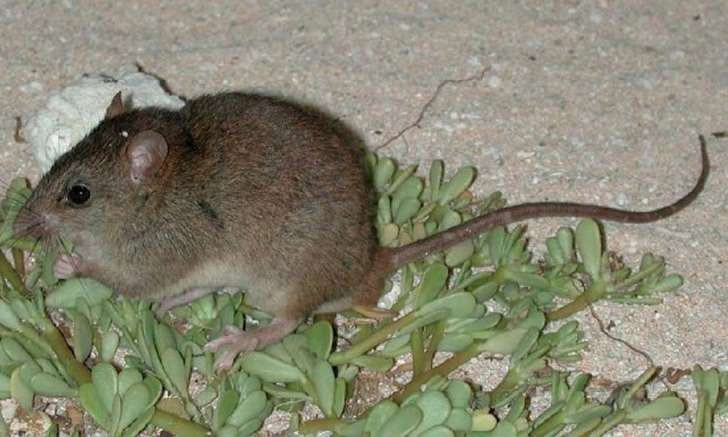
Add another one to the list of extinctions occurring during the Holocene, the period in which humans trashed the biosphere: Melomys rubicola — Bramble Cay Melomys, a species of mouse that remained in existence only on an island in the Torres Straight near Queensland Australia. The rodent, also called the mosaic-tailed rat, was only known to live on Bramble Cay, a small coral cay, just 340m long and 150m wide off the north coast of Queensland, Australia, which sits at most 3m above sea level.
mousex

–  –   –   –

Mariner stopped by the Forbes Magazine to review an article. The first screen had a display that said:

Quote of the Day

“You will never own the future if you care what other people think.“

Cindy Gallop

Each of us could write three of four counterpoints to Cindy’s comment – which is  required to be a capitalist. Assets do not normally flow up hill; they deliberately must be acquired. Capitalism unbridled by compassion will make few rich, most poor, and the capitalist, protected by layers of wealth, will be indifferent to environment, fairness, contribution to the point of meaningful sharing and a twisted sense of self-worth.

“Only when the last tree has died, the last river been poisoned, and the last fish been caught will we realize we cannot eat money.”

                        – A  Cree Indian Saying

Ancient Mariner
Stirrings in the South China Sea

Okay. This headline has Chicken Little running around the backyard:

The U.S. Navy has dispatched a small armada to the South China Sea.

The carrier John C. Stennis, two destroyers, two cruisers and the 7th Fleet flagship have sailed into the disputed waters in the last 24 hours, according to military officials.

The mariner spent some time in Taiwan in the early nineties. The entire South China Sea was an officially declared war zone even then. The western beaches of Taiwan were (and still are) cluttered with anti-tank and anti-landing craft concrete cones. The new jet fighters built in the nineties are kept inside mountains. Taiwan’s only defense if China invades the island is to counterstrike, making it painful for China to consider an invasion; Taiwan will be obliterated in such an invasion.

In the last few years, China has assumed ownership of the South China Sea all the way down to Brunei not far from Singapore. The South China Sea wraps around the coastline of Vietnam on the west and the Philippines on the east. Not only does China desperately need the fishing rights, it has decided to turn the Spratley Islands into a military zone to protect its southern coast. As recent news headlines have reported, China is creating new man-made islands with air and naval bases. Further, China has its eyes on the rich oil region off the coast of Thailand.

China has numerous ways to escalate the confrontation. Once protected by the vast Pacific Ocean, the US has small islands and atolls, many uninhabited, spread around the western Pacific. China easily can harass these islands. Obviously, China will continue its militarization of the region.

Mariner suspects that any escalation will be between surrogate nations and territories. The US forces will be playing in China’s backyard far across the Pacific. Calling on allies like South Korea and Japan has its own set of anxieties. Imagine China turning loose North Korea on South Korea, Japan (700 miles away) or nations bordering the South China Sea (1,700 miles away). Kim Jong Un would leap at the chance.

The US has little choice but to show some kind of presence. Aside from China’s mainland, the South China Sea is bordered by US allies and trading partners. Certainly, these nations are anxious about the Chinese extension into the primary ocean resource for several nations.

The mariner put Chicken Little in the hen house for now. But his squawking can still be heard.

  • – – –

On a more pleasant note, the mariner reports to his family that all the cacti and succulents brought back from the Sonora Desert are thriving under the grow lights. Woodland plants retrieved from the backwoods of Arkansas have survived and show new growth. A Nandina shrub retrieved from Maryland has healthy bark and looks ready to burst forth.

The mariner is in the midst of planting seed trays for the vegetable garden and flower beds. Rabbit fence will surround the backyard perimeter in another few days. Rabbits are the mariner’s nemesis and all his neighbors save one think they are cute, semi-wild pets; his sister-in-law actually tames them and feeds them by hand.

Each warren produces three batches of six rabbits – eighteen all together from spring to fall – from one nest. The last thing the mariner wanted to do was ruin the landscape with fence but even with military reinforcement including rifles, pistols, compound bows and chemicals, the mariner is losing to his neighbors’ willingness to let rabbits breed as, well, as rabbits will do. It’s a fact that in a year one doe’s offspring can produce 800 pounds of rabbit meat. The only predator in town is the king of predators: Homo sapiens. Where are they when you need them?

REFERENCE SECTION

Reader Becky has forwarded a website that has information about the fight to save the monarch butterfly. See: http://www.xerces.org/blog/butterflies-and-volunteers-the-western-monarch-thanksgiving-count/

Some good news on the environmental front: For the first time this year, more California Condors were born in the wild than have died. In 1987, the remaining Condors were rescued by the U.S. Fish and Wildlife Service. Releasing young ones into the wild began in1992. In 2015, more young were born in the wild than older ones that died, suggesting that the Condor population was capable of sustaining its numbers. For more detail, see:

http://www.fws.gov/cno/es/CalCondor/CondorCount.cfm

Ancient Mariner

Visiting the Folks

The mariner returned recently from the Southwest. It was important to see his children again; that was a fulfilling experience. Mariner also went to the Southwest to visit the Sonora desert. He has never been to a desert biome and that experience, too, was fulfilling.

Now, about a week back in Iowa, he had time to absorb the impact of the visit. The desert experience reminded him that it has been a long time since he visited the planet he lives on.

Perhaps a visit to our home – our planet – is something each of us should do on a regular basis. Homo sapiens pushed aside Earth to make room for human-specific priorities. This is our prerogative; evolution has provided humans with propensities that encourage redesigning our environment to fit our needs and that enable us with technologies that can create new potential for our species. Wrapped up in our concrete cities, our electronic gadgetry, our quest for comfort and privilege, we forget that we are offspring of our planet.

Many people, of course, feel they return to nature to camp, jog, walk, and other human purposes. This is not the same thing. This is like visiting one’s invalid great grandfather not to restore the bond between the two of you, or to look genuinely after his needs but to impose on him your own personal accomplishments and interests. Truth be told, wise old grandpa couldn’t care less; he has his own reality to deal with. And so it is with the wise old parent of all of us: Earth.

Had we, over the millennia, considered our planet and its biosphere to be part of the formula for success, perhaps we may not be causing the sixth extinction, we may not have allowed Carbon imbalance, we may not have been so destructive that we have our own epoch – the Anthropocene, created because our trashiness has literally changed the surface of the Earth.

Every one of our species should visit Earth every few months. The visit entails setting aside human interpretations of what we see. This is a good time to practice empathy and imagination; empathy is something humans should exercise frequently anyway because empathy is not used when it should be.

Hello, field mouse. You seem busy. Why do you scurry so much? Is the space you live in adequate and satisfactory to your needs? You caught a cricket. Will you carry the cricket back to a nest? How can I help you defend your environment?

Hello, hawk. How far do you fly to find your meals? What do you eat? Are there places for you to nest safely? How can I help you defend your environment?

Hello, turtle. Hello, opossum. Hello, bluebird. Hello, frog. Hello, monarch butterfly. Hello, bee. Hello, rain forest. Hello, bat. Our fellow inhabitants suffer for our lack of empathy and respect for their environmental needs. We humans have the ability to push aside any life form and any ecological presence so we can build Interstates, convert hundreds of acres from open land to super malls with room for us to park our cars. Our capability to overrule nature is a power. Power corrupts. Homo sapiens is so corrupt, in fact, that we don’t provide proper habitat even for our own. Millions starve to death. War, an antiquated tool, is used too easily.

Recently, Stephen Hawking proposed that Homo sapiens will be extinct within 10,000 years. The first signs of human ritual occurred about 10,000 years ago. We are halfway through our time on this planet. No doubt, many other residents are cheering that day.

Mariner urges you to spend a half day in the wilderness – meaning more than ten blocks from a sidewalk and paved street. As you walk, take your time to find tiny little environments, small creature environments, and wide-ranging environments. Stop and empathize. The other inhabitants will appreciate the rare, good vibes.

Ancient Mariner


The Western States – Independence versus Federal Management

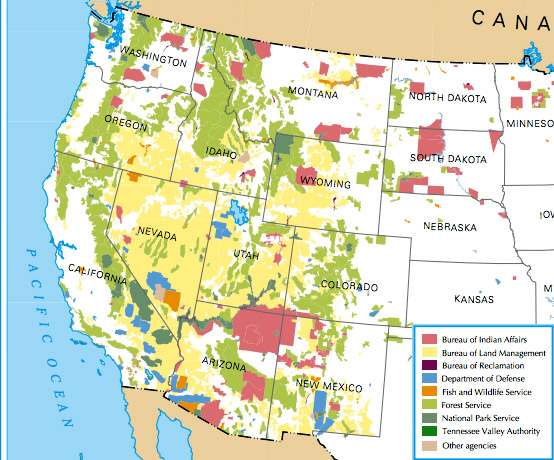
Everyone who follows the reality of our times is aware of the complex priorities surrounding the nurturing of the Earth and its biosphere. The priorities range from global issues like chemical contaminants that destroy the ozone layer and the destructive effects of excessive Carbon on the environment, to more political and philosophical issues like international agreements to slow Carbon discharge and whether the Federal Government has the right to own and manage land in behalf of a balanced biome in the western states of the US. To understand the scope of this issue, the Federal Government owns fifty percent of the land in eleven western states; Federal Government owns over fifty percent of Nevada land – the State where Cliven Bundy took issue with the Federal Government over his “right to use Nevada’s land.”

This last issue, an argument today about the right of a national government to seize and hold land in behalf of a larger objective, provides an unusually clear dialogue about a person’s right to pursue life, liberty and the pursuit of happiness versus global values required to sustain human wellbeing in a global context. Right now, a test case is playing out – regarding the Cliven and Ammon Bundy confrontations with the Federal Government over the right to use Federally preserved property for farming and other private enterprises and, in Ammon’s case, the right of the Federal Government’s justice system to prosecute individuals for abusing “Government property.”

Beside the conflict between private enterprise and Federal control, this case provides a clear picture of the cultural shift in Federal objectives over time. Originally, very large sections of land were acquired by the Federal Government to assure that it would not be divided into disorganized uses that would prevent using the land for its natural resources, primarily lumber and grazing. The original intent, as the west became settled, was to sell off the Federal land in large acreages to private owners who would continue to pursue renewable practices for lumber and grazing. Later, around 1880-1890, there was a fear that private enterprise would strip the western resources of a ready supply of wood – as important then as oil is today – that would lead the nation into a natural resource crisis. As a result of this concern, the Federal Government’s attitude toward a sell-off faded.

In 1947, the Federal Government created The Bureau of Land Management (BLM) – the agency that attempted to seize Cliven Bundy’s cattle in 2014. The BLM is tasked with multiple and different interests, many of which conflict with each other. Objectives managed by the BLM include commodity production, grazing, recreation, ecological functioning, endangered species habitats, and revenue.

Fed Land west

In Cliven Bundy’s case, he refused to honor the rights of the Federal Government as owners of the land where he grazed his cattle and never paid over one million dollars in fees for the right to graze there. Fees began in 1993 when the BLM moved to reduce grazing to protect the endangered Desert Tortoise. When the BLM began removing cattle to be auctioned to pay overdue fees, the situation became an armed standoff as militant groups arrived ready to defend Bundy with weapons if necessary. BLM did not want this kind of escalation so they withdrew. Currently, the BLM plans to move through the Federal Court system. This is a slow process. The Bundy family, including Ammon, who is leading a takeover of a firehouse in Oregon, feels they won in Nevada and plan to expand their resistance as opportunities arise.

However, the case has much broader ramifications than a family feud with the Federal Government. Does the Federal Government have the right not only to seize and manage property, but to threaten citizens/businesses with confiscation of property if they fail to comply with Federal regulations? Substitute cap and trade for coal burning companies; can the Federal Government enforce environmental policy with the threat of a takeover? Hugo Chavez thought so when he nationalized Venezuela’s oil industry. Can the Federal Government take over power companies like Duke Electric in Georgia because of blatant and severely damaging abuse to local water resources? Can the Federal Government stop production of automobiles outright if Carbon standards and miles per gallon are in violation of Federal regulations? There are several precedents for government takeover in one form or another; remember prohibition? Remember the Keystone pipeline?

The Bundys have turned over a huge rock! The mariner suspects our capitalist-dominant culture is not ready for this much governmental authority. Nevertheless, science and technology are defining a path that leads to catastrophic disruption of Earth’s biome within a comparatively short time.

Who can make unbiased – and enforceable – decisions in this increasingly chaotic situation?

Ancient Mariner

Giving Humans their own Epoch

Open any general history book and the reader will find humankind’s history broken down into specific eras, ages, epochs, and periods. For example, we all know the Christian era, 0-2015AD (in history books, dates are important). We also know about the American Civil War, 1860-1865 and the Age of Enlightenment, 1620-1780. A major marker for the world is the dropping of a nuclear bomb on Hiroshima August 1945 as the beginning of the nuclear age.

Too often, and this goes back to the distant past when Homo sapiens had barely moved out of Africa, changes in period, age or era are bracketed by wars or cultural invasions. For all our centuries, our species settled major issues with violence. Easily isolated in daily news is the horrible conflict in Ukraine, Syria, Iraq, Pakistan, Afghanistan, Iran, Libya, Egypt, Somalia, Kenya, Nigeria, and Sudan. It is as if there are rules about implementing new eras: many people must die; massive destruction of artifacts and public buildings; horrendous attacks on the innocent – including women; trench burial plots (not only must one be killed, one must be forgotten). Perhaps wars are significant because wars have definitive start and end dates. The mariner suggests that war slows down cultural transition. It may be better to set differentiation on successful, progressive changes.

Some ages are benchmarked by advancement of a discovered thing or the adoption of some idea. For example, cotton gin, steamships and trains, automobiles, macadam road paving, electricity, airplanes, television, and the Internet. Intellectual ideas have been noted in similar fashion; consider the mathematics of Archimedes and Newton, logic of Socrates and Plato, Solar System by Galileo, and General Theory by Einstein.

It is burdensome that Homo sapiens expends significant effort on the advancement of war: chariot, trireme, trebuchet, gunpowder, armored vehicles, aircraft, rockets, and now drones. It is not difficult to divide the history of war into periods of change.

One could go on naming moments that signify a transition of some sort using endless objects, events, and ideas. Is it possible to name so many periods, phases and eras that there is no time left that is not a turning point? The mariner believes so.

Why must there be change? The quick answer is “Things change for the better, the less expensive, and the more efficient.” Comparatively, this may be true for manufactured things, for economics and general wellbeing. But the real reason for change is Homo sapiens. Humans have a brain that thrives on change. Consider other species; many trees may live unchanged until the planet changes, perhaps millions of years; the opossum is one of the oldest creatures around and the latest opossum lives the same life as the first. Monkeys and apes, for all their intelligence, haven’t changed their lifestyle nor have whales and dolphins. No other species invents puzzles for the sake of inventing puzzles. Humankind must be entertained intellectually – if only watching a television show a monkey could understand or struggling to find the unified theory in physics.

If one merges the predatory nature of humans with the ability to imagine an expansion of power, the result is greed and avarice. Further, the faster humans can attain more gratification, the more rewarding the experience. The fastest way, of course, is violence. Second to violence is cheating – still a form of violence. This behavior is in our genome. The oldest parts of our brain, the parts that go back to the primordial days of Homo sapiens, understand this behavior and react accordingly. Humans and monkeys weren’t that different then. It is the nature of evolution to carry genetic baggage forward along with newer mutations. For example, a fetus develops false gills before it develops lungs. There must have been a fish somewhere in a human’s path of evolution. If one gives greedy behavior some thought, it seems only natural that any predator must satisfy sustenance quickly or it will not thrive.

It is up to our predatory and inventive selves to manage our species. No other species can manage Homo sapiens. This is why government evolved. Even government, however, is subject to predation. It has taken the entire era of human existence to fine tune government to the point that it functions today. Obviously, there is much more tuning to be done. Unfortunately, our ability to change the status quo often means that what was good will not remain good, hence Lord Acton’s phrase ‘power corrupts; absolute power corrupts absolutely.’

Being the premiere predator on Earth plus having an inquisitive mind has allowed humans to multiply and prosper. Humans have overcome every adversary except themselves. The mariner has written often about the effect of population growth and the destruction of Earth’s biosphere. Excessive Carbon has disrupted the atmosphere, land and oceans. The broad use of fossil fuels, which began about 1850, has changed the name of our current epoch: We were living in the Holocene Epoch until another name had to be given for our current times because humans have so changed the Earth. Now we live in the Anthropocene Epoch – named for human trashiness, abuse of living creatures, and disrupting the Earth itself.

By the end of this century, there will be nearly twice as many humans as there are today. How do we rein in ourselves? All we have is religion and government. Obviously, they haven’t been working very well. Our definitions of culture, government and faith are all we have to fix a problem that will be fixed without us if we aren’t careful.


REFERENCE SECTION

Let’s deal with the awkward article in front of ‘opossum.’ Is it correct to say ‘a opossum,’ ‘an opossum,’ a ‘‘possum,’ or an ‘‘possum?’ Yes. This is a singularly intriguing circumstance in our language; dictionaries and grammar sources support this odd behavior. The truth is it is determined by how the speaker chooses to pronounce the word. Proof that there is free will! If you choose ‘opossum,’ then you say ‘an;’ if you say ‘possum’ then you say ‘a.’ It’s your choice! Of course, you can call it by its official name, Didelphis Virginiana and avoid the whole thing.

Expanding the Liberal Arts mind:

A reader has offered an interesting podcast link from the book review section of the New York Times. The podcast features the year in poetry with guests reading favorite poems; about half of the 39-minute podcast is an interview with poet George Saunders. See:

http://www.nytimes.com/2015/12/27/books/review/inside-the-new-york-times-book-review-podcast-the-year-in-poetry.html?_r=1 .

The printing press was not mentioned in the above list of inventions but certainly is one of the most important. Johannes Gutenberg invented the first western press in 1445 AD. However, independent letter blocks of wood were made by Chinese monks in 866 AD. Further, a Chinese peasant named Bi Sheng (Pi Sheng) developed the world’s first movable type. Though Sheng himself was a commoner and didn’t leave much of an historical trail, his ingenious method of printing, which involved the production of hundreds of individual characters, was well-documented. Metal movable type also was developed independently in Korea in the late 14th century. In 1377, a Korean monk named Baegun is credited with printing a compilation of Buddhist sayings using movable metal type. The two-volume book, known as “Jikji,” is believed to be the oldest book in the world printed with metal type. Unlike the West, the East did not utilize prepared type very quickly because of the complexities of Asian writing systems.

This history of printing is found on http://www.livescience.com/43639-who-invented-the-printing-press.html , a website the mariner encourages browsing readers to view periodically looking for anything of interest.


Administration of the iowa-mariner website.

Occasionally, a reader will ask how to find past posts. To help readers search, the POST page, typically the first that one sees, now has a menu across the top with subject headings. The mariner frequently lists a post under multiple subject headings but they should help in any case. There is a search box on the POST page and another on the subject page. Another method is to scan the posts on the right side of the page; these are sequenced by date and if the reader has an idea of when, this may be helpful as well.

Speaking of the column on the right side of the page, at the bottom is the “meta” section. Use the “login” option to create a site identity and receive notice of new postings. Your email address will never be shared with others although your login name will be how readers of the site will refer to you. Once you have subscribed, send an email to the mariner to make sure your subscription is noted at skipper@iowa-mariner.com.

Finally, the mariner has created a forum page called “The Captain’s Mast.” If any reader wants to open a dialogue with the mariner or with another reader’s replies, simply enter your comment in the Captain’s Mast.

Ancient Mariner


Mother Earth

The mariner came across this news item:

“Prince Charles has spoken exclusively to Sky News about his ongoing concerns about climate change, saying he believes there are links to the current refugee crisis and terrorism.

In his only interview ahead of COP21, the UN’s climate summit which opens next Monday, the Prince of Wales suggested that environmental issues may have been one of the root causes of the problems in Syria.

He said: “We’re seeing a classic case of not dealing with the problem, because, I mean, it sounds awful to say, but some of us were saying 20 years ago that if we didn’t tackle these issues, you would see ever greater conflict over scarce resources and ever greater difficulties over drought, and the accumulating effect of climate change, which means that people have to move.

“And, in fact, there’s very good evidence indeed that one of the major reasons for this horror in Syria, funnily enough, was a drought that lasted for about five or six years, which meant that huge numbers of people in the end had to leave the land.”

During the fourth millennium BC, about six thousand years ago, the Middle East was the first area to practice widespread agriculture. Slowly, over many centuries, weather patterns changed leaving mountains and harsh, crusty soil. The term “Fertile Crescent” is no longer applicable. Several debilitating floods and droughts occurred over the centuries as well as numerous wars. Governments and economies became minimal.

Then, in the nineteenth and twentieth Centuries, oil became profitable and has since provided 95% of the economy in the Middle East; the region was overrun by Western entrepreneurs who established weak local governments supported by oil profits. After the First and Second World Wars, the Middle East finally established permanent boundaries between countries except during the six year war between Iraq and Iran – a war for regional supremacy rather than for territory.

All this time, the weather worsened, leaving little in the way of economic disparity – it was oil and not much else. One wonders whether Prince Charles has a point. In the US, California suffered a drought for five years. Prices of fresh produce rose significantly. More produce was flown in from South America. North America is fortunate that another warming phenomenon came along in the form of El Nino – at the cost of floods and damaging storms. Already, 2015 is the warmest year on record. It hasn’t been thousands of years but is weather shifting? El Nino is a specific event but how can we tell that weather a hundred years from now may not be conducive to record corn and wheat crops?

Further, as with more of the Earth than we realize, fresh water is disappearing. Scientists are working hard at new ways to produce fresh, clean water. There are a few commodities that are provided by the Earth and as such should not be owned by proprietary corporations: a clean atmosphere free of carcinogens and chemicals that disrupt the chemical balance of our atmosphere. Another is water itself; corporations should never own water rights, whether natural or reproduced. Finally, while this is indirect, diversity of life is another commodity. Wildlife and plants service our planet and in the process, service us as well. Elizabeth Kolbert in her book, The Sixth Extinction, proves that humans are ravaging the Earth’s living family far more destructively than any terrorist attack by ISIL.

Very slowly, earthquake by earthquake, volcano by volcano, and our human contribution, excessive Carbon, the weather is bound to change. It’s an experience similar to living a lifetime: one is young and suddenly, almost by surprise, we wake up one morning to know we are approaching the end. It is hard to focus on large planetary issues far beyond nationalism – but the time has arrived.

Ancient Mariner

An Eclectic Post

Inspiration comes from many sources, in this case from road kill. Carcasses lie abandoned on the side of the road which led the Mariner’s wife to write this poem:

Elegy for a Dead Raccoon

The body lies beside the road

A furred lump hit by a passing car

Left like refuse, unremarked.

We in the cocoons of our cars

Pass by without a second glance

Without a second thought.

If we gave it a second thought

We would have to recognize

That we, too, will become a lump

Beside the road.

Our mammal bodies are not different:

A baby raccoon was born, suckled,

Stretched his paws, struggled to walk,

Learned to eat, to drink, to clean himself,

Wrestled with his brothers and sisters,

Explored the same world we live in

With the same five senses.

The only difference is that when he died,

In a sudden, tragic accident

His body was left as a furred lump

Beside the road.

There were no remarks at a solemn funeral

And no elegy

Except for this one.

REFERENCE SECTION

Getting the most out history is an art form. History books that deliver dates, events and event correlations are full of facts but leave out the human condition, the three dimensional reality that makes history real and provides the reader with human substance. One trick to expand one’s understanding of history is to read biographies of those who played a role in history but may not have been on the front page. As a bonus, biographies are easy to read and almost like reading fiction. Below are four biographies spread across a wide spectrum of history.

Lucy by Ellen Feldman, W,W, Norton, 2011.

One of the most important romances in the last century. Although their relationship was heavily constrained, their love lasted. Lucy was with FDR when he died. Arthur Schlesinger gave a review:

“It is a story which reminds us of the code of another day, of the complexity of human relationships, of the human problems of statesmen bearing the heaviest responsibilities and of the capacity of mature people to accept the frustrations of life and, perhaps, to make of frustrations a sort of triumph. Eleanor Roosevelt, Franklin Roosevelt, and Lucy Mercer all emerge from the story with honor.

And, if Lucy Mercer in any way helped Franklin Roosevelt sustain the frightful burdens of leadership in the Second World War, the nation has good reason to be grateful to her.”

Arthur M. Schlesinger, Jr.

The Sixth Extinction, an Unnatural History by Elizabeth Kolbert, Henry Holt & Co. 2014.

Mariner has referenced this book in past posts. It is an accounting of Kolbert’s travels around the world visiting scientists and living creatures. However, it is a biography of us and our association with the Earth’s life forms. Written in a story-like style, it is mesmerizing.

Paul Newman, A Life by Shawn Levy, Random House, 2009.

Historian Shawn Levy gives readers the ultimate behind-the-scenes examination of the actor’s life from his merry pranks on the set to his lasting romance with Joanne Woodward to the devastating impact of his son’s death from a drug overdose. This definitive biography is a fascinating portrait of an extraordinary man who gave back as much as he got out of life and just happened to be one of the most celebrated movie stars of the twentieth century.

Frederick the Wise by Sam Wellman, Concordia Press, 2015.

Little is known about one of the most powerful individuals in the Reformation, Frederick III, Elector of Saxony. Blessed by a translation of German works by Sam Wellman, Frederick’s life and influences are readily available. Frederick was the protector of Martin Luther as Saxony battled the Holy Roman Church during the 15th and 16th centuries.

Ancient Mariner

The Great Barrier of Nationalism

In the last post, Today is Earth Overshoot Day, the mariner wrote of global issues that are ignored by governments around the world. Water and minerals have reached an end game and face inadequacy during this century. Food is both abused by waste and unavailable to millions because of political obstruction. Ecosystems of all kinds are wantonly destroyed to increase profit. One-third of the Gulf of Mexico is a dead sea because of the toxicity flowing off the Mississippi River. 90% of Monarch butterflies have disappeared. Coral reefs around the world are dying. Coral is the bottom of the food chain; without coral whole species of fish and mammals will disappear. Much of Micronesia will vanish beneath the sea in 50 years. Although we know deforestation of great forests is not good for our atmosphere, yet the clearing continues.

The mariner knows he sounds like Chicken Little but the ramifications of not caring about our planet or ourselves already are measurable. While there is a futile attempt by multiple nations to limit Carbon Dioxide, that effort miserably falls short of functional change, let alone actually modifying global circumstances. Still, governments feign ignorance about global warming and converting to alternative energy now and deny passing legislation to prevent profit taking at the expense of everyone’s biosphere.

Why is each nation so reticent to join with others to avoid terminal catastrophes for humanity? The answer is nationalism. The twenty-first century presents issues that can only be solved if the world politic changes its priorities. These priorities are not nation-sensitive. The type of government does not matter be it communist, socialist, capitalist, authoritarian, monarchy or tribal. In every case, the wellbeing of the nation, its economy, its culture, and its advantage among nations, are the first priority.

The one new nation that has evolved without nationalist priorities is corporations. Focused on profit as a first and last cause, corporations glean unfathomable amounts of cash and assets from the world economy. This cash is used to grow and acquire more assets or it is parked in long term investment. Corporate profit is sufficient to take serious steps toward global rejuvenation but does not for the sake of profit. If the sums stored away by corporations were taxed for the benefit of global issues, relatively simple issues like fossil fuels could be bought outright – diminishing the pressures against Earth’s biosphere in short order. Although the solution is simple, the process is tangled in worldwide nationalism – nations who benefit from their corporate contributors.

Operating largely outside the jurisdiction of nations, corporations are in effect today’s pirates – not roaming the seas but roaming the Internet that allows rapid reorganization and fast-dollar marketing and to move to nations that are more amenable and enable larger profits. The Trans-Pacific Partnership in Congress right now will make participating corporations virtually impervious to nation-based human rights and labor law. Corporate payoffs to legislators and kings are huge and difficult to resist.

To a small degree, one can understand greed as a goal. Certainly, it is personally rewarding. On the other hand, fairness is a tangible factor. If one makes a mess in a friend’s home, one pays the price of cleaning the mess rather than leaving it for the friend. Somehow, governments have forgotten fairness. Some of this forgetfulness can be attributed to outdated government concepts. The founding fathers of the United States left fairness to the individual so that there can be freedom for all, freedom to pursue happiness, etc. This liberated the new country from the abuses of colonialism but it provided no structure for fairness. If one could pick a single issue why the US and State governments are broken, one would have to say the governments don’t enforce fairness – hence the ease with which the US has become an oligarchy and allows the fast-buck, under-taxed marketplace.

Humanity has been unfair to Mother Earth. All of human history has been an expansion of skimming Earth’s riches but not cleaning human mess, not restoring or respecting what Earth has given toward our arrogant sense of success. Not only has humanity been thoughtless, humanity has been wanton. Without Earth, there would have been no success; without Earth now, there will be no humanity tomorrow. A respected ecologist has put the end 600 years from now.

Ancient Mariner

The Situation between Us and Our Planet

The mariner wishes to remove the political bickering by our elected officials. Their motives are tied more to the science of profit-making and job security than to the real situation of the relationship between Homo sapiens and Earth. Below is a link that the mariner urges you to read. There is no political banter; there is no liberal-conservative bias; there is no corporate or socialist slant; there is no nationalist defense. It is short and has pictures.

http://www.livescience.com/

51280-the-new-dying-how-human-caused-extinction-affects-the-planet-infographic.html


By the time the reader reaches the end of this post, extinction, climate change, an ice age, polar magnetic shift, and plate tectonics will be discussed. Lest the reader be confused, the topics actually are relatively independent of one another but Mother Nature is playing games with our adversarial political style. Poor Congress will be tied in knots for years!

The Planet Earth has some very large and slow-to-change processes that are not necessarily visible to humans. They are not visible because the impact of humans upon themselves may not be felt for decades or centuries. Nevertheless, the Earth does notice – if the mariner may be anthropomorphic. Slowly, the Earth changes its behavior. The first signs that the Earth has noticed is Earth adjusts its biosphere by eliminating species that no longer fit the Earth’s global ecology. This is the mass extinction of species called the “Sixth Extinction.” The second sign that the Earth is adjusting to reality is the change in subsystems like ocean temperature and acidic oceans, which begins to eliminate the very bottom of the protein chain – coral, plankton, simple land life like lichen, moss, and other simple plant life both in the water and on land. This elimination process already has begun.

Like many, the mariner feels that there is too much carbon dioxide. Evidence among growing things is too obvious. Excessive carbon has haunted us since the iron mills in Indiana and Ohio were spewing smoke that was killing trees in Pennsylvania and New York and coal mines poisoned rivers in the Appalachians.

However, the Sun is the most powerful influence on Earth’s weather and global temperature – easily trumping even Homo sapiens’s mischievousness. In just the last few days, solar scientists, armed with the best data yet regarding the activities of the Sun, say the Earth is headed for a “mini ice age” in just 15 years — something that hasn’t happened for three centuries. Early predictions are that it will last until 2045. The drop in Sun activity is called a Maunder Minimum; deeper currents in the Sun are moving in an opposite direction to the currents on the surface. The mariner mentioned a probable ice age in a post in June 2013 when he mentioned an ice age will occur in the 21st century. It isn’t his insight; he had been reading what solar scientists were saying about Sun cycles and the timing seemed correct.


Climate change versus the ice age. If there is confusion and disbelief now, think what both together will do to politics, international anti-carbon agreements and many environmental improvements riding the financing of climate change. Perhaps it should be made clear that there are two issues: ice age and excessive carbon – climate change notwithstanding.

Every 200,000 years or so, the magnetosphere switches poles, that is, the North Pole becomes the South Pole and vise versa. Presently, we are experiencing the very early phases of a polar switch. Scientists have determined that the strength of the magnetosphere has dropped 15% since 1840. There is nothing cataclysmic about the switch. The North and South magnetic waves push through each other around the globe. For example, today the South Atlantic and the Bering Sea have very weak magnetic spots such that a compass can be seen to vacillate as North and South magnetic waves move back and forth. “It may take another 2,000 years,” said physicist Phil Scherrer of Stanford University.

The real danger in a magnetosphere shift is twofold: First, the magnetic waves shield us from strong radiation from the Sun that is capable of causing cancer and other radiation ills; the Earth’s magnetosphere is weakened considerably during a shift and the Sun’s radiation can reach the surface of the Earth. At some point, all satellite communications will be interrupted.

Second, every creature that depends on a compass to get around will experience a topsy-turvy effect that turns everything backwards. Many creatures may be disoriented: Monarch butterflies, geese, whales – anything that migrates great distances without mapping terrain.

Switching to plate tectonics, the media covers stories about earthquakes and disturbed volcanoes on a regular basis. Statistically, the number of larger earthquakes per year has not changed but the energy or intensity has. The Earthquake that hit Japan recently moved that nation 12 feet closer to North America and caused a shift in Earth’s axis of 6.5 inches. Scientists worldwide focus increasingly on the Pacific Rim by Washington State. New evidence suggests that a small fault, Juan de Fuca, is currently pressing against the North American Plate causing uplift and stress. Eventually, it’s expected that the ground will break perhaps causing another “mega-thrust” earthquake that could rival the recent Japanese disaster. In addition, there is increased activity in the Chile/Peru fault and Los Angeles’s San Andreas Fault. Based on geologic data, a major earthquake has hit the Los Angeles area approximately every 200 years. The last major quake was about 300 years ago.

The mariner has written much about extinction. Peruse recent posts for more information or use the reader’s browser. To the mariner, extinction is both probable and within hundreds of years unless severe modifications are made to mankind’s treatment of the biosphere. We may not need to worry about earthquakes, magnetosphere shifts, ice ages, or Congress.

Ancient Mariner


Jim Inhofe

In fairness, the mariner stayed awake until 3:00AM to listen to Jim Inhofe (R) Oklahoma Senator on CSPAN1. His presentation was difficult to follow because he spoke in half-sentences. His major defense against climate change, and the impact of the fossil fuel industry on that climate change, boiled down to bits and pieces of hearings in his Committee on Environment and Public Works that provided loopholes in defense of non-action on the part of his committee – even when the testimony was taken out of context as given by those testifying against conservative government policy.

Inhofe’s basic premise is that unless one stops all countries simultaneously from contributing carbon dioxide to the atmosphere , it is useless to pass US legislation because CO2 will not be diminished.

This policy flies in the face of so many international and national legislation and court decisions that the mariner cannot list them all. To name a few countries that are pursuing less CO2 carbon emission, one could name all European countries, all Nordic countries, and many others scattered throughout the world – even Mexico and South Korea. The United Nations, whatever the reader may think of the organization politically, does a good job of monitoring energy production around the world. It is unanimously opposed to current CO2 output and has proposed significant decreases in CO2 by 2020.

It is impossible for every country instantaneously to change its carbon policy. Inhofe knows this is impossible and stands behind the principle that every nation must agree to significant reduction before the US need lift a finger in Congress.

In addition, he stands behind the scientifically unsupported concept that there is no global warming and further, that it is not related to human activity.

Oklahomans not related to fossil fuels, be proud.

Ancient Mariner