Whence Jobs?

Guru has been catching mariner’s attention more frequently, predicting a significant shift in economic growth and a change in the definition of what “job” means. For the first mariner comment on the future of work, see the post, “The Future of Work III – When Jobs will End. July 12, 2015.” Significant credit for that post’s analysis is due to an article published in Atlantic, August 2015.

Guru has been pointing out subtle events that don’t reach the front page but nevertheless identify trends in an economy that has been diminished, permanently, as computerization grows more capable and efficient at replacing human labor and even many vocations considered ‘specialized’ today; the mariner perceives that general practice lawyers will be replaced by a red box in McDonald’s. Further, the international corporate freedom to acquire even greater wealth with little control by national governments will further regionalize labor, technical and even top drawer scientists and executives, by relocating to the least expensive nation who also packages benefits – making ‘jobs’ at any level less expensive. Further, regionalization of work will create pockets of unemployment on a national scale for nations who do not in some manner restructure ways to create national income, e.g., steel workers: China won the contract to build Chicago’s new light rail system.

The mariner lived in Taiwan for awhile. He was impressed with a government and culture that kept small business operating by preventing horizontal or vertical business growth from expanding beyond small, often family run businesses. For example, it took three different small businesses to print large flyers: one to make paper, one to design and print the flyer, and one to finish the flyer in any manner required for distribution. Each operation was family owned. A large corporation was required to have the Taiwanese government own 51% of the Corporation. As a result of this policy, there were only two classes: the wealthy, who gained wealth slowly as their families climbed generation by generation and the working class which seems low to Americans but there was no destitute or deprived underclass.

If one had a relative – even a cousin once removed – one had a job with the family’s business. The pay may not be the best but one had a role in generating income for and promoting the family, and had a source for room and board. Interestingly, Taiwan had no unemployment insurance but the government paid a rebate to the family business based on gross taxable income for the ‘business.’ The Taiwanese economy is greatly dependent on a culture of family-based income models which avoids an elaborate, form-driven individual ‘welfare’ dole. Needless to say, it took 3,000 years of separate cultural development for Taiwan to develop and sustain a family economy; perhaps the West can never evolve away from its capitalistic, individual, wealth-based society.

At the time, Taiwan was the seventh wealthiest nation in the world in terms of assets per capita. The assets underwrote the Bernie Sanders model: controlled corporate and income taxes, free health, free education through graduate school, fairly distributed retirement, and – in a fashion unfamiliar with American job description, assured close to full employment. Avoiding the disruption of both Bernie and Donald, the government held tight control of trade agreements. If an island nation of less than 24m Taiwanese can do it, why can’t the United States?

When it comes to economics and fair profit from a nation’s economy, capitalism is more interested in unfair profit. Even a hint of socialist attitude is anathema to capitalism. The mariner first read about capitalism as a competitive religion to Christianity’s morality. It was in a book written by Methodist pastor Paul Tillich at a time when it was a new thought to call certain governments ‘religions.’ Written in 1961, the title is Christianity and the World Religions. The reader may find it in an old section of a library; it also may be purchased through an Internet search engine.

With capitalism still in charge of the most capitalistic culture and most capitalistic nation in the world, citizens have a long road ahead before the culture shifts enough to redefine jobs and the economy. International corporations already see change coming and are spreading themselves over as many economies as possible so that no one nation can draw from their profits to support a socialist or Christian responsibility.

The world must gravitate more toward international unification to have the clout to care for their citizens.

REFERENCE SECTION

It seems almost hackneyed to mention it but the mariner recommends becoming comfortably familiar with the economics and the culture of Denmark. It is the most successful model in the world to transition from top down politics to a stable and successful democratic socialism. Americans will be proud to know the citizens overthrew the government!!

Ancient Mariner

Caution – Philosophical Subject: May be Boring

The mariner is not a sage pol. The mariner is neither democrat nor republican. He will concede that sometimes his political philosophy appears socialistic – but not like Bernie or Robert Owen or Albert Einstein or Bertrand Russell. It is true that socialism is driven by an idea centered on universal equality and assured fairness. However, socialism is a humanist philosophy.

Perhaps the mariner is a Universalist, that is, a believer in the natural law of the universe. It was Socrates and his progeny Plato who determined natural law.

We live in an orderly universe. At the base of this orderly universe or nature are the forms, most fundamentally the Form of the Good, which Plato describes as “the brightest region of Being”. The Form of the Good is the cause of all things and when it is seen it leads a person to act wisely. In the Symposium, the Good is closely identified with the Beautiful. Also in the Symposium, Plato describes how the experience of the Beautiful by Socrates enables him to resist the temptations of wealth and sex. In the Republic, the ideal community is, “…a city which would be established in accordance with nature.”

“The Form of the Good” is the foundation of every religion’s ethical framework. Ancient Buddhist writings described The Form of the Good to be a sensation generated within the brain. As mentioned in the previous paragraph, Plato further described a sensation of unity with the universe. In modern times, Joseph Campbell describes The Form of the Good as a transcendent experience where one’s state of Being escapes duality[1] to be at one with the universe. In Christianity this experience is simultaneous with death and passing out of this dimensional world.

The mariner extends humanist philosophy to include environmental respect and equality. The universe, by any definition – from stars and planets to any indigenous existence including weather, planetary forces, biomes and creatures – is part of the universe and is granted equal influence in Homo sapiens’ unity with the universe via The Form of the Good.

Ancient Mariner

[1] See yin yang and western definitions at https://en.wikipedia.org/wiki/Dialectical_monism#Principles

Of the People

In response to the disassembled nature of society and war in 1770 to 1815, the founding fathers achieved a new form of government “of the people, by the people, and for the people.” To be assured that “of the people, by the people and for the people” prevailed, the fathers created three branches of Federal Government: Executive, Legislative (with two houses), and a Supreme Court. Further, the fathers kept the power to make money, fight wars, impose taxes and officiate over foreign treaties. Everything else more or less was left to the parochial wisdom of the states. To elect candidates for the Presidency, a democracy is required to allow citizens to vote for their preferred candidate. However, states were left to devise their own methods for deciding who their favored candidates may be. This created a party system and, while each state was free to have its own selection methods, a national party was responsible to have a runoff vote at a party national convention.

Along the way, the National Government added citizen rights, adjusted roles of the branches of government, and begrudgingly accommodated civil rights to citizens of color. But for sure, it has never overseen how a state elects favorite sons. An unintended effect, perhaps not, is that state election procedures for President serve as a front line defense for the “establishment” as it is identified in the current campaign. It is virtually impossible for populist campaigns to acquire a party majority. The 2016 election campaign is truly unique in that is has three populist campaigns who lead two establishment campaigns in citizen voting: The democrats have Bernie Sanders (a democratic socialist); the republicans have Ted Cruz (religious authority) and Donald Trump, (a populist). Each of these populist campaigns draw unusually large audiences to their events, yet while all three are popular in their following, they have a difficult time converting popularity to political clout.

In his colorful but often blunt way, Donald expressed his frustration clearly. “Look at Bernie Sanders,” he said, “Every morning you hear the headline: Bernie wins but Bernie loses; Bernie wins but Bernie loses, Bernie wins but Bernie loses… the primary/caucus system is crooked!” Actually, as a representation of state citizenry, it isn’t so much crooked as unconnected to popular vote. Citizens in the states have their preferred candidate but if that candidate isn’t qualified by arbitrary rules, any votes for that preferred candidate are thrown out. To further burden the process, if the citizens still want to participate, they must select another candidate thereby inflating the second candidate’s numbers – without underlying actual preference by the citizens who initially preferred another candidate.

There are many arguments for these questionably unfair and highly politicized delegates. Two million citizens cannot go to a convention; by using delegates to reduce attendees, ferret out dozens of minor candidates, and to have rules that free delegates after one vote, it is possible to identify one person who will win the party’s nomination. So doing, a Presidential nominee quite likely can be elected within a reasonable time.

However, the independent freedom of a state allows it to nominate a favorite son in any way imaginable: Indiana Governor Mike Pence appointed all 57 delegates, prominent republicans, well before the primary vote – the prominent question is why hold an election? Mississippi and Alabama close select voting centers to minimize black and college voter turnout; many southern states have made voter identification difficult and confusing; several states have secondary requirements like winning targeted Congressional Districts before delegates can be assigned to a candidate. But what makes delegates irrelevant to citizen opinion is that delegates in no way represent the popular state election. When one listens to old pols, they find nothing wrong with ignoring the popular vote; primaries don’t vote for candidates, they vote for delegates. The two are not associated with election percentages.

The overall effect of this folderol – an original fear that colonies would hesitate to join the Union, has turned into a political tool to prevent change to the “establishment.” The fact that three strong populist campaigns are demonstrating for change indicates to the mariner that something needs to be changed in American Governments. On April 18, however, Bernie will lose to Hillary (an establishment avatar) and in the final stand down, we have a Choice between Hillary, Ted, a tea party conservative or Donald – a man of the people – wise or not.

Mariner believes that populist movements don’t occur until genuine, longstanding abuse is imposed by the governments and by abusive backers supporting those governments. It looks like 2016 populist movements will have little effect on the manner of governance. Maybe next time. Donald’s implication of violence may have more influence in 2020 – which is our first chance to depoliticize redistricting. Where is Joan when you need her?

Ancient Mariner

In case you feel you are not perfect

The mariner is preoccupied with spring gardens and major landscaping. Consequently, posts may be irregular. If you have difficulty viewing the Blog of the Ancient Mariner, write a short descriptive phrase in an email to skipper@iowa-mariner.com . If you feel a need to reply to a post, please do so! Mariner enjoys feedback.

The website will change over the summer to provide more reader options and promote the forum as a way to discuss posts and other reader contributions including communication directly between readers.

….

Mariner has mentioned a number of times that his father, a sociology professor, enjoyed collecting pop psychology tests and interpretations. He admitted that pop psychology was easily misinterpreted and provided insights that were entertaining conversation starters but quickly failed to measure a sound profile. In truth, he felt that general personality tests, even ones with serious scientific purpose, cause more trouble than knowledge gained. He had an especially poor opinion of the Myers-Briggs test that is widely used by businesses as a way to encourage compatibility and interaction, knowing that everyone is special but different.

Many readers have taken the Myers-Briggs test where they work. Test takers learn about all sixteen characteristics that make up humankind. When a new individual learns their four-letter description of themselves and has been enlightened as to how everyone is valuable but different, that individual should be sensitive to how others communicate and contribute to the common good – this is not what happens. Before the end of the day, the four-letter score becomes a condescending characteristic; it is a bat to belittle others – always implying incompetence. A typical conversation may be:

“So. What’s your type?”

“I’m an ISPF.” (artistic person)

“Oh, wow. Does your supervisor know? I mean, your job is awfully mechanical. I’m an ENTJ; that’s a corner score (the four scores at the four corners of the chart have special leadership talent).”

Another one mariner heard at one of his management training seminars:

“Never mind, you’re an ISFJ, you wouldn’t understand.”[1]

Nevertheless, the mariner’s father used his classes to try out various personality tests. He came to the conclusion that personality tests used for self improvement work much better if they aren’t public. The test should be introspective rather than comparative. He gave the following test to his classes many times. The questions are designed so that the question itself implies a standard to be approximated. Your score is determined by your deviation from the expectation of the question and, importantly, your own reaction to the deviation. The test triggers internal measurements which, if you reduce deviation, may help you be a happier and more confident person.

  1. What daily habit do you perform that makes you happy?
  2. What daily habit do you perform that clearly is one you would prefer not to do?
  3. On a typical day, do you have contact with at least three people you enjoy who are not in your family?
  4. With how many best friends do you still have regular contact from secondary school days?
  5. Each day, what important responsibility do you avoid?
  6. Do you participate in two civic/religious organizations each week?
  7. Do you meet with a group of eight active good friends each week?
  8. Do you have a job you enjoy?
  9. Do you spend one hour each week visiting non-family patients in a medical facility, retirement home or shut-in?
  10. Do you have a conversation with and touch or hug every family member each day?


  1. If applicable, do you have sufficient sex each week?
  2. Do you have physical activity that requires three aerobic hours each week?
  3. Do you take twenty minutes each day meditating or doing some restful activity?
  4. Do you think you’re fat?
  5. Have you had a physical examination in the last six months?
  6. Do you take a small trip every month to explore or participate in pleasurable activities?
  7. Have you taken at least a week’s vacation in the last six months or if retired, have you deliberately changed your daily routine to include new experiences and learning?
  8. Looking back on the questions so far, have you dismissed any question for any reason? Tell yourself why.
  9. Do you regularly play a musical instrument, sing in a choir or regularly attend music events or participate in performing arts?
  10. Has it been more than five years since you enrolled in an education, hobby, or trade skills class?


  1. Is debating with others more satisfying than being compatible?
  2. Do you feel others want to include you in your friend circle activities at every opportunity?
  3. Are you often skeptical of other people’s opinions and decisions?
  4. Do you receive two non-family calls or visits every day?
  5. Do you readily take charge even if not asked?
  6. Are you frequently slovenly when in public?
  7. Do others think you tend to talk incessantly? A clue is that others always end your conversations.
  8. Is it important for others to look up to you – or for you to look down on them?
  9. Do you watch the news on television every day or read a newspaper every day?
  10. Do you feel competent when you seek person-to-person contact with someone you’ve never met?

Having finished all the questions, return to each question. Without having a conversation with others, review your answers. More importantly, how did you feel about your answers? Note if you had a tinge of guilt, moral obligation, avoidance, or feeling a need to improve. The test is intended to help you improve your attitude, personal lifestyle, basic health, and your interpersonal qualities.

It seems an odd test but the mariner’s father said this test provoked more substantive discussion in class than any other – which he thought was a good sign that the test touched on self personality analysis in a non-threatening way.

Ancient Mariner

[1] See http://www.myersbriggs.org/my-mbti-personality-type/mbti-basics/the-16-mbti-types.htm for a description of the 16 types.

Nuance

The mariner has noticed, albeit casually over time, that one’s expressions seem to gravitate toward absolute values. He noticed this while watching a television show where a couple had to decide which of three houses they wanted to purchase. As the couple toured the three homes, both partners were wont to say, “I love this,” or “I hate this.” Yet, later in the show, these extreme terms were compromised in the final decision the couple had to make. Perhaps such extreme expression was a sign of undue prejudice – a desire to keep the world simple but at the loss of open-mindedness.

What if we consciously tempered our feelings by expressing a degree of appreciation or dissatisfaction rather than going for the absolute hate or love about what are actually mundane preferences. Would it hurt to say, “That’s nice but I would like to see something more green?” Studied measurement reflects a person who is capable of making a refined judgment without succumbing to an internalized and polarized opinion that has no ability to measure qualities other than egocentric comfort. Instead of saying “I hate that candidate,” would we have more self control, perhaps even empathy if we said, “I have some concern about that candidate.”

Speaking of candidates, Donald and Bernie have attracted followers – liberal and conservative – who have a common attitude: populism. Having populist followers is like owning two pit bull dogs. “Oh, they never bite; we even let the kids rough-house with them.” That may be the case. In fact, a tenant once had two pit bulls that were as friendly as puppies and always pleased to see the mariner but one can’t help seeing a judgmental attitude about them; Pit bulls tend not to have much reaction time between happy and attacking. Sort of like saying, “I hate/love that house” and “I hate/love the government.” Like pit bulls (or any pack of dogs), if one attacks they all attack. Populists require less provocation to incite mob rule.

Similar to a pack of dogs and those who say only “love” or hate,” populists are prone to over reacting and on the spur of the moment make foolhardy decisions that are untenable in principle. Remember when California’s citizens revolted against increasing property taxes by passing Proposition 13 driving the state to the edge of bankruptcy? Remember when KKK groups would hang African Americans for mundane behavior? Or our older relatives practiced genocide on Native Americans? Today, ISIS has vicious, torturous reactions very much like pit bulls. The US will never avoid wars until its culture adopts a more contemplative sense of self.

Still, as to followers of Donald and Bernie, someone has to attack capitalist greed and legislative incompetence….

REFERENCE SECTION

Many readers are from The Mississippi River Valley or the Ohio River valley – the center of US agriculture. A reader may either enjoy or be irritated by the following pass along. Nevertheless, mariner is entertained by devout republican capitalist farmers who cling to their liberal, even socialist farm subsidies:

From an article, “Spoilin’ The Broth”, by Bill Cook, in the Rockdale ( Texas ) Reporter dated February 11, 2016.

A letter to the U.S. Secretary of Agriculture from Jimmy Henry of Broken Arrow, OK –

Dear Sir:   My friends, Wayne and Janelle over at Wichita Falls, received a check the other day for $1,000 from the government for not raising hogs.  So, I want to go into the not raising hogs business.

I need to know your opinion on what is the best breed of hogs not to raise.  I want to be sure that I approach this venture in keeping with all government guidelines.  I would prefer not to raise Razorbacks, but if that is not a good breed to not raise, then I can just as easily not raise Yorkshires or Durocs.

As I see it, the hardest part of this program will be keeping an accurate inventory of how many hogs I am not raising.  My friend Wayne is excited about the future of this business.  He has been raising hogs for 20 years and the most he ever made was $422 in 1988, until this year when he got your check for $1000 for not raising hogs.

If I get $1,000 for not raising 50 hogs, will I get $2,000 for not raising 100?  I plan to operate on a small scale at first, holding myself down to about 4,000 which will give me $80,000 income the first year.  Then I can afford to buy an airplane.

Another thing, these hogs I’m not raising will not eat 100,000 bushels of corn.  I understand that you also pay farmers for not raising corn and wheat.  Will I qualify for payments for not raising wheat and corn not to feed the 4,000 hogs I am not going to raise?

I want to get started not feeding as soon as possible as this seems to be a good time of year to not raise hogs and grain.  I’m also considering the not-milking-cows business so please send me any information you might have on that.

I assume that the government will consider me to be unemployed from all this non-production, so I plan to file for unemployment and food stamps.

I eagerly await your reply,

Sincerely yours,

Jimmy Henry Henry Farms Broken Arrow, OK

  • Sometimes mariner is embarrassed by the inhumane pursuit of profit extracted from the bottom of the job market. He has insight into what indenture was like in the early days of industrialism. See:

http://www.nytimes.com/2015/05/10/nyregion/at-nail-salons-in-nyc-manicurists-are-underpaid-and-unprotected.html?CID=4QXQY&nlid=74363051&_r=0

Ancient Mariner

CYBELE

There was enough curiosity about Cybele: What is it? Who is it? How do you say it? Why is it a holiday?…. The mariner decided to do an old fashioned treatise about Cybele as a way to cover all the questions. First information: Cybele is pronounced like the last two syllables in “possibly” with an added but diminished “uh” inbetween, SIB’uh lee.

There was a period of time from about 7500 BCE until 4000 BCE when human civilization began to show signs of organized thought, that is, something that looked like it may be perception beyond naturalism, perception beyond anthropomorphism. The first challenge to be answered was, “Where did all these people come from?” “How did they get here?” Without science, the only answers were myths.

The earliest religions evolved from these primitive myths to be followed by modern western religions that emerged from about 550 BCE until 500 CE. It is interesting to note how similar, even today, the rites, holidays, theologies, behaviors and celebrations continue.

Cybele ˈsɪbᵻliː/Sib’uh-lee /Phrygian_language “Phrygian Matarubileya/Kubeleya (“Kubeleyan Mother”, perhaps “Mountain Mother”). She is Phrygia’s only known goddess, and probably was its only state deity. Cybele represented nature, weather, seasons – all things environmental, including procreation.

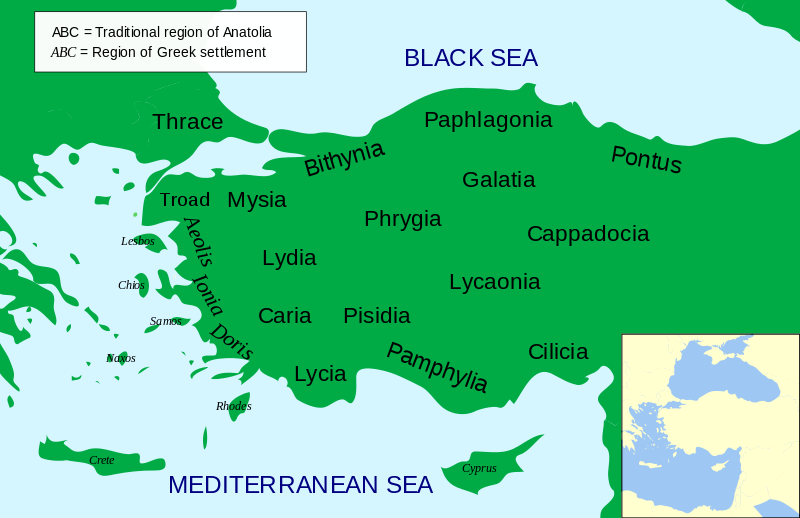
In antiquity, c6000 BCE, Phrygia was a kingdom in the west central part of Anatolia, in what is now Turkey, centered on the Sakarya River. Phrygia was a region of Anatolia whose people spoke Phrygian. Its main cities included Ancyra and Gordium. Phrygia included the Troad, whose main city was Troy. The early Phrygians were fishermen; Phrygia gained prominence only after the 8th century BCE during the Hellenistic period, when the area was settled by Gallic Galatians and renamed Galatia.
6000bc Cybele
Photograph. Seated Mother Goddess of Çatal Hüyük: the head is a restoration. The Seated Woman of Çatalhöyük (also Çatal Hüyük) is a baked-clay, nude female form, seated between feline-headed arm-rests. It is generally thought to depict a corpulent and fertile Mother Goddess in the process of giving birth. Cybele may have evolved from an Anatolian Mother Goddess of a type found at Çatalhöyük, dated to the 6th millennium BCE.


MYTH
According to myth, Cybele loved a shepherd named Attis. Because Attis was unfaithful, she drove him insane. Overcome by madness, Attis castrated himself and died. This drove Cybele into great mourning, and it introduced death into the natural world. But then Cybele restored Attis to life, an event that also brought the world of nature back to life.

Attis’s return to life took the form of his being changed into an evergreen tree – the basic idea underlying the myth is the annual vegetation cycle in spring when nature comes to life. Eventually, the Attis myth became an annual event in which worshipers shared in Attis’s “immortality.” Each spring the followers of Cybele would mourn for the dead Attis in acts of fasting and flagellation. By 300 CE, the Romans had Romanized Cybele, now mother of all gods, into a lavish celebration of eating and merriment (Does the reader recognize the word ‘celebration, celebrity’ from the Latin ‘celebrare’ or the name Sybyl, varients: Sybil, Cybil, Sibil; Sybella from Greek Sibulla”Σιβυλλα (Sibylla), meaning “prophetess”? And ‘sibling’ – archaic ‘god sibling’ transforming to Goddaughter and Godson?)

FESTIVALS AND CULTS

Festivals and cults in this document are limited to common practices in order to shorten the document and to clarify relationships to other modern practices. Christian similarities are noted. Throughout early centuries, Cybele was a Goddess in Anatopia (sixth century BCE) and was adopted by Phrygia and Greece (sixth century BCE), and Rome (218 to 201 BCE when Rome officially adopted her cult during the Second Punic War after dire prodigies, including a meteor shower, a failed harvest and famine seemed to warn of Rome’s imminent defeat).

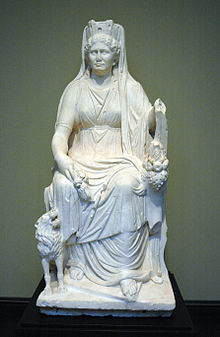
In Greece, as in Phrygia, she was a “Mistress of animals” with her mastery of the natural world expressed by the lions that flank her, sit in her lap or draw her chariot. After a short period of time in Rome, Cybele’s origin was reinterpreted as Magna Mater (“Great Mother”). The Roman State adopted and developed a particular form of her cult after the sibyline oracle recommended her conscription as a key religious component in Rome’s second war against Carthage. Cybele’s Roman mythographers reinvented her as a Trojan goddess, and thus an ancestral goddess of the Roman people by way of the Trojan prince Aeneas. With Rome’s eventual hegemony over the Mediterranean world, Romanized forms of Cybele’s role spread throughout the Roman Empire. Cybele’s special holiday was Megalisia.220px-Cybele_Getty_Villa_57_AA_19

Photograph. Cybele enthroned, with lion, cornucopia and Mural crown. Roman marble, c. 50 CE.

The role of Cybele exists today, especially in the Holy Roman Catholic Church, as Mary, Mother of God. In particular the Eastern Orthodox, Oriental Orthodox, and Eastern Catholic Church, Mary plays a more active role in liturgy. Its literal English translations include “God-bearer”, “Birth-Giver of God” and “the one who gives birth to God.” Less accurate translations include the primarily Western title “Mother of God” (Latin: Mater Dei). One of the more serious debates at the Nicene Council in 325 CE was whether God was the ultimate creator (as in definitions of the Trinity) or, because God and Jesus were of one spirit and Jesus was of human form, it follows that a human had to create God (Greek term: Theotókos.) The Trinity interpretation prevailed. The mariner speculates that at the Nicene Council, Christianity became a wholly paternalistic religion. From the book by Alice Lucy Trent: “….overwhelming historical evidence that the world’s earliest civilizations (covering the vast majority of earth’s history) were feminine in orientation, religious, social, and political.” Just as with the Roman Empire, Cybele was reduced in power from creating all things to one of significant recognition as Mother of Gods but not as the creator of all things. Until the Nicene Conference, Mary, AKA Cybele, had a role similar to the Iroquois Confederacy (American Indian’s creator Mother Earth plus female dominance in daily culture); in Sumatra, Minangkabau view women as the foundation of life and, therefore, the foundation of the entire social order.

[[ Cybele can be considered an influence on both the Old Testament and the New Testament and seasonal Christian rituals because Roman versions of rituals, including Cybele’s, were practiced in the Middle East at the same time that early New Testament documents were written. Further, on his second visit, around 50 CE, Paul spent three years proselytizing in Antioch and other large cities. It was in Antioch that the term “Christian” is used for the first time.

It may be serendipitous to the future of Christianity that Greeks, Jews, and Assyrian Semites – who still reflected Anatolian culture – had large populations in western Turkey and southern Greece during the Roman Empire; Rome contributed a common government and a common cultural perspective and a governance model referencing citizens, senators, Trumpian emperors and employed illegal immigrants also known as slaves. The Roman style of government still dominates the western world; the mix of common ancient mythologies, Indo-European language, familiarity with rituals about Greek and Roman gods, Judaism – all of which evolved from Anatolian culture – virtually mandated that Christianity would move to the west and reflect similar celebratory styles. The Holy Roman Catholic Church still reflects a mythological model similar to the Pantheon.

One can’t help but find similarities across the centuries. For example, the introduction of death by Cybele and eating the forbidden fruit in Genisus 3; mourn for the dead Attis in acts of fasting and flagellation around Easter dates AKA asking forgiveness and rebirth and the season of Lent; the celebration of spring through all the ages has been present in some form from early Antonian castrations to Roman high-dollar orgies; the female role of creating life and managing nature is similar to the Iroquois Confederacy that was not on the path of religion in the Middle East; the strong gravitation throughout of celebrating the seasons by associating them with early myths; finally, the similar requirement between Judism (Moses) Islam, (Mohammed), Christianity (Jesus), and Buddhism (Siddhārtha Gautama), to have an intermediary between man and God ]]

Looking back in the abstract, Cybele was the most influential “person” in Assyria, Greece, the Hittite Empire, Israel and intermediaries who lived on a truly fertile crescent. It is the same geography where humans first invented economic farming; it is the same geography and culture that produced Jesus, Mohammed and not far away, Buddha. Only a friendly, quite abundant Mother Nature would give Homo sapiens the time and energy to create a new iron age, farming, and three new religions.
Thanks to Cybele.

Location of Phrygia, Anatolia, Greece.

800px-Map_Anatolia_ancient_regions-en_svg

Ancient Mariner


More Reference than Evaluation

For folks facing an imminent move to Social Security, US News has tips that can make a significant difference in payments. The article includes how to manage the passing of a spouse. See:

http://money.usnews.com/money/retirement/articles/2014/04/07/5-ways-to-boost-your-social-security-payments

  • Copying a Bankrate report, the Washington Post reported that new studies show that not only are Millennials carrying less debt than they did in previous years, they are actually pretty good at saving. Millennials are saving more aggressively than they have in the past, and in some cases, they’re saving more than their older counterparts, according to a new study from Bankrate.com. Ironically, some notable economists wish they would spend more, even borrow, to improve recovery from the 2008 recession. See: https://www.washingtonpost.com/news/get-there/wp/2016/03/29/one-habit-millennials-are-actually-pretty-good-at/
  • Patty Duke died today of sepsis due to a ruptured intestine. She was 69.
  • An excellent article in Atlantic Magazine April, 2016, is about Obama’s legacy as President. It is a far ranging report that covers Obama’s thought processes associated with his impact on foreign relations and his guiding principles. The article is almost like reading a novel – an easy read. It is enlightening when real world sophistication is compared with Donald’s “I know how to fix that” – no he doesn’t; he has absolutely no idea how complex and nuanced foreign relations are today.
  • The reader may recall the recent report about the happiest nations in the world [US and Happiness, 3/16/2016]. It turns out that there is a direct correlation between happy cities and creativity in science and culture. See: http://www.livescience.com/54132-six-of-the-best-cities-for-scientists.html
  • While studying the parasite that causes toxoplasmosis in cats, researchers with the University of Chicago found a connection between the microorganism and Intermittent Explosive Disorder or IED. Symptoms of the disorder are recognized by repeated, impulsive outbursts of verbal or physical hostility.

http://www.examiner.com/article/toxoplasmosis-cats-linked-to-violent-behavior-humans

  • Nestle wants to own water rights in Oregon. See the FWW notice below (log on to see clip). A corporation is seeking to own water. This is a taboo. Humans can live only 5-7 days without water or suffer debilitating effects if the water is contaminated. Water is a public, worldwide commodity that can only be managed by governments (Flint Michigan aside). There are many confrontations across the United States between clean water-dependent corporations and public access. Further, there are corporations that poison public water sources beyond potable quality for farms and towns that need the same water. Around the world, fresh water is declining.

http://www.foodandwaterwatch.org/


This Is How You Stop Nestlé From Bottling Your Water: Watch the new Story of Stuff Project’s video on the Oregon ballot campaign to protect Cascade Locks!

Dear Ancient Mariner, What would you do if a bottled water company came to your town and tried to take control of your water? Unfortunately, for too many communities, this is not a hypothetical situation. Take Cascade Locks, in Hood River County, Oregon. This pristine town on the Columbia River has been battling for the last seven years to stop Nestlé from taking control of their water and building a bottling plant in their community. For years, the company has been working the system to avoid environmental reviews, buy influence over local politicians and speed up the process to get what they want. Meanwhile, the community has been putting up a fierce fight to protect their water.  So how is a small community taking on a huge, multinational corporation? Hear the story of this powerful, grassroots campaign in a new video, produced by The Story of Stuff Project — watch “Our Water, Our Future” now!

Nestlé came to Cascade Locks in 2007, promising to create jobs and stimulate the economy with a plan to bottle and sell water from a local spring. But when the community found out about Nestlé’s attempted water grab, they started to speak out against the plan. Nestlé has a track record of lying about the impact its bottling has on a community’s economy and environment.1 Cascade Locks residents didn’t want Nestlé wreaking havoc on their town — leaving them without enough water for the local farming and recreation industries. After years of trying to chase Nestlé out of town — inundating state agencies with public comments, pushing multiple governors to stand up and protect their water, and rallying against Nestlé’s lies — residents decided to come together and put the issue on the ballot so they can declare, once and for all, that Nestlé, and any other corporate bottlers, have no right to bottle public water! Food & Water Watch has been working alongside community members fighting the Nestlé water bottling proposal for the past seven years. Now, we’re partnering with the Local Water Alliance, Hood River County’s grassroots group, to push this effort over the finish line and stop Nestlé once and for all! Watch this video to hear the stories of local activists fighting to protect their water from Nestlé! [log on to view video]This isn’t just the story in Oregon. From Maine to California, this multinational corporation is working to take control of local water sources for its own private profit. But water is a public right and should not be bottled for private profit! If Hood River County passes this measure, it will send a message to Nestlé and help create a playbook for other communities that have to stand up to this big bully of a corporation and say NO. Winning this campaign would ensure the protection of this public water for future generations. Check out the video from the people who are standing up to Nestlé and fighting to keep their water public. Thanks for taking action, Caitlin Seeley George Online Campaign Organizer Food & Water Watch act(at)fwwatch(dot)org

1. Keep a Nestlé Water Bottling Plant Out of the Columbia River Gorge, Food & Water Watch, April 23, 2013

Donate » View Online  •  Visit Our Website  •  Contact Us  •  Share This:
Food & Water Watch • 1616 P Street NW, Suite 300 Washington, DC 20036 • Tel: (202) 683-2500 Manage your subscription or unsubscribe

Ancient Mariner

The US needs a new 21st Century Congress

The United States and likely other countries as well will suffer unnecessarily for many years to come because of the 15-year legislative stall caused by a small number of far right conservatives in the Republican Party. Mariner includes specifically the republican leadership across the terms of two Presidents, republicans who were afraid of losing their incumbency (Boehner finally ended his own). However, across both parties and both houses of Congress, as a third of the US Federal Government, there is an absence of statesmanship. Outside the dysfunctional government, the extremely wealthy have had fifteen years to diminish democracy, leaving a sense of helplessness in the lives of citizens. Then Citizens United became the keystone for plutocracy and complete oligarchy handed to the wealthy on a plate of jurisprudence by the Supreme Court – another third of the US government.

To this group of ‘leaders’ we have entrusted our society, our lives, and sadly, a future of unpreparedness as planetary and cultural change looms like a Japanese tsunami. Years ago, we were aware that we were experiencing oddities of behavior in Federal and state governments, in business, in stagnant salaries. We sensed signs of change; life seemed not as much fun for most of us; satisfaction with life had too many disruptions.

Still, too many Congressmen denied scientific indicators; too many Congressmen did not want financially comfortable situations to change; too many Congressmen had no foresight that we were quickly moving into a new cultural and economic era. Have we a plan? Has the world a plan? What does this change look like?

During the administration of George H.W. Bush, the Saudi Princes visited the President at the Whitehouse. Thoroughly covered by the press, arrival reminded one of a family reunion; the President held hands with the King of Saudi Arabia. More precisely, it was a bunch of folks heavily invested in oil. Shortly afterward, in 1991, with little dissent from Congress, the US engaged in an open military suppression of Saddam Hussein’s invasion of Kuwait. The US already was engaged in limited conflict with Saddam, an incursion that pitted most of Iraq against Shia Muslims. The US was now irrevocably involved in a religious war whose combatants on both sides also wanted to be rid of Israel – another US gesture in 1947 that made Jewish-Muslim conflict permanent. History has shown over and over that religious wars and civil wars are nasty and vicious. But the US, for whatever reason, voted to touch the tar baby. In the end, the tar baby turns out to be ISIS and indirectly a latent war between the US and the Middle East.

Nevertheless, in the tradition of Western meddling since Constantine, for the next fifteen years the US and its western allies continued in grand style to disrupt endemic, parochial activity in the Middle East that, if left alone, would be a horrible war but one that would have unblocked cultural advancement that still has not happened because of the West’s meddling – for 250 years. The result of Bush’s Presidency in America was large deficit spending on several wars, a faltering economy and increasing crime.

In Bill Clinton’s administration, Congress collaborated with Bill and Federal Reserve Chairman Alan Greenspan to overturn Glass/Steagall. This allowed the investment banks to have access to savings accounts and to insure the banks’ losses through insurance subsidiaries – the very thing that caused the Great Depression. It was a grotesque windfall of profits for early investors, including most of Congress, but greed eventually caused the 2008 recession when banks could not cover the trillion dollar debt from high risk investments. Dodd-Frank, a bill proposed by President Obama in 2009, plugged the gap but Congress was split on the constraining legislation. The net result of the recession was deepening US debt, further disruption of society, and a working class stripped of the few assets they had.

Then came Citizens United. The amount of money contributed to democratic elections had no limit. A new category called Political Action Committees opened sacrosanct democratic voting to plutocratic control.

It will take more than a new President to steer the ship of state in the right direction – it will take a new Congress and a new Supreme Court.

There was a time when Congress worked. The attitude of Congressmen was to fix the most glaring cracks among the entire polity both conservative and liberal. Both houses of Congress had a collegial tone; decisions were not locked tightly in a few House and Senate leaders; tit-for-tat was de rigueur. Remember names like Fulbright, Inouye, Dirksen, Stevenson, Bayh, Dole, Margaret Chase Smith…. and many more. They were of their time. They knew the nuances of their culture. Undue lobbyism had not set in. Significant financing and political support still were found at home in their own states.

Times have changed. The term “establishment” in the 2016 elections represents Congressmen whose tenure reflects a past age, or who have been prejudiced too much by lobbyists, who spend all their time raising money for expensive campaigns instead of working on the most glaring cracks of the polity. Many Congressmen grew up before computers were common; many more grew up before the Internet, before wi-fi, before 4GL and social networks. They may know about the devices and services but they have no idea how the last two generations have changed the culture.

You, the reader, must give serious consideration to who your next Congressmen will be – even if they’re comfortable old shoes. Is there someone on the ballot that has the wherewithal to manage today’s world and today’s culture?

Congressmen consider their term to be a life’s career. 98% of Congressmen will return to office. Many things cause this: elections are too expensive; gerrymandering restricts candidates; hometown rules protect the incumbent; Citizens United has poisoned voter influence. Nevertheless, the reader can pick the candidate that best fits today’s very different culture.

The US needs a new Congress, not just a new President.

Ancient Mariner


Cybele et al

Happy Cybele to everyone; and Nowruz; and Passover; and Ostara; and Easter; and Las Fellas; and return of the serpent; and Holi; and maslenitsa; and Alban Eilir; and Songkran.

Mother Earth returns to spring. Regardless of the term or its meaning, Homo sapiens has a bump of comfort as the days grow longer, the temperature rises, greenness emerges and most species begin procreation for another North Temperate Zone Spring.

Did the reader know the Easter egg is a Christian symbol of Easter? The decorated egg was first mentioned in Christian literature by a North African Christian community 500 years ago. Its earliest documentation is painted eggs representing the rebirth of Jesus – similar to the hatching of a chick from its egg. In worldly context, the egg is part of nearly all early religions.

Mariner wonders whether the Presidential election should be held during the week of the full moon nearest the spring equinox. Humans definitely are more accepting of newness as another natural period of new growth, both intuitively and physiologically, raises our mood. Perhaps voters may be more accepting of change and have a desire to ‘seize the future.’ The mariner for one is more skeptical in November as the darkness of winter looms.

Influenced greatly by history, the United States celebrates its heritage most visibly during Independence Day. It is celebrated loudly, militaristically and with great nationalist fanfare. Over the last four decades, the American culture has remained stalwart in its nationalist fervor but there is another element of our culture that has been with the US since its inception: it is best represented by the Statue of Liberty. Among the world’s nations, the US has stood for freedom, for compassion, for opportunity – the great melting pot of the world. This side of American culture is frayed and forgotten. Yet it is the one aspect of US history that is unique among nations.

Our nation is unusual in the diverse cultures considered mainstream. Our nation benefits from culturally diverse thought in science, technology, education, and freedom of religion. As the entire planet moves into new frontiers and new planetary difficulties, only the US has the cultural diversity and wealth to lead – but this leadership is at risk. Our trademark cultural diversity has waned; our democratic manner of selecting the right path has disappeared; our openness even to our neighbors is suppressed through fear and isolationism; our myopic focus on profit has destroyed our ability to share the bounty even among ourselves.

The US needs another national holiday. It is to celebrate the moral fortitude of our country. It is an event full of sharing. It is a typical American display of magnanimous support to others. It is the American Way.

Ancient Mariner


Pack a Towel

Did readers see the climate change article in the New York Times?[1] Do you know how to swim? Do you have a nice looking bathing suit? If no, change the answers to yes soon. The latest report on rising sea temperatures suggests that catastrophic rises will occur in decades, not centuries. A quote from the report:

“In 2009, nations agreed to try to limit the planetary warming to 3.6 degrees Fahrenheit, or 2 degrees Celsius, above the preindustrial level. The Earth has already warmed by about half that amount. The climate appears to be destabilizing, virtually all land ice on the planet has started to melt, and the oceans are rising at an accelerating pace.

The paper, written by Dr. Hansen and 18 other authors, dwells on the last time Earth warmed naturally, about 120,000 years ago, when the temperature reached a level estimated to have been only slightly higher than today. Large chunks of the polar ice disintegrated then, and scientists have established that the sea level rose 20 to 30 feet.

Chicken Little is racing around the compound. “The sea is rising! The sea is rising! His anxiety is triggered by the fact that civilization – at least those with shorelines – will suffer financial ruin, cultural destabilization, and unacceptable shifts in global weather patterns. Don’t worry about Florida, LA and New York City – they’ll be gone. The question is will we be able to grow corn and wheat.

Mariner has mentioned in other posts that today’s nations are not designed to deal with planetary issues. We’re still fighting wars and raping women and children for Pete’s sake! How many times do we have to say, “Don’t cut any more trees in the Amazon forest?” The world’s capitalists will hold on to profit schemes until they drown. Common folks around the world have nowhere to turn. In the US 2016 election, who should we vote for to deal with a dangerous and imminent situation that’s never heard the word ‘politics?’ or the word ‘Constitution’ or the word ‘humans?’ Hillary? We’re doomed. Bernie? We’re doomed. Ted? We’re doomed. Donald? Take him off the ballot!! Still, we will all drown because Congress wants to protect the coal industry.

The experience of waiting for the ultimate result will not be pleasant. Already storm surges have ravaged sea fronts around the world more frequently and more destructively. Islands with many people are disappearing now. The warmer temperature already is wreaking havoc by pumping energy into the atmosphere; this will grow worse well before the biosphere reaches a catastrophic shift.

Teach your children to swim!

Mariner will move to a boat…. The wait for a really high tide in Iowa will have arrived.

Ancient Mariner

[1] See: http://www.nytimes.com/2016/03/23/science/global-warming-sea-level-carbon-dioxide-emissions.html?_r=0