The times they are a changing

Human society as we know it today began as the last ice age receded, about 20,000 years ago. The earliest known communal societies were during the Neolithic Revolution, a time when the plant environment began to reemerge. Vegetation was becoming sufficient to support stationery communities. The Near East was one of the earliest regions to escape the ice age.

֎ In the late 1980s, a drought caused a drastic drop in the Sea of Galilee in Israel, revealing the remains of a previously unknown archaeological site, later named Ohalo II. There, Israeli archaeologists found the burned remains of three huts made from brush plants, as well as a human burial and several hearths. Radiocarbon dating and other findings suggested that the site, a small, year-round camp for hunter gatherers, was about 23,000 years old.

This site exposed several elements: Humans are naturally inventive relative to their environment. One could surmise that the building of brush huts was the beginning of industrialization. Another element is that gathering more food than was needed at the moment meant that one did not have to remain a nomad; maybe donkeys and the Ford model A weren’t needed but not walking all day is worth hoarding some vegetables. Another element is that there were three huts; family was important although the economics of the time probably didn’t support whole generations. Finally, and easily overlooked, is that there was a burial; the earliest humans had a spirituous principal: life went beyond the existential experience.

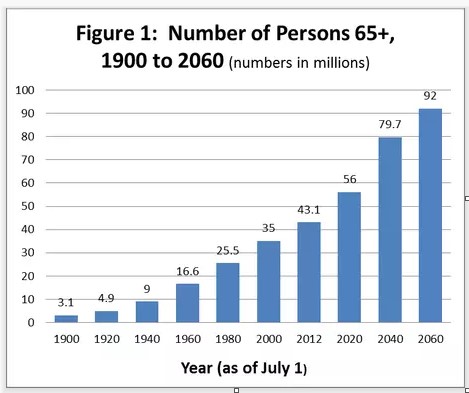
֎ Has the human genome changed in 20,000 years? Does evolution ever stop? A branch of zoology has become popular: Scientists are tracing behavioral and genetic modifications of all kinds of creatures as the creatures adapt (or die) to global warming. Are humans adapting? On average, humans live thirty years longer than they did in 1900. One could argue that medicine and modern industry, e.g., air conditioning, are not necessarily genetic – after all, our Neolithic ancestors built huts. The scientists may counter that living longer by itself induces genetic adaptations in human behavior and survival. Did our forefathers experience dementia? Would they have if they did live longer? What would the Continental Congress change if they saw this chart?
Aside from the fact that our chromosomes stop reproducing, thereby making death inevitable, humans have one characteristic that no other creature has: humans can change the environment. Think about the impact of changing nature. Opossums can’t do that, nor Monarch butterflies. If another ice age came, would we evolve with a hide and have a different fat structure under our skin or would we ask Amazon to send us a furnace?

Mariner has wondered whether a hunter gatherer could sit still for four hours like we can when we watch television. Perhaps today’s humans are different.

Ancient Mariner
All over again

We live in a time of change, no doubt about it. Not just the normal change between generations or the systemic changes brought on by cyclical weather eras or the changes in economics brought on by political shifts. Today it is a time of change commensurate with the first time, about 15,000 years ago, when humans discovered economic trade and the political advantages that went with it; nomadic cultures quickly disappeared.

Today is a time of change commensurate with the technology of the printing press when, for the first time, ideas and history were available to the common citizen, not exclusive only to the tiny elite of theorists and theologists. At a time when the Americas were discovered, the Great Awakening, the Reformation, and the Industrial Revolution rapidly emerged and changed human life around the world.

Today is a time of change commensurate with the invention of the internal combustion engine in a global moment when natural resources were unlimited – allowing global trade and global warfare, and the quick dissipation of tribalism replaced by a new wave of politics called colonialism.

Today, computer-based communication replaces the printing press; today, advances in travel, technology and economics have released a new age of exploration – not across the oceans but from the Northern Hemisphere to the Southern Hemisphere.

Today, global politics enters a new age when nationalism will be replaced by corporatism.

Today, an uncontrolled warming of the planet replaces cyclical weather eras.

Today, the number of humans on the planet exceeds the limits of the planet’s environment.

Today, the era of European white dominance will shift to a non-white majority, leaving the United States in a disadvantaged position because of its intense racism.

One wonders what the next era of change will look like, starting all over again.

Ancient Mariner

Regarding the Apocalypse


Mariner’s alter ego Guru, responsible for wide ranging philosophical and futuristic insights, claimed in a recent post that the Apocalypse already has begun. There have been queries about definition.

From his safe house in Chicken Little’s hen house, mariner will lay out the timeline implied by Guru.

It all began innocently 2 million years ago when a new species evolved that had a growing brain. The species was Homo. 1 million years ago, Homo began splitting into variations. Many failed to sustain themselves and became extinct but a few with names like Neanderthal, Habilis, Australopithecus and Erectus survived into the age of humans. Together they would become Homo sapiens.

In those days, Homo had no choice but to live within the natural confines of their habitat. Living a plenteous life in an agreeable environment, a typical lifespan was about 40 years. Homo’s predators were meat eaters, infections and serious injury.

These characteristics are similar to the few indigenous tribes that still exist in remote areas of Africa and South America. These tribes to this day sustain themselves only with the restorative resources their environment provides.

About 10,000 years ago, Homo discovered how to grow more grain than he needed, hence the beginning of commerce by acquiring more grain than would be consumed by a local tribe. In a subtle way, this is the first abuse of the natural relationship between Homo and the environment.

Centuries roll by and Homo learns more ways to consume the environment beyond his natural relationship with nature. Homo extracted from nature other creatures like donkeys, horses, and wolves that would help expand the ability to acquire excessive amounts of Nature’s resources. Then Homo discovered iron, tin, lead and carbon-based energy. Now Homo could consume many times his need from Nature. Homo was consuming Nature faster than Nature could replenish itself.

This imbalance was the seed that has grown into the apocalypse we have today.

After I million years of living in accordance with the rules of Nature, in the last 1,000 years, Homo has trashed Nature; Homo has trashed the basic tribal society; Homo has trashed multiple generations that cohabit as a protective wall against difficult times. Homo quickly learned to ignore Nature and lived by the rule ‘If you can do it, do it’. He developed elaborate tools which, at every step, diminished the evolutionary potential of every Homo. For example, the use of coal and gasoline in the last 150 years has destroyed the security provided by extended family and tribe (town economy). Its method was to produce trains, automobiles, mechanized, oversized farms, superhighways and national and globally based industries.

In just 150 years the apocalypse gained speed. Isolated nuclear families became the norm – left defenseless without the human support of multiple generations and tribal support. Giant corporations became the norm, slowly eliminating local economies, local jobs and the existential satisfaction found in smaller towns and cities.

In the last 175 years, the apocalypse has shifted into a higher gear. 16,000 species are extinct because of Homo indifference. Around the world potable water is becoming scarce. Seafood from the oceans is 20 percent of what it was 100 years ago. And obviously the excess use of fossil fuel has launched serious changes in air quality and of the planet generally.

But in this century the chains are off. What easy transportation did to tribes, the Internet is doing to society. Communication technology makes war easier and more horrific; interpersonal skills and rewards are replaced by artificial behavior that dismisses 1 million years of evolutionary sophistication; privacy and security are fallacious assumptions.

Now a new age is upon us: artificial intelligence (AI). AI can emulate the entire reality of Homo. The final bridge to the apocalypse is that AI can reproduce itself. Who needs Homo?

Ancient Mariner


Check the sky – is it falling?

Mariner allowed Guru to offer a spontaneous thought about the state of things. Guru said, “Armageddon isn’t going to happen because there won’t be enough souls around for Jesus to bother coming back. However, the Apocalypse already has begun.”

Mariner has built a small apartment in Chicken Little’s hen house. He’ll be living there now. Amos has been put on leave.

Book to read: “Brief Answers to the Big Questions” by Stephen Hawking published 2018. Stephen Hawking is beyond reproach as one of history’s premiere theoretical physicists; he picked up where Einstein left off. He answers questions like:

Is there a God?

How did it all begin?

Will artificial intelligence outsmart us?

Will we survive on Earth?

And six other questions.

If the reader needs me, check the hen house.

Ancient Mariner

About Fabric

Has the reader noticed that among cloth generally, there are many different fabrics? Each has a unique feel to it. For example, one can clearly tell the difference between silk and denim, or suede and wool, or nylon and hemp. What if, in fact, all cloth felt the same? Would that not really matter? Cloth is cloth and it’s the fashion that is important; it’s usability for whatever; it’s the style that counts; it’s what is popular that matters more.

In virtually every fiction book and film where mariner has observed ‘the future of mankind’, the plot is about humans becoming nondescript, that is, the fabric of life changes. It happens in a piecemeal way. Consider what effect the internal combustion engine had on daily society: Towns no longer had to be only twenty miles apart because that was the limit of a day’s horse ride; agriculture shifted from local market to national market; shared resources among large, stationary families shifted to independent career income no longer bound to the home town or the family.

Even the fabric of riverside cities changed from river shipping to rail, leaving dozens of river towns with dwindling resources. Today local business, the enjoyment of life, the vitality of society is a pale remembrance. Perhaps it could be said these towns lost their fabric.

Readers will quickly challenge loss of fabric versus endless increases in the economy, freedom of new life opportunities, better health services, etc. After all, it’s not about fabric, it’s usability, fashion and style that counts.

Several months ago he read a book, ‘The Way Home – tales from a life without technology’ by Mark Boyle. It is an accounting of Boyle, an economist, who deliberately spent three years without money – zero dollars. The only economy he had was what he could muster with his own hands. What gave him the idea to retreat from industrial society was that he was aware of what it took to pump a glass of water from the ground; it required steel, copper, plastic, dams and endless pipelines including what to do with wastewater. It wasn’t about Mark Boyle being thirsty nor was it about any other individual being thirsty. Individuals were nothing more than a device used to discharge water from a very large, self-important industry.

His key discovery was that the farther away a human is from his core, natural environment, the more damage is done to that environment. His second discovery was that the few families that were close enough to his cabin to interact, were genuinely friendly and willing to help Boyle survive in his stark environment. He and his few neighbors came first instead of last. They had human fabric.

For more philosophical insight into the idea that humans are at the center of life, not abusive corporate trashing of the biosphere, read Gandhi.

Ancient Mariner


Does anyone have a plot line?


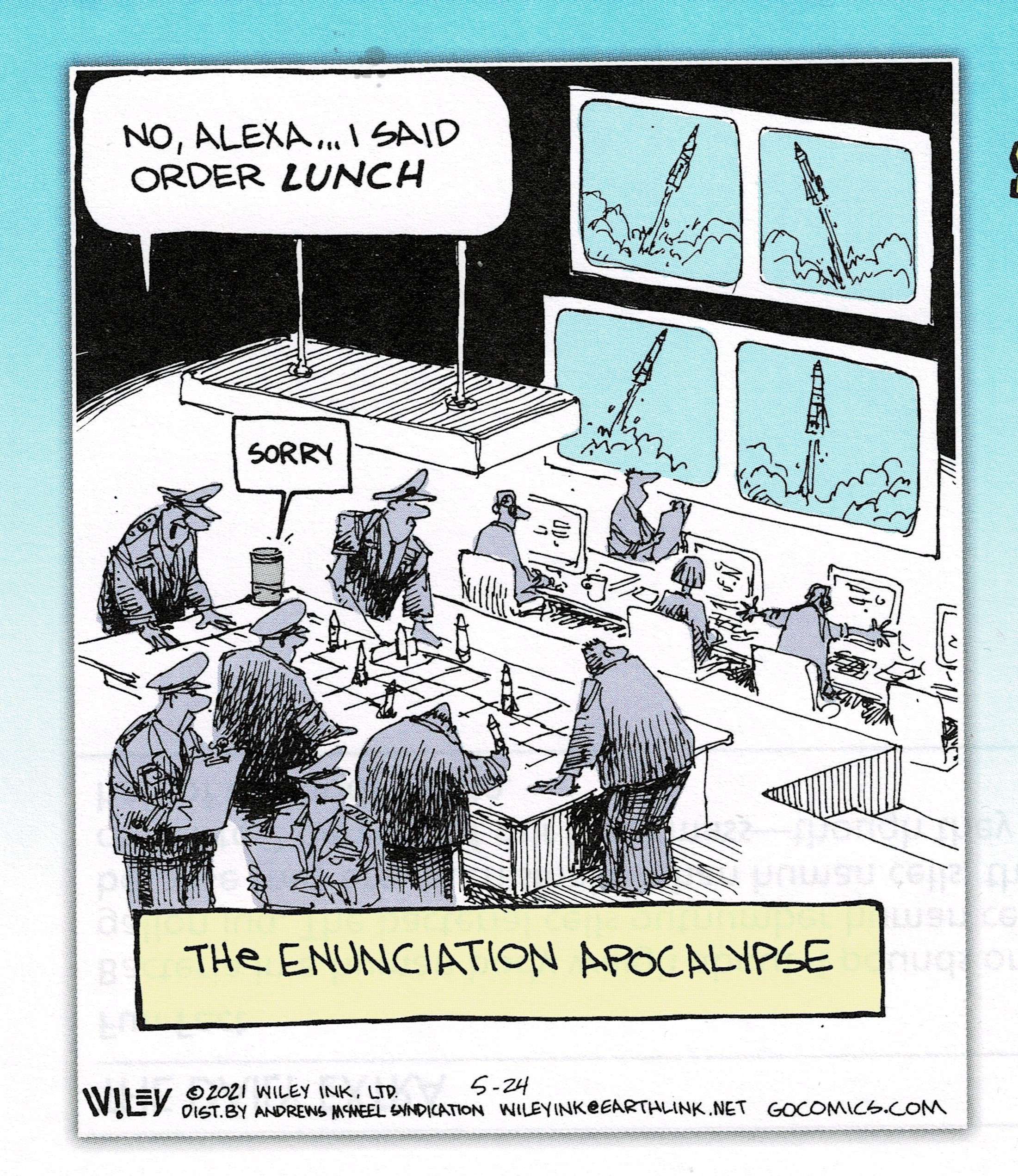
By Wiley:

Is it possible that our eager scientists are consumed by the phrase, “I do it because I can”? Is Homo sapiens ready for an automated lifestyle? Is the biosphere ready for Homo sapiens to have an automated lifestyle?

Scientists have created Xenobots, computer cells that can reproduce. Even Steven Hawking predicted this will be the demise of humanity.

Over the millennia, humans have learned to adapt to significant changes in the biosphere status quo; everything from ice ages to rocket ships and nuclear bombs. But each epoch was singular – just one at a time.

It isn’t the same today. There is AI, collapsing nationalism, global warming, social abuse, over-population and the waning of Adam Smith economics.

Can we Homos handle it?

Ancient Mariner

Phonemes

For most readers, this is a new word. Roughly speaking, it means the set of sounds in a language. We are accustomed to using written letters to organize our language into words, grammar and the expression of meaning. But there are other ways of organizing a language: by its sounds, not its letters. For example, the ‘c’ in the word ‘cool’ is the same sound as the letter ‘k’ in ‘leek’. Though different letters, they are the same sound – just one sound in a phoneme ‘alphabet’.

Yes, this topic is extremely esoteric, Mariner is attracted to any topic that has to do with hearing and speaking. The marvel of science that could make a scientist the richest man in the world would be to emulate the mechanics of hearing.

His experience with hearing aids is subpar. It seems that trying to convert sound waves into human speech is flawed. Every human listening system is slightly different because brains are different, bone structure is different, language expectations are different (budder in the US is the same word as buTTa in England or ‘sar’ in Massachusetts versus ‘saw’ in the rest of the US. Mariner’s pleasing favorite is anything Fats Domino says; mariner’s favorites are ‘haut’ for ‘heart’ and the permanent replacement of a short ĭ with a long ē – My haut stood steel on Blueberry Heel).

He has noticed that in general practice, there is a human who translates sounds between two incommunicable groups – either a translator of language or a converter changing sounds to hand gestures. Hearing aids don’t have translators; they only hear sound waves without intelligent interpretation.

Perhaps hearing aids should have a phoneme lexicon built in. Computer storage can store a sound value on an atom these days. Why not build a phonemic dictionary into hearing aids; adaptability to parochial sounds could be as rapid as human listening.

Here is the difficulty: Phonemes are categories rather than actual sounds, they are not tangible things; instead, they are abstract, theoretical types or groups that are only psychologically real. (In other words, we cannot hear phonemes, but we assume they exist because of how the sounds in languages create a pattern.) For example, the word ‘kicked’ has two ‘k’ sounds but they are not identical. The first k is clearly thrust from the throat and the second k is a collaboration between the tongue and the roof of the mouth.

Nevertheless, mariner feels there must be some form of phonemic intelligence incorporated into hearing aids.

Ancient Mariner

You know what I mean

Mariner is an old codger. The wiring between his brain and his mouth is damaged. Consequently, he cannot recall words, especially nouns and names of things if the mouth is asking for them – the brain knows but won’t tell until five minutes later when he doesn’t need the word anymore. On the other hand, when he is typing, he has almost his entire lexicon at hand; words fall in as needed and he can manipulate meanings with unending suffixes and metaphors.

It doesn’t help that mariner can’t hear other people’s words, either. He wears hearing aids.

Mariner was poking around on the Internet looking for information about his issue. He was familiar with the general explorations of language as a deep survival skill and as a social skill as well. Just as with whales and many birds, humans have a brain that, when as young toddlers, the brain is quite adept at associating meaning with a given sound.

The following two paragraphs are from science journals. The topic is about the anatomical science of hearing and its chemical processes.

The investigation of organometallic compounds containing unsupported homoatomic metal-metal (M-M) bonds has been an area of major interest for decades. These compounds feature distinct, otherwise inaccessible bonding, such as M-M quadruple and quintuple bonds, and fascinating reactivity, including mimicking the reactions of C-C multiple bonds. Ultimately, the main driver for research in this area is to push the boundaries of bonding for a given element and, in doing so, rewrite the textbooks. On page 1147 of this issue, Boronski et al. (1) report the isolation of diberyllocene as the latest entrant in the field. Diberyllocene is a stable Be-Be bonded compound and is a relatively accessible source of nucleophilic beryllium, which has the potential to unlock the reactivity of organoberyllium with a vast array of new substrates.

Astrocytes are intimately associated with neurons and participate in a host of essential roles that facilitate synaptic transmission and circuit function. In neurons, heightened activity induces the expression of “immediate early genes,” which are predominately transcription factors that modify gene expression programs and activity-dependent epigenomic states, ultimately regulating circuit activity, plasticity, and associated behavioral outputs. However, whether heightened neuronal activity induces an analogous immediate early gene–like response in mature astrocytes and how this sculpts astrocytic transcriptional and epigenomic responses to regulate circuit function remain unclear.

Isn’t knowledge wonderful?

Ancient Mariner

Amos and Worster

Mariner was questioned “Who is Amos?” referring to the mention of that name in the last post. Mariner apologizes for having an empty page under the Heading ‘About the Author’ which has been blank for several months. Somehow, it was deleted.

Just a short precis of its contents: Mariner writes his post with the aid of three alter egos: Chicken Little, named for his namesake who thought the sky was falling and always assumed the worst in any situation; Amos, named for his namesake from the Book of Amos in the Old Testament who with earnestness chastised the religious authority of his time until he was assassinated; Guru, named for his namesake in the comic section of the newspapers who is preoccupied with esoteric, intensely intellectual theories of no relevance. Thus, mariner’s posts are assured of clarity, facts, and a comprehensive view of the world.

On to today’s post.

Having read Donald Worster’s book, The Wealth of Nature, mariner has given some thought to Worster’s hope that global society, perhaps through the absence of potable water, perhaps social conflict that collapses global economies, even perhaps the result of nuclear war, it may be that in order to survive, humans will have to return to a respectful relationship with a sparse environment.

Instead of sending humanity down the bottomless hole of AI, imagine that Mother Nature has an equal force on society. Season the next fifty years with the spice of the Maga movement and similar movements across Africa and the Middle East, the growing stress from free-ranging oligarchy, the demise of Ukraine, a collapse of world security by disrupting the Internet, then stir back in the destructive powers of an uncontrolled weather system, impending solar activity and little if any arable land.

Would this concoction be enough to create a throwback in human history? Could humanity be forced to become a member of the Earth’s ecosystem without fossil fuel? Such reversing phenomena have occurred many times as Planet Earth evolved. Consider the restart of the animal kingdom 65 million years ago (at the end of the Cretaceous Period).

By 2100 might it be important to protect arable land for individual survival? Will everyone have to own a couple of ponies?

Ancient Mariner

Pick your worries

There must be dozens of worries from which to choose. Perhaps start with some of the big ones: A failing democracy, the collapse of religion, war with China, Trump becomes President, Social Security gets chopped, housing for normal Americans gets worse, Health industry collapses, public schools can’t educate anymore.

Mariner opts for the war with Mother Earth – global warming/climate change. The time is approaching when all the other worries will disappear because of extreme disruption to global economics, agriculture, viable living zones and human migration on a scale that has never been experienced. Governments will not be able to pay for wars, although groups of rebels around the world will cause as much destruction. Plutocracy will worsen then collapse as The US runs short on funding.

ProPublica, a much awarded and exceptional news company, published a report titled, “Climate Crisis Is on Track to Push One-Third of Humanity Out of Its Most Livable Environment”. One paragraph is presented below:

“The notion of a climate niche is based on work the researchers first published in the Proceedings of the National Academy of Sciences in 2020, which established that for the past 6,000 years humans have gravitated toward a narrow range of temperatures and precipitation levels that supported agriculture and, later, economic growth. That study warned that warming would make those conditions elusive for growing segments of humankind and found that while just 1% of the earth’s surface is now intolerably hot, nearly 20% could be by 2070.”

 Add to that thought rising oceans wiping out the viability of dozens of nations, even making large areas of land become flooded or submerged. Current tax structures will be changed dramatically as the United States begins to feel social and economic pressures that remind us of World War II America. In the 1930s and 40s, the tax philosophy was to tax the rich so the poor would not have to underwrite government expenses. FDR, for example, put a 100 percent tax on income over $25,000 (about $500,000 today).

One wonders whether the new facemask telephones will matter even though they are one step closer to Matrix reality. The world’s environment is up in arms and that will dictate our pleasures. Can Alexa and Siri keep up?

Ancient Mariner