Caution – Philosophical Subject: May be Boring

The mariner is not a sage pol. The mariner is neither democrat nor republican. He will concede that sometimes his political philosophy appears socialistic – but not like Bernie or Robert Owen or Albert Einstein or Bertrand Russell. It is true that socialism is driven by an idea centered on universal equality and assured fairness. However, socialism is a humanist philosophy.

Perhaps the mariner is a Universalist, that is, a believer in the natural law of the universe. It was Socrates and his progeny Plato who determined natural law.

We live in an orderly universe. At the base of this orderly universe or nature are the forms, most fundamentally the Form of the Good, which Plato describes as “the brightest region of Being”. The Form of the Good is the cause of all things and when it is seen it leads a person to act wisely. In the Symposium, the Good is closely identified with the Beautiful. Also in the Symposium, Plato describes how the experience of the Beautiful by Socrates enables him to resist the temptations of wealth and sex. In the Republic, the ideal community is, “…a city which would be established in accordance with nature.”

“The Form of the Good” is the foundation of every religion’s ethical framework. Ancient Buddhist writings described The Form of the Good to be a sensation generated within the brain. As mentioned in the previous paragraph, Plato further described a sensation of unity with the universe. In modern times, Joseph Campbell describes The Form of the Good as a transcendent experience where one’s state of Being escapes duality[1] to be at one with the universe. In Christianity this experience is simultaneous with death and passing out of this dimensional world.

The mariner extends humanist philosophy to include environmental respect and equality. The universe, by any definition – from stars and planets to any indigenous existence including weather, planetary forces, biomes and creatures – is part of the universe and is granted equal influence in Homo sapiens’ unity with the universe via The Form of the Good.

Ancient Mariner

[1] See yin yang and western definitions at https://en.wikipedia.org/wiki/Dialectical_monism#Principles

CYBELE

There was enough curiosity about Cybele: What is it? Who is it? How do you say it? Why is it a holiday?…. The mariner decided to do an old fashioned treatise about Cybele as a way to cover all the questions. First information: Cybele is pronounced like the last two syllables in “possibly” with an added but diminished “uh” inbetween, SIB’uh lee.

There was a period of time from about 7500 BCE until 4000 BCE when human civilization began to show signs of organized thought, that is, something that looked like it may be perception beyond naturalism, perception beyond anthropomorphism. The first challenge to be answered was, “Where did all these people come from?” “How did they get here?” Without science, the only answers were myths.

The earliest religions evolved from these primitive myths to be followed by modern western religions that emerged from about 550 BCE until 500 CE. It is interesting to note how similar, even today, the rites, holidays, theologies, behaviors and celebrations continue.

Cybele ˈsɪbᵻliː/Sib’uh-lee /Phrygian_language “Phrygian Matarubileya/Kubeleya (“Kubeleyan Mother”, perhaps “Mountain Mother”). She is Phrygia’s only known goddess, and probably was its only state deity. Cybele represented nature, weather, seasons – all things environmental, including procreation.

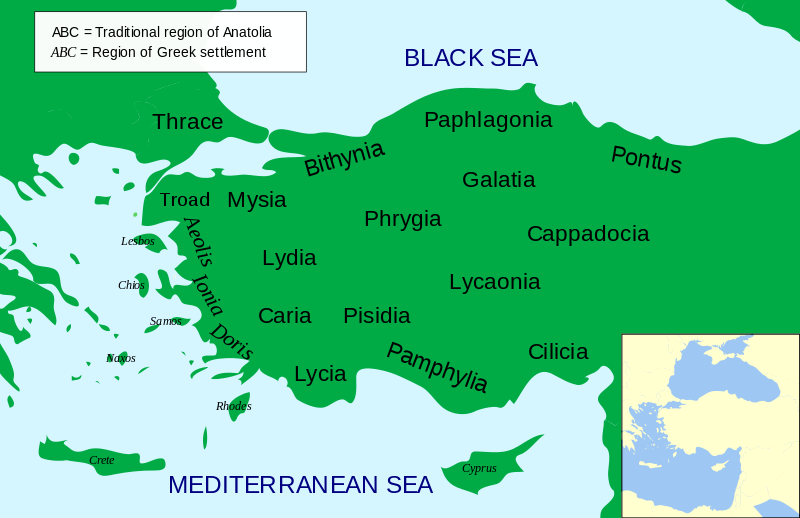
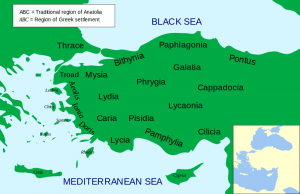
In antiquity, c6000 BCE, Phrygia was a kingdom in the west central part of Anatolia, in what is now Turkey, centered on the Sakarya River. Phrygia was a region of Anatolia whose people spoke Phrygian. Its main cities included Ancyra and Gordium. Phrygia included the Troad, whose main city was Troy. The early Phrygians were fishermen; Phrygia gained prominence only after the 8th century BCE during the Hellenistic period, when the area was settled by Gallic Galatians and renamed Galatia.
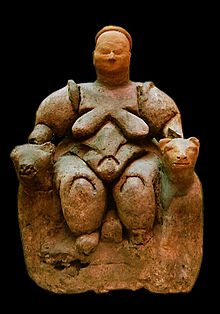
6000bc Cybele
Photograph. Seated Mother Goddess of Çatal Hüyük: the head is a restoration. The Seated Woman of Çatalhöyük (also Çatal Hüyük) is a baked-clay, nude female form, seated between feline-headed arm-rests. It is generally thought to depict a corpulent and fertile Mother Goddess in the process of giving birth. Cybele may have evolved from an Anatolian Mother Goddess of a type found at Çatalhöyük, dated to the 6th millennium BCE.


MYTH
According to myth, Cybele loved a shepherd named Attis. Because Attis was unfaithful, she drove him insane. Overcome by madness, Attis castrated himself and died. This drove Cybele into great mourning, and it introduced death into the natural world. But then Cybele restored Attis to life, an event that also brought the world of nature back to life.

Attis’s return to life took the form of his being changed into an evergreen tree – the basic idea underlying the myth is the annual vegetation cycle in spring when nature comes to life. Eventually, the Attis myth became an annual event in which worshipers shared in Attis’s “immortality.” Each spring the followers of Cybele would mourn for the dead Attis in acts of fasting and flagellation. By 300 CE, the Romans had Romanized Cybele, now mother of all gods, into a lavish celebration of eating and merriment (Does the reader recognize the word ‘celebration, celebrity’ from the Latin ‘celebrare’ or the name Sybyl, varients: Sybil, Cybil, Sibil; Sybella from Greek Sibulla”Σιβυλλα (Sibylla), meaning “prophetess”? And ‘sibling’ – archaic ‘god sibling’ transforming to Goddaughter and Godson?)

FESTIVALS AND CULTS

Festivals and cults in this document are limited to common practices in order to shorten the document and to clarify relationships to other modern practices. Christian similarities are noted. Throughout early centuries, Cybele was a Goddess in Anatopia (sixth century BCE) and was adopted by Phrygia and Greece (sixth century BCE), and Rome (218 to 201 BCE when Rome officially adopted her cult during the Second Punic War after dire prodigies, including a meteor shower, a failed harvest and famine seemed to warn of Rome’s imminent defeat).

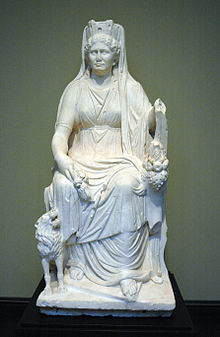
In Greece, as in Phrygia, she was a “Mistress of animals” with her mastery of the natural world expressed by the lions that flank her, sit in her lap or draw her chariot. After a short period of time in Rome, Cybele’s origin was reinterpreted as Magna Mater (“Great Mother”). The Roman State adopted and developed a particular form of her cult after the sibyline oracle recommended her conscription as a key religious component in Rome’s second war against Carthage. Cybele’s Roman mythographers reinvented her as a Trojan goddess, and thus an ancestral goddess of the Roman people by way of the Trojan prince Aeneas. With Rome’s eventual hegemony over the Mediterranean world, Romanized forms of Cybele’s role spread throughout the Roman Empire. Cybele’s special holiday was Megalisia.220px-Cybele_Getty_Villa_57_AA_19
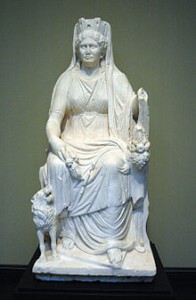
Photograph. Cybele enthroned, with lion, cornucopia and Mural crown. Roman marble, c. 50 CE.

The role of Cybele exists today, especially in the Holy Roman Catholic Church, as Mary, Mother of God. In particular the Eastern Orthodox, Oriental Orthodox, and Eastern Catholic Church, Mary plays a more active role in liturgy. Its literal English translations include “God-bearer”, “Birth-Giver of God” and “the one who gives birth to God.” Less accurate translations include the primarily Western title “Mother of God” (Latin: Mater Dei). One of the more serious debates at the Nicene Council in 325 CE was whether God was the ultimate creator (as in definitions of the Trinity) or, because God and Jesus were of one spirit and Jesus was of human form, it follows that a human had to create God (Greek term: Theotókos.) The Trinity interpretation prevailed. The mariner speculates that at the Nicene Council, Christianity became a wholly paternalistic religion. From the book by Alice Lucy Trent: “….overwhelming historical evidence that the world’s earliest civilizations (covering the vast majority of earth’s history) were feminine in orientation, religious, social, and political.” Just as with the Roman Empire, Cybele was reduced in power from creating all things to one of significant recognition as Mother of Gods but not as the creator of all things. Until the Nicene Conference, Mary, AKA Cybele, had a role similar to the Iroquois Confederacy (American Indian’s creator Mother Earth plus female dominance in daily culture); in Sumatra, Minangkabau view women as the foundation of life and, therefore, the foundation of the entire social order.

[[ Cybele can be considered an influence on both the Old Testament and the New Testament and seasonal Christian rituals because Roman versions of rituals, including Cybele’s, were practiced in the Middle East at the same time that early New Testament documents were written. Further, on his second visit, around 50 CE, Paul spent three years proselytizing in Antioch and other large cities. It was in Antioch that the term “Christian” is used for the first time.

It may be serendipitous to the future of Christianity that Greeks, Jews, and Assyrian Semites – who still reflected Anatolian culture – had large populations in western Turkey and southern Greece during the Roman Empire; Rome contributed a common government and a common cultural perspective and a governance model referencing citizens, senators, Trumpian emperors and employed illegal immigrants also known as slaves. The Roman style of government still dominates the western world; the mix of common ancient mythologies, Indo-European language, familiarity with rituals about Greek and Roman gods, Judaism – all of which evolved from Anatolian culture – virtually mandated that Christianity would move to the west and reflect similar celebratory styles. The Holy Roman Catholic Church still reflects a mythological model similar to the Pantheon.

One can’t help but find similarities across the centuries. For example, the introduction of death by Cybele and eating the forbidden fruit in Genisus 3; mourn for the dead Attis in acts of fasting and flagellation around Easter dates AKA asking forgiveness and rebirth and the season of Lent; the celebration of spring through all the ages has been present in some form from early Antonian castrations to Roman high-dollar orgies; the female role of creating life and managing nature is similar to the Iroquois Confederacy that was not on the path of religion in the Middle East; the strong gravitation throughout of celebrating the seasons by associating them with early myths; finally, the similar requirement between Judism (Moses) Islam, (Mohammed), Christianity (Jesus), and Buddhism (Siddhārtha Gautama), to have an intermediary between man and God ]]

Looking back in the abstract, Cybele was the most influential “person” in Assyria, Greece, the Hittite Empire, Israel and intermediaries who lived on a truly fertile crescent. It is the same geography where humans first invented economic farming; it is the same geography and culture that produced Jesus, Mohammed and not far away, Buddha. Only a friendly, quite abundant Mother Nature would give Homo sapiens the time and energy to create a new iron age, farming, and three new religions.
Thanks to Cybele.

Location of Phrygia, Anatolia, Greece.
800px-Map_Anatolia_ancient_regions-en_svg

Ancient Mariner


Happiness Is

Reader Marty, who downloaded the Happiness report, replied to the post, Theodicy and Secularism –

“I thought it was interesting that the Dalai Lama said that we cannot count on religion as the basis for our ethics, since the people of the world cannot agree on one religion–and many don’t believe in any religion at all. (This was in the UN World Happiness Report.) The Dalai Lama said that we need a secular ethics. The World Happiness Report suggested a secular ethics based on the Greatest Happiness Principle. I think the UN has made a great start in the Universal Declaration of Human Rights. We have the plan already in place, if only we would follow it. Ha! Isn’t that always the problem!”

In concert with Marty’s response and in acknowledgement of how important, how critical this concept is, the mariner has reproduced verbatim that portion of the Happiness Report that explains the happiness principle. Further, two other recent posts have focused on this subject. See: Where is our Light? and Sailing One’s Own Ship in a Tumultuous World.

The Greatest Happiness Principle

So, first, what ethical idea based on human need can best fill the moral vacuum left by the decline of religious belief? The answer must surely be the great central idea of the 18th century Anglo-Saxon Enlightenment on which much of modern Western civilisation is based. This can be expressed in three propositions.

 We should assess human progress by the extent to which people are enjoying their lives—by the prevalence of happiness and, conversely, the absence of misery.

 Therefore, the objective of governments should be to create conditions for the greatest possible happiness and the least possible misery. As Thomas Jefferson put it, “The care of human life and happiness … is the only legitimate object of good government”.

 Likewise the obligation of each of us is to create the greatest amount of human happiness that we can in the world and the least misery. (Overall happiness of course includes our own.) And in all of this it is more important to reduce unhappiness (or misery) than to increase the happiness of those who are already higher up the scale.

These three propositions are what may be called the “greatest happiness principle”. It was Proposition 1 which inspired many organisations, like the OECD, the EU and many governments, to reassess their answer to the question: what is progress? And it was Propositions 1 and 2 which have mainly inspired the production of successive World Happiness Reports – our hope has been to display enough of the new science of happiness to enable policy-makers to make happiness a practical goal of policy.

But it is Proposition 3 that we wish to promote in this chapter, because we believe it should be the central principle which inspires those billions worldwide for whom religion no longer provides the answer to how we should live.

The principle is frequently misunderstood. For example, it does not assume that people are only concerned about their own happiness. On the contrary, if people only pursued their own happiness, this would not produce a very happy society. Instead the greatest happiness principle exhorts us to care passionately about the happiness of others. It is only if we do so that true progress (as we have defined it) can occur.

But what is so special about happiness? Why not judge our progress by our wealth or our freedom or our health or education, and not just our happiness? Clearly many things are good. But different goods are often in competition. My spending more on health may mean spending less on education. Or wealth-creation may require some limitations on freedom. So we have to ask why different things are good? And in most cases we can give sensible answers. For example, ‘Wealth makes people feel good’ or ‘Ill health makes people feel bad.’ But if we ask why it matters how people feel—why happiness is good—we can give no answer. It is just self-evident. So happiness is revealed as the overarching good, and other goods obtain their goodness from the fact that they contribute to happiness. And that is why an “impartial spectator” would judge a state of human affairs by the happiness of the people.

The greatest happiness principle has a universal appeal. It has the capacity to inspire, by mobilizing the benevolent part of every human being. In the language of Jews, Christians and Muslims, it embodies the commandment to Do as you would be done by, and to Love your neighbor as yourself. In the language of Hinduism and Buddhism, it embodies the principle of compassion—that we should in all our dealings truly wish for the happiness of all of those we can affect, and we should cultivate in ourselves an attitude of unconditional benevolence….

….In this context, an ethical system that favours not only others’ happiness but also our own has a much better chance of being implemented than one that is pure hair-shirt. It is therefore a huge advantage of the greatest happiness principle that it requires self-compassion as well as compassion towards others.

Reprinted from Chapter 3: Promoting Secular Ethics, Fourth World Happiness Report 2016 in behalf of the United Nations.

REFERENCE SECTION

It behooves the reader to read the Universal Declaration of Human Rights mentioned in Marty’s reply, see: http://www.un.org/en/universal-declaration-human-rights/index.html

To see the World Happiness report, http://worldhappiness.report/ for a free download or purchase a printed copy at: https://shop.un.org/search/Universal%20Happiness%20report  $17+shipping.

Ancient Mariner

Theodicy and Secularism

Theodicy is a philosophy organized and documented by Saint Augustine of Hippo (354-430CE). Theodicy addresses specifically the question: “If God is good, loves all things and created all things, why is there evil in the world? Either God also created evil and therefore is not good and loving, or God does not exist.” Theodicy is a defense of God’s perfection in light of the existence of evil.

The question itself was asked as early as Plato and was posited as a reason for nominalism[1] by William of Occam, famous for Occam’s Razor. Bertram Russell, a famous British agnostic, mathematical theorist and inquisitor at large, presented the following thought experiment in an article titled, “Is there a God?”

“If I were to suggest that between the Earth and Mars there is a china teapot revolving about the sun in an elliptical orbit, nobody would be able to disprove my assertion provided I were careful to add that the teapot is too small to be revealed even by our most powerful telescopes.

But if I were to go on to say that, since my assertion cannot be disproved, it is an intolerable presumption on the part of human reason to doubt it, I should rightly be thought to be talking nonsense.

If, however, the existence of such a teapot were affirmed in ancient books, taught as the sacred truth every Sunday, and instilled into the minds of children at school, hesitation to believe in its existence would become a mark of eccentricity and entitle the doubter to the attentions of the psychiatrist in an enlightened age or of the Inquisitor in an earlier time.”

“The existence of this teapot cannot be disproved. We can look and scan the skies almost for eternity, and it may always just be the case that it wasn’t in the place we looked – there may be another spot we’ve overlooked, or it may have moved while we were looking. However, given the absurd nature of the specific example, the teapot, we would rightly infer that absence of evidence is evidence of absence. Russell’s audacity in the thought experiment was to question why people don’t like to apply the same, sound, logic … to the existence of any particular deity; there is no difference in the evidence base provided, therefore there is no reason to assume a God and not a celestial teapot.[2]

Theodicy addresses these logical challenges to deism – the belief in a supreme god. Saint Augustine, simply, said that God is perfectly good. It was God who created the world and the universe out of nothing and that evil is a byproduct of humanity’s sin. Evil is the punishment for original sin[3]. Augustine states that continued sin is created by human free will, an attribute made possible by eating fruit from the tree of knowledge. God remains whole and not responsible for sin and suffering.

  • – – –

During the nineteenth and twentieth centuries, secularism[4] emerged as a broadly accepted philosophy. Secularism is different than agnostic or atheistic philosophies which require, more or less, theistic presumptions. Secularism has ethics derived from humanism, pragmatism, and anthropological reasoning. Secularism is a self-contained life experience where the existence or non-existence of God does not matter.

Augustine (and many other theologians) would consider secularism sin. In religious context, God is the source of goodness and love – elements that are not necessary in secularism. Secularism is founded in vanity and self aggrandizement. The original question about the existence of God is replaced by the question, “What is good?” Humans tend to answer this question in terms of convenience and privilege for the self, the community or the nation – whatever works best – especially for the individual.

It is obvious already that great questions confront humanity in the twenty-first century. Human culture is yanked back and forth by new technologies, new scientific frontiers, abuse of the planet, power shifts in national supremacy, and even the existence of humanity itself. Some will argue that only secularism will allow the best decisions to be made in the future; others will argue that, despite the vagaries of the future, the belief in a superior force – one that predefines what is good – is our only rudder.

We shall see.

Ancient Mariner

  1. [1] Oxford Dictionary: “the doctrine that universals or general ideas are mere names without any corresponding reality, and that only particular objects exist; properties, numbers, and sets are thought of as merely features of the way of considering the things that exist. Important in medieval scholastic thought, nominalism is associated particularly with William of Occam. Often contrasted with realism.

[2]See: http://rationalwiki.org/wiki/Russell’s_Teapot

[3] Old Testament, Genesis 3.

[4] Merriam –Webster Secularism: indifference to or rejection of religion and religious considerations.

Faith, Feelings, Fellowship

The mariner has often commented that the comic strips are the most important part of the newspaper; he reads them first. Often, whether the reader is aware or not, an underlying reflection is triggered in the brain – evading every protective or judgmental barrier – to provoke contemplation.

Mariner has written many articles and posts that often put him at odds with his local congregation and friends. Often, it is the mariner’s use of the term “pew Christians.” It is a term implying that the Lord’s work is needed away from the pew. The term also signifies that the Church doctrine has displaced personal commitment to the works of Jesus with the priorities of managing a building, budget and charitable giving.

The mariner accepts the cultural forces that focus on the physical and personal experience provided by ecclesiastical practices; we all need rejuvenation and the role of the church as a focus on moral and spiritual behavior. But…Jesus never had a church, to oversimplify.

The mariner was provoked to write this post by a comic strip:

Zits-feelings-1

Very few pew Christians are comfortable focusing their faith and works out in the community – especially engaging personally with those in need. Many parishioners belong to their church first to have fellowship and second to feel that they are responsible citizens supporting a higher calling. The idea that the parishioners are called by Jesus to be among the needy, the morally lost, and the forgotten, is not a requisite. Charitable giving from a distance is acceptable but no ‘feelings,’ please – just gifts.

One need not be a biblical scholar; the two great commandments cover the subject. God does not find the parishioner – the parishioner must find God and love that relationship ‘with all one’s heart, mind, and strength.’ Further, the parishioner cannot practice elitism, vanity, prejudice or pride. It has always been difficult to be a Christian.

In this era of significant change to culture, politics, economics, and religion, the local church is under great pressure to modify its practices. There is a barrier to changing the ecclesiastical paradigm; the pew-based worship of the Trinity is the way it has always been. Whole generations have grown up and passed on who were committed to the local church and its role in the sacraments. The fellowship and gratification of belonging still is an important role for the church and will always be so. But it is time to change the manner in which church-goers execute their commitment to the Trinity.

W. Edwards Deming, a renowned economist and an influential writer about change in business and any organization undergoing change, said that a paradigm shift (changing the model of practice) cannot be created within the old paradigm. It requires a new energy, a different approach, and different priorities – to which the old paradigm is incapable of morphing. History has proven Deming correct. This does not bode well for pew-based churches.

The American culture – politics and all – is moving toward a populist ethic. This transition is brought about by the disruption of oligarchic practices which interfere with the ‘American Dream,’ a concept based on the fairness that everyone’s vote is equal, that anyone can be President, and that the profits of the nation are distributed fairly. This means that every institution and organization must move toward populist ethics. For the Christian Church, this means that prejudice, pride, exclusivity, and social obligation, are under pressure to provide a Christian role based on the public, not the pew.

The mariner has had personal experience wrestling with the shifting culture versus ecclesiastical practices that go back hundreds of years. Deming is right: there is no vision for future community-based priorities. Whatever changes are possible, those changes must accommodate the pew model. Somewhere in the community, new parishioners will forge a new role for congregations. In the meantime, pew-based churches face hard times during the transition. The public wants ‘feelings,’ not ritual.

Ancient Mariner

Where is our Light?

The mariner was watching one of Joseph Campbell’s lectures on DVD last evening; it was the one about uniting with the myth beyond the physical world. He used a simple analogy that prepares one’s mind to grasp the concept:

You are in a school room at night. There are a number of light bulbs on at the ceiling. The room is bright with light. Campbell asks, “Are you a light bulb or are you the light? A light bulb is a physical thing. If one burns out, you simply replace it. What is more important is the light. Without light, there is no use for bulbs.” This analogy was his way of saying that we bulbs must be more than ourselves; we must reach beyond incandescence and become the purpose that lies beyond the physical body – the essence of why we exist.

Opening a post with this deep analogy may stop the reader from reading further. Mariner offers apologies. Every culture from the dawn of human awareness to every global, regional and tribal culture today has sought and continues to seek a transcendent relationship with a source of meaning beyond the physical world. Campbell suggests the western world has lost its myth – that our bulb glows but there is no light. This loss is the source of our vague sense of consternation and is the source of our disconnection from who we are supposed to be – not only as individuals but as part of our human society and as a part of a greater universe. We have a vague feeling of being disconnected. One may come to the point that they stop to think, “How do I know that I have fulfilled my role, my responsibility, my destiny?”

In religious context, becoming the light is the same as metamorphosis. One transcends the physical world and perceives the universality of existence. The transcendent event at the end of Jesus’ life is a supreme example of transformation – freeing consciousness from the constraints of the body. The mythology of most religions suggests this event occurs upon death although it can be represented by extreme examples of heroism and self sacrifice.

The conundrum for western civilization is to define an integrated combination of personal role and morality, societal obligation and ethic, and a value for universal existence.

Joseph Campbell said that myth and science must grow together, that both are an awareness of the mythic universe. In the western world today, what kind of bulb are we? Where is our light?


REFERENCE SECTION

Election Projection is a website dedicated to the 2016 campaign for President. Dozens of articles examine the campaign from every direction. The website has a full history of polls, analysis of each candidate and observations about each primary – a veritable mall for readers who want to indulge. See:

http://www.electionprojection.com/

Ancient Mariner


Of Monkeys and Metamorphosis


It’s too bad Joseph Campbell did not live to see a metamorphosis performed in a hospital operating room. Campbell had a clear understanding about consciousness, and its ability to press for life beyond duality. Metamorphosis is the experience of Jesus on the cross; Jesus is able to disassociate consciousness from the body – simply a container to feed the spirit. Pain, human history, and self-centeredness fall away.

A few days ago, it was announced that surgeons successfully transplanted an entire skull from one monkey to another. Immediately, so many questions filled the mariner’s head:

Given the first head’s disassociation from its body, did the first head experience metamorphosis?

Did the replacement head experience metamorphosis when it was removed from the contributing body? Was there confusion about the consciousness of self when it was associated with another body?

One can hope both monkeys were very close in size and confirmation else the replacement brain would assume that, more or less, this is like the other monkey and would issue muscle memory instructions apropos of the previous body. One can imagine that picking the nose may well be difficult.

It is common knowledge that both nurture and nature constitute the conditions of a primate body, brain, genetic propensities, and psychological behaviors. Is handedness not an issue for the new body of the transplanted skull? Monkeys grab things with all four limbs; this could be a life or death situation high in a tree.

But mariner squanders questions on the mechanics of brain-to-body management. What would Aristotle want to know? What would Freud want to know? If the new body was addicted to alcohol or good cigars, how would the transplanted brain deal with this?

If the contributing monkey liked parsnips but the new body didn’t, how would this be resolved?

We’ll have to wait for the interviews.

Not that the previous subject brings politics to mind – well, actually it does. Donald is joined by Sarah. Oh my, oh my! Sarah associates with Glenn. Oh my, oh my, oh my!!

.

.

.

Oh my…

Ancient Mariner


Data is Free – Insight, Logic and Deduction is Not

Occasionally, a reader may comment to the mariner that he must know a lot to be able to post so frequently and about so many different subjects. That is a nice compliment but the truth is the Internet is only a click away; the Internet has not failed mariner in providing voluminous detail about even the most arcane and obscure subject. The reader’s compliment should go to the Internet.

A common term is that we live in the information age. This is true. As Ed McMahon used to say, “The [Internet] has everything a person would ever want to know….” If all human data were on paper, as it used to be, we would be living between mountainous hills of paper that would put an old fashioned dump to shame. The amount of electronic information collected today has outpaced the places to store it. Here is a quote from Economist Magazine:

“Hal Varian, Google’s chief economist, predicts that the job of statistician will become the “sexiest” around. Data, he explains, are widely available; what is scarce is the ability to extract wisdom from them.” (Note that mariner did not know this quote until he looked for related information on the Internet. Incidentally, the whole article will explain more about information than mariner chooses to cover in this post – thanks to Economist Magazine online – a magazine mariner recommends for every household coffee table. See:

http://www.economist.com/node/15557443 ).

Not too long ago, the best search engine was a sharp reference librarian at the local library. Sometimes, customers had to wait a week or more if the information were complex or obfuscated or had to be retrieved by inter-library loan. The function of a reference librarian still is needed but more at assisting with the relationship between subjects and sorting and the data that may link the subjects together. When a strategy has been mapped, everyone goes over to the Supreme Master and God of Reference – the computer and the Internet.

Traditionally, one would marvel at memory gurus, people with photographic memories and lots of education. Now, one can still marvel – would we all be blessed with photographic memory – but the Internet is a classic example of cybernetic symbiosis. Anyone can collect large amounts of data in a dozen different ways without having to memorize the data; the Internet memorizes data for us. What is difficult is the ability to know what specific data one needs and how that data can be used to achieve the goal; further, how does one draw meaning from raw data?

Just having a ton of data in a database does not make one knowledgeable or more functional. Even if one could memorize the entire table of data, it would be of no use unless one can process the data properly. The simplified steps for leveraging our symbiotic relationship are:

  1. Why do you need data? This step assures that you have a specific need that requires data. This step sharpens focus; identifies the topic, subject, or problem that will be resolved.
  2. What don’t you know that would be known if you had specific data? This step clarifies data element requirements.
  3. At the end, what objective will be resolved? This step uses answers to the first 2 steps and often is the source of the query posted with your search engine.

In the information age, there is plenty of data. What does it imply? Which data is important to provide the values for many different types of decisions? How does one invent ancillary data to augment the data table? We may be able to generate enough data to match the number of grains of sand on the planet but if we don’t know the definition of ‘beach,’ all the sand in the world is useless.

Responding again to the compliment at the beginning, mariner knows little about where data comes from; what mariner contributes is the question and subsequent reasoning. Once having the data to support comparative reasoning, the mariner will offer the reader his reasoning of the objective.

REFERENCE SECTION

Religion – While scanning the news of the day, mariner came across some interesting issues. An article in the Denver Post covered a labor dispute between Muslims and Cargill. The Muslims walked off the job and were subsequently fired because eleven wanted to pray together. What the mariner found interesting is that this situation is quite similar to that of Kim Davis, the county clerk who went to jail rather than approve homosexual marriage licenses. In both cases, workers chose religious principles over economic opportunity. See:

http://www.denverpost.com/news/ci_29330180/cargill-tried-resolve-issues-before-firing-colorado-muslim

Other religious news is a poll taken by the Christian Science Monitor on the issue of freedom of religion (protected by the First Amendment). The poll says 82% of Americans believe it is important for Christianity to practice freely but only 61% say the same is true for Islam – an oxymoron it seems to mariner. See:

http://www.csmonitor.com/

Ancient Mariner

US – the Home of Cowards

Donald and his xenophobic, misanthropic republican candidates are ruining our party – that is, the party of citizens who know the right thing to do. The mariner will rejoin this comment after the reader reads the next few paragraphs.


Muslim passengers defended Christian passengers during an extremist attack on a bus in Kenya on Monday.

Members of the al-Shabaab militant organization shot at a bus in Mandera, Kenya, forcing it to stop. Once the militants boarded the bus, they attempted to separate Muslim and Christian passengers, intending to kill the Christians on board, the BBC reported.

“We even gave some non-Muslims our religious attire to wear in the bus so that they would not be identified easily. We stuck together tightly,” Abdi Mohamud Abdi, a Muslim passenger, told Reuters . “The militants threatened to shoot us but we still refused and protected our brothers and sisters. Finally they gave up and left but warned that they would be back.”

The local governor, Ali Roba, confirmed the account in an interview with Daily Nation , a Kenyan publication. “They refused to separate from non-Muslims and told the attacks to kill all passengers or leave,” Roba said. There were 62 passengers on board, according to the paper.

Even though the passengers stuck together so well, two people were killed and three were injured.

MEANWHILE –

A British Muslim family heading for Disneyland was barred from boarding a flight to Los Angeles by US authorities at London’s Gatwick airport amid concerns of an American overreaction to the perceived terrorist threat.

US Department of Homeland Security officials provided no explanation for why the country refused to allow the family of 11 to board the plane even though they had been granted travel authorization online ahead of their planned 15 December flight.

Senior [British] politicians have been drawn into the case, warning that a growing number of British Muslims are being barred from the US without being told the reason for their exclusion.

MEANWHILE –

Striking photos of unity have emerged from the chaos in Egypt as Christian protesters stood together to protect Muslims as they prayed.

A group of Christians joined hands and faced out surrounding hundreds of Muslims protesters left vulnerable as they knelt in prayer. ‘Bear in mind that this was a month after Alexandria bombing where many Christians died in vain. Yet we all stood by each other.’

The suicide bombing, shortly after the New Year’s Day, killed 23 Coptic Christians, who make up 10 percent of Egypt’s 80 million person population.

MEANWHILE –

A passenger plane carrying singer Cat Stevens to Washington was diverted to another city 600 miles away yesterday so the musician could be escorted off the flight by FBI agents and sent back to Britain.

The Transportation Security Administration (TSA) said the singer, who converted to Islam and changed his name to Yusuf Islam, was denied access to the US “on national security grounds”.

Flight 919 from London to Washington was diverted to Bangor International Airport in Maine, after US security officials were told Mr Islam was aboard.

He had been allowed to board the flight after United Airlines officials initially failed to spot his name on a watch list, the TSA said. The plane, carrying about 250 passengers, was held at Bangor for more than three hours before being allowed to continue its journey to Washington.

Mr Islam was questioned and told he would have to leave the US. His 21-year-old daughter, who was travelling with him, was allowed to remain in the country.

The deputy general secretary of the Muslim Council of Britain, Mohammad Abdul Bari, expressed dismay at the US authorities’ actions.

 MEANWHILE –

Pakistani Muslims Form Human Chain To Protect Christians During Mass

Hand in hand as many as 200-300 people formed a human chain outside the St Anthony’s Church adjacent to the District Police Lines at the Empress Road, in a show of solidarity with the victims of the Peshawar church attack two weeks back, which resulted in over a 100 deaths. The twin suicide attack on All Saints church occurred after Sunday mass ended and is believed to be the country’s deadliest attack on Christians.


The mariner is embarrassed by the behavior of US citizens and the government. Sadly, these few anecdotes were in the midst of many, many more – each depicting grownup judgment – not even mentioning bravery – displayed by foreign Christians and Muslims in the face of weapons and terrorists, and on the contrary, the childish, selfish imbeciles within the US. Some are candidates running for President!!!! Allah be praised.

Chicken Little is bothered – not panicking but definitely bothered. There are two issues at stake. The first is prejudging race and culture. It happens easily all over the world but it is a coward’s folly. Is the good ol’ USA a coward? Isn’t it enough that US citizens must have a gun in every pot? Guns and deliberate racism – what a mix!

Mariner could go on but his dander is up. The least we can do is organize a neighborhood watch not for the little children but for the Muslims and their mosques. Is there a way we could contact Imams to let them know we will actively protect their members and mosques? Don’t ask police to do this job; they are too militarized as it is.

The second issue is that a very important election lay ahead. Voters must hear clearly the arguments for two political parties that will take us in opposite directions in the future. The US is on the cusp of serious modifications either way. Having racism derail common sense (AKA grownup judgment) as has so often occurred in the South, will be disastrous. The citizens with moral judgment and a sense of cultural and national identity must step up to the war mongering. Do not let the media handle it; they are incompetent. There. The mariner said it. He agrees with Donald: the media is incompetent. However, killing a reporter has never occurred to the mariner – yet – but he has a list, Glenn.

Ancient Mariner

Food and Water plus a bit more about Joseph Campbell

A report from Food and Water Watch about the Omnibus Appropriations bill just passed by Congress:

Our policy staff just finished combing through the 2,000-page omnibus appropriations bill that Congress must pass this week to keep the government running, and here’s how some of the key issues that impact our food and water fared.

Let’s start with some good news:

1. We stopped the Monsanto rider that would prohibit states from labeling genetically engineered foods (a.k.a. the DARK act). After thousands of phone calls and letters from people like you, legislators didn’t include it in the appropriations bill.

2. An amendment to label genetically engineered salmon was included. We’ll still be working to stop the introduction of GMO salmon in our food system, but this is an important step.

3. The attempt to overturn our national parks’ ability to ban bottled water did not make it into the final bill. Thank you to all of our supporters who took action on this issue!

4. We kept important food safety measures in the final bill including banning the purchase of chicken processed in China in school lunches and limiting the beef imports that may have been exposed to foot and mouth disease.

Now the bad news:

1. The 40-year ban on exporting crude oil is being removed. This fossil fuel industry giveaway happened despite massive opposition from everyone involved in fighting climate change and working for a renewable energy future.

2. Mandatory Country of Origin labeling for beef and pork is being repealed despite massive consumer and farmer outcry about the importance of these labels for our everyday decision making. Unfortunately because these deals were made behind closed doors and Congress didn’t follow the normal appropriations process, our members of Congress will only get a single up or down vote on the entire 2,000-page bill that includes these and many other amendments that affect a whole range of issues. It’s likely that this bill will pass this week to avoid a government shutdown, but that doesn’t mean we’ll stop working to protect your food and water. – F&WW

The mariner would like to add that the bill includes full funding of health care for first responders to 9/11 – a bill championed by Jon Stewart.

While on the topic of sustaining quality food and water sources, in a recent post, the mariner recommended viewing the series Breakthrough on the National Geographic channel. The most recent episode covered some of the new methods for extracting fresh water from many sources. It is an excellent review of an issue that is worldwide and growing worse as fresh water becomes scarcer. In a scant 100 years, human population will grow from 7 billion to 12 billion. Water ranks with climate change as a critical issue that transcends national differences. If you missed the show, it can be seen online at: http://channel.nationalgeographic.com/breakthrough-series/episodes/water-apocalypse/

REFERENCE SECTION

There is an interest in further inquiry about Joseph Campbell and the Power of Myth. The mariner strongly recommends acquiring a DVD copy of the Bill Moyers interview and to purchase Campbell’s lecture series either in DVD or book form.

Transformation (metamorphosis) of consciousness, requiring consciousness to let go of the body, is of particular interest. In the interviews, Campbell says that everything in our known world has duality – an opposite value. For example, birth and death, consciousness and unconsciousness, physical and metaphysical, good and evil, before and after, etc. Transformation requires the separation of consciousness from the physical self. Transformation lifts consciousness into a unilateral existence where duality does not exist.

Mariner asked readers to identify the role of a few animals in mythology:

In Europe, the dragon – In many western myths, serpents and dragons are conflated into fearsome figures of evil that must be slain by heroes.

In Asia, the dragon – Dragons represent good things, good fortune and power. Only the Emperor could wear the golden five-toed dragon.

Lakota tribe (North America), the bison – Bison represented the source of the way of life for the plains Indians.

In China, the boar – The boar represents wealth and good fortune.

Celts in Britain, the boar – Boars were a symbol of courage in battle.

Ancient Mariner