On Morality – 2

The human plight of fragmented reality is the same circumstance as a severely tangled 100 foot extension cord. ”Is this really just one cord?” and “Finally, I found both ends but the cord reaches only 11 feet.” To solve fragmented reality, the entanglement must be addressed one tangle at a time and starting at the beginning of the extension cord.

In his book Mark Boyle forces himself to abandon money and industrial inventions. He was looking for the beginning of the cord – just him and Mother Nature. Mariner repeats Boyle’s description of a shift in his reality:

“. . . surprisingly, over time I found my reasons slowly change. They now have less to do with saving the world, and much more to do with savoring the world. The world needs savoring.”

An event that triggered his angst about reality today was a change in the Oxford Junior Dictionary, 2007 edition. The current publication deleted the following list of words:

Acorn, alder, ash, beech, bluebell, buttercup, catkin, conker, cowslip, cygnet, dandelion, fern, hazel, heather, heron, ivy, kingfisher, lark, mistletoe, nectar, newt, otter, pasture and willow.

In their place the dictionary added:

Attachment, block-graph, blog, broadband, bullet-point, celebrity, chatroom, committee, cut-and-paste, MP3 player and voicemail.

This action by the dictionary seemed contemporary and pragmatic but also troubled Boyle. Part of his preparation for living without the Internet was to stop googling modern dictionaries. Instead he obtained an ‘every word ever spoken’ dictionary published in 1785. He claims his understanding of words and the size of his vocabulary has improved. The speed of communication was dictating the speed of change rather than the existential experiences that normally modify reality. All the words deleted from the junior dictionary still exist and have contemporary meaning.

The ‘hurry up do it this way’ impact of machines, computers and communications is well documented. Mark Boyle’s key to successfully adjusting reality/morality is to slow down – really, really slow down; slow down more! To this purpose Boyle committed himself to writing his book longhand with a pencil. He discovered that his bad handwriting improved when he made himself write slowly – writing fast (like a computer) was the cause of his terrible handwriting. Citing mariner’s metaphor, Mark was untangling his extension cord, one tangle at a time.

Very few people have the opportunity or the motivation to live Boyle’s three-year adjustment to improve his perception of reality. There must be another way to examine and adjust one’s own reality.

Giving thought to untangling tangles, a suggestion from a psychologist’s treatise about the self [sorry but the name is long forgotten] suggested that there are four zones of emotional awareness: (1) within one and a half feet around the body is called the ‘intimate’ zone. (2) within ten feet is the ‘interactive’ zone. (3) within 30 feet is the ‘recognition’ zone and (4) beyond 30 feet to infinity is the ‘inactive’ zone. These distances aren’t for detailed mapping but suggest a change in emotional expectation. For example, three situations mariner used in the last post, McDonalds, supermarket and smartphone all occur in the interactive zone. Boyle’s three-year experiment was an attempt to reorder his intimate and interactive realities.

At the time he read the treatise, mariner would test it by seeing a co-worker or friend coming toward him. When they were beyond the recognition zone, say 40 feet, mariner would shout out a greeting by name. It was amazing how many were caught off guard and did not know how to respond until they were closer. Another test was when, in a normal conversation, he stood within the intimate zone of the person. It was obvious that the person was uncomfortable.

Society’s tangles are caused when one is expected to respond within various zones with information or actions that don’t belong in those zones. A classic example is when an individual is exposed to a situation that alters the reality of their recognition zone but should remain in their inactive zone – perhaps Donald saying the election was rigged without proving it. Being in the wrong zone disturbs the subconscious which has license to adjust reality even under false pretenses – hence the formation of a tangle.

Confusing emotional awareness for ulterior, unrecognized motives is the great sin of the Internet. The subconscious doesn’t need actual facts to adjust reality. Therefore not wearing masks in a pandemic because irrelevant information about government takeover and personalized inferences like voter fraud are combined and target the interactive mind– that is, information that belongs in one zone pops up in the wrong zone. If new information causes alarm, verify it based on the reality and morality of more intimate zones.

Repair does indeed require slowing down. Slow down to the point that the first zone, intimacy, is in order. Use the morality of the intimate zone to measure the morality of experiences in the interactive zone. Use the reality of intimacy and interactive morality to measure the value of the recognition zone. Finally use the proven morality of the first three zones to consider the importance and verity of the inactive zone. Much slower than letting Google give you the answer in one second. Being exposed to hate mail when your interactive reality says there’s no reason to hate is just one example.

There is another expression that fits this process: Lead with your heart.


Ancient Mariner

Good ol’ USA

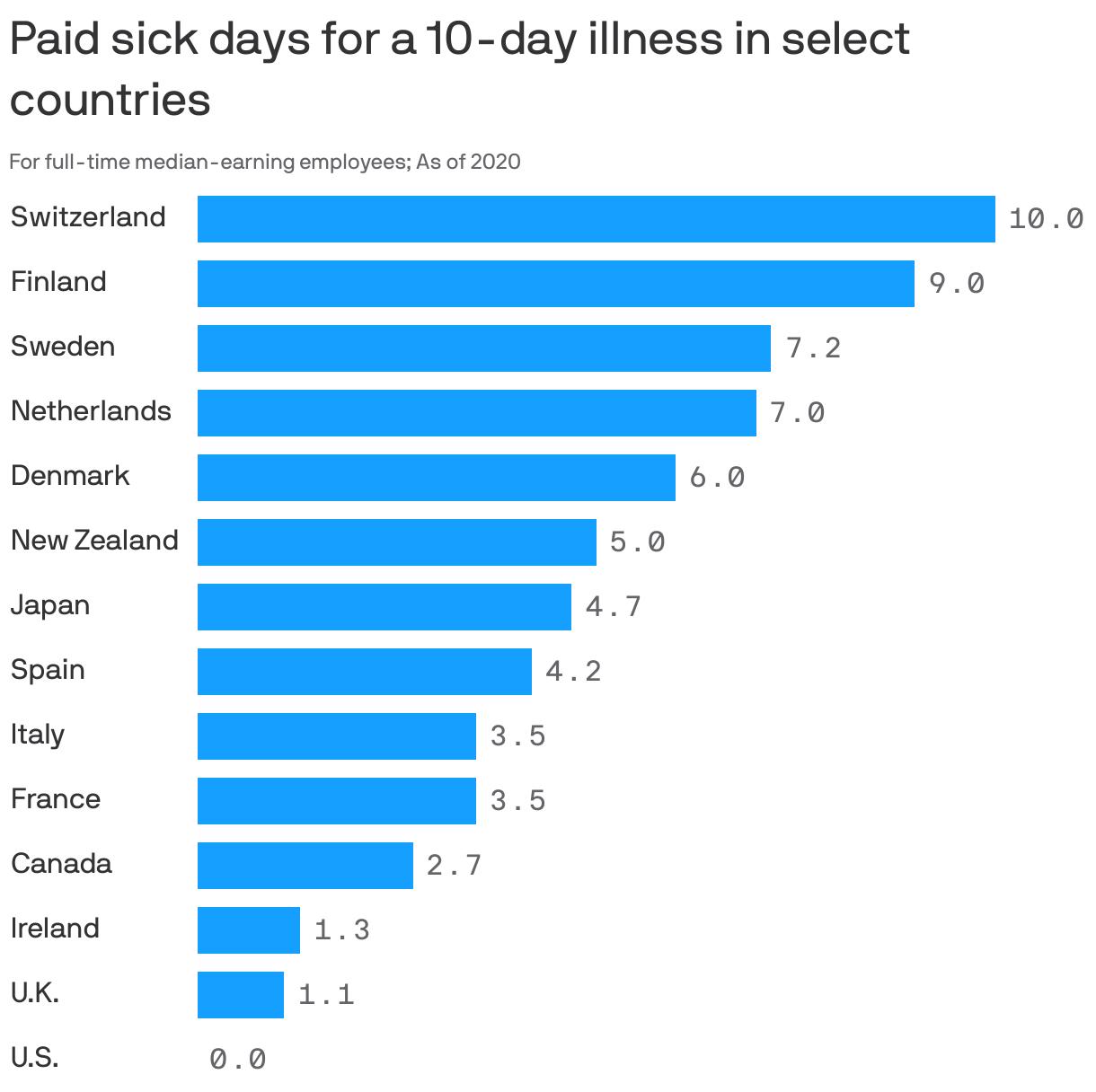
Remember when: Companies paid a guaranteed 100% retirement? Or employees had the right to negotiate salaries? Remember unions? The economists say there is a shortage of workers. Bull chips – there is a shortage of salary and benefits. Here’s another one:

Data: Center for Economic and Policy Research. Chart: Tory Lysik/Axios

Ancient Mariner

About monarchy

All the news, of course, is about the death and burial of Queen Elizabeth and what King Charles will do differently. England was organized into a nation officially in 927 CE, the point being that in comparison, the US today is but a teenager. Since 927, England conquered Scotland, signed the historic Magna Carta in 1215, was the primary colonizer of North America beginning with Jamestown in 1606, was the world leader in the age of colonialism during the 18th and 19th centuries and, as the calendar approaches the 20th century, formed a multinational union and shared global leadership with the United States.

Since its inception, the United States has switched national leadership 46 times, having only politically based Presidents, not neutralized Kings. As we are witnessing today, this teenager is having trouble holding things together.

The United States does not have an apolitical monarchy. Does a royal family that is noted for dogs, horses, interesting marriages and fancy parades have a role in the stability of the English State?

Perhaps there is more than meets the eye. Watching from this side of the pond, it seems the general population shares affection for the Monarchy despite their personal political differences and serious economic hardships.

Remember Rosie the Riveter? Rosie was a symbol of “We can do it” at a time when US industries did not have enough men to meet the demands for military production. Rosie had a positive aura that brought the nation together during a difficult time. Is this what the Monarchy provides – a sense of common unity that sits above the derisive issues of life and politics?

In mariner’s life time there is only one brief moment when the President may have represented a unifying role. Remember Camelot? He was assassinated.

Short of establishing an apolitical family of its own, what could the United States do to generate national unity? What cause is as great and threatening as World War II? The pandemic, serious as it was, didn’t coalesce the nation. Maybe it might be global warming – that would be a world war with a tough opponent. Could that unify the US?

Maybe it’s a shame that the Founding Fathers didn’t set up an apolitical family. The Fathers did attempt something similar in granting religious freedom but they forgot to castrate it.

Ancient Mariner

Marching on to Meta

GPT-3, is an AI program, can write essays, op-eds, tweets, and dad jokes. It will change how we think about creativity. Who is “we”? Doesn’t Alexi deal with this kind of stuff? Leave me alone so I can get back to my opiates.

There is an unreconciled circumstance when AI becomes judge and jury in our society: prejudice. Not necessarily the headline gathering prejudices like racism and misogyny but prejudices we don’t know we have. For example, app programmers working for financial firms may include biased code that is beneficial to finance firms just as a matter of business rather than allowing a fair integration with societal mores.

Several studies already are in that show existing government programs arrive at different decisions based on assets, neighborhoods and cultural differences. To wit: roads and the Interstate system always have chosen less expensive neighborhoods to build the highways. Government policies also are prejudiced by NIMBY politics (Not In My Backyard). And finally, urban development regulations allow venture capitalists to buy up inexpensive land inhabited for many generations by unique subcultures.

How will AI make sensitive, on-the-edge decisions? Mariner spent enough years in the automated data world to know that more than enough data will be available; it’s the analog formulas where the rubber meets the road.

Today, cultural change is in the hands of the owners – the citizens. As everyone has learned, change is nasty, confusing and final expectations are unknown. Computerized data, no matter how hard it tries, cannot emulate values in a topsy-turvy world – unless humans surrender reality to the Matrix.

Ancient Mariner

Goliath

With all the social confusion, with the growing menace of global warming, with all the corruptness in politics, a giant walks among us: Goliath, AKA super large monopolistic corporations.

It isn’t just the communication sector (Big Data) with Google, Meta, Apple, Microsoft and a large number of software companies providing cloud and internet services. It is also the retail sector with super conglomerates like Amazon, Walmart, Costco and Walgreen.

Endless examples abound: show business has Disney, butchering has Tyson and Hormel; news has CBS and NBC.

Anti-trust laws have not been properly enforced for decades. Corporations buy potential competitors when those companies still are small. Marketing companies do the same thing in different retail markets.

There are two things to be concerned about. The first has been obvious for many years: monopolization diminishes competition thereby controlling market prices and availability of alternatives.

The second is a new issue available since the internet was invented: government policy intervention. For example, does anyone know who will set health policy when Amazon owns one of the largest hospital corporations in the US? How about a wanky space engineer owning Twitter – one of the most used communication channels in the country. Who will set regulations? Zuckerberg already has proven that if a corporation is large enough, the government has a hard time getting its arms around it.

One could almost say “Huge monopolies are like city or county governments.” Counterarguments may claim that global supply chains require large monopolies; not true (what happened during the pandemic when too few manufacturers caused failure?) Another counterargument is the international nature of business today; not true (The EU has imposed $million+ fines for not complying with privacy and false information regulations and impeding free trade.)

Whenever the US government can get its act together, two things will make or break the nation: fix taxes and break up monopolies. It can be done. Remember Ma Bell and Standard Oil?

Ancient Mariner

Political Sociology in action

It was mentioned on the blog some weeks ago that the time was coming when the retirement age would be extended as the population grew smaller and older. The pandemic has forced this idea into the political world today. Recently, Senator Ron Johnson (Trumpist republican) proposed putting seniors back to work – after they already had retired and started claiming Social Security benefits. Senator Ron’s motivation is suspicious; perhaps he found a new way to cut the cost of Social Security benefits simply by ignoring that it exists and ignoring the earned right to be on Social Security – or maybe civil rights are subservient to authoritative mandates.

Once a predator has been turned loose, it is difficult to put it back on the leash. This is the case between capitalism and socialism as resources become scarce, human environmental relationships begin to fail and plutocratic/authoritative defense mechanisms turn increasingly predatory. This battle will take decades to restore balance to society.

Recent history has shown that less sophisticated nations easily fall prey to authoritative leadership. Is the United States capable of putting the leash on prowling predators?

Who are economic predators? “everybody’s on their own” capitalists, a number of hoarding types like monopolistic corporations, venture capitalists and private equity types; also antidemocratic and libertarian types.

In the end, the outcome will be based on who controls the military and whether a legitimate, operational constitution holds together. Remember when Donald tried to call out the US military to quash Black Lives Matter and ‘de-fund the police’ protests?

Our personal liberties and democratic government lie within the realm of an arbitrary future. Perhaps we should win a big lottery just in case.

Ancient Mariner


Is there a shift in the wind?

֎ It seems that the latest polls – and a few primaries – suggest that the democrats may be more successful in November than was imagined just sixty days ago. Don’t bet money yet but the election may be more interesting than expected.

One situation that is giving democrats a larger than expected victory is rank voting. In Alaska especially, Donald-backed Sarah Palin did not survive to run in November.

If you aren’t sure what rank voting is, mariner posted a detailed explanation back on April 22 called ‘Rank Voting – 2’. Type the title in the search box on the Home page.

A lot hangs on whether the economy is decent until November. Any disruptions will have an effect on a cautious electorate. Otherwise, the polls suggest that an unusually large number of independents and young voters prefer the democratic side.

It is obvious that the abortion issue has stirred dust as far as voters are concerned but Donald himself is having difficulty with his appointed preferences in tossup states.

֎ Another issue that is growing rapidly is climate change happening across the US west. Small towns already have rationed use of water; some literally have so little water they depend on government and charitable organizations for water.

On the other side of the crisis, Mississippi and several other southern states are suffering from record breaking floods. A skeptic could poo-poo the shifts in weather as just an unusual year except that the entire world is having a weather related crisis. For the moment, Pakistan has the worst case. The nation’s economy and human wellbeing have been stopped dead as mountain glaciers melt so rapidly the lower rivers can’t handle the flood.

Let’s hope Mother Earth holds off on more tragedy until after the election; sooner or later the US economy will have to accommodate a growing cost caused by a warming planet.

֎ Does the reader have a pseudonym? Mariner’s is pink dot.

Ancient Mariner

Connect the dots

֎ Mariner was up early this morning. As usual, first get a coffee then turn on the computer. His standard procedure is to go to NOAA to check the weather, then to the blog, then open email.

Before mariner got past the weather check, Googlesyndication had made 138 attempts to enter his computer system. Fortunately, he has software that blocks this kind of silent intrusion.

֎ Mariner read the commentary of a Big Data executive who said, “Our future in the metaverse is to be a dot similar to the dots in a George Seurat painting.” The inherent value will not be in any one dot; one will have to step back to view the entire collection of dots.

Things like individualism, one person-one vote and personal choice in life no longer will exist. Instead, the entrapment of becoming a pink dot whether or not one prefers pink will be the extent of individualism.

֎The Trumpian movement occurs because the labor class in the United States for decades has been discounted as an unsuccessful class because they are not white collar; their salaries have fallen in value because of inflation versus employer disregard for economic well being; they carry no respect in the gestalt of US culture; their voice through unions was systematically eliminated. Now to be a dot . . . 29 percent of US citizenry believe it is somewhat likely that within ten years there will be a civil war.

The situation is made more complex because of a dysfunctional Congress. We can blame Newt Gingrich for that dysfunction. During his tenure as Speaker of the House of Representatives (1995-1999), he weaponized party politics; the opportunity for Bob Dole and Ted Kennedy to cut a deal could no longer happen.

In Congress, party dominance became Job One; citizens weren’t on the job list. Campaign fundraising became the influence on policy. When Al Franken resigned, he said he spent five hours a day making calls to raise campaign funds. Today, Mitch McConnell carries the torch but isn’t the leader of the party. The party stands armed and ready under the Trumpian flag.

So, reader, will there be a civil war? Who cares if one is just a statistical dot?

– – – –

On the good side of things, unions may be coming back. Gallup news reports that public approval is rising and is at its highest since 1965 (71 percent). Mariner’s brother is a union advocate. He reports that many trade companies are voluntarily coming to unions to have access to workers. Obviously the economic effects of the pandemic have messed up employment enough that unions are the only dependable source to find workers.

Ancient Mariner

A new legal consultant

WASHINGTON (AP) — “Sen. Kyrsten Sinema, the Arizona Democrat who single-handedly thwarted her party’s longtime goal of raising taxes on wealthy investors, received nearly $1 million over the past year from private equity professionals, hedge fund managers and venture capitalists whose taxes would have increased under the plan.”

Who says the nation isn’t a plutocracy – or maybe a corporatocracy? Forget ‘one person, one vote’, let’s you and mariner and a couple of our friends pool together a few million to see if we can change tax laws.

Mariner read this comment from European sources: “The West is having a hard time dealing with a nation with a failing society that is supposed to be the leader of the democratic world and at the same time is the leader of the democratic world.”

But don’t worry readers; a new law firm is taking over control of our human disarray. The Congress wasn’t interested, state governments weren’t interested, the Supreme Court didn’t know things were in disarray and the President (previous and present) are incapable of handling the world’s woes.

Planet Earth has decided to take the case.

– – – –

Mariner feels obliged to report some good news given his reputation for doom and gloom.

Despite a terrible spring for gardening and mariner’s bout with influenza (not Covid), the gardens have taken it upon themselves to give a good display despite the abundance of weeds. Slowly, limited by lack of twenty-year-old energy, he is restoring order to the garden section by section.

Despite the woes of traveling in a world of convoluted airline scheduling and gas prices, the next few months will provide visits from seldom seen friends and relatives and a giant family gathering in Utah.

This post suggests at least one positive circumstance: The world is crashing around us but there is salvation in family unity and friendship.

Ancient Mariner


While we wait

It definitely is a waiting game on several critical fronts. China has begun its pressure game with Taiwan; we can only wait to see what happens.

Neil Degrasse Tyson said if both polar ice caps melt completely, the ocean will rise to The Statue of Liberty’s elbow; we can only wait to see what happens.

The November elections clearly are jump ball at this point. All the polls mariner has read indicate a fog of insight; we can only wait to see what happens.

The Supreme Court has missed the ball on the Affordable Care Act and abortion. Is this the new direction for the Court? We can only wait to see what happens.

Across the nation police departments are understaffed from resignations and low pay. Crime is up in many states, including homicides; we can only wait to see what happens.

Finally, big corporations will have to pay a 15 percent income tax; will the republicans reverse this legislation in November? We can only wait to see what happens.

Afghanistan society has collapsed, having no economy and no social standards; we can only wait to see what happens.

The Ukrainians continue to fight as their nation becomes decimated by a needless bullet war; will the government and the economy survive as the war goes on? We can only wait to see what happens.

Mariner’s potato crop is nearing the end. Will there be an abundance of potatoes? We can only wait to see what happens.

Does the reader have a hobby?

Ancient Mariner