Bonding

Recently mariner wrote a post about how to develop spirituality. Briefly, it has two key requirements: One must acknowledge the existence of a permanent prophet who sets the standards for proper behavior. The second is a personal allegiance to that prophet, a sense that one belongs to that prophet rather than to one’s self. The prophet does not have to be human. For example, many naturalists believe Planet Earth is the prophet because it controls the rules of life; some Christians believe the Bible is a prophetic statement in behalf of Jesus [See ‘Spirituality’ May 29, 2024]

Closely related to spirituality is a human behavior called ‘bonding’. Bonding can occur only when sharing with others. One easily can relate to bonding with family, close friends and those who participated in significant life events. But bonding, like spirituality, has an extended role in the fabric of society that sustains social orderliness, community allegiance, and the ability to sustain common abstract behaviors; just a couple of examples: being a fan of a sports team, and befriending the mail carrier as a person who shares a common task. Both these examples imply a commitment to sharing without which the civility would not occur.

An excellent example of bonding in everyday life is the movie “The Green Book” released in September 2018. It stars Viggo Martensen and Mahershala Ali. For those who have not seen it, take the characters in stride as the movie progresses. Mariner’s wife found a copy at the library or you can pay to see it online

(https://www.youtube.com/watch?v=w_VoWF9mKEc).

Bonding requires sharing a common responsibility with open mindedness as a lubricant. Importantly, bonding generates motivation in life.

Ancient Mariner

The New Age

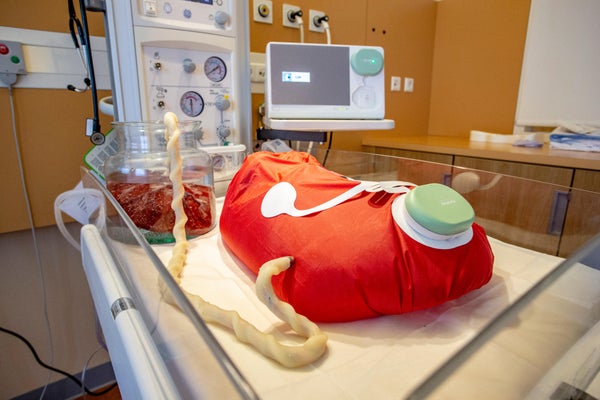
Scientific American has focused on modern issues, particularly those related to a new AI world:

It Is Too Soon for Clinical Trials on Artificial Wombs

A technology meant to help severely premature infants raises questions of inequity and may some day threaten parents’ rights to make decisions.


Who Owns Your Voice in the Age of AI?

Emerging AI services present scenarios that could challenge the laws over rights to a persona.


Remember when the moral question was whether it was right to prefer building roads through indigent neighborhoods? Remember when party lines on telephones became an invasion of privacy? Remember when purchasing anything only required anonymous cash or paper-based checks?

The point is that no one, not even the technicians, has a moral understanding of what an automated world looks like. How will routine judgments based on human dignity be altered? In the extreme, will Wiley’s cartoon about buying a newborn from Microsoft become a reality? Who made a rational decision about the merits of conception?

The public domain, ruled throughout history by the idiosyncrasies of each individual as a unique individual, no longer will have that discipline because AI can produce as many copies of an individual as it chooses; They will be exact copies complete with gestures and voice.

Which brings the situation to this: Do Senators John Boozman (73), John Hickenlooper (72), Richard Blumenthal (78), Tom Carper (77), Rick Scott (71), Mazie Hirono (76), Mike Crapo (73), Jim Risch (81), Dick Durbin (79), Mike Braun (70), Chuck Grassley (90), Jerry Moran (70), Mitch McConnell (82), John Kennedy (72), Susan Collins (71), Angus King (80), Ben Carden (80), Elizabeth Warren (74), Ed Markey (77), Debbie Stabenow (74), Roger Wicker (72), Deb Fishcher (73), Jeanne Shaheen, (77), Bob Menendez (70), Chuck Shumer (73), Sherrod Brown (71), Ron Wyden (75), Jack Reed (74) Marsha Blackburn (71), John Cornyn (72), Mitt Romney (77), Peter Welch (77), Patty Murray (73), Joe Manchin (76), Shelly Moore Capito (70), and John Barrasso (71) [36 Senators out of 100] have the life perspective capable of comprehending the social and moral ramifications of the AI age?

Humans finish grasping a subconscious moral perception of reality by the age of 25. Does a Senator who developed a moral understanding of the world when Abraham, Martin and John were assassinated really have the wherewithal to manage Corporate AI? So far it seems not. Mariner knows he doesn’t.

If the reader has the possibility of voting for a young representative no older than 55, seriously consider that candidate.

Ancient Mariner


Distracting mini-thoughts

֎ Mariner will not speak disparagingly about the future if it exists.

֎ From the 1990s until now, humanity very much resembles a pot of boiling water. Has the reader ever watched the process? At first, there are small wisps of steam rolling about in the pot; After a bit, one can see tiny bubbles on the bottom of the pot that show up then quickly disappear; moments later there are lots of tiny bubbles and they no longer disappear but seem to be waiting; they don’t wait long before starting to dance and grow; then the bubbles grow large and violent. Finally, the water itself begins to roil pushing bubbles to the side. Where in this process is humanity? Even Denmark, the most liberal nation in the world, went red in its last election.

Will the pot boil over in a giant rage only to vaporize in the end to a scorched pot of nothing? Is there anyone who can turn off the burner? (Don’t be ignorant enough to suggest the three-year-old or the ghost). Examples of roiling bubbles are US financing of any war, Putin, Netanyahu, the genocide war in China against Muslims, and the military leaders of thirty different state wars in Africa! An example of a roil is the Middle East.

֎ Mariner quickly is distracted by tiny, irrelevant things. He was sitting on his back porch the other day when a tiny, really tiny black bug walked by. The bug has a brain that is fully functional for bugs. In it’s own way, it interprets the world just like humans do except from a bug’s perspective. It turned out to have wings. Wow! My son is going to college to learn how to fly but this bug has it all in it’s tiny brain! Could the human brain handle six legs? Mariner wondered whether the bug could rationalize the presence of an escalator – now that’s something the human brain excels at: inventing things that make life easy. As the bug flew off, he wished it well in it’s disciplined reality.

֎ If small things entertain the reader, the biggest small thing is the neuron. The human brain has 86 billion nerve cells (AKA neurons). 86 billion!! And that’s just one brain. One wonders how many neurons exist in the Universe. How would anyone consciously be able to manage 86 billion cells? As a human, we can’t manage 86 commercial airplanes. Thank goodness the brain brought along a cerebellum to handle things.

֎ It is the busy time of year for gardeners. It seems every plant wants attention – especially weeds. But there are some plants that earn respect by not asking for much, by returning every year for decades and which provide a fine display, anchoring other flowers around them. Mariner recommends this quiet, unassuming shrub that performs well as a plant and as a player in the quality of the garden:

Spiraea Double Big Bang

Ancient Mariner

Spirituality

As every news-wise reader knows, spirituality is suffering staggering setbacks not only in formal religions but in politics (spirit of democracy), finance (plutocracy) and culture (weaponized classes). Spirituality is one of the cosmetics a person uses to present themselves as a human creature. Spirituality sets the tone of all personal beliefs from the subconscious self to general personality and to one’s role in society. Yet, it is a will-o-the-wisp phenomenon. From where does spirituality arise? How does a person apply this ‘cosmetic’?

It is difficult to disseminate spirituality from cultural reality. For example, the Holy Bible has a huge impact on what spirituality is, as well as do all sacrosanct sources and ideological writings. How does one present an example of the dynamics of spirituality? After all, it is the foundation of ethics, morality, socialization and personal stability.

Mariner has decided to demonstrate spirituality through a valid but not often used premise: naturalism.

The Universe is God – unending, omnipotent, multidimensional and pervasive of all energy and context.

The prophet, AKA Jesus, Mohammad, et al, is Planet Earth. As Earthlings, the planet sets our ethics and morality through the manner by which humans respect and count on a solid, meaningful and compliant role within the planet’s biosphere. When we feel “all is right with the world” we are experiencing the impact of a spiritual bond with the planet.

As readers are aware, the very terms ethics and morality are easily misinterpreted, irregularly revalued and can be distorted for immoral reasons. To keep this treatise short, amalgamate all the pros and cons related to global warming – a confrontation with, possibly an abuse to the spirituality of the planet. Examples of violating spirituality in other religions is the crucifixion of Jesus, cutting off clitorises in Islam, and, just maybe, slavery.

An imbalance in spirituality caused by immoral interpretations of the biosphere will lead to disruptive behavior in the context of planet ethics. For example, the abuse of oil and the artificial interference provided by automation slowly have allowed chemical, cultural and population issues to be disruptive – creating turbulence in the biosphere. In other words, our cosmetics are smeared.

In this bare-bone example, it may be hard to imagine the phenomenon of bliss or spirituality. Like all moments of spiritual awareness, it is a fleeting moment of complete belonging, something as simple as feeling a fresh breeze or freeing a trapped animal or perhaps preventing an industrial project that would lead to the extinction of local biomass. The cosmetic has doses of compassion as well as biological territorialism but there always is a sense of belonging to the planet rather than to one’s self.

Belonging is the lock-in. Do we belong to democracy? Do we belong to Jesus? Do we belong to our community? Do we belong to a greater existence? Do we belong to our planet?

Ancient Mariner

Keep your world real

As readers know, mariner is an old fogie. He has learned, however, to pretend he still is a young person. He has also learned that, rather quickly, he is kidding himself. He has adopted a gardener’s life as a replacement for a career. As his wife will attest, he has more projects than he can handle and deliberately sustains this overload. “Keeps me thinking”, he says.

One project was to build a rabbit-proof garden space for vegetables, plant management and a supply depot for the tools and paraphernalia associated with gardening. Well, mixed with all the other chores associated with gardening, the project was not moving. Add to that the mariner’s constant trope that he belongs to a special union that requires him to work eight hours a day but allows him two and a half days to complete it, and there is no hope that his physical limitations and his work plan together were achievable.

Enter a life-long friend living on the East Coast. Last November, he traveled to mariner’s home in Iowa for a week to set posts and make gates. The weather that week had temperatures in the thirties with constant snow, sleet and rain, and a soil of a very muddy nature. Still, with great persistence, he set the posts and made the gates.

He returned this past week with a wonderful new girl friend as well. He set the fencing while his girl friend weeded mariner’s gardens. Needless to say, this was not a come-and-go event. It took a lifetime of mutual support in life’s good times and bad times for their allegiance to become firm and unchallenged. Unlike the political clouds and economic storms that make up life today, these personal experiences among genuine friends (and family) are what REAL life is like.

Try to find a pattern of life that depends on genuinely loved friends and family. Use it or lose it.

As to the other reality, from a stratospheric view, Armageddon progresses.

Ancient Mariner

Wafting thoughts

֎ Several weeks ago mariner read an article about why old people don’t wash. ‘don’t wash’ isn’t an absolute term; the article was suggesting that cleanliness became more arbitrary and a matter of necessity rather than maintaining cultural norms for cleanliness. The larger point was that it is the cosmetic and pharmaceutical industries that set social norms. When at work, we may feel obligated to shave or smell a certain way or perhaps not wear jeans or certain styles of clothing. When retired from the daily obligations of society, old folks don’t feel the need to maintain a supply of different odors, sixteen different teeth whiteners and unnecessary chemicals to alter wrinkles and eye shadow. A bar of soap, a tube of toothpaste, maybe a deodorant if the oldster is wearing diapers; maybe a sponge bath at the sink instead of showers.

The article reinforced the notion that, if any influence can reach the subconscious, our behavior will be modified. It is job one for the subconscious to adapt to the external world – that is a critical survival skill. It’s just that the external world is jammed with artificial information to take money from you or get you to vote a certain way, or maybe marry someone you saw on the smartphone. Those $1,000 sneakers would sure make me look good! It’s all about surviving in the real world – however humans choose to define it.

֎ Culling through several polls over recent weeks, he saw that a noticeable percentage of Gen Z (today aged 12-27) were favoring Donald. On those occasions when the respondents were interviewed, their feelings were that everything was a mess and, more importantly, no one seems to be fixing anything – perhaps Donald appears more rambunctious and may at least try. Gen Z choices reflected other perspectives as well, a new generation whose roots are not buried in the soil of Reagan’s indifference toward labor, feel more liberal about social mores (homosexuals, abortion, importance of college, and don’t carry the scars of the past century, etc.). Mariner assumes that Gen Z is more accustomed to 21st century electronics thereby not being as distracted as older generations may be. It’s all about surviving in the real world – however humans choose to define it.

֎ The economic, scientific and environmental objectives affected by global warming are producing a Shakespearean drama. Each emphasis is taking independent paths in response to the claims (and current validations) of a warming planet. Each claims that it’s approach is the only moral path to managing the climate. Economics is trying very hard to pretend it is helping by inventing new processes for offsetting the impact of fossil fuels by storing gases in the ocean, for example.

The scientific approach is exploring new ideas like blocking the Sun’s heat in the atmosphere, growing food in miles-large greenhouses with recycled water and vertical gardens and incorporating useless deserts and swamps to support endless solar panels.

The environmentalists are planting trees, promoting home gardening on the front lawn, advocating changes in people’s habits relating to water usage and reducing food dependence on herd animals – or better yet, become a vegan. Environmentalists also pursue re-balancing nature, e.g., reintroduce wolves in Wyoming, saving the polar bear and curtailing dependence on seafood.

Each approach is pursued with an ethical assumption about how to make the world cooler. Yet the approaches are distinctly different in how they would change human behavior. For example, economists would say “continue to drive cars”, scientists would say “Don’t worry, we’ll invent something new” and environmentalists would say “Turn back the behavior of humans”.

Stay tuned, all three  will make entertaining news.

Ancient Mariner

How to us divers in a sentenc

Mariner is in trouble again. He used the word ‘divers’ in his post. He apologizes for using an anachronistic term crowded out by words like type, option, choice, difference and, yes, diverse. Having apologized, he must say that divers is a legitimate word. It has a different, albeit subtle, definition.

He does not know why his brain chose to retain rather acutely the difference between the two words; divers is an active word in his lexicon as is diverse. Divers is spoken di’ vers whereas diverse is spoken di-verse’. Perhaps using a chart with columns and rows may help.

A table has columns. It needs columns because the definition of each column is different from the other columns. Each column, however, has many rows where each item is about the same header but not about other columns because each column is intrinsically different while members of a single column have a common definition.

For example, the human life form has many races like Hispanic, Asian, White, etc. One could say that there are diverse (more comfortable may be ‘a diversity of’) races in the column about the human life form. But there are many different, exclusive life forms, each having their own column and unique row values. One could say there is a divers number of life forms.

True, mariner knows most folks would not choose ‘divers’ but each of us as a divers creature has a diversity of idiosyncrasies – his is an awareness of header relationships versus column relationships. At least they come from the same Latin word; check their entomology.

Ancient Mariner

2024 – the age of juggernauts

A good analogy for the definition of ‘juggernaut’ is a huge cargo ship running into a bridge, splintering the bridge apart as if it were made of matchsticks. The 2000s have been years for growing juggernauts culminating with an election in 2024 that may well splinter a nation.  The registry of juggernauts is awesome: Middle East oil, Middle East war, Middle East international conflict, Putin’s war, Sudan genocide, Pacific war over Taiwan; in the US, the recent pandemic, immigration, unbridled economy, cultural collapse, social isolation expressed with mass shootings, Federal and State governments and courts operating under antique theories about governance and further stressed by the presence of plutocracy, the age of super-automation and the stress from violating the rules of nature for centuries.

It makes one feel they are walking through an entanglement of giant rosebushes with significant danger from life-threatening thorns.

There are three relatively unnoticed juggernauts that will bring collapse to our nation – not the movie versions with high energy explosions and sudden destruction of the countryside. What will happen is similar to the ripening of an avocado – looks good on the surface but spoils more rapidly inside than expected and is inedible before one would suspect. The three juggernauts are:

֎ Health Industry. Even today the economics of health management are destructive. Too few physicians are graduating from medical school, nurses and other staff are overworked while working for wages that have not kept up with inflation. US governments/insurance agencies are over-managing medical science and the implied authorities of medical professionals. Private investment is turning medical service into a profit-only model of service, demanding more patients with less care per patient. There is a growing trend for physicians to disassociate from their medical institution and set up an independent, fee-based patient relationship (eliminating access for poorer patients). In mariner’s state of Iowa even standardized health care may be an more than an hour away.

There is promise from new technology that will ease an individual’s workload but this is only a mechanical solution to a national population that cannot survive to current age expectations without personalized healthcare. In 1900 the average life expectancy was 40 years.

֎ Retirement. This is a cousin juggernaut to healthcare. The population in the US has begun to slow because births have fallen below 2.1 per fertile woman; by the end of the century population will reflect an annual decrease. At the same time, an increasing percentage of the population is moving into retirement. Today, this population dilemma goes unnoticed. As more and more citizens retire, fewer and fewer citizens comprise the national workforce. Who will, or can, pay for retirement and healthcare? On this very day Social Security faces a huge political confrontation in 2025. The only solutions offered to date are sidewalk tents and tiny ‘homes’ for the homeless.

֎ Education. In the 1850s the idea of grading students was implemented. This has been the norm until the internet began to offer divers ways to gain an education. Today’s society is so divers that the letter ‘A’ or ‘C’ can have very different meanings across different education administrations. Colleges in particular suffer from the undermining idea that knowledge cannot be totally scored by a set of letters. The desire to tie education with a direct link to a job is more important than a letter.

It has been a blessing over the decades that the ‘white collar’ class maintained a steady, independent function for education. This is gone today as citizens attack libraries and otherwise intercede the authority of trained teachers – similar to interference by governments with a physician’s professional decisions.

Over the centuries with many cultures and religions, education was a matter of compliance with behavioral norms or religious mandates. Neither is an influence today because of the diversity of society and, in particular, because of confrontations with many juggernauts.

While there are many techniques for keeping one’s self sane and worthy, that does not dismiss one’s job to sustain survival as a nation.

The closing analogy is one of a polar bear trying to walk across melting slush in a warming world.

Ancient Mariner

Visit with Mariner’s alter-egos

It has been a month or two since mariner visited his alter-egos; their personal perspectives often reveal entirely different realities. So he’ll stop at each ego’s residence to see how they are doing.

Chicken Little is just down the hall because mariner is renting an apartment in his hen house until after the 2024 election. It is a good place to hide because broadcast news on TV is blocked to avoid undue stress. [mariner cheats by going onto the internet]

Mariner asked Chicken Little to give him a general perspective on the United States today.

“You know,” Chicken Little said, “Each day is not fun anymore. Used to be I could wake up in the morning, put on my comb, go out into the yard and just have an easy day with the flock. Now, you have to be careful what you say to a given chicken because the flock is really uptight about so many issues.”

“What bothers you the most?” mariner asked.

“The violence. Chickens don’t have many resources to defend themselves. And I don’t understand why issues like homosexuality and abortion are causing so much conflict. These issues aren’t really the fault of the victims.

“Maybe it’s because the dissenters can’t really address larger issues like the economy and dysfunctional government agencies,” mariner suggested.

“May be.” Chicken Little said. ” But what’s closer to home is gun violence, riots and destructive protests. Thank goodness we chickens have a nice home here but it could be gone in a day because of riots with torches, gunfire, police abuse, tornadoes, and changes in zoning. Most chickens don’t have the resources to start over again.”

Chicken Little was becoming upset so mariner wished him well, left and headed for Amos’s house – mariner’s skeptical alter-ego.

“Hello.” mariner said as he entered the office of Amos. (Amos was named after the prophet Amos in the Old Testament of the Holy Bible). “Hello.” Amos replied. Amos’s office was disheveled, having stacks of newspapers, magazines, books, a television, two phones and a computer. Obviously Amos was an information hound.

Mariner tossed out an obvious conversation starter: “How is the election coming along?” he asked.

“Jesus, mariner, you jump right in the middle, don’t you? I haven’t had the time I’ve wanted to follow the three-year-old and the ghost. I’m too busy trying to keep on top of an all out war in the Middle East, not to mention Taiwan!”

He paused a moment and continued, “And its like Congress doesn’t even know its the twenty-first century – and the courts are trying to recreate the eighteenth century.”

“What’s your biggest concern?” mariner asked.

“Hell, that’s like asking which piece in the garbage do I dislike the most.” He paused. “I think its that corporations and private equity have taken over the economy. Congress is so busy pissing on each other’s shoes that corporations can do whatever they want – and both are ignoring the growing impact of global warming. It is time to modernize tax structure and government spending for a new reality – and get out of paying for wars.”

Amos was becoming flushed. Mariner said goodbye and headed for the home of alter-ego Guru, the theorist member of the team.

Guru has a pleasant but simple home on a hillside in the country. He offered a Croatian red wine as we sat down to talk. “I’ve been visiting the other egos”, mariner said. “I would be interested in hearing your concerns about today’s world.”

“Hmmm, that’s a difficult question to prioritize. In all likelihood, there are four global forces that will require civilization to reconstruct the future of humanity in a way that does not exist at the moment: Not in any specific order, they are population, the relationship between humans and dwindling natural resources, a warming planet combined with solar phenomena from sunbursts to magnetic shifts, and certainly the impact of intensive automation that will affect the daily behavior of human society.”

It was mariner’s turn to pause. He asked, “Will any of the great difficulties facing the world today affect the four issues?”

“No. The end of the twentieth century coincided with deep changes in how society will move forward in the twenty-first century. The most subliminal may be the move toward a global or regional economy rather than a separate economy managed by each nation. Another subliminal shift will be a redefinition of human rights from a global perspective. Both these issues will be difficult to experience and will cause consternation.”

“is this the same as the confrontation between capitalism and socialism?” mariner asked.

Guru replied, ” That is a typical shortsighted question. Just as there was a rewriting of human values during the early Persians, just as there was a rewriting of human values during the Great Awakening, so to will humanity have to ‘rewrite the books’ as they say to provide structure for a global society.”

Mariner could sense that the conversation was getting a little too deep. He finished his Croatian wine and pleasantly said thanks and headed for the door.

It is always interesting to visit the alter-egos; they each have a view of reality at very different altitudes. Mariner appreciates this diversity since the alter-egos have a lot of influence in his posts.

Ancient Mariner


Twentieth Century

Roughly speaking, the European era of colonialism existed from the 14th century until the 19th century. A weakening of colonialism began with the creation of the United States in the late 1700s. It was an era when the European nations played a role very similar to today’s venture capitalists. Europe didn’t want there to be too much war because war doesn’t necessarily generate profit. Instead, through political and especially religious domination, Europe invaded cultures rather than territory. Capitalism was the only political game.

It took two world wars to reorder the international relationship from economically constricted nations to an era of independent nations. The twentieth century, all 100 years of it, was a process of restructuring economic theory, redividing political authority and launching an unprecedented pursuit of technology from automobiles and interstates to landing on the moon.

As much as can be expected, democracy bloomed around the world. While wars continued, they were regional, e.g, Vietnam war. The economic reordering of the world economy based on independent nations increased gross domestic profit in all civilized nations, ergo, the richer nations could finance regional wars as a means of political influence.

The concept of power through financial support of war continues into the twenty-first century. Like an addiction, too much war can be bad for the planet. It is clear across all news platforms that war seems not to solve twenty-first century issues. Human society in general struggles with the last century’s version of venture capitalism, democratic concepts being stressed by instant global communication and a restructuring of political power based on stressed natural resources as common as drinking water.

The elephant in the room for the twenty-first century is global warming. Virtually everyone still would rather keep the twentieth century values than have to start over again with a new era. But at what price?

Corporations have moved on and are not controlled by twentieth century democracy. Governments around the world struggle to identify new international relationships. Wealth continues to grow despite the deepening economic crisis around the world. Dictators are leveraging public fear as the world shifts.

Unfortunately, no one knows how things will work out but there are indications that human strife cannot afford to continue paying for the twentieth century.

Ancient Mariner