
Privacy continues to dwindle

Before we start, mariner has been asked about the accuracy and prejudice of his cluster of news sources. Anyone who knows mariner knows he is critical about everything – especially doctored facts. He has collected the best commentary, best fact checking and least biased reporting available. That being said, the two news sources below aren’t trying to change minds, just enlighten them.

Mariner owes it to his readers to reprint a Protocol (news agency) article that clearly demonstrates how large corporations can erase privacy even for the most personal aspects of one’s life. This issue also begs the question whether super giant corporations like Amazon should be allowed to be so large as to control what should be independent government oversight.


“Amazon announced yesterday that it’s buying its way into a huge slice of health care provision with the acquisition of One Medical for nearly $4 billion. It claims the deal will allow it to “reinvent” health care, and it’s raising some eyebrows.

One big concern with the deal: data. Health care companies hold a massive amount of information, especially in the age of telehealth. The deal gives Amazon new ways to glean data to help it build AI, Protocol Enterprise reporter Kate Kaye writes.

One Medical operates clinics throughout the U.S. and already has roughly 800,000 members enrolled for both in-person and virtual services. Amazon will have access to a treasure trove of valuable data for AI health products.

This means that talking with your doctor could be used to improve things like voice-enabled health apps or in-office ambient software.

This deal is also unlikely to face antitrust pushback despite its size, Protocol Policy editor Kate Cox told me.

Because Amazon doesn’t yet have a strong foothold in the health care industry, other than its work with Amazon Pharmacy, the deal will likely be viewed by regulators as “competition-neutral,” Kate said.

This reveals a flaw in current antitrust laws, allowing massive corporations to continue to grow their influence: Antitrust laws go after companies that are trying to grow in one particular sector, not “octopus” companies working on a little bit of everything.”

Join Amazon Prime! Cancer cured with Amazon products. Get Amazon health insurance discounts not based on averages but specifically targeted to your ailments except for existing conditions . . .

If Amazon doesn’t produce goosebumps, read this article by Axios that reveals Donald’s active pursuit to dismantle the FBI and IRS as part of a scheme to make America great again as a dictatorship, should he be re-elected. Winning aside, his advocates are deadly serious. See:

https://www.axios.com/newsletters/axios-am-ed1e48cc-4d9d-4a23-b2b9-042504d7b0b6.html?utm_source=newsletter&utm_medium=email&utm_campaign=newsletter_axiosam&stream=top

Ancient Mariner

Sharing is a battlefront weapon

Make no mistake, the next several years will get tougher than today. Already the climate is wreaking havoc with the economies of whole nations – including the United States. Everyone already knows that the less financial cushion one has the more rapidly they become severely destitute.

The governments at all levels have demonstrated failure across a wide spectrum of issues, especially sustaining the health and well being of those who have life changing disasters and the normal hardship of destitute life.

Here is a crazy correlation: As AR-15s are dangerous in the public’s hands, so, too, is sharing inversely helpful to the public. Sharing is the primary weapon against adversity. Some examples:

Does the reader have a drawer full of socks? Does the reader know socks have the highest demand in charity distribution centers? Give the drawer full to a distribution center and buy a new dozen to replace them.

Does the reader have a closet full of tee shirts? (mariner confesses he has a tee shirt he bought in 1988) Give all of them to a charity distribution center and buy a new dozen to replace them.

Does the reader have a house full of shoes? Keep three pairs and give the remaining but usable shoes to a charity distribution center.

Repeat this process for every kind of clothing, even long forgotten underwear stuffed in the back of the drawer.

The alternative, if the reader is so disposed, is to purchase equal quantities new and give them to the charity distribution center.

Some local charities depend on donations of soft drink cans. Take the time to deliver them to the charity.

Sharing is a primary weapon in the battle against adversity.

Another sharing weapon is a quarterly cash donation to charity food distributors. It doesn’t need to be so big that it imposes on the reader’s budget; it’s the steady, quarterly donation that really helps.

There are large corporations in the charity business; the Salvation Army is one example. The reader’s contribution to these corporations helps but some of the donation is redirected to corporate overhead. Just as mariner believes in bottom-up politics, he also believes sharing is a personal experience with a local end-of-process deliverer.

And of course, calamity may strike friends and family. Be prepared to share.

Ancient Mariner

The Future Economy

A frequent subject on the blog is the shape of United States participation in globally-based economics. Often mentioned is the big three of the ‘Sumo’ league, US, China and India, who have economies large enough to lead massive supply chain agreements. But things already are changing – welcome a new member to the Sumo League: the G7. On June 26 the group of nations committed to a plan to spend $600 billion to invest in low and middle income nations over the next five years. Its title is “Partnership for Global Infrastructure and Investment (PGII)”

Quoting Wikipedia, “the Group of Seven (G7) is an inter-governmental political forum consisting of Canada, France, Germany, Italy, Japan, the United Kingdom and the United States. In addition, the European Union is a ‘non-enumerated member’. . . As of 2020, the collective group accounts for over 50 percent of global net worth ($418 trillion), 32 to 46 percent of Global Domestic Product, and approximately 770 million people (10 percent) of the world’s population.”

Further good news is that the group is organized around the principles of liberal democracies.
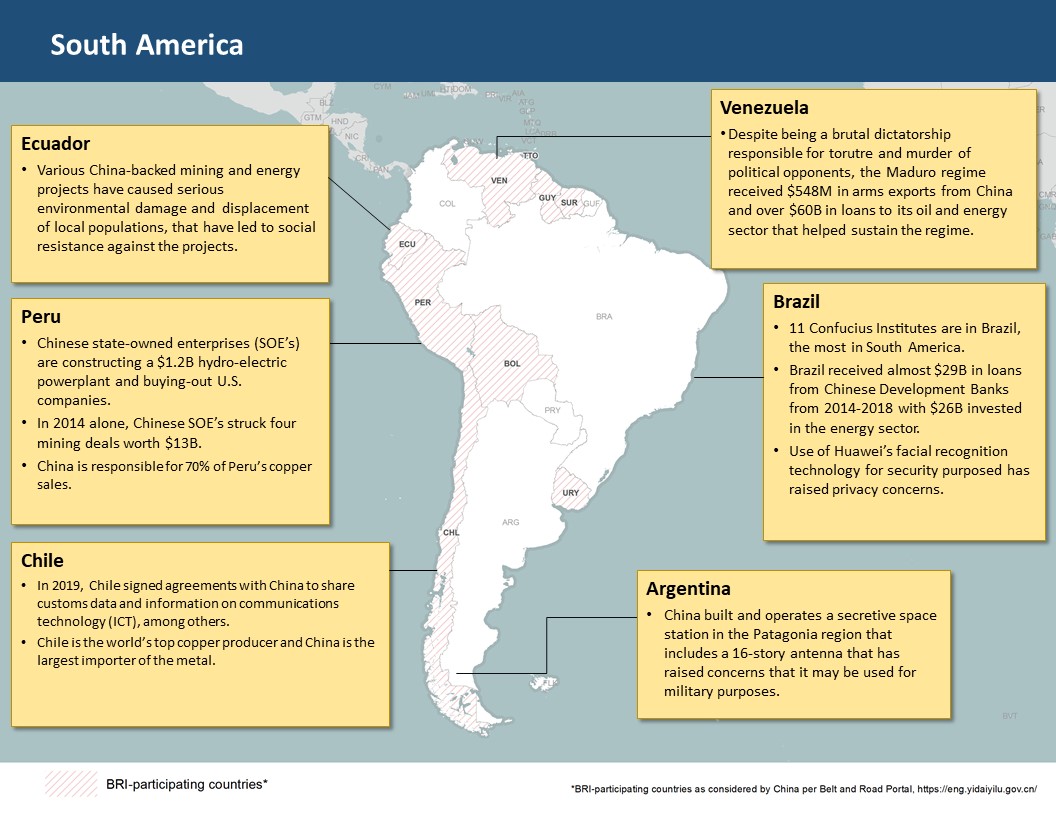
G7 has not named its target nations but mariner hopes the nations include those in South and Central America. In any case, the monetary power of the group is incomparable even considering China and India.

Even though the PGII doesn’t address the Pacific Rim situation directly, this is great news and mariner wants the readers to know – this is a good news post!

Ancient Mariner

What does it feel like?

What must it have felt like to societies that were at war before the invention of explosives and then experienced bullets, bombing and impersonal killing? Before explosives, war was very personal; brutal person-to-person engagement in violent and painful murder; war was an engagement of individuals – war could not be executed without individuals directly engaged with other individuals. Suddenly, many individuals could be killed without that personal, person-to-person engagement.

This is an example of ‘depersonalization’. War was no longer a personal experience, it became one person taking no risk but killing many unknown persons far away – whether the unknown individuals deserved it or not or even knew they were engaged in combat. Society must have felt an important moral commitment slip away – the individual was no longer morally responsible, rather, killing became a pluralistic, amoral experience.

What must it have felt like to societies that lived in relatively stable, locally governed communities where daily commerce was an engagement with familiar people, where the local economy was created by the community as a group of related individuals before the invention of the internal combustion engine that shifted commerce away from communal living, required massive interaction with non-community businesses and having to travel away from the local community on roads and rails? Afterward, communities were subject to economic forces outside the community and its familiar economic ethos of individual well being. This is depersonalization of economy – no longer a community-driven value system.

What must it have felt like to society when elections were strictly a regional phenomenon, where the elected officials were locally known and the issues were the voters’ concern focused on meat and potato issues before individual perspective was swamped by television which exposed individuals to unknown, pontificating, irrelevantly motivated hacks that had no concern for the power of the individual in democratic politics? This is depersonalization of democracy – a philosophy dependent on strength that comes from a bottom-up flow of authority.

What must it feel like to humans when growing up, assuming persona and responsibility and living life among other humans when the chemistry of inter-human behavior is disrupted by a handheld device that replaces human behavior with insidious instructions and influences, induces drug-like dependency and the sole motive is to deflect normal human behavior. Truly this is the depersonalization of human life.

Mariner has vowed to practice forgiveness and compassion, center his life in the society of his town, deny participation in top-down political activities that impose on local perspective and will never participate in the evils of uncontrolled, unmonitored behavioral modification.

In accordance with his Luddite attitude, mariner has completed his Christmas wish list for 2022: two ponies and a small, two-axle pony cart.

Ancient Mariner


Possible tools for HORSE #3

It is interesting to notice how this horse race has an all or nothing air to it. HORSE #1 has democracy at stake. Intensely focused social and political resources must be expended, to borrow an abused phrase, to make America great again.
HORSE #2 has economic survivability at stake. As the 21st century moves forward, civilization will become more extreme in its relationship between have and have-not nations. Already 793 million humans are starving to the point of death, severe malnutrition and stunted bodies. Already out of 43,000 multi-national corporations, 40% of the wealth rests in the hands of only 147 of those corporations.
Human society has hidden much of its economic imbalance by over indulging in the consumption of Earth’s resources – fossil fuel, over-fishing the oceans, destroying forests to plant crops, leveraging limited elements on the Periodic Table, etc. The resources have become scant enough to threaten national stability around the world. HORSE #2 has the difficult task of redistributing wealth in an oligarchic, grow or die world.
Taking a look now at HORSE #3, the planet has no judgment with which to modify or improve its condition. The planet, from an unusual perspective, is just another orphan in the Milky Way not allowed opinion or input into how the orphanage is run.
What tools might humanity use to counter such huge, automatic, astronomic rules?
Probably the most important tool is to realize that humans live in the same orphanage. (Suddenly, a new metaphor emerges; mariner can’t help it!) In other words, planet Earth responds only with cause and effect options. Humans have given HORSE #3 Carbon Dioxide, which amounts to Furosemide (Lasix), also called “doping”, in horses. Now the Earth is running a lot faster than it usually does. So, not being too intellectual, humans should stop doping Planet Earth with Carbon Dioxide. But humans have a flaw: humans can make decisions without facts.
Today, it is the fossil fuel industry, the logging industry, the computer industry (computers are in the same class as automobiles when it comes to releasing CO2), the plastics industry, et al who make decisions about Carbon Dioxide. Asking these industries to stop releasing Carbon Dioxide is like asking the reader to stop urinating.
In this respect, all three horses are using the same equipment to win the race: Politics and money. Planet Earth, however, has an unmeasurably large bankroll with which to raise the stakes (another metaphor: poker).
To win or at least tie in this race, the US stable must expend unknowable amounts of money, must overcome the fleabites of prejudice and greed in society, and must acknowledge from the heart that they do not own or control the biosphere.
Ancient Mariner

HORSE #3 at the starting gate

Mariner has leaned heavily on the horse race metaphor. It helps provide direction and simplifies objectives. The element that changes dramatically when HORSE #3 enters the race is the track itself. It has been easy to correlate the requirements for winning with HORSE #1 and #2 – they are owned by the same stable: The United States. The track is identical for both horses. HORSE#3, however, is owned by a different stable: Planet Earth. The track is unfamiliar to the US stable. Given today’s circumstances, to win the race the US stable must run on an unfamiliar track.

There are familiar attributes in HORSE #3. All three horses are focused on consumption of resources; all are concerned about survival; all are concerned about the grand order of things. What distinguishes each horse is the manner in which each horse runs the race.

HORSE #1 runs by modifying legislation, shoring up cultural unity and establishing common purpose.

HORSE #2 runs by investing in financial partners who will comprise an international market/GDP liaison.

HORSE#3 runs by utilizing planetary resources such as atmospheric temperature, biosphere adaptation, weather patterns, tides, volcanoes, earthquakes and similar physical characteristics. (When evaluating HORSE #3, there is a tendency to push measurement to infinity, that is, one feels the urge to jump off the track and frolic in the infield. If one’s thoughts seem to require a consultation with Charles Darwin, Sir Isaac Newton, Stephen Hawking, Albert Einstein or Harry Emerson Fosdick, the scale is too grand.)

Perhaps not very scientific but the three-horse race is all about the fact that the US stable has been borrowing hay from the Planet Earth stable and not ever paying for it. The cost to run this three-horse race is very, very high; without a good racing strategy, the US stable (and other national stables) could go bankrupt.

Addressing the issues more directly, humans have been releasing carbon dioxide in volumes so huge that they have interrupted the naturally very slow Carbon cycle typical of the Earth’s planetary behavior. Spiking the planet with Carbon Dioxide is like giving someone methamphetamine. Consequently, glaciers are melting, oceans are rising, air is heating, weather is changing dramatically and earthquakes are more active.[1]

֎ The planet is so energized that in the US alone 162 million people — nearly 1 in 2 — will most likely experience a decline in the quality of their environment, namely more heat and less water. 1 in 12 Americans in the Southern half of the country will move toward California, the Mountain West or the Northwest over the next 45 years because of climate influences alone.

֎ Eight of the nation’s 20 largest metropolitan areas — Miami, New York and Boston among them — will be profoundly altered, indirectly affecting some 50 million people.

֎ Ten fastest-sinking coastal cities (2015 to 2020)
Tianjin, China 5.22 cm per year
Semarang, Indonesia 3.96
Jakarta, Indonesia 3.44
Shanghai, China 2.94
Ho Chi Minh City, Vietnam 2.81
Hanoi, Vietnam 2.44
Chittagong, Bangladesh 2.35
Kobe, Japan 2.26
Kerala, India 1.96
Houston, USA 1.95


To translate the impact into dollars, the cost of repairing damage from hurricanes, floods, fires and drought in the US has risen. Climate change has cost U.S. taxpayers more than $350 billion over the past decade, according to a report released last year from nonpartisan federal watchdog the Government Accountability Office. By 2050, that figure will be $35 billion per year. Costs include clean up and disaster assistance caused by flooding and storms, which are set to increase under rising temperatures. Not taken into account are the shifts in climate which will severely impact agricultural production.

So entry fees for this three-horse race are exorbitant. They are large enough for every nation on the planet to be forced to reassess budgets. What comes first, war or flooding? What is more important, plutocracy or feeding citizens? What’s more important, space budgets or rebuilding New York City and Miami?

Finally, given the objectives of all three horses, will the US stable win anything?

Ancient Mariner

[1] If the reader wants to have a deeper understanding of the Carbon cycle, check out https://www.earthobservatory.nasa.gov/features/CarbonCycle

Possible tools for HORSE #2

There is precedent for a tool designed to develop the integrated marketing schemes that will emerge in the near future:

The Trans-Pacific Partnership (TPP) was a proposed trade agreement between Australia, Brunei, Canada, Chile, Japan, Malaysia, Mexico, New Zealand, Peru, Singapore, Vietnam and the United States. Participants signed the agreement on February 4, 2016.

As written, the TPP had serious flaws that left human rights issues at risk. Congress was not willing to sign the agreement as it stood; renegotiation would be necessary. After taking office, newly elected President Donald Trump withdrew the US from the agreement in January, 2017.

The remaining nations signed a reworked agreement called ‘Comprehensive and Progressive Agreement for Trans-Pacific Partnership’ (CPA) that went into effect in December, 2018. The eleven signatories have combined economies representing 13.4 percent of Global Domestic Product (GDP).

The issue at hand is the cost and political transition of such agreements. Every member nation must adjust government budgets, labor laws and have a member nation who can underwrite the cost of setting up productivity, legislation and buying off resistance. Without the US, the CPA moves slowly and cannot make competitive changes to the world market. Hence the importance of China, India and the US as anchors for these large international markets.

Using South America as an example, several dictatorships with failing economies must be rescued; several failed nations in Central America, the Gulf and Caribbean (including Cuba) must be propped up with renewed, functioning cultures and economies. This strategy cannot begin until HORSE #1 creates a more caring attitude toward South America and Hispanics in general. Today Congress and the President would rather spend billions on a failed and eternal immigration issue rather than go to the source nations and make them economic partners, thereby eliminating the cause of excessive immigration in the first place. China has a head start –

The race is on.

Ancient Mariner

HORSE #2 at the starting gate

When HORSE #2 is examined, one discovers that the three horses have more in common than expected and may, in fact, be traced back to the same genetic source. HORSE #1 is about democracy and HORSE #2 is about economics; both are about capitalism. Both are about the democratic ethics of a unified and principled nation leading the world in fair and equitable market management.

At the starting gate, a great deal can be identified about track conditions. China, with its Belt and Road economic strategy, is focused on smaller neighbors along the Pacific Rim and a large swath of Eurasia including several ‘stan’ nations. A sea version loops around India into the Indian Ocean and to the east coast of Africa – 60 nations in all.

India, troubled at the moment by conflicts similar to those in the US, eventually may get it together, displace China’s sea strategy and may even dominate the Middle East economy.

Europe and China are investing heavily in African commerce.

This leaves South America, Pacific alliances including Australia, New Zealand, South Korea, Taiwan, Canada, Mexico and Japan and presumably a greatly enhanced presence in South America as fertile economic ground to be developed by the US.

Coming out of the gate, HORSES #1 and #2 require a common unity of purpose. Winning the race requires compassionate assistance to potential nations; winning requires wise and significant investment in the economics of potential nations; winning requires an air of successful cooperation with fellow partners.

Does current prejudice against Hispanic people and governments help? Does pulling manufacturing back onto US soil help? Does prejudice against Asian nationals help? Does the frozen, nontaxable wealth of the oligarchs help? Frankly, if HORSE #2 has any chance of winning, it will be because HORSE #1 got wise and developed a unified and principled nation.

Mariner calls the big three nations the ‘Sumo League’. Each nation had better come to the tournament healthy, well endowed, and have its internal affairs in order.

Ancient Mariner

Possible tools for HORSE #1

[The reader may recall that mariner has decided not to bother with the ongoing drama and iterative accounting of every day, commercially sponsored, viewer-rating-hungry news. Instead he has chosen three critically important issues to review: 1, will democracy survive; 2, will the United States remain a world power in a new global economy; 3, what is the impact of global warming.

As is his wont, mariner has packaged the three issues in a metaphor as a three-horse race. Each horse receives a definition, current circumstances and possible impact on life in the US and around the world. To date, mariner has defined the three-horse metaphor and described the current circumstances of HORSE #1: Will democracy survive?

In this post, mariner looks at possible tools and modifications that may sustain democracy, that is, lead to a win for HORSE #1.]

– – – –

Possible tools for HORSE #1

Mariner cited several social examples that showed it is not the high-standards of ethics and policy in the Constitution that steer the nation. In fact, dozens of local, unabashed selfish cultural standards control the US political world, ignoring both original and modified language in the Constitution.

Over time, Atlantic Magazine has focused on this issue from different directions. One very dramatic idea that may bring behavior of the US more in line with the spirit of the Constitution is to redefine the term ‘Republic’ in the phrase, “The United States is a democratic Federal Republic”. Today, the term ‘republic’ alludes to the independently and publicly ruled states that comprise the United States. Could there be regional ‘states’ that more closely represent the regional cultures that today ignore the Constitution?

֎ Mariner observes that the Indigenous Indian treaties set a precedent for this concept. Would it be better if Dixie had a treaty relationship with the US Constitution that would allow the region to manage its own culture? A good example already underway is abortion, clearly a different ethic depending on the region of the nation.

Regional history for the US is extremely different for different areas. For example, the racist south is steeped in slavery and defensive eras where Indians and Hispanic immigration were perceived as threats. Then there’s the cowboy west, based on cattle economy and scant law enforcement which still is reflected today (Change cattle to oil and one can understand the risk faced by Wyoming Representative Liz Chaney).

Certainly the West Coast has its own idiosyncrasies, much more liberal than the cowboy mountains. How about the plains which even today have a staid agricultural economy with a no frills culture? And of course the ancient Northeast with New York; big business is the standard and money talks.

֎ Another republic model to consider is the European Union. The historical difference is that nations in the EU already existed as independent nations and already ruled their own culture. The new piece was a common money system – the Euro. There have been issues as member nations have suffered economic ups and downs which stretch the financial dependencies between the members. Today, England is considering dropping out of the common euro because of an imbalance in costs and trade agreements. Germany as well complains about supporting the EU more than other members.

An interesting conjecture for the future if the US adopts the EU model: California alone has a GDP rank close to England’s. What if California became disgruntled and decided to leave the US economy and be its own independent country? Further, would the US regions, which differ mightily when it comes to GDP, have the same conflicts the EU has balancing economies? Roughly speaking, the Confederate states lag behind the Union states with 22 percent less GDP.

A political conflict is emerging as several eastern members, the largest is Turkey, are eroding the democracy requirement to be an EU member and introducing autocratic rule. Mariner definitely sees that happening among the red states in the US.

So mariner leaves the regional solution in the hands of the readers for further contemplation. Would allowing regional cultural management, that is, mini-constitutions, save the United States? Anti-abortionists and the Republican Party think so – even to overturning US Constitutional election language and eliminating open election of representatives to the Electoral College.

Next: HORSE #2 at the starting Gate

Ancient Mariner

Ready, Aim . . .

An article from The New Statesman, a British publication, has a different slant on the US obsessive gun dependency:

“US gun violence is not just a domestic political issue. The failure to take action is a gift to Chinese and Russian propagandists. Shortly after Joe Biden took office in January 2021, he delivered a major foreign policy speech setting out his vision for the United States’ place in the world. He vowed to rebuild the country’s alliances and restore its moral leadership after the tumult of Donald Trump’s presidency.

“America is back,” he declared, and he promised that the United States would “again lead not just by the example of our power but the power of our example”.

“Yet the power of that example has been repeatedly undermined by the failure of US political leaders to tackle the country’s domestic problems, including racial injustice and worsening gun violence. This plays into the hands of American adversaries like China, whose propaganda highlights the deaths of young children in American school shootings and the police killings of Black Americans to advance the Communist Party’s agenda and what it claims are the comparative advantages of its own political system.”

Mariner surmises that guns are to this disheveled nation as opiates are to a drug addict. How does one detoxify a gun addiction? As with all other virtuous ideals that have disappeared, it seems having a gun is more important than continuing to be the world’s moral leader and key advocate of democracy.

It isn’t just guns that tarnish our national image. A dysfunctional Congress and the attacks by red states on open elections also have been noted – especially by European sources.

If the United States loses its moral leadership advantage, it will lose the economic battle for economic supremacy in an emerging global economic system.

Mariner’s solution: When it comes time to vote and the candidate is running for reelection, give serious thought whether the candidate deserves another term; if the candidate is over 55, do not vote for that candidate; further, give precedence to women, nonwhites, and candidates not supported by a national PAC.

Detox is not a pleasant experience.

Ancient Mariner