
Today’s Issues are about Paradigm Shifts

So many deep cultural and behavioral patterns are under duress today. To name only a few of many, In the US and Europe, consider the transition of religious practice: many churches are becoming anachronisms with falling attendance, bound by generation gaps and overburdened spiritually by large, old fashioned denominational hierarchies. On the evangelical side of the spectrum, literal allegiance to old rituals and intense isolationist attitudes prevail. A few churches are blessed by location in supportive communities and have excellent leadership. Yet the path they follow grows narrow. The current role of Christian faith in society is under pressure to change its paradigm, its model of behavior and purpose.

In the US, political process is grinding to a halt as our body politic undergoes a meiosis of culture – moving farther right and farther left – leaving little ground in the middle for common purpose. Eventually, what new political identity will emerge? What will be the new paradigm?

International relationships are confronted with global issues that require a new, stronger bond between nations. Not just climate change, a profound confrontation for which there is scant preparedness, but other global issues as well involving cybernetics, instant awareness of global activity, population management, multinational economic models, distribution of food and medical support, and the international role of corporations.

Every one of these patterns of behavior, or paradigms, is under duress, highly vulnerable to disorganized response, militaristic rebellion, profit taking, denial, and short-sighted solutions. The news of the day focuses on terrorist atrocities in France. In the Middle East, cultural wars have erupted in response to religious differences, economic inequality, cultural conflict and political disparity. Many nations struggle to find solutions to mass emigration, irrational abuse of citizens by governments and armed conflict in a war with no boundaries, no front lines, and no hierarchical organization.

What is the world to do? What are the processes by which solutions can emerge?

First, we must acknowledge that profound changes are occurring. These changes introduce new values that do not exist in the current perception of world order. Intransigent Christian concepts of society, government, and ethics have shaped the history of Western culture since the time of Constantine. Meanwhile, unnoticed histories shaped by Islam, Buddhism, Hinduism, and Taoism have evolved unnoticed until recent times. In many respects, these other historical influences have not experienced the demand for innovation and competition that Western societies require. Hence, many Eastern practices exist according to older behaviors established as long ago as the eighth century. Many Eastern governments exist today in forms that were adequate until economic and social influence from the West interfered. Tribal values persist even today; the East, particularly the nomadic Middle East, had no need in the past to develop new social solutions similar to Western mechanisms that cope with power and competition. The East never had need of a Magna Carta, parliaments, or the right to vote.

Without the cultural tools developed by the West, that is, trust in government to manage important issues, democratic tools to shape government as times changed, and the rule of law, the Middle East is bound to manage a paradigm shift with what is at hand: aggression and lashing out with violence.

The cultural conflict today, particularly the Islamic-Christian conflict, cannot be ignored. Further, it cannot be contained by armed aggression; it cannot be contained by Western political tools like treaties, international agreements like NATO, or buying compliance through economic favoritism. Of particular importance is that Middle Eastern governments are theocracies – whether dictatorships, sheikdoms or subordinate governments; the religious leaders are in charge – or at least dominate national options. Middle Eastern theocracies have not experienced the pragmatic influence of secularism first melded in Max Weber’s The Protestant Ethic and the Spirit of Capitalism and other publications. Further, separation of church and state mandated by a few Western nations is an unknown precept to Middle Eastern theocracies.

An assumption held by many westerners is that the West must be tolerant but controlling while waiting for the Middle East to “grow up” and become part of the modern (Christian) world. It may not be addressed as simple as that. What if the roles are switched? If the West had the attitude that it must allow the Middle East to develop a new world order inclusive of the Islamic tradition – a tradition that at least would alter Western perceptions of ethic and personal freedom.

Here are some facts about the world and Islam that may be of interest to the reader’s contemplations:

Bill Maher provides a stark comparison between Islamic and Christian ideology that’s simplistic but reveals in short order the different approaches to justice. See:

http://www.bing.com/videos/search?q=Islam+Vs+Christianity&FORM=VRIBRE#view=detail&mid=792282120BE4D111E919792282120BE4D111E919

The number of Christians in the world is 1.99 billion. The number of Muslims in the world is 2.08 billion. Muslim population is growing faster (1.84%) than Christian population (1.13%).

A column from CNN compares religious behavior between Islam and Christianity. See:

http://religion.blogs.cnn.com/2011/12/03/conflict-theology-and-history-make-muslims-more-religious-than-others-experts-say/?hpt=hp_c1

Considering population in terms of gross income between Islamic countries and Christian countries, the Islamic paradigm restricts economic flexibility. Advances in technology, science and cultural adaptation often contradict the Quran, especially when these advances influence a change in societal behavior.

A classic example exists in Iran, an Islamic theocracy and population, struggling with its own emerging technical (and imperial) capabilities versus centuries-old religious traditions that are in conflict both with new technical ideas and with old Shiite-Sunni rivalries. Unlike other Middle Eastern nations, Iran has a growing middle class pressing for Western values and economics at the same time that Middle Eastern politics require Iranian support of Shiite wars and objectives, including ISIL and declaring the West as evil even as its middle class uses ipods, eats fast food and wears western attire.

Clearly, the Middle East is in the throes of a paradigm shift between a religion that requires strict allegiance to Islamic values going back as far as the first century and the overwhelming human experience of the twenty-first century. The gap between the old Islamic paradigm and the new paradigm is catastrophic. It will take the rest of the century to adapt to the new paradigm. In the meantime, the West must mitigate violence perhaps with little reward as Muslim nations come to terms with the modern world.

The new international paradigm that eventually emerges will call for a different West and a different Middle East. Twenty percent of the world’s population will become a new, equal and active participant in the global experience.

Ancient mariner
Beyond Guns

Mariner received feedback on the post, “The Gun Situation.” Some agreed with the premise that the gun issue will be resolved only when guns are removed from easy access. Others stood their ground and took the position of Charlton Heston: “From my cold, dead hands.” A reader or two said we can’t go back to walking policemen; the world has changed, and one said old people always want it the way it was.

Mariner is pleased when his posts provoke dialogue. He hopes to respond adequately to these comments.

The mariner knows many gun rights advocates. Most are hunters. Surprisingly, most hunters do not own hand guns; they own rifles. Many are occasional hunters, have rifles and one or more handguns. Many are paranoid about authority in general – especially government authority. A subset of these is the individual who fears the public in general and carries a weapon at all times. Another subset is the collector who fears weapon recalls – especially military weapons.

Finally, the largest group of gun rights advocates simply wants the right to own a gun or two just for emergencies like attempted rape or robbery and car napping. It is this group that kills inadvertently simply because a gun is handy. The Blade Runner is a member of this group.

Collectively, gun rights advocates are politically conservative. If well-to-do, they have an attitude that they are privileged to own guns and prefer that government keep its nose out of their personal life. If working class, they are infused with a paranoia toward society in general – perhaps appropriately so.

Advocates that are financially comfortable prefer not to incite violence, while anyone who is deprived of financial stability, untrusting of bureaucratic harassment, and disadvantaged in daily life is prone to act out with rage or criminal intent when social pressures become too great. A gun is a quick equalizer for sure.

Older folk are blessed to have lived through a golden age of the United States. From the forties to the mid sixties, the American culture was on a high; the middle class was surging; jobs were available at every level of income; higher education was affordable; democrats and republicans weren’t polarized; it was an age of cultural unification and national pride. It was an age of civility and protective policemen. Sociologist David Riesman observed the importance of peer-group expectations in his influential book, The Lonely Crowd. He called this new society “other-directed,” and maintained that such societies lead to stability as well as conformity.

However, the cold war, the Vietnam War, and inflation added a taste of vinegar to our society. The world was not perfect – not even in the United States. Middle class resistance groups began to emerge, the prominent one being Students for a Democratic Society (SDS) that advocated populism as a solution to military spending and economic reform. When Ronald Reagan became president, he made a list of objectives that would quell anything that smelled of populism – even unions – and moved the government away from the influence of local politics, replacing the void with “free market capitalism.” Eventually, plutocrats managed the government and ideas of caring for citizens vanished – replaced by an oligarchy that controls our culture today. Economic class differences increased making the upper class richer, the middle class paying the bills with less income, and the lower class forgotten.

As the stress of imbalance between classes increased, many poor felt abused as opportunities for them disappeared, as salaries became stagnant, as family life took the burden and too frequently was shattered. Alternatives to stable employment led to a growing drug culture, theft, and, finally lashing out, violence. Still under the influence of conservative policies, governments responded by replacing benevolent policemen with cruisers, superior-force attacks instead of protection, out-arming the armed underclass and blaming entitlement programs for creating lazy people who would rather live off a government dole.

Looking back, one can understand how a gun culture grew. The omniscient news media continuously reminded everyone of every criminal incident, every drug bust, and every gun incident. Our culture became saturated with a need for self protection. Better to have a gun to protect oneself from whatever happens.

To move toward banning guns, other issues must be addressed:

Deal with class issues. Every economic class has norms and expectations that, if provided, restore a sense of security.

Give the government back to the voter. Limit campaign contributions to the district of jurisdiction; overturn Citizens United. Remove redistricting from political influence.

Restructure tax legislation for the upper class. The nation needs their excessive income for the national good. Reign in corporatism at least by imposing appropriate tax reform.

Create a bottom-up educational system tied to employment. Opportunity through education easily mollifies a feeling of entrapment.

Legalize marijuana to undercut the black market. Tighten drug inspections at borders and increase penalties for distributors of illegal drugs.

Once the above list is underway and showing progress, perhaps gun registration and a paid-for-recall gun program may be possible.

Oh, and reinstitute the cop on the beat swinging that shillelagh. We need protection, not street wars.

Ancient Mariner

The Gun Situation

The United States has a deep rooted issue when it comes to weapons and the citizens’ libertarian attitude toward problem solving (I’ll buy my own gun – I can handle my own safety better than the government can). Further, the American culture has adopted a militaristic attitude as international issues put stress on Americans that suggest the nation shows signs of slipping as the number one nation in everything. Typical of cultural change, we tend to ignore the change itself and go on living our daily lives – taking note only of the growing number of gun events that make the news. Noting these gun events in the news, the most common compromise is to admit that some people, let’s call them ‘mentally disturbed,’ should not have guns. Therefore, there should be universal record checks whenever guns are bought or sold.

Although well intentioned, this tit-for-tat response to the American gun issue is misdirected. Who, at a given moment, should not have access to a gun? Any of us! One example to explain.

Remember Oscar Pistorius? He is an Olympic athlete called Blade Runner because he ran on spring prosthetics; both legs amputated below the knee when he was 11 months old. On Valentine’s Day in 2013, Pistorius and his girlfriend Reeva Steenkamp were having an argument. Steenkamp locked herself in the bathroom. Pistorius shot through the door and killed her. He was convicted of culpable homicide. There is an effort by prosecutors to retry him for murder. For a video of Blade Runner, see:

http://www.bing.com/videos/search?q=south+african+olympic+blade+runner&FORM=VIRE5#view=detail&mid=2B5C6FB2D3788EC99C132B5C6FB2D3788EC99C13

Oscar Pistorius cannot be called one of those ‘mentally disturbed’ individuals; no psychological test could identify him as other than a normal human being. Yet, in a rage, he used a handy pistol to demonstrate his ire. How many of us have known rage? With each of us having a gun around, we might say, “There, but for the Grace of God, go I.” What if Oscar had no gun? Would Reeva still be alive? Would Pistorius still be a world renown athlete?

One last example. Too frequently, small children kill parents and siblings for many reasons. Are these children “mentally disturbed?”

People don’t kill people. People with guns kill people. To attack the gun issue at the cultural level, the US must seriously consider Australia’s legislative action to ban the sale of guns in addition to registration and illegal use. As in Australia, violence is an issue in the US. That so many feel the need to own a gun is a bellwether of how our culture has moved from civility to barbaric paranoia. Canada has banned the sale of guns.

When mariner was nine or ten, he had no defensive reflex when he saw a policeman. Policemen walked their beat then, swinging their shillelagh artfully around the thong. Occasionally, one could hear them whistling. The policeman visited each shop owner for a bit of small talk, checked locked doors, covered every block and every alley. It wasn’t long before the policeman knew most people on his beat and even had a good idea where trouble may arise – many times preventing an incident rather than responding too late. In troublesome neighborhoods, two would walk along together. The quickest access to backup was a phone every few blocks that looked like a parking meter. In a word, policemen were civil.

Today policemen travel in elaborately decorated vehicles. The vehicles are called “cruisers,” which is the same image as a bunch of rebellious youth “cruising” – both looking for trouble. Today, policemen don’t protect people; they wait for an event and bring a militia armed with military vehicles and weapons. Too many times, policemen shoot first and think later. Not so civil. The transition of police from protectors to militant enforcers is another bellwether of cultural change.

Utilizing a trite comparison, the Roman Empire ruled the entire known world by military might; Roman citizens cheered blatant torture and death of animals, religious ‘deviants’, criminals, and the big sport was armed warriors fighting to the death – by the turn of an indifferent thumb. Those were not civil times.

The gun issue cannot be solved by reacting to day-to-day incidents. It must be stopped at the beginning: ban gun sales – an improbable event given the level of civility in the US.

Ancient Mariner


The Battle of Isms

Mariner has noticed that conservatives have begun to cast pejorative meaning onto the word populism. It is claimed by conservatives and authoritarians that capitalism and populism cannot coexist. In the same sentence, socialism virtually is a curse word. Sadly, the term communism is used to bludgeon socialism, populism and progressivism; have we not learned from Senator Joe McCarthy that beliefs, especially in the Western nations, are a composite of ideas and not segregated as to become absolute? A nation functions better and has more success when ideas are a mix that draws the best from many beliefs.

Unfortunately for the conservatives, they must abide within their own ranks tea party and libertarian movements, both of which are populist. Populism is not conservative; it is not liberal. Populism means the will of common citizens is the source of judgment and morality. Populism becomes the mood of the citizenry when they become aggravated because of abuse by society’s institutions – public and private.

Some states, notably California, use the referendum (also called an initiative) as a means by which the people can legislate from the voting booth, bypassing the formal branches of government. Populism is unwieldy as a government process because it usually reflects an emotional reaction by the masses, which may not be the best source for reason or fairness. A benchmark example of populism run amok occurred in California in 1978. The reader may remember that inflation was high in the 1970’s. Inflation had been climbing for several years, reaching a peak of 14% annually.

The combination of inflation, growing population and ever increasing property taxes began to force many California homeowners to sell their homes because they could not afford to pay property taxes. Finally, there was enough pain inflicted that an initiative was drawn up; it received enough signatures on the petition that it qualified to be on the ballot. In a word, the initiative said that property taxes could be raised only 1%. From that day to today, California has been paying a price. What was once one of the top public school systems disintegrated due to lack of funds. California is in debt. Public services still are reduced. Walkouts and strikes ensued. In other words, an honest and severe experience in the lives of many citizens led to active populism. Short-sighted relief collapsed the seventh largest economy in the world. The change made to the California Constitution remains today.

The United States has provoked a similar stress point today because of an unfair distribution of profit. Bernie Sanders defines the problem well. In another post, the mariner cited the statistic that since 1940, inflation has risen 2,273% while average income has risen only 455%. Certainly, the stretched rubber band approaches the chaotic point where it will snap. Another statistic says that if one does not receive income of some sort equal to $150,000.00 per year, one is slowly falling behind in purchasing power.

We know some of the causes: plutocrats manage the governments – the common citizen’s vote is virtually useless. The ploys of control are politically managed by gerrymandering voting districts and using restrictive racist policies; elected officials are knee deep in bribes and protected from prosecution for many illicit financial practices; the cash dam broke when the Supreme Court said money was free speech and approved Citizens United; since the 1980’s, corporations were authorized to raid retirement funds for corporate reinvestment; union busting was common using bankruptcy law and restructuring of corporations; Social Security funds have been reallocated to other uses since World War II; lax attitudes about entitlements and workers rights allowed businesses to stifle minimum wage and wages in general; insurance, health and bank profits are uncontrolled, rising far ahead of inflation. And the issue everyone hears is the existence of a brutal oligarchy where 1% possesses 90% of the nation’s wealth.

Chicken Little is saying “There is chaos! The sky is falling!” Amos says The US is paying for its sinfulness. God will strike down the nation!”

Populism, anyone?

The most critical vote in many decades is before us next year. Vote. Vote thoughtfully.

Ancient Mariner


Amos Comments on the Candidates

The primary season will begin in the mariner’s state in February. He sat with Amos to hear his opinions about the candidates. The reader must remember that Amos is the personification of the prophet Amos in the Old Testament – not so much interested in self aggrandizement but more concerned that many do not take time to understand their role and responsibility in God’s world. Amos would say all of us depend too much on comforting habits and yield to distractions too easily.

Greetings, Amos. The mariner wants to know your one-sentence opinions about the candidates running for President. First, let’s look at the republican field:

Ben Carson. If he doesn’t talk faster, he’ll have a lot of pocket vetoes.

Donald Trump. Reminds me of Jackson who rode his horse into the white house and eliminated the Federal Reserve.

Ted Cruz. He’s from Canada. That must count for something.

Chris Christie. He has more experience than Donald Trump.

Marco Rubio. He’s Cuban. That must count for something.

Jeb Bush. He’s a Bush. That must count for something. On the other hand, he’s a Bush.

Carly Fiorina. She watches too many movies.

Jim Gilmore. He’s from Virginia. He probably knows Carly.

Lindsey Graham. A romantic conservative. That’s rare.

Mike Huckabee. He’s on a book tour. It’s a shrewd move to run for president at the same time.

Bobby Jindal. He’s no Earl Long. Say, have you met Blaze Starr? I have.

John Kasich. He’s a perfect Governor for Ohio’s political schizophrenia – learned how to say two different things at the same time.

Rand Paul. I remember when his daddy Ron posited that the US could wipe out its debt by offering tax incentives to corporations for increased business then receive more than the rebate back in taxes over ten years. States still play that game and lose every time.

George Pataki. Don’t know him.

Amos, you’ve shed new light on the campaign. Thank you. Let’s turn to the democratic candidates:

Hillary Clinton. She (and her husband) should have written Donald’s book, “The Art of the Deal.” It’s interesting that the electorate doesn’t trust the Clintons; they can achieve progress where others can’t – for a price, of course.

Bernie Sanders. He’s a fabulous preacher. Not sure about being President.

Martin O’Malley. He’s from Maryland. That is good for something!

Ancient Mariner

Old is Tough

A very old man lay dying in his bed. In death’s doorway, he suddenly smelled the aroma of his favorite chocolate chip cookie wafting up the stairs. He gathered his remaining strength and lifted himself from the bed.  Leaning against the wall, he slowly made his way out of the bedroom, and with even greater effort forced himself down the stairs, gripping the railing with both hands. With labored breath, he leaned against the door frame, gazing into the kitchen. Were it not for death’s agony, he would have thought himself already in heaven. There, spread out on newspapers on the kitchen table were literally hundreds of his favorite chocolate chip cookies. Was it heaven? Or was it one final act of heroic love from his devoted wife, seeing to it that he left this world a happy man?  Mustering one great final effort, he threw himself toward the table. The aged and withered hand, shaking, made its way to a cookie at the edge of the table, when he was suddenly smacked with a spatula by his wife.

“Stay out of those,” she said. “They’re for the funeral.”


A little, silver-haired lady calls her neighbor and says, “Please come over here and help me. I have a very difficult jigsaw puzzle, and I can’t figure out how to get started.”

Her neighbor asks, “What is it supposed to be when it’s finished?”

The little lady says, “According to the picture on the box, it’s a rooster.”

Her neighbor decides to go over and help her with the puzzle. When he arrives, the old lady shows him the puzzle spread out all over the table. He studies the pieces for a moment, then looks at the box, then turns to her and says:

“First of all, no matter what we do, we’re not going to be able to assemble these pieces into anything resembling a rooster.” Then he takes her hand and says, “Secondly, I want you to relax. Let’s have a nice cup of tea, and then…” and he says this with a deep sigh…


“Let’s put all the Corn Flakes back in the box.”

Three seniors are out for a stroll. One of them remarks, “It’s windy.” Another replies, “No way. It’s Thursday.” The last one says, “Me too. Let’s have a soda.”


On an overseas flight, a lawyer and an older man were in adjoining seats.

The lawyer asked the senior if he’d like to play a little game. The older man was tired, and he told the lawyer he only wanted to sleep.

But the lawyer insisted the game was a lot of fun.

“Here’s how it works,” he said. “I’ll ask you a question. If you can’t come up with the answer, you have to give me a dollar. Then it’s your turn to ask me one. But if I can’t answer it, I have to give you $20.”

The senior figured if he just got this over with, maybe he could get some sleep. So he agreed to play.

The first question from the lawyer was “How far apart are the earth and the moon?”

The senior stayed completely silent, reached for a dollar, and gave it to the lawyer. Then he said, “My turn. What walks upstairs backward and comes downstairs forward?”

The lawyer was stumped. He thought and thought. He tried to remember all the riddles he knew. He searched every corner of his brain.

He even cheated and asked the flight attendants and other passengers.

Finally, he gave up. He woke up the older man and gave him a twenty. The senior stuffed the twenty in his coat and immediately went back to sleep.

The lawyer couldn’t stand it. He woke up the older man and said, “I have to know. What walks upstairs backward and comes downstairs forward?”

The senior got out his wallet, gave the lawyer a dollar, and went back to sleep.

  • –   –   –   –   –


Old folks live in a different society. Virtually none of them work and have days to fill. Memories and maladies are their stock in trade which leaves them free to invent their own world, their own way to cope.

One thing seniors do very well is remember entire family trees that go back to the Cleveland administration and even sometimes to the first President Adams. They consider it fun to debate each other to prove what really was the name of the son of Sadie Mathers who was divorced from the uncle of Harry Thompson who lived in the green house next to the Smiths – the family everyone was really talking about.

Younger folk often aren’t aware of the reality that seniors experience. There are simple things, somewhat debilitating but not worth advertising: that bit of arthritis that keeps the hand from lifting the fry pan; weakened sphincters that require Depends or antacids; a hip that can’t be repaired because they don’t earn enough at the part-time job to take time off for an operation; slack muscles that can’t keep one’s balance when they walk – requiring a cane or walker; the waning vision and hearing that reduce social interaction; months or even years coping with impending death, and, despite excellent memories of people long past, dealing with confusion about the last ten minutes.

The mariner is an old fogey, too. It grates him that those with the power to support seniors, to give them ease from time to time, to prop up their self esteem and financial security, instead ignore them. Mariner speaks of governments who bargain with health services as if they were auctioning tobacco and too many would shut down all senior entitlements if they could. He speaks of pharmaceutical providers that have worse social ethics than big banks. He speaks of insurance companies who are more interested in profit margins than proper benefits and coverage. He speaks of the entertainment industry that marginalizes senior’s television shows because advertisers want shows for younger folk who still spend money.

Mariner knows an elderly man who still has a sharp mind but is crippled and subject to seizures. His daughter, unemployed, did not want him to stay in her home. The other daughter did not maintain much contact with the father. One day, the two daughters put the man in the car and dropped him at a nursing home. No one thought to pack clothes; no one thought about the nursing home environment. No one asked the elderly man what he thought. Did the man feel like he was trash taken to the dump? No doubt.

The daughters were excessively thoughtless but an underlying chasm exists between younger, purposeful, healthy, engaged-in-life folks and senior citizens who virtually live in a different dimension. The young know newer things, absorb the leading edge of culture while the old folk know older, well, useless things and cannot fathom nor participate in the leading edge of culture. Even a horse put out to pasture has a better daily life than too many lonely, ailing, dying seniors.

The worst prejudice is one we don’t know we have. Mariner fears that such a prejudice sits between the young folks and the old folks – even with parents and other relatives. One forgets, or perhaps doesn’t even know, how much an old person has contributed to the betterment and stability of the young person’s world. One example that is seen frequently is the lame old guy looking for handouts. No one knows he was a war hero awarded the Medal of Honor. All seniors are heroes. They have laid down their lives for the betterment of society.

Consider old people when you vote for every office on the ballot in 2016.

Ancient Mariner

There is Change in the Air

Today is the first cold day. Sharp winds from the Northwest blow past at fifteen knots plus – fast enough to make whitecaps on open water. The flower and vegetable gardens wilted a week ago in a night frost. Grass has yielded to the cool temperatures. Time to store the lawn mower and bring out the lawn rake to herd fallen, tumbling leaves.

Within the space of a week or two, there is an abundance of outside chores: take cuttings or roots for plants that will not make it until spring; pull summer bulbs for dormancy until spring; plant garlic and some new bulbs for next year; clear the table under the grow lights for winter seedlings and cuttings.

In addition to winterizing outside spaces, the place where the three old trees stood is barren and covered with mounds of plant material waiting for the compost box to be completed. The four leopard frogs in the small makeshift pond will hibernate in the sunken debris, only their noses showing. Rabbits will try to winter in the gardens – a no-no; they will be rousted from their warrens. This year is the year for pruning fruit trees.

There was a time in mariner’s life when he heated with wood; six cords had to be cut to last the winter. Six cords is six stacks of quartered wood stacked four by four by eight feet. It is a time to reminisce about but never to experience again. Each to his own: Dick Proenneke spent winters in the Alaskan wilderness.

Inside, the attic will receive new insulation replacing the original material put there in 1954. The 1954 windows will receive a stuffing of cotton or silicon to eliminate drafts. The furnace will be cleaned. Blankets will appear at the foot of beds.

The clocks will be set back this weekend. It is the official act that says it is wintertime; the daylight will be gone long before supper. Winter is here.

There are many who enjoy the winter with its briskness; many even like the snow; many favor winter sports. But there is no mistaking the grey, sunless skies, the biting wind, the need for an omnipresent sweater and an extra heater here and there.

The mariner will hibernate similarly to the frogs by staying inside until spring with his nose peering out the window. He will venture outside for necessities and to travel to Phoenix when winter is at its worst. If mariner had a coat of arms, it would have a palm tree on it.

REFERENCE SECTION

Clear Food is a laboratory that examines food with genomics, that is, food is studied at the molecular level and each ingredient is identified by its genome. A headline grabbing detail is that Clear Food found human DNA in 2% of the hotdogs studied. See:

http://www.clearfood.com/

Who could think that lions could be erased from the world of living things? Lions once were the premiere predator across all the African Continent. They are about to be extinct because of human activity. See:

http://www.newsweek.com/lion-populations-likely-decline-half-next-20-years-much-africa-387471

It’s not only lions

http://www.smh.com.au/environment/climate-change/forecast-for-persian-gulf-a-heat-too-hot-for-human-body-20151026-gkj3do

Ancient Mariner

Poor Amos

First and foremost, the mariner appreciates and is grateful for each reader.

Regular readers know the mariner has two alter egos. One is Chicken Little, a character that runs about saying disaster is at hand. The other is the prophet Amos, a character ill fit socially but nevertheless decries the behavior of the masses for not following God’s commands. There is a third alter ego, the guru, but he seldom appears because no one understands what he says.

Over the years, only two complaints about mariner’s blog are repetitive. One is the posts are always doom and gloom; the other is mariner should provide solutions for his complaints. Just yesterday, I challenged readers to write some haiku. The following is a reader’s reply to that challenge:

Ancient Mariner:

Your voice and the canary

Foretell disaster.

Mariner has no defense. His Meyers-Briggs says he is an ENTJ. Even so, the mariner reads many blog sites – many receive recompense for their posts. He has not found any substantive blog that reflects Pollyanna, Helen Steiner Rice or Norman Rockwell (if he wrote instead of painted). There are endless blogs that talk about the personal life of the blogger. Many of these are similar to War and Peace; a few, like Dave Barry, are comedic; the rest are sitting in their garden reflecting on the meaning of the universe. Mariner has no doubt that virtually all these blogs belong on social media.

While we are examining the Blog of the Ancient Mariner, note that regular readers are from ten countries (47 cities) around the world. Periodic readers are from twenty countries. On a regular basis, each post is read by at least 158 readers. The highest count of readers is in the US and Brazil followed by France and the Philippines.

Solutions are both direct and indirect. Most often, the solution to an issue is to use one’s vote wisely or to correct one’s deportment. The indirect solution is that the mariner has added to one’s perspective.

The mariner appreciates and is grateful for each reader.


REFERENCE SECTION

A new science is emerging regarding how accurate our ability is to predict what will happen in the future.

Expert Political Judgment: How Good Is It? How Can We Know? by Philip E. Tetlock Paperback, 2006.

“The intelligence failures surrounding the invasion of Iraq dramatically illustrate the necessity of developing standards for evaluating expert opinion. This book fills that need. Here, Philip E. Tetlock explores what constitutes good judgment in predicting future events, and looks at why experts are often wrong in their forecasts.”


In the news today, the World Health Organization stated that processed red meat may, on occasion, cause cancer. The report focused on processed meats like hotdogs, hamburger, sausage and canned meat. Diet books have emphasized for some time that meat should be reduced and vegetables increased. Visit the following:

http://money.cnn.com/2015/10/26/news/red-meat-processed-cancer-world-health-organization/index.html

http://www.webmd.com/diet/a-z/flexitarian_diet

http://dailyburn.com/life/health/flexitarian-diet-less-meat-better-health/

http://www.scientificamerican.com/article/caveman-diet-secret/

Your library may have several books on this subject.


Ancient Mariner

Stealthy Transition


A fascinating phenomenon to watch is the silent shift of culture from one era to another. Why did flappers become flappers in the 1920’s? Where did they go? What effect on people occurred because in 1933 income tax was 94% on the rich and businesses were required to pay a straight profit tax of 52% (35% today with further deductions through loopholes)? As a consequence, our culture changed. The taxes continued to improve for the wealthy (39% today). Meanwhile, since 1940, inflation has increased 2,283%; from 1940 to 2008, salaries show an increase of 455%.

What once was a grand democracy that represented equal opportunity (the American Dream) gradually became an oligarchy but we were not aware that this change in cultural value was happening. Election precinct captains were replaced by billionaires and corporations; voting rights were displaced by increasingly severe gerrymandering. But were we aware? Were we aware of the disappearance of fairness, of equal opportunity, of the slow strangulation caused by worker salaries that haven’t risen with inflation or Gross Domestic Profit for 75 years? Are we aware of the changes in corporate law that slowly drain the existence of freedom? Our culture has changed. Yet, as each day passes, as we live our daily lives, we are aware only of the occasional bellwether – still unaware that our core culture has changed.

We have changed many times in the past 75 years. As a visual analogy, most can measure cultural change with music. Do we remember big bands, swing, the Charleston, J-hop, meringue, jitterbug, and line dancing? Today, dancing has become a herd motion of subtle bouncing and shuffling – often as couples, often not. Music and dancing obviously have changed. Why? There is nothing wrong with change; it is precisely comparable to the growth zones in a plant: If a plant doesn’t produce new leaves and roots, the plant will die. The concern with humanity is that, unlike the plant, there is no control of new growth. Human change is willy-nilly and too often not beneficial to humanity in general.

There is a silent change occurring today. Privacy is disappearing. Personal freedom to choose is disappearing. Even government and corporations change policy based on a presumption of what and who you are without your input.

Blame it on the power of computers and electronic communication combined with high-profit greed. The institutions, whatever kind, want to control the financial aspects of our lives. Your opportunity for simple things like the interest available to you for a loan is predetermined by FICO, income, and asset value. This model may make sense to an accountant but it lacks in human spirit, ingenuity, and human purpose. The financial institutions don’t take into account your personal existence.

If one applies for a job, one is given a human-to-human interview only after a series of searches into your income, deportment, credit, neighborhood, and places one has lived, marital status, criminal activity – including traffic violations – education grades and sometimes even one’s immediate family. Again, there seems to be an interest in one’s deviation from a predetermined profile – not the substance of the applicant and the wellbeing of the human spirit.

Do you sneak a peek at pornography once in a while? Do you use email? Especially, do you use social media? Do you gamble online? Do you buy clothes, hardware, books, groceries, chocolate, or look for an automobile? Google knows. Even if you use Bing or Yahoo, Google knows. Google will sell your personal information for profit. Google knows who your friends are. Google can sense changes in your personal life. The end result is, in a very subtle way, that you will be given access only to information that fits your profile. If you want to buy a Cadillac but your profile says you should own a Chevrolet, you’ll have to dig up Cadillac data on your own and the loan officer will add a point or two to your loan interest because your deviation from your profile suggests risk.

Just for the experience, the mariner suggests the reader pay a few dollars to have an online detective service search your background. Using nothing more than public records, your entire life will be laid out in front of you. And Google knows, too.

An entertaining article about privacy is in the current Atlantic magazine for November 2015 titled “If you’re not Paranoid, You’re Crazy” by Walter Kern. Read it online at:

http://www.theatlantic.com/magazine/archive/2015/11/if-youre-not-paranoid-youre-crazy/407833/

REFERENCE SECTION

An interesting study that shows the black plague has been around since 2900 BC. Modern history is familiar with the bubonic plague in Europe that eliminated as many as 200 million people between 1346 and 1353 AD. The plague has occurred often enough to suggest it is the reason for massive migrations in Eastern Europe and Russia. See:

http://www.nature.com/news/bronze-age-skeletons-were-earliest-plague-victims-1.18633

Snow leopards face imminent extinction as global warming changes environment farther up mountain slopes. Many mountain villages depending on snow melt face water shortage. See:

http://phys.org/news/2015-10-climate-leopards-edge.html

For improvement in liberal arts awareness through biographies:

Forty Ways to Look at Winston Churchill: A Brief Account of a Long Life by Gretchen Ruben. Publisher: Ballantine Books, 2003.

One of the best biographies of Churchill. Only a few dollars from several book sites online; mostly used. Barnes and Noble has a few copies in stock.

Churchill was one of the leaders in modern history that truly was multidimensional in life, politics and in personal conflict. This biography delves into the time of Churchill and his evolving impact on British history.

Exercise your mind:

A different form of poetry is Haiku, a Japanese poem of seventeen syllables in three lines of five, seven, and five, traditionally evoking images of the natural world. Some think writing Haiku is similar to solving a three-dimensional crossword puzzle but with nuance. Try writing your own. Sample:

New moon on the lake.

Your voice and the nightingale

serenade springtime.


Full moon on the lake.

Your voice and the waterbirds

celebrate summer.

Ancient Mariner

Time in Maryland

While visiting the Middle Atlantic States a few weeks ago, the mariner visited the Patuxent Research Refuge (PRR) in Laurel, Maryland. The refuge is operated in part by the U.S. Fish and Game Service and by the U.S. Geological Service. PRR, with 12,841 acres, is the largest science and environmental center run by the Department of the Interior. PRR is the only National Wildlife Refuge in the United States established to support wildlife research.

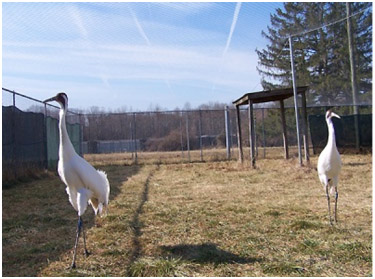
For example, in 1942, only 16 whooping cranes remained in the flock that Whooping Cranesannually migrates from Wood Buffalo National Park in Canada to Aransas National Wildlife Refuge in Texas. An additional six cranes were located in Louisiana, bringing the total global population to just 22 individuals. Unfortunately, the Louisiana flock died out a few years later, so all the whooping cranes now alive derive from the original 16 birds from the Aransas-Wood Buffalo flock. As of October 2013, an estimated 434 whooping cranes exist in the wild – a significant improvement – thanks in part to the captive breeding program at Patuxent.

Mariner was impressed by the quality of the dioramas in the visitor’s center. The many rooms have themes that cover many habitat areas, life-sized wildlife, the importance of food, fresh water, and the many facets of global warming.

Mariner travelled to Annapolis, Maryland where he has sailed many times. When sailing, he particularly enjoyed watching the Naval Academy’s ‘Navy Navy 44MKII copy44MKII’ as they left the Academy to sail to all parts of the world. These boats are schooners built with special requirements for the Naval Academy. Annapolis is a wonderful destination for a trip to Maryland and Virginia. The location fits well in a trip to Washington, D.C. The Annapolis State House is famous in Continental history as the US National Capital in 1783-84; the Treaty of Paris ending the Revolutionary War was signed in Annapolis. A visitor must practice driving roundabouts (circles); Annapolis has two connected together for your driving pleasure.

Just a block from the Naval Academy is Saint John’s College. Readers may recall the mariner’s chagrin regarding disbandment of liberal arts studies in many colleges. At St. John’s, however, one enters a bastion of liberal arts education. The following is an excerpt from their website:

Statistics show that St. John’s College students excel in their endeavors both at the college and after graduation. Almost 70 percent of St. John’s graduates pursue advanced degrees—many enter the nation’s leading humanities, science, business, law, and medical programs. St. John’s College is in the top 2 percent of all colleges in the nation for alumni earning PhDs in the humanities, and in the top 4 percent for earning them in science or engineering.

One element of St. John’s curriculum is that every student must read and report on a predetermined list of fifty classic humanities texts.

Mariner took his first sailing lessons in Annapolis. He finished his captain requirements in Florida. On his last sail to the Caribbean with his family, he visited St. Vincent and the Grenadines and an island belonging to Granada. At a small inlet on the west side of St. Vincent is the shooting location for the first Pirates of the Caribbean movie. These islands are far enough south to have local cultures yet to be overrun by tourism. Often, schools (or pods) of dolphins will race with the boat for a mile or so. In the mariner’s opinion, Caribbean weather is much nicer than many places located along 40°38”42.62’ N.

In addition to points of interest, Maryland seafood is outstanding – especially Crabcakesthe blue crab in every possible style. When the mariner and his wife visit family and friends, somehow several meals involve crab. The photograph has two, half-pound crab cakes flavored and cooked to perfection – one entrée from the menu.

REFERENCE SECTION

Nate Silver, the probability star, maintains all his odds and prognostications from sports to politics on a website called “538.” His political articles are easy to read and show his reasons for his predictions. Nate himself is not very political, which is good; his thought processes have little or no ideological basis – just the numbers. If you are tired of the narrow and sensational news from news channels and pundits, check out Nate Silver at:

http://fivethirtyeight.com/politics/ It is refreshingly apolitical.

Also on 538 is an article about patent rights in big pharma that reads a lot like the manipulations by NRA and the gun manufacturers. Unusual light shed in TPP negotiations bares the conflicts and suggests that the pharmaceutical arrangements in TPP are worth billions in profits and was the last point to reach agreement among the nations. See:

http://fivethirtyeight.com/features/the-problem-with-tying-health-care-to-trade/

Finally, a new book hot off the presses is a book about the Israel-Palestine conflict that has raged for many decades. The ambassador to the Middle East, Dennis Ross, is the author of Doomed to Succeed: The U.S.-Israel Relationship from Truman to Obama, published in October 2015 by Farrar, Straus and Giroux, LLC. The book isolates the history of the US/Israel relationship based on each President’s relationship with Israel. Mariner suggests reading an excerpt from the book rather than purchasing it. See:

http://www.msnbc.com/the-last-word/excerpt-doomed-succeed-fmr-us-amb-dennis-ross

Ancient Mariner