Being Real

[“Real isn’t how you are made,’ said the Skin Horse. ‘It’s a thing that happens to you. When a child loves you for a long, long time, not just to play with, but REALLY loves you, then you become Real.’

‘Does it hurt?’ asked the Rabbit.

‘Sometimes,’ said the Skin Horse, for he was always truthful. ‘When you are Real you don’t mind being hurt.’

‘Does it happen all at once, like being wound up,’ he asked, ‘or bit by bit?’

‘It doesn’t happen all at once,’ said the Skin Horse. ‘You become. It takes a long time. That’s why it doesn’t happen often to people who break easily, or have sharp edges, or who have to be carefully kept. Generally, by the time you are Real, most of your hair has been loved off, and your eyes drop out and you get loose in the joints and very shabby. But these things don’t matter at all, because once you are Real you can’t be ugly, except to people who don’t understand.”

― Margery Williams Bianco, The Velveteen Rabbit.]

From the Atlantic:

 Can We Touch?

Physical contact remains vital to health, even as we do less of it. The rules of engagement aren’t necessarily changing—they’re just starting to be heard.

James Hamlin, April 10, 2019

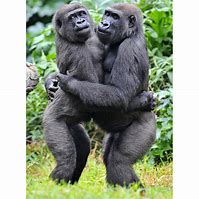
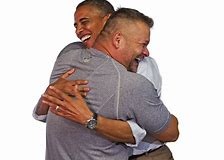
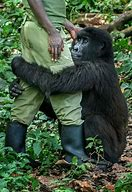
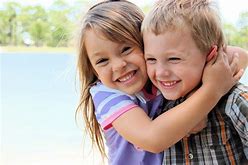
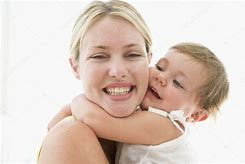
֎  Today’s post largely is a number of excerpts from James Hamlin’s article. Regular readers know that mariner is skeptical about modern technology, especially Artificial Intelligence (AI) which is cleaving human behavior away from interpersonal touching, hugging, conversation, and deliberate sharing of the intimate space – a column of space that extends about a foot from the body. Several studies are presented that show a human is dependent on touching and hugging not only for social acceptance but for healthy bodies and emotional development. Brackets [ ] encompass quoted material.

[ Tiffany Field has spent decades trying to get people to touch one another more.

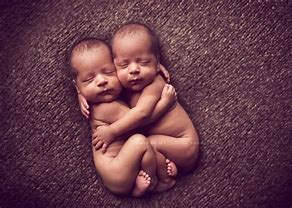
Her efforts started with premature babies, when she found that basic human touch led them to quickly gain weight. An initial small study, published in the journal Pediatrics in 1986, showed that just 10 days of “body stroking and passive movements of the limbs” for less than an hour led babies to grow 47 percent faster. They averaged fewer days in the hospital and accrued $3,000 less in medical bills. The effect has been replicated multiple times.

Field, a developmental psychologist by training, went on to found the Touch Research Institute at the University of Miami’s Miller School of Medicine. She was a pioneer in highlighting the effects of “touch deprivation” among kids, famously those in orphanages. She explained to me that the effects are pervasive, influencing so many bodily systems that kids are diagnosed with “failure to thrive,” resulting in permanent physical and cognitive impairment, smaller stature, and social withdrawal later in life—which often includes aversion to physical contact. ]
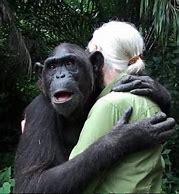
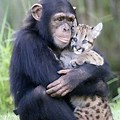


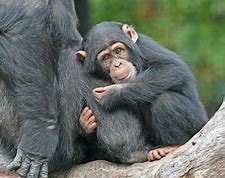
֎ It is beyond question that hugging, touching, kissing, caressing, and many other intimate reinforcements are a biological requirement in primates – in fact all mammals require to some degree feelings of value, justification, affection, friendship, bonding, celebration and love.

[ Physical touch doesn’t make adults larger, but its effects are still coming to light. Field has published similar findings about the benefits of touch in full-term infants, and then children and pregnant women, adults with chronic pain, and people in retirement homes. Studies that involved as little as 15 daily minutes found that touch alone, even devoid of the other supportive qualities it usually signifies, seems to have myriad benefits.

The hug, specifically, has been repeatedly linked to good health. In a more recent study that made headlines about hugs helping the immune system, researchers led by the psychologist Sheldon Cohen at Carnegie Mellon University isolated 400 people in a hotel and exposed them to a cold virus. People who had supportive social interactions had fewer and less severe symptoms. Physical touch (specifically hugging) seemed to account for about a third of that effect. (The researchers conclude: “These data suggest that hugging may act as an effective means of conveying support.”) Cohen and his colleagues continued to show other health benefits of physical contact, such as a 2018 reveal in the journal PLOS titled “Receiving a Hug Is Associated With the Attenuation of Negative Mood That Occurs on Days With Interpersonal Conflict.” ]

֎ Everything mentioned to this point is critical to a healthy, mature sense of self. But there is another level of reality. Culture comes from human interaction; who we are among ourselves in a world of 7.7 billion people is reality. There is no way to identify and manage reality except through human interaction. Smartphones and iPads and computers are not reality. Let them take control and there will be no reality save ‘the cloud.’ Shades of “The Matrix”. We should have learned this on television: the fun parties in beer commercials are not real.

Reality comes from interaction with other people. The degree to which data mining distracts us from reality is damaging. Stop just to reinforce a friendship and hug them will enforce cultural reality. Giving the thumb a workout is time away from reality.

Ancient Mariner


Spring, maybe, has sprung

Mariner’s town had its first Spring day three days ago. A Spring day means the Sun is shining, the breeze is comfortable and the temperature is in the sixties. Two days ago the town had its second Spring day in a row. However, as expected the temperature returned to highs in the forties and in the twenties at night and a couple of inches of rain the ground doesn’t need.

On those two Spring days mariner wandered outside to examine the gardens and lawns. Early bulbs are breaking through the mulch; the azaleas out front haven’t shown any interest in growing yet; there is hope they will return in zone 3-4 conditions. He cut back the patch of dead cattails and the brown zebra grass in the shade garden. Mariner cleared the Asparagus bed. The pickup truck was full and ready for the dump.

Mariner noticed other small things. A #$!!@ rabbit had eaten his newly planted fig tree to the nub and two 18-inch high emerald arborvitae as well. Two years ago three fox families moved into town because of the abundance of rabbits. The foxes don’t seem to be around this year and the rabbits are back.

Mariner’s wife feeds the squirrels and birds during winter snows. The snow is gone and thousands of sunflower hulls cover the kitchen garden as if mariner had spread mulch. Mariner has lots and lots of tree leaves like Ash, Oak, Walnut, etc. to collect along fence lines, in the gardens, and across the lawns. Funny thing, mariner has only one tree – a Pecan tree.

So it’s the beginning of another garden season. It was not easy to collect the grasses and clear vegetable boxes. Fifteen years ago mariner could clean up the yard in three hours or so; this year it took all day and required several breaks to ease the pains of codgerhood. Tomorrow he’ll drive to the dump and maybe find a dumped truck load of good dirt to pilfer.

Ancient Mariner


Peace by any Means

The following story copied from mariner’s newsletter from The Atlantic deserves to be distributed as widely as possible. It speaks to the joy of human compassion; it is a giant example of Pass It Forward.

Peace by Chocolate

Mar 06, 2019

For decades, Issam Hadhad ran a chocolate factory in Syria, the second-largest in the Middle East. In 2012, it was destroyed in a bombing. Hadhad and his family fled war-torn Damascus soon thereafter. After spending years in a Lebanese refugee camp, they were granted asylum in Canada. When they arrived in Nova Scotia in 2016, they had little more than the clothes on their back.

Hadhad, a chocolatier at heart, hoped to resume his profession once he was settled in his new country. But he spoke no English and had no resources. That’s when the community around him stepped in. Locals noticed Hadhad at the farmers’ market, where he sold sweets baked in his home kitchen. When they learned of his ambitions, plumbers, electricians, carpenters, and other skilled workers from the community rallied around Hadhad to help build a factory. The family even received a loan to kick-start the business. “I was welcomed as [if] Canada was my homeland,” Tareq Hadhad, Issam’s son, has said.

One of those friendly and solicitous locals was Frank Gallant. “Rather than viewing Issam as an outsider, Frank simply saw him as a friend going through a tough time,” Jonathan Keijser, who made a short documentary about the pair, told The Atlantic. Keijser’s film Brothers premieres on The Atlantic today. It follows Gallant and Hadhad on the latter’s first-ever camping trip. “Frank told me about how he’d been wanting to introduce Issam to some ‘real Canadian experiences,’ and mentioned how Issam had never been camping before,” Keijser recalled.

Gallant was initially skeptical about the prospect of being filmed. “He questioned what would be so interesting about following the two of them around,” Keijser said. “To Frank, the friendship that developed between [him and Hadhad] and their families was nothing out of the ordinary.”

Though Gallant and Hadhad cannot communicate fluently, the language barrier doesn’t seem to have impeded what is a palpable connection between the two men. “It was profoundly moving to witness firsthand the effortless friendship between Issam and Frank, despite their inability to speak the same language,” Keijser said. “It was clear by their interactions that they have an inherent understanding of each other—something many people search their whole lives for and still never achieve.”

Gallant frequently works alongside Hadhad in his chocolate factory, Peace by Chocolate. The company has pledged to hire 50 refugees by 2022.

– – – –

[CityLab] As AI Takes Over Jobs, Women Workers May Have the Most to Lose

Women, especially if they are Hispanic, may be at most financial risk from the automation of jobs says a new report from the Institute for Women’s Policy Research. (Sarah Holder)

– – – –

This is a blatant, unabashed promotion by mariner: His go to news channel is NEWSY (283 on DISH and available on many other outlets). The following is copied from a search engine list:

“For news networks like CNN and Fox News Channel, about 70% of the viewership is over 55. By contrast, about 70% of Newsy’s audience is 25-54, according to E.W. Scripps.”

Nevertheless, if those over 55 checked the program, they may become regular viewers.

–Straight news, no gossip, no manufactured reality. Sean Hannity would have nothing to say.

–Conversational style directly to the viewer. Chris Matthews would never make it.

–Very appropriate special interest coverage.

–Get it all: world news, US news, local news, weather – each in a crisp, two or three minute presentation.

–Newsy also offers an email newsletter covering top stories.

–Website is friendly. See: https://www.newsy.com/

Ancient Mariner


Familiarity

The old home town looks the same
As I step down from the train,
And there to meet me is my Mama and Papa.
Down the road I look and there runs Mary
Hair of gold and lips like cherries.
It’s good to touch the green, green grass of home.

Yes, they’ll all come to meet me, arms reaching, smiling sweetly.
It’s good to touch the green, green grass of home.
The old house is still standing tho’ the paint is cracked and dry,
And there’s that old oak tree that I used to play on.
Down the lane I walk with my sweet Mary,
Hair of gold and lips like cherries.
It’s good to touch the green, green grass of home.[1]

These words come to mind as mariner returns home after a trip that lasted a swirling fifteen days. True, the last verses are more maudlin (see footnote) but one cannot help but relate to the sensation of returning to what is familiar; somehow, the brain feels relieved that the five senses have ceased providing continuously new phenomena that requires the brain to process and identify them in every case. At home, things don’t need to be processed – the brain already has dealt with them.

Familiarity is an expression of implicit memory and largely is distinct from explicit memory (how to perform tasks). If it is suggested that a penny is an important coin, it is likely that, say one day later, if asked “what is an important coin?” an individual likely will suggest the penny. At home, one is surrounded with things that have been addressed over and over, including everything from spatial relations to colors to resident emotions. Everything already has an implicit value. If the reader is intrigued with further brain function, check out http://www.human-memory.net/types declarative.html .

So, settled among familiar settings, mariner can relax in a way that is not possible in a constantly changing environment. Familiar furniture, rooms, watching TV from a familiar angle in a familiar chair, it is comforting. Let implicit memory take over for a change and give explicit memory a rest.

Familiar issues return to the focus they had before the trip: Individual One, the state of the home gardens, things that require repair, balance the checkbook. Still, it’s good to touch the green, green grass of home.

Ancient Mariner

[1] Then I awake and look around me,
At four grey walls that surround me
And I realize, yes, I was only dreaming.
For there’s a guard and there’s a sad old padre,
Arm in arm, we’ll walk at daybreak.
Again I touch the green, green grass of home.

Yes, they’ll all come to see me
In the shade of that old oak tree
As they lay me ‘neath the green, green grass of home.

Songwriters: CLAUDE CURLY PUTMAN
© Sony/ATV Music Publishing LLC

Caught between Old and New

Agriculture scientists report that the weaker one’s scientific knowledge, the angrier they are about genetically modified crops. Previous studies have found that, while genetically modified organism (GMO) opponents demand more research into the foods, no amount of science can convince them the products are safe. “We have to get people to recognize gaps in their knowledge before we try to teach them new things and have a meaningful discussion,” one researcher said.

Mariner notices that the phenomenon of rebelling because something is not familiar or seems to countermand established values is common across any discipline including behavior seemingly not becoming to the standard of the day. For example, mariner, a registered old fogey, resists the use of smart phones and social media. He claims social interaction is minimized, human importance is trivialized, and the loss of privacy also means the loss of independent thought. Yet, smart phones are universally used around the world and social media is how millions communicate – to the extent that POTUS uses Twitter to issue national policy, without talking to any human.

Similar to the detractors of GMO, mariner will never accept the values of future technology no matter how hard Neil Degrasse Tyson tries to persuade him. Mariner suggests Neil watch the Matrix movies. Mariner stands his ground as a primate, not as a digitized asset. Yes, he knows already he is becoming an anachronism but he is comfortable with that.

The pattern of resistance demonstrated by the GMO resisters and mariner is universal. One wonders how the Amish survive. The Amish are a group of traditionalist Christian church fellowships with Swiss German Anabaptist origins. They are closely related to, but distinct from, Mennonite churches. The Amish are known for simple living, plain dress, and reluctance to adopt many conveniences of modern technology. They place their beliefs on the Holy Bible, isolating themselves from the rest of society is one of the key Amish beliefs. They think secular culture has a polluting effect which promotes pride, greed, immorality and materialism. Therefore, to avoid the use of television, radios, computers, and modern appliances, they do not hook up to the electrical grid.

A hardy culture that equates religious value to physically working hard, it offers a slap at the “English” (non-Amish): “If a dollar doesn’t do what it used to, remember that hardly anyone else does either.”

Finally, in the midst of worldwide turmoil in politics, economy and human equality, one sees rebellion for similar reasons – shattered beliefs and protocols, cultural imbalance in economy, and ignorance of the reality represented by modern advances in science and technology. The reader is free to place blame on numerous causes both for ignorance and unpreparedness for new concepts.

Mariner chooses education. One cannot blame education in isolation because it is subject to politics and other resistance to newness by conservative reactions to radical thought. But one must take note that the core knowledge, that is, the curriculum, is no longer appropriate to the world that its students face. If one is to be up-to-date on scientific knowledge, one must at least be aware of the difference between Einsteinian reality and the reality of quantum theory. See, most of you don’t know but it is easily understood and sets the direction for all future science. Check your smartphone.

Ancient Mariner


Just to be Human

Mariner and his wife moved to this small town when they retired about ten years ago. Culturally, they were dropped into a foreign country. Fortunately, mariner’s wife grew up in the town and had a sense of the culture. Mariner had been a consultant project manager who assisted corporations when they converted their management structures to take advantage of the new capabilities of multidimensional database technology.

His work took him all over the US and even to Taiwan for a computer upgrade so the Taiwanese could build modern jet fighter airplanes. Mariner and his wife owned a number of properties that kept them busy as well; and two children who took root far away. All this description is provided to give the reader some insight into the culture shock of moving to a small Iowa town of 900 folks in the middle of endless cornfields.

Let mariner say up front that the town folk are quite friendly and supportive. The town moves at a slow pace; the conversations and concerns do not march to a time schedule; a better term may be ‘timeless’. There are no complex responsibilities. Mariner had to learn how to live in his new town.

One interesting adaptation was to understand how residents referred to house and family locations. Large portions of the town can trace families back to the end of the 19th century. One is identified by their relatives and where they live or lived and whose house it was before that and before that when someone married someone else. Most older residents grew up in the town before it had street signs. Mariner, however, habitually mapped and organized the town by street names and sections so he could find his way around.

When mariner had conversations, the resident would say, “You know where Martha lives; she lives in Frank Merten’s house over a block from Aunt Dorothy’s house.”

“You have an Aunt Dorothy?” mariner inquires.

“No, everybody just calls her “Aunt.’

Mariner is further helped by the resident describing the color of the roof across the street. Haltingly mariner tries to convert the descriptions to a location with a street name, which block and intersection. It has taken some time for mariner to adapt to a new interpretation of both people and location. Even cemeteries are identified by who is buried in them rather than the official name of the cemetery.

To this day mariner is aware that he is not a ‘townie.’ But his independent view of the culture allows him to experience its charm and to understand what the national culture has sacrificed in the name of progress. Most notable is the importance of people as the primary definition of the town. One is not defined by terms like suburbanite or ‘west side’ or neighborhood class. The prime identifier is an individual and that individual’s role in the life of the town: “Remember when Frank worked at John Deere?” sets a timeline. There still is a residue of past generations when townie and farmer were discriminatory and whether one’s ancient town ancestors were movers and shakers but this is noticeable only among the town’s most elderly.

There is an advantage to growing up in this rural culture; it provides time just to be human. There’s an old tale about the plough horse, now retired and replaced by a young horse, who every morning still comes to the barn door to be harnessed. How one grows up is a life-setting experience. Do today’s young families have time just to be human?

Ancient Mariner


Let it Snow

Mariner must mention that he is the recipient of a pass it forward experience. His town received a foot of snow yesterday. This morning, two neighbors knocked on his front door asking if it was okay to clear his driveway. He blessed them and said, “Of course!” Otherwise mariner would have been snowed in; his two vehicles were in a garage whose doors were behind a snowdrift much deeper than a foot. Pass it forward works for everyone – passer and recipient.

– – – –

Snow seems to encourage folks to work together to regain lost functionality. Snow falls, stays still afterward and is a composition that can be moved, melted or even taken advantage of if one is a winter sports person. Flooding on the other hand wreaks terrible destruction and will not be deterred from racing through towns, cities and open countryside. Wind, too, is unstoppable; hurricanes, tornadoes and shear winds quickly vent their energy on buildings, infrastructure and even large animals – then, like flooding, escape the scene leaving havoc behind.

Certainly snow is inconvenient given how we drive on hard surfaces that accommodate ice and slush. Today, snow is notably troublesome unless one keeps sled dogs, four wheelers and motorized plows around just in case there is snow; comparatively, few people live within walking distance of grocery stores, gas stations, churches, and other destinations. Once arrived, one hopes the establishment is open for business.

Many years ago when mariner and his family moved to the farm, there was an immense snowstorm. Even the snow removal truck could not clear the road beyond the frontage. Across the road, the farm sloped down into a hollow. It was a huge pasture and had no trees; one could sled down a 30° slope for 150 yards or more, having time to really experience sledding. If one took a route to the right, the sled ride ended by rolling through a stand of cattails and sliding uncontrollably across a pond. His family, despite subzero temperatures and a brisk wind, could not resist this new adventure offered by the farm. Everyone was, of course, dressed to look like Charlie Brown and after a handful of trips down the hill, retreated to the house with its large fireplace in the living room.

But it was snow that provided that memorable experience. Pouring rain, flooding and tornadoes deny positive experiences. Perhaps snow’s benevolence is why it is a major symbol for the winter holiday season and why Santa stays jolly even at the North Pole. Snow brings out the passing forward in us.

Ancient Mariner


Humanism – a Threatened Awareness


The last post about not touching each other’s lives is symptomatic of our time. There was a time when a person needed another person to help with life, to generate a sense of wholeness. Granted and without question, a fulfilled life is still a universal experience but, for example, when one looks for a new friend recommended by Facebook, something subtle is missing. Increasingly, we tend to turn to frozen food solutions rather than bake from scratch.

Mariner certainly leverages the huge amount of free data available on the Internet. He can become, for practical purposes, knowledgeable in any subject. Does that define him as a valuable commodity? Does it reflect a life’s work through time commitment? Does it define him as a scholar with years of study, reading and human dialogue? No. The Internet and the cloud is a giant frozen food factory. The missing dimension is the three-dimensional experience as we move through time, space, commitment, people, and the finer edges of worthiness, sympathy, empathy and experiencing the ethos of humanness.

Anthony Bourdain had a television series called “Parts Unknown” wherein he traveled around the world visiting unique cultures and sampling the differences in cuisine. Mariner began watching the series in 2013. Tony freely admitted his difficulties with drugs and alcohol which set a framework for watching Tony as much as where he went. Over the years viewers watched as Tony mellowed, became less mechanical and eventually looked forward to the opportunity to share life with his series guests. Tony died on June 8, 2018. No matter how efficient a process is, it takes time for a human being to become valuable – not only to others but to one’s self.

The recognizable human creature has been around for about 200,000 years. The story of those years is one where very slowly humans mastered the environment and invented tools that expanded human capability. In recent times, say about the last 3,000 years, tools have become more sophisticated and have altered core behavior in humans. Just a few oversimplified examples reflect this: There was a time when electricity didn’t exist. Life was simple, time-consuming, and required dependence on others to survive. Then suddenly there were combustion engines; care and feeding of livestock and the time it took to maintain transportation for the family and the time it took to travel 25 miles to the nearest village to visit other humans suddenly required a few minutes at a gas station and a half-hour drive – no other human or animal interaction required.

Today, with the advances in telecommunication and labor-saving devices, humans live history on fast-forward. Humans don’t darn socks anymore; they don’t even take the time to go to a store to buy them, which requires human interaction, time spent and what today would be called inconvenience; just a click on a keypad – socks delivered. Soon, socks will have a tiny microprocessor that decides when the socks need to be replaced. Who needs a keypad? Further, who needs themselves? The socks run our lives, needing only to use our feet to sustain commerce.

Humanism is a belief that focuses on the potential value and goodness of human beings, emphasizes common human needs, and seeks solely rational ways of solving human problems. As humans move through to another era with many confrontations (overcrowding, elitism, racism, economic failure, environmental degradation, and displacement of human behavior and activity by robots and AI), our conscious awareness of worthiness, sympathy, empathy and experiencing the ethos of humanness is left wanting. If sensitivity to other humans as an end product, and the most important one at that, is not practiced, human society will diminish. Humans will be reduced to interactions with their socks.

This is the commercial. For all of the 200,000 years humans have been around, they have a tool for sustaining humanism. Pass it forward. Readers may overlook this term because mariner pushes it so incessantly. It is a tool for the human spirit. Deliberately look for a way to make another person’s human experience better. As walking is to exercise, passing it forward is to human spirit. Further, seek ways to participate in group activities – everything from Tai Chi to bowling to square dancing to parties for no reason.

We will defy the power of the sock.

Ancient Mariner


Compassion, Damn It!

Well, well. Wasn’t the fur flying because young mariner had no traffic ticket for his accident. An entire article about compassion as the root of democracy was trashed because mariner did not get a ticket. So much for compassion over judgment.

Mariner understands that in these uncertain times citizens are chary and become judgmental about due process. Nevertheless, he stands by the principle that compassion without judgment is both restorative to personal happiness and productive as well. One thinks of the abused folks who constitute Donald’s base: The US economy has squeezed them for decades; there is little that comes easily to them. These folks are left only with defensive mechanisms similar to pride, judgmental attitudes, intense populist ethics that are destructive – in their minds as it should be – and intensely protective of what little they have.

Mariner assumes that most readers have read the parable about the Good Samaritan so he won’t repeat it here. Perhaps, though, you just might check out Luke 10:25. The context surrounding the Samaritan’s compassion is identical to the social conflicts present today. The US population has become increasingly conscious of class, even fragmented versions of class (identity politics). In the Samaritan’s situation, he was considered less than a proper Jew because Samaritans did not adhere to the racial requirements of proper Judaism; Samaritans allowed mixed marriages even though otherwise they practiced the Jewish faith.

Mariner’s wife read a book written by a homeless person, Lars Eighner, who walked across the country with his dog Lizbeth.[1] From the book she remembers a time when Lars, who had no source of income, would save the bit of change he came by to purchase dogfood for Lizbeth. Many times others in the stores would buy his dogfood for him. No one said “He ought to get a job” or “He should be picked up by the police.”

Often mariner has touted the practice of “Pass it forward.” It is a practice based on having a compassionate insight into another person’s need without judgment or prejudice. Use this simple gesture to practice compassion. What’s more important than ever is to look for ways to be compassionate toward someone from a different class – even a different political class.

Ancient Mariner


[1] Travels with Lizbeth, Lars Eighner, Ballantine Books, 1993

One for Many but Many for One, too

Mariner was a young lad, well, not really young, he had progressed a bit in his career and was working as a staff consultant assisting all state law enforcement agencies in complying with new Federal regulations about reporting law enforcement activities to a State database. Let’s just say he had a full head of hair with a flat top.

The work was both tedious and fraught with conflicts about changing behaviors that had long existed in local police agencies. After a hard Friday, we all stopped after work to enjoy a happy hour at a local pub. It was a good release from a difficult day and, after a couple of hours, mariner had had an uncounted number of half-priced gin and tonics. Needless to say, as he left for home, he had an accident on the interstate. One is supposed to slow a bit when taking a tight exit ramp, which mariner failed to do.

But the accident is only a set-up for a genuine insight that has stayed with mariner throughout his life and sets his belief in what democracy is all about.

Mariner rolled his jeep-like vehicle and totaled it. He crawled out the back window virtually unhurt. The first person to be there as he crawled out of the vehicle was a nurse who checked him for critical injuries, determined he would survive and left. The second person to greet mariner simultaneous to the nurse fed him two breath mints to help ward off law enforcement analysis of his inebriation and left. The third person redirected traffic. There was no judgment of mariner’s behavior; there was no judgment of inconvenience; there was no judgment of moral principles. Mariner was a fellow interstate traveler. Further, because he was in law enforcement and reported to the Secretary of Public Safety, police officers saw to it that there were no ticketing or other law enforcement transactions as a result of the accident.

This tale has nothing to do with regulatory justice, alcohol, or nuisance among interstate travelers. What mariner learned is that he belonged. He was a fellow interstate traveler; he was a fellow law enforcement employee; he was a fellow human being. He belonged. Not only that, he was accountable to other travelers for the same concern about wellbeing. He learned that judgment and prejudice are not the rules for living together. Just the opposite, it is compassion and understanding that hold us together.

At this time we are confronted in our nation with a despot president, an unjust economic system and many citizens suffering from innumerable injustices in daily life. Democracy is at risk. Our nation is not so far from the cliff not to be concerned about abject collapse into a so-so nation that will be left behind in the artificial intelligence age. Already our allies are drifting away.

The solution is to feel that we belong. We are one of many. Also, we are among the many that care for the one. Democracy requires unity and mutual participation without judgment.

Ignore the fake news concerned about prejudice and malfeasance. Go outside and look for someone who needs to belong. While you’re at it, let yourself belong to the nation as well – without judgment.

Ancient Mariner