Postmodernism

Mariner was drifting through the endless world of the Internet last evening when he came across the author Frederic Jameson, a prolific writer in the 1980s and 1990s who contributed ideas about postmodernism. Mariner hasn’t thought about postmodernism since the 1990s. It is refreshing to revisit the perceptions of Jameson and others about the philosophical interpretations that underlie the way people perceive the world today.

Most readers are aware of ‘the age of enlightenment’, a movement that occurred in the 18thcentury. It evolved because of new scientific understanding at the time and the beginning of industrialization – both of which changed how people lived and identified with society (Luddite rebellion in 1811).

Then, from about 1900 to 1965, came modernism. To keep the post short, mariner cites Wikipedia:

[Modernism, in general, includes the activities and creations of those who felt the traditional forms of art, architecture, literature, religious faith, philosophy, social organization, activities of daily life, and sciences, were becoming ill-fitted to their tasks and outdated in the new economic, social, and political environment of an emerging fully industrialized world.]

It is intriguing to note that the end of modernism was imprinted in American history by three significant assassinations: John and Robert Kennedy and Martin Luther King. As an example of the breadth of philosophic change at the time, one of mariner’s favorite authors, Paul Tillich, wrote “Christianity and the Encounter of the World Religions” in 1963 and “Situation Ethics: The New Morality” by Joseph F. Fletcher was written in 1966. Since then the role of Christian doctrine in American culture has been changing dramatically.

Postmodernism is the next interpretation of society, religion, art, economics, etc. It defines how everyone today experiences society and daily ethics. In the turbulence of the sixties, from Viet Nam to Woodstock, a conservative resurgence occurred to quell general disruption and was empowered by the election of Ronald Reagan. During this conservative period especially during the 1990s, philosophers like Jameson began to realize a new world was emerging that would be culturally segmented and institutions of every kind would not be sacrosanct.

Just like the earlier periods of enlightenment, change has been brought about by scientific advancement, an emerging new kind of economy, and a separation of human values from religious and ethical traditions. Today, the polarized conflict between conservatives and liberals in all walks of life represents the same conflict experienced at the end of earlier periods of philosophical change. It is interesting that shifts in global philosophy occur more rapidly each time.

Ancient Mariner


In the News

֎ [Newsy] New York Gov. Andrew Cuomo signed legislation that would eliminate religious exemptions for children’s vaccinations amid an ongoing measles outbreak. Under the new law, children who attend school or daycare can only be exempted from vaccine requirements if they have a medical reason. In a statement, Cuomo said: “The science is crystal clear: Vaccines are safe, effective and the best way to keep our children safe. This administration has taken aggressive action to contain the measles outbreak, but given its scale, additional steps are needed to end this public health crisis.” Opponents of the bill say it violates religious freedoms and that they’ll continue to fight for their rights. The U.S. is currently facing one of the worst measles outbreaks in decades. In Rockland County, New York, there have been more than 260 confirmed cases since June 12.

Vaccination is a classic example of confrontation between freedom of religion and freedom of state. The largest religions address the common good in their doctrine but there are uncountable variations and assumptions in religious practice. The same is true of most governments; they are founded on principles of common good but the interpretation of common good runs to irrational extremes.

Common good must prevail else humanity may not survive. At its simplest, humans are a tribal species. Sans an available vaccine, the black plague wiped out sixty percent of Europe’s population in the fourteenth century. Regarding the issue of vaccination, whose freedoms take priority? Solutions require some doctrinal or legislative adjustment; whose common good is more important? Can one imagine a Venn diagram solution? Mariner leaves this issue with the reader to reconcile.

Ancient Mariner

The Meaning of Pride

Mariner and an old friend visited yesterday. The conversation rambled across many experiences, opinions and bad jokes. Part of the discussion centered on the failure of expectations in family life and on the motivations that promote goodness or destructiveness. At one point in the conversation, the role of pride was the focus. It reminded mariner of an old sermon he preached a time or two about pride.

The word ‘pride’ occurs in many different circumstances and under an assortment of conditions. Why is a family of lions called a pride? Is there a nuanced meaning? A frequently used aphorism is ‘Pride goes before destruction, a haughty spirit before a fall’ (Proverbs 16:18). Change the noun pride into the adjective proud and a specific definition is difficult to abide by; a common skeptical retort is “Well aren’t we proud?” Wikipedia settled on the following description for pride:

“Pride is an inwardly directed emotional term that carries two antithetical meanings. With a negative connotation pride refers to a foolishly and irrationally corrupt sense of one’s personal value, status or accomplishments, used synonymously with hubris. In Judaism, pride is called the root of all evil. With a positive connotation, pride refers to a humble and content sense of attachment toward one’s own or another’s choices and actions, or toward a whole group of people, and is a product of praise, independent self-reflection, and a fulfilled feeling of belonging.”

With such polarized meaning, there must be another dimension to pride that makes it as important as it seems to be. That dimension also is an inwardly directed emotional term: Love. On the one hand, pride, or hubris, is a defense mechanism to compensate for perceived incompetence or inadequate self-esteem, often caused by unsuccessful relationships with family or significant others. Angst and insecurity are common sensations.

At the other end, one may feel arrival, achievement, creativity and silent reward. Real pride grows the spirit not only of the individual but of those who receive benefit from the individual’s efforts.

To connect this human phenomenon to religion (quite briefly), major religions believe the power of creation and salvation is love. Love creates salvation whether now or in the afterlife. When an individual improves the state of human affairs without personal reward, one has created with love.

If one wants to grow inside and feel good about it, try love. One can be proud.

Ancient Mariner


In Defense of Criticism

From time to time mariner is chastised for his skepticism toward what he refers to as ‘pew’ Christians. Similar to his favorite prophet Amos, mariner criticizes the behavior of those who come to church on Sunday for a social hour with some ritual thrown in and that’s the end of it. Prophet Amos said,

“Seek the Lord and live, or he will break out against the house of Joseph like fire, and it will devour Bethel, with no one to quench it. Ah you, who turn justice to wormwood, and bring righteousness to the ground.” (5:6-7)

Throughout his lamentations Amos focuses on duplicity. The Israelites feign allegiance to God but sell slaves, will do anything for improved self-interest, wealth and comfort, and who visit harm on perceived dissidents and the poor. That sounds a lot like a modern nation with which we may be familiar.

Every religion has rules for social behavior whether it’s Moses’ Ten Commandments, the Sermon on the Mount and the parables of Jesus, the Eightfold Path of Buddhism, or the Five Pillars of Islam. Some of the rules at least appear to be easy to follow; some rules strike at unpleasant and unfair attitudes that often do not survive a day. Fortunately, all major religions contain a central kernel based on love. Each religion holds love to be a creative force that makes one’s life and all of reality a better, healthier and growing experience – a life in synchrony with the Great Creator.

Theologian Paul Tillich identified the influence of culture, politics and economy on Christianity – and other religions by inference – and concluded that Christianity is highly, almost fatally modified by three ‘quasi’ religions: capitalism, authoritarianism, and communism. There were other examples as well but these three were the primary examples. Add to Reverend Tillich’s philosophical insights mariner’s street pragmatism: Never work with Christian volunteers who are participants in one of Paul Tillich’s quasi religions.

In one sentence, in this case focusing on Christianity, the difference between Christianity and the quasi religions is the quasi religions placate an individual with worldly benefits and advantages while Christianity requires unending personal sacrifice and 24-hour compassion for the wellbeing of all others. In mariner’s generalist manner, he has adopted the Two Great Commandments as the core verb of it all and reworked them into a phrase that fits any cultural or religious environment: Pass it forward – with continuous and fervent intent. That goes well beyond the pews and out into a needy world. Sunday services are for renewal in commitment and energy – not for a social hour once each week and reciting a bit of liturgy, turning it into wormwood.

Ancient Mariner


Now to the Court

The electorate has been misinformed by the Executive Branch and uninformed by the Congress. Now it is the Court’s turn. Aside from the many legal challenges percolating from the mire of political infighting, the Supreme Court is considering some cleaving decisions – cleaving in that large portions of American society will rise or fall on those decisions.

Increased activity largely is from the conservative side of society trying to leverage a newly conservative court. But long overdue Constitutional issues also are on the docket e.g., citizenship, gerrymandering and Native American rights. Needless to say, soon Roe v. Wade will be addressed; one or two Presidential authorities as interpreted by Donald eventually will come before the Court. In the near future, voting rights will be addressed – especially as they are violated in Dixie.

֎ Native American rights – In a 5-4 decision, the court ruled Monday in favor of Native American rights in a Wyoming hunting case. There is another Native American rights case to be decided this term — a case from Oklahoma that deals with tribal territorial rights. Justice Neil Gorsuch — who is a champion of American Indian rights has been the deciding vote on several cases including Monday’s — is recused from this particular case. That means the court could deadlock.

֎ Political and racial gerrymandering – Three states, Virginia, North Carolina and Maryland, are before the court dealing with redistricting. Gerrymandering by race is one issue. The others are political party gerrymandering. Any rejection of gerrymandering will have immense impact on future elections.

֎ Separation of church and state – This particular case is known as the “cross case.” It’s about a World War I memorial concrete cross that sits at an intersection in Bladensburg, Md. — and whether it should be allowed to continue to stand on public land. The Federal government asked the Supreme Court to rule in favor of the cross, which critics say is an unconstitutional state endorsement of Christianity as the state religion.

Mariner notes other religion/state conflicts in many places – even money – where Christian doctrine and state authority are represented as co-equal. This confusion, generated in an early age of the nation despite the freedom of religion clause in the Constitution, is what causes consternation among Evangelicals and conservatives when the state takes actions in behalf of the US citizen which do not represent the authority of Christian doctrine.

֎ Census citizenship question – Donald’s administration is trying to add a citizenship question to the upcoming census. The court will decide whether it can. Based on questioning during oral arguments, the court’s conservatives agree with the Trump administration and allow it by a narrow 5-4 majority. The Census Bureau, however, states that there could be an undercount of 6.5 million people if the question is included.

֎ Race, murder and jury selection – This is a case about bias in jury selection. A Mississippi death row inmate was prosecuted six times for the same crime by a prosecutor with a history of racial bias in jury selection.

֎ When is a word too dirty to be trademarked? – A clothing designer, Erik Brunetti, tried to trademark his “FUCT” line, but it was rejected. The US Trademark Office has not exactly provided standards about what constitutes “immoral,” “shocking,” “offensive” and “scandalous”, leaving the justices to decide whether the term will be allowed.

Other potential cases of consequence:

-Gundy v. US: A sex offender case dealing with how much power is too much to give to the US attorney general for his application of the law.

-Gamble v. US: A double jeopardy case to decide whether a state and federal government can try someone for the same crime.

Major issues remain outside the priorities of all three branches of the Federal Government: cash in elections, Electoral College and misrepresentation in the Senate, antitrust enforcement, bank regulations, and not last and not least, privacy and state security.

Ancient Mariner

Abortion

This post, to say the least, reflects advocacy, prejudice and disdain.

Mariner’s mother had congenital heart disease. He was born when she was eighteen. Four years later, she became pregnant with his brother. She was advised not to have the baby but no one would perform a safe abortion. Mariner’s father could find no one to perform an abortion. She carried to term and mariner’s brother was born. Mariner’s mother was bedbound for two years then spent her last year in a hospital in an oxygen tent. She died when mariner was eight years old, leaving horrendous hospital bills for his father and left mariner and his four year old brother without a mother.

For the holier than others conservatives, irrational religious fanatics and political hackers, mariner has disdain. They don’t understand that pregnancy has many reasons not to be in the best interest of people’s intimate lives. They don’t understand that abortion is not a political decision. They don’t understand that the Constitution in no way gives them the right to own the life of any woman – any more than owning black slaves. Mariner’s mother wasn’t even black.

Basing the political conflict on fetal arguments of any kind is useless. People who oppose abortion aren’t scientifically minded nor would those arguments matter. Mariner notes that these same faux aristocrats have the same disrespect for other life-taking issues:

Among all other issues, war kills more than any other political misappropriation. The last thing a sane, emotionally secure person would desire is to go to war – about anything.

Failure to provide medical care to the poor and indigent is another way of saying “Let them die before I measure my dollars versus their life.”

Should a woman give birth to an unwanted child, the curse of prejudice stays with the child. The United States tolerates one in five children living beneath the poverty line. Further, the United States and its anti-abortionists cause the United States to rank 47th among all nations in infant mortality per 1,000 births. Anti-abortionists are rife with hubris, irrational thought and no capability to feel empathy and compassion.

Ancient Mariner


Dancing

Mariner wrote a post some time ago that defines a physical difference between liberal and conservative thinking (Red Brain, Blue Brain posted June 19, 2015). The difference is where decisions are made in the brain.

֎ From an Atlantic article by Dan Meegan

Conservatives Have a Different Definition of ‘Fair’ and liberals ignore it at their peril.

[Some people have more than they need, and others need more than they have. Even when liberal leaders describe policies that are beneficial to everyone, they make it clear that the most important beneficiaries are those whose needs are most urgent.

Conservatives tend to value equity, or proportionality, and they see unfairness when people are asked to contribute more than they should expect to receive in return, or when people receive more than they contribute. Consider a hypothetical comparison of two people who graduated from college five years ago with equal amounts of debt. Jessie successfully implemented a plan to pay off the debt in five years, while Sam still has much to repay. Warren’s plan forgives Sam’s debt, but offers nothing to Jessie, despite her industriousness and self-discipline. To add insult to injury, Jessie must contribute tax dollars to the $640 billion fund necessary to forgive outstanding loans, including Sam’s.]

 Sigh. ‘Pass it Forward’ must not be a conservative concept. Where are the Evangelicals when Christ needs them?

No doubt the example above proved to be a litmus test for the reader. One option will ring more true than the other. The conservative option is based on self-value while the liberal option is based on human value. The twain, as it is said, will never meet. When one gives it thought, one realizes this is the very core of the dysfunction of US governments. Conservatives are willing to eliminate the Affordable Care Act (ACA aka Obamacare) because they already have health insurance and balk at paying someone else’s health insurance as well – and gratis at that. Liberals, on the other hand see the imbalance of the human condition and seek to rebalance equality using the abundance of others.

In a more subtle sense, conservatives operate from a point of view that induces prejudice and classism; prejudice and classism simply are rules of the road that keep proportionality in place. Liberals on the other hand see the injustice of prejudice and classism as lack of concern for the human condition.

There are handy government philosophies for this conflict: capitalism and socialism. Mariner has said in the past that these philosophies don’t work if either is an absolute. It takes two to mambo . . .

Ancient Mariner

Happenings

[HuffPost] Confirmed: Facebook, WhatsApp, Instagram, YouTube, Viber, Snapchat and Messenger blocked in #SriLanka following series of deadly church and hotel attacks.

The United States is fortunate that misinformation did not lead to bombing and killing during the political campaign. Social media remains an uncontrolled communication service unhindered by the scruples and regulations of America’s free press. While the US suffers racial hate in the bombings and killings in black churches, Sri Lanka suffers religious hatred fueled by racism and politics. Life in the US could be worse. So far citizens yell and curse one another but warfare is not a tool of our religions or politics except for the armed crazies who seem to have a bias toward school children.

The real cause in Sri Lanka and many other situations is the ability to broadcast untrue and unwarranted information. Mariner believes that fact-checking can be automated to the point that attempts to spin falsehoods could be trapped.

– – – –

Talk about violence on TV, did the reader watch Bernie Sanders on Fox television? A notable moment to remember and one that caught the debaters off guard was when Bernie asked the audience if they would rather have single payer health coverage or stay with insurers. A significant majority raised their hands for single payer.

– – – –

[NPR] More than 80% of parents in the U.S. support the teaching of climate change. And that support crosses political divides, according to the results of an exclusive new NPR/Ipsos poll: Whether they have children or not, two-thirds of Republicans and 9 in 10 Democrats agree that the subject needs to be taught in school.

It is true that society would be less argumentative if our children were educated in contemporary subjects that provide a common (apolitical) foundation for life. However, public education is subject to imposing political and religious influence. Civics isn’t taught anymore because political locals prefer less complicated, controlled campaigns; American history of minorities isn’t taught because of race prejudice; Religions of the world and the accompanying sociology isn’t taught because of conflicts between other religions, science and Christian bias. Health practices aren’t taught because of biased resistance to issues like sex, abortion and flu shots.



Imagine if there were a class called ‘Living Today’ or ‘Contemporary Living’ where the material covered how government works, factual presentation of long-standing, polarizing issues and videos of economic circumstances around the world. Nah, mariner is dreaming.

While Betsy DeVos’ economic model for education would wipe out public education, private contractors may be encouraged to teach contemporary subjects by dangling increased profits for the effort. Nah, mariner is dreaming.

But just imagine if Donald’s base had studied civics and economics. . . Mariner is following Alice down the hole. God bless the US electorate.

Ancient Mariner


Being Real

[“Real isn’t how you are made,’ said the Skin Horse. ‘It’s a thing that happens to you. When a child loves you for a long, long time, not just to play with, but REALLY loves you, then you become Real.’

‘Does it hurt?’ asked the Rabbit.

‘Sometimes,’ said the Skin Horse, for he was always truthful. ‘When you are Real you don’t mind being hurt.’

‘Does it happen all at once, like being wound up,’ he asked, ‘or bit by bit?’

‘It doesn’t happen all at once,’ said the Skin Horse. ‘You become. It takes a long time. That’s why it doesn’t happen often to people who break easily, or have sharp edges, or who have to be carefully kept. Generally, by the time you are Real, most of your hair has been loved off, and your eyes drop out and you get loose in the joints and very shabby. But these things don’t matter at all, because once you are Real you can’t be ugly, except to people who don’t understand.”

― Margery Williams Bianco, The Velveteen Rabbit.]

From the Atlantic:

 Can We Touch?

Physical contact remains vital to health, even as we do less of it. The rules of engagement aren’t necessarily changing—they’re just starting to be heard.

James Hamlin, April 10, 2019

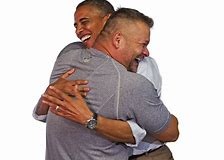
֎  Today’s post largely is a number of excerpts from James Hamlin’s article. Regular readers know that mariner is skeptical about modern technology, especially Artificial Intelligence (AI) which is cleaving human behavior away from interpersonal touching, hugging, conversation, and deliberate sharing of the intimate space – a column of space that extends about a foot from the body. Several studies are presented that show a human is dependent on touching and hugging not only for social acceptance but for healthy bodies and emotional development. Brackets [ ] encompass quoted material.

[ Tiffany Field has spent decades trying to get people to touch one another more.

Her efforts started with premature babies, when she found that basic human touch led them to quickly gain weight. An initial small study, published in the journal Pediatrics in 1986, showed that just 10 days of “body stroking and passive movements of the limbs” for less than an hour led babies to grow 47 percent faster. They averaged fewer days in the hospital and accrued $3,000 less in medical bills. The effect has been replicated multiple times.

Field, a developmental psychologist by training, went on to found the Touch Research Institute at the University of Miami’s Miller School of Medicine. She was a pioneer in highlighting the effects of “touch deprivation” among kids, famously those in orphanages. She explained to me that the effects are pervasive, influencing so many bodily systems that kids are diagnosed with “failure to thrive,” resulting in permanent physical and cognitive impairment, smaller stature, and social withdrawal later in life—which often includes aversion to physical contact. ]


֎ It is beyond question that hugging, touching, kissing, caressing, and many other intimate reinforcements are a biological requirement in primates – in fact all mammals require to some degree feelings of value, justification, affection, friendship, bonding, celebration and love.

[ Physical touch doesn’t make adults larger, but its effects are still coming to light. Field has published similar findings about the benefits of touch in full-term infants, and then children and pregnant women, adults with chronic pain, and people in retirement homes. Studies that involved as little as 15 daily minutes found that touch alone, even devoid of the other supportive qualities it usually signifies, seems to have myriad benefits.

The hug, specifically, has been repeatedly linked to good health. In a more recent study that made headlines about hugs helping the immune system, researchers led by the psychologist Sheldon Cohen at Carnegie Mellon University isolated 400 people in a hotel and exposed them to a cold virus. People who had supportive social interactions had fewer and less severe symptoms. Physical touch (specifically hugging) seemed to account for about a third of that effect. (The researchers conclude: “These data suggest that hugging may act as an effective means of conveying support.”) Cohen and his colleagues continued to show other health benefits of physical contact, such as a 2018 reveal in the journal PLOS titled “Receiving a Hug Is Associated With the Attenuation of Negative Mood That Occurs on Days With Interpersonal Conflict.” ]

֎ Everything mentioned to this point is critical to a healthy, mature sense of self. But there is another level of reality. Culture comes from human interaction; who we are among ourselves in a world of 7.7 billion people is reality. There is no way to identify and manage reality except through human interaction. Smartphones and iPads and computers are not reality. Let them take control and there will be no reality save ‘the cloud.’ Shades of “The Matrix”. We should have learned this on television: the fun parties in beer commercials are not real.

Reality comes from interaction with other people. The degree to which data mining distracts us from reality is damaging. Stop just to reinforce a friendship and hug them will enforce cultural reality. Giving the thumb a workout is time away from reality.

Ancient Mariner


You got Religion?

Everyone has religion. From the brightest, emotionally secure to the dullest, brutally psychopathic, religion is part of our DNA. It is an intractable part of our species. It is the base mental and emotional engine from which all understanding emerges. Further, every religion has three components: belief (theology), responsibility (doctrine), and practice (ritual). From the most brutal, child sacrificing voodoo cult to the elaborate doctrine of the Holy Roman Catholic Church to the Eastern state-of-mind religions and even Zen and atheism – all have belief, responsibility and practice.

When one has no comprehension, no experience and no skills, that is when belief is most influential. Consider the four-year-old who believes in monsters, magic, the Tooth Fairy and Santa Claus. These beliefs provide order and value to an otherwise unknown reality.

As the child grows older, especially during periods of learning and acquiring new skills, belief must change to accommodate what still remains unknowable but by necessity is more elaborate and abstract. Learning is more influential when a person is young. The brain has acquired a budding sense of self eager to find out more about how the self fits into a widening reality. How the self fits into reality is the source of responsibility, a code of behavior attached to a set of values; in religious terms, that’s called doctrine.

Armed with the newness of belief and responsibility, one is eager to invoke proper practices; another way to say that is eager to be an advocate. Consider the new young Congressional Representatives eager to establish the untarnished principles of democracy; consider any person new on the job – new on the job of life – and the accompanying zeal and commitment to advocate their responsibilities. Older, less eager folks may call them naive or say it’s time for them to grow up.

The tendency to leave advocacy behind is part biology and part experience. On the one hand, our body stops growing and begins slowing down; on the other hand, one learns that being proactive in most cases doesn’t change anything. One seeks a stable status quo.

As a person grows older, the complexity of reality stabilizes. Daily life commands attention at a very pragmatic level. One does not have the time or energy or need to continuously pursue new or unknowable elements of reality. One develops a shorthand version of responsibility and practice. It is called ‘habit.’

Acquiring habitual behavior is an important function of the brain. It is a real, proven physiological phenomenon. If the Frontal Cortex had to start from scratch learning what to do in every situation, identifying value systems, determining functionality and crosschecking personal worth, it would require a much larger number of brain cells to keep track of everything as if it had never happened before. Fortunately, the brain has a way to compress and automate many experiences especially if they are redundant. These compressed procedures are called habits. There is a trigger in the Frontal Cortex that signals which habit to invoke so the brain doesn’t have to think about what’s going on.

And that’s the down side – the brain doesn’t have to think anymore. The three dimensional life experience that fosters advocacy is no longer there to provide energy, focus and commitment to responsibility (doctrine). The value system that is supposed to direct practice (ritual) disappears.

In the Christian religion (and relevant to all religions), followers in this state are called ‘pew Christians.’ The minimalist application of habitual behavior forgets the power of love (theology), the requirement to spread that love through selfless action (doctrine) and the act of interpersonal advocacy (ritual) and are not part of the practice. The habit remembers that it is Sunday, dress differently, take a few dollars, be at the church on time, etc. But do unto others in person? That’s for the young advocates.

Ancient Mariner