And yet another side

In a recent post mariner was baring his life experiences to demonstrate how one’s daily environment, whether work, community or family, sets the rules for one’s personal understanding of how human life works. One can read great books of knowledge and fiction, or watch the fancy visual gizmos of our age and feel as if they understand the complex life of the human primate. Perhaps, but a thin, simplified understanding.

He was watching a documentary on the TV gizmo the subject of which was the importance of dining as a political tool to assist in negotiations. It made the point that eating was a neutral experience, as were the trappings and wine. In this collegial surrounding, more delicate debate points could rise rather than be smashed down as in a typical debate environment. The show reminded mariner that Homo has demonstrated this amenity of survival across the ages.

He selected four examples, one from the early Pleistocene (approximately 1 million years ago), Pre-dynastic Chinese cultures that existed in southern Asia 4500 years ago, the Native American Plains Indian and a contemporary one begun in the European Age of Enlightenment. All four had the benefit of not having to deal with congressmen or corporate economics.

֎ Recent discoveries from several scientific sources have discovered small villages with mud and straw homes in different geographical parts of Africa. These little villages were independent communities; they had no roads to anywhere and became excellent hunters because of the oft-mentioned advantages of sweat and two-legged motion – much more efficient than hunting on four legs (try it). The economics of each of these villages was tightly associated with an organized team of hunters and gatherers. Given the constraints of living off the land, the primary social event was eating today’s kill. (Mariner believes primitive forms of square dancing occurred during this time}.

֎ Along the Yellow River in southern China, the village of Banpo existed 4500 years ago. Villages were closer to one another than they were in Africa so conflicts occurred between towns. What emerged were inter-village conferences to end conflict or avoid it. The economics of the villages included simple trading of important foods; this is the Iron Age so weaponry had to be manufactured as well. The terrain of southern China wasn’t too abundant so access to hunting grounds was a common issue. These talks needed to be fed which very shortly led to the first dynasty in China – the Xia Dynasty. Still, each village was pretty much isolated and recently attained food – AKA dinner – was important.

֎The next example is the Native American Plains Indian culture that lasted 10,000 years until white people visited. The Indian culture remained nomadic until its untimely demise because the tribes moved with the American Bison and certain indigenous plants. Again, procuring food was an ‘all hands on deck’ enterprise and tribal feasts were a relaxed celebration. (Mariner also suspects that some elements of square dancing emerged here as well.)

֎This last example may be familiar with most readers. It is a number of religious sects that practiced Christianity but did not accept capitalism or baptism: those groups followed a social belief that does not believe in infant baptism rather they required personal commitment. Familiar sects today are Amish, Hutterites and Mennonites. These groups broke away from the Christian Reformation over the issue of infant baptism, which the Anabaptists didn’t believe in. Fascinating is the retreat from a booming economic era to live on self-sustaining farms and integrated services like reins, horse drawn plows, etc. In the remaining parishes that still abide by the anti-capitalism position, did you know no member of the parish receives a salary? The GDP is shared among every member – including many common dinner celebrations.

So, while in the recent post mariner delineated US economic differences in classes, the Anabaptists are at the other end where, within the congregation, there is no economic class discrimination.

However, in today’s national parish of 300 million, self-sufficiency is out of the question. Not every member gets the choice to celebrate dinner.

It is notable, however, that square dancing has survived everywhere.

Ancient Mariner

The other side

Mariner has had 38 distinct jobs in his life. Everything from delivering newspapers to a contract in Taiwan building a computer system for the nation’s first fighter aircraft. He can avow that jobs shape one’s ethic and one’s place in the culture. He has had luxury dinners with CEOs and generals; he has seen a dead dog in the basement of a row house with an unused kitchen and a destitute family. He could go on about a 90-year-old woman offering sex for 75⊄, confrontations with guard dogs, a bull and an armed woman – to say nothing about belligerent executives.

But this post isn’t about bar stool stories. Of the 38 distinct jobs in his life, four have had a profound impact on his ethic, philosophy of life and his role in society. In chronological sequence they are gas & electric meter reader, Methodist preacher, parole officer and coding supervisor for an insurance company.

During 4½ years as a meter reader, he visited the homes of the very, very poor, the laborer, the white collar worker, the wealthy and many homes that were converted to small businesses and one-nite motels. These visits provided a belief that the separation of economic classes is severe, unfair and ignored by society. Each culture has its own style of community interaction, behavioral mores and even its own dress code.

As a Methodist preacher, he learned that religion is a specialized form of politics. The Christian theology is not a mainstay; the vast majority of church goers accept a parochial set of beliefs born out of tradition rather than faith. The socializing effect of belonging to a community is a positive trait but the church building is more important. Few attendees abide by the Second Great Commandment.

Mariner was a parole officer for three years. The job exposed him to the more complex side of human experience. Life is made up of many stresses that present emotional injury, loneliness, passive/aggressive behavior, debt, health and stressed relationships due to mental disorder and abuse. He learned that the personal side of life has its own mores, taboos and rituals. As with economic classes, home life is given little importance by community or by society in general.

This last job is cited because of its similarity to today’s Trumpian world of work. Mariner worked as a supervisor in the data processing department of a large insurance company. Like every other business of its time, the computer language was COBOL. Suddenly, thanks to IBM and Microsoft and Apple, COBOL was dropped in favor of new technologies and coding methods. In the blink of an eye, mariner was laid off. All the other large companies had simultaneous layoffs for the same reason. Locally, he was left without a career. It took a long time to rebuild a career in another field. His learned ethic is that corporations are politically independent and feel no need to incorporate themselves into the worlds of workers. Just profit, profit, profit.

Humans are intelligent and very much a caring species. It seems to mariner that humans, like 3-year-olds, have no sense of decorum and make life difficult just because they can. Given overpopulation, environmental abuse and provoking Mother Nature, perhaps humans should clean out the pantry and start over again.

Ancient Mariner


Turtles like to dance

This post owes its topics to the March 2025 issue of Scientific American magazine.

First, did the reader know turtles like to dance? A scientific study of the sea turtle discovered that when it arrives at a feeding source, it does a little circle dance. [Mariner could only imagine Ethel Merman dancing the boogie.] It turns out turtles have a worldwide GPS in their brain complete with saved addresses and routes. Will Homos ever try to replace it with AI?

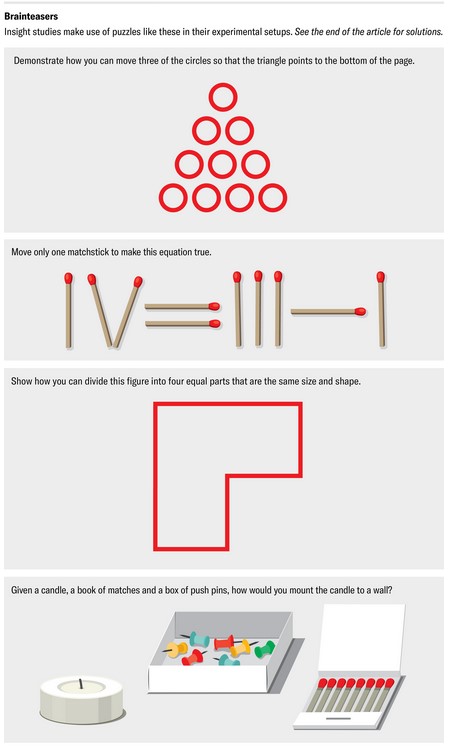
Another article stated that the human brain doesn’t use words to reason or gain insight. Mariner and his fellow hearing impaired are pleased about this finding. Externally, those with hearing difficulties are treated nicely but with tolerance, that their thinking is affected by their frequent misunderstandings. Scientific American says ‘no way’. When the brain is rationalizing an issue, it is off in another part of the brain and does not need the skill set that uses the five senses – including hearing. The author offers a few examples to show that words or speech-based articulating don’t have a place in reasoning:

Mariner assumes his readers are of a high quality intelligence that will solve these puzzles easily. If one escapes the reader’s insight, solutions follow tomorrow.

Just like the turtle, and most other creatures as well, the brain is a big place where the senses are just a small part more interested in immediate survival than in pondering the unknown, storing memory and managing a complex living creature.

Ancient Mariner


Best measure of national content

Generally speaking, the way a nation measures its economic health is by measuring its Gross Domestic Product (GDP). GDP is an economic phrase that means ‘how much profit ls generated’. Since the Second World War, the US economic strategy has been ‘big is better’ leading to large, monopolistic corporations, international trade control and sustaining controlled inflation/deflation. Donald reminds us of how profit is manipulated through tariffs. As things stand today, the United States is the wealthiest nation in the world.

But something doesn’t seem right. Would it then be true that small is worse? Does this delineation lead to hoarding the better and ignoring the worse? Afraid so, that’s how capitalism works. Charity is okay as long as it is voluntary. Mandated charity (Is that like a penalty for being wealthy?) is verboten.

GDP is just one item in a long table of contributing issues as to what makes a nation happy – not just wealthy. In population polls of all the nations, the US is ranked 16th to 23rd in most polls and one source reports the US at 63rd) as a ‘happy’ nation. It is interesting but clearly demonstrative that certain elements of society play a larger role than ‘bigger is better’. Eleven of the top twelve happiest nations are dominated by a similar social structure. They are:   Finland, Denmark, Iceland, Sweden, Netherlands, Norway, Luxembourg, Australia, Switzerland, New Zealand and Costa Rica.

This conclusion is based on Gallup polling data collected over the past three years from 143 countries, with researchers evaluating six critical factors: gross domestic product (GDP) per capita, social support, healthy life expectancy, freedom to make life choices, generosity, and perceptions of corruption both internally and externally.

֎ GDP per capita. ‘Per capita’ means per person rather than the typical use to measure a nation’s situation. This measurement is the average income of all citizens individually. It includes not only well-to-do citizens but citizens from all income levels – including those with no income.

֎ Social Support. This category includes government programs that support the citizenry, e.g., Medicare, Social Services, child care, social security, food stamps, minimum wage, etc.

֎ Healthy Life Expectancy. This category focuses on price controls for various costs related not only to health and prescriptions but also to assisted living and living conditions generally.

֎ Freedom to make life choices. Distracting issues like racism, class discrimination, sexual constraints like birth control, abortion and homosexuality, education policy, restrictions caused by disruption from zoning, home owner associations, tax and insurance policies, and corporate intrusion all impose on an individual’s desire to make independent decisions about life choices.

֎ Generosity. There are two types: government and citizenry. It is a matter of behavioral attitude for both. Governments can be oppressive and finite about social policy or they can adopt some awareness of social need and exception. A US example is the battle over minimum wage, which is far behind the effects of inflation. Food stamps and rental policies which avoid competitive pricing are other examples.

On the citizenry side, Housing Associations are notorious for constraining individual desires. Another is the atmosphere of unanimity in communities. [In a recent post, mariner alluded to the influence of a common industry and multi-generational families contributing to a unified society.] Large corporations can choose to support employee needs outside the workplace by ‘joining the community’ or simply impose their presence in a way that can, in the extreme, wipe out a whole neighborhood.

֎ Perceptions of corruption both internally and externally. This category is likely to be the real reason the US is ranked as the 23rd happiest nation. Corruption is de rigueur in the US. Since the Reagan administration in the 1980s, unions have been busted, the tax code is dangerously imbalanced, elected officials see their own security and lifestyle as more important, rental prices are not competitive, Corporate America is completely self-managed and owes no support for American society. Lest we go on . . . .

Many times mariner has heard the comment, “If Trump buys Canada, where else can I move?” Try Finland, perpetually the happiest nation in the world.

Ancient Mariner



Where is everyone?

Mariner has written many posts about how social relationships are affected by economics, industrialism and technology. Most often, the relationship turns out to be a visible impact on specific generations. Because of the age break in generations, typically twenty years, and because the average active lifespan of humans has been around three generations, he has proposed that every sixty years a community will have significant social and economic changes.

For example, small to medium rural towns have followed the ‘sixty’ rule for three successions. The first significant change occurred around the turn of the century (1900) when automobiles and tractors changed farm practices and opened direct marketing of farm products to a much larger territory. Suddenly, in just a few years, farms had to be much larger to accommodate supply and demand. Access to a railroad line was a big advantage.

This shift in economics took an entire generation’s time to buy and sell farms, switch from horses to machinery, and to modify farm production. The population did not shift notably because these changes required lots of rural support from family farms to family banks to farm industries.

Forty years later World War II intervened. Farm families experienced the first significant migration away from rural population to factories in cities and joining the military which offered generous college benefits to GIs.

Rounding out the first 60-year loop, a large industrial influence was an active era of building US highways, interstates, train, bus and air services. This made it easier for an entire generation to leave local areas to seek better income and education. Many GIs took advantage of college benefits to leave farming for other careers.

This was during the 1960s. In 1964 Mariner moved from a big eastern city to this small town. The social structure still was dominated by large, multi-generational families. But something was missing. In the sixties, almost an entire population of high school graduates left for college and commercial opportunities elsewhere. Mariner was able to enjoy a still-functioning farm culture, a unique experience for him. But by the 1970s and especially into the 1980s, ‘family’ farms no longer existed; not only did high school students leave but many families sold smaller farms because of economic pressures.

The third 60-yearloop, until today, has seen a further drop in population which caused most small businesses to disappear, churches began to suffer from dropping attendance and the active farm culture was not the social influence it once was. The town, slowly through to today, has become a residential neighborhood where jobs are found elsewhere.

Mariner and his wife, now seasoned members of the town, have noticed the final phase of the third 60-cycle: Friends are dying; family members are dying; most of the town is populated by newcomers. No one knows everyone anymore. It is becoming a town which has no connection to its past.

When he moved back to town, mariner memorized all the street names in the town as an aid to finding his way around. Still, old folks, when he asks where someone lives, most often will say, “You know, over behind Carl’s old house.” Mariner lives in a section of town where until many decades ago a farm was across the road; older residents still cite that farm.

Mariner and his wife are losing friends and relatives rather frequently. Where is everyone?

Ancient Mariner

About Era shifting

Greetings, Readers

It has been pleasant, if not rewarding, avoiding television news. Watching headlines is a lot like taking slaps to the face over and over. Mariner does keep track generally through his own news email services and a number of trustworthy magazines. Television still has its saving grace through shows like NOVA (PBS) and documentaries on Netflix.

Just the other night PBS ran a show about Thomas Jefferson and John Adams, two early presidents who had different perceptions about the structure and role of the emerging United States. They fought tooth and nail and were brutal politically. Honestly, there were as many dirty tricks as one witnesses with politics today. An important difference was that back then, each political battle added to the Constitution with the intent of strengthening the nation whereas today it is petty payback and disassembling the Constitution without a plan to improve it.

The general observation mariner took from the show was that moving from one era to another, whether presidents, migrating fowl or coral reefs, it is grotesquely disruptive to normal expectations. There is abuse at the individual level. New rules are yet to be known.

So it was with those early days when Europe, Russia and The United States (and indigenous natives) had several wars to determine how the new world would be split among nations.

Similarly, today a new economic future that has little to do with contemporary practices has led to a global scramble to acquire a dominant position in the ‘new world’. What frightens mariner is that the planet has its own Trumpian plan to force human life to pay for the ‘borrowing’ of too much of nature’s resources – including global warming, overpopulation and gross extinction of the planet’s biomass.

Under the circumstances, the best one can do is to love family, share with the community and be careful about insecure assets and income.

Armageddon progresses.

Ancient Mariner

Good AI perspective

Virtually every commentary about AI approaches the topic at a too low perspective: the impact on jobs, privacy, energy vulnerability, etc. In fact, AI is a global issue that will change global politics, global trade and a new era of feeding the world. Below is an expert’s insights as to how AI will change the world – worth reading. From AXIOS:

https://www.axios.com/newsletters/axios-am-167e2440-d545-11ef-86f8-718f1121da12.html?utm_source=newsletter&utm_medium=email&utm_campaign=newsletter_axiosam&stream=top

Ancient Mariner

How does Holy Father Trump sound?

The only daily news mariner reads are the email titles from news websites. He avoids television news. However, given a decent education and actively pursuing information during two presidential elections, he has a perspective about the way things are going. More than once he read headlines about two billionaire preachers trying to turn the US government into a theocracy – an awkward interpretation of the spirit of Jesus similar to what Rome did 2,400 years ago.

Anyone who takes the New Testament even half seriously asks about billionaire preachers. Isn’t that a blatant oxymoron? How can a representative of Jesus’ instruction that one is with God only when giving, sharing or helping become a billionaire? Remember the main parable about the Good Samaritan? Samaritan Jews and traditional Jews did not get along well (sort of like Protestants and Catholics} but a Samaritan is traveling in traditional Jewish neighborhoods when he comes upon an injured Jew by the side of the road. The Samaritan gets the Jew to an inn, pays his housing costs and assures the innkeeper that he will cover medical costs. Mariner is pretty sure the Samaritan is not a billionaire in Rome-dominated Israel.

At a minimum what the preachers are doing is even worse than what Donald is doing. Metaphorically, if the nation were a shrub, Donald is using shears to cut it to the ground but is possible that the shrub will grow back; the preachers want to pull the shrub out by the root.

Of course one of the benefits is that the US congregation will have its own pope – probably a billionaire.

Ancient Mariner

Our career molds our empathy

Readers know mariner’s distaste for the invasion of privacy by new technologies embedded in our vehicles, budgets, social life and that of our children as well. Perhaps his unusual resistance can be traced back to his career.

He has had dozens of jobs from paper boy and soda jerk to preacher, parole officer and computer system consultant. The longest career was as a freelance consultant hired by corporations to install computer upgrades – thirty years. He never was wanting for the next contract because he ran a stable project that met its goals. One would think that such a consultant would have to be a computer expert and indeed he had a major in computer science but not one in computer engineering.

In fact, what made mariner successful in project management was his previous experience as a preacher and a parole officer. Mariner did have an associate or two who were computer engineers and coding specialists which made it possible for him to manage the difficult part of the project: people. He had learned a technique that creates team ownership. Each project worker was assigned to an eight to ten member group; each member owned a segment that was an integrated segment such that the other workers had a role in the worker’s success. Mariner was always present at these group meetings playing the role of coach and at times, decision maker but never taking away segment ownership. In the end, the group managed itself.

But the transition in the corporate power structure caused by a new computer system was often tragic. Employees who had worked there for many years were told they would be laid off; workers were transferred to lesser jobs and hopeful careers were interrupted. coders and technicians who were unfamiliar with the new technology were pushed into dead end corners of operations. In larger corporations, there were fierce political battles between vice presidents and key managers because their political power, created by the amount of data they controlled, was no longer needed. Everyone will own all the data.

Did the reader catch the phrase ‘everyone will own all the data’? Were the upgrades in mariner’s projects ancestors to Google, Facebook, Twitter and TikTok? The major reason for mariner’s projects was to move from a network where the workstation computer created data that was uploaded every night to data storage devices where it could be integrated with other workstation data; the core work data remained in the workstation to be managed by a network of employees. Hence, a supervisor, manager or vice president was important because they managed (owned) the data in their unit’s workstations.

The effect of his projects forced a reorganization of the corporate workforce without, he suggests, any grace or feelings about a large segment of displaced workers and managers. In his projects, the workstation became a data entry terminal little more complex than an ATM.

Now, long out of his career, he understands the subtleties of data ownership and how it creates, metaphorically, a democratic operation. Today, one’s private computer – much more personal and life-important, is being taken away to live in the clouds of the AI corporate data banks. Now everyone owns all the data – including the reader’s data. The reader’s computer is just a data entry terminal.

Democracy will have a hard time existing in an AI world.

Ancient Mariner


The Fourth horseman of the Apocalypse

In a recent post, mariner mentioned four forces of nature that would determine the future of Homo sapiens. They were global warming, population, disappearing resources and AI. This post offers resources that help understand why AI may not be the blessing of other advances like the automobile, airplanes, can openers, electric lights, etc.

Often mentioned is the movie Matrix which has become a movie series. It is about the battle a few independent humans have against an AI brain that totally controls the human race; humans are kept alive in caskets so central AI intelligence can use them as batteries; These humans are fed a fake reality that makes them believe they are living a normal life.

Another frequently mentioned source is a PBS documentary ‘Hacking the Brain’ about the powers of AI and how, if controlled, AI can be useful but the documentary also displays the dangers of AI in its ability to manipulate humans even as they think they are living normal lives.

One source mariner hasn’t mentioned in a while is ‘The Social Dilemma’ available on Netflix. Largely, it is an interview of AI experts and managers who have left the AI corporations because of the immoral and intensely capitalistic policies exercised by corporations collectively known as Silicon Valley and which generate all the social media content with ulterior motives.

As to mariner’s prediction of Armageddon, AI is not a tool for making life better. There is an element of improvement reflected in better health care, resource management and supply chain efficiency but the AI technology is not controlled by anyone but the corporations themselves.

As it stands, social media can start wars, erroneously destroy careers, turn gossip into national policy, etc. – and does this without government restraint, without individual control of personal information, without total control of AI intrusion into economic sectors, and without due diligence to protect against hackers and international political abuse.

It is an area of the future which has yet to show its true colors. We will just have to wait and see how things turn out.

Shades of Matrix.

Ancient Mariner