I am a refugee

Mariner cannot be found today so his wife graciously submitted one of her insightful essays. We get tied up in numbers and policies, growing insensitive to the fact that these refugees are individuals in the midst of their own lives.

I am a refugee.   Before you judge me, hear my story.  You may have been a refugee once, too.  When my husband’s employer laid off 400 employees in one day, due to a downturn in the economy, our family had to leave our home and travel a thousand miles to a new land and, we hoped, a better job and a new home.  Our children were in school at the time, but they had to say goodbye to their friends and teachers and travel by caravan, with all of our belongings, and the family dog and cat across half of a continent.

When we got to the border of our new country, there was not a wall in place to stop us, and no one questioned our documents.   The border was not guarded and we were able to cross it freely.   I was able to enroll the children in a new school without any hassle.  The children had the advantage of speaking the language and they were the same race as most of their classmates.   Still it was not easy for them to make friends right away, as we were strangers from far away.

We all missed our family and friends in our country of origin.  We grieved the loss of the life that we loved, but we were determined to make the best of our new surroundings.  Even though we looked like we fit into our new community, it took years to feel like we were part of it.  When I first went to the grocery store in the new town, I knew no one and spoke to no one except the checkout clerk.  I looked forward to the next trip to the store, when I could say hello to her again.  It was very lonely in the beginning.

The people in our new town kept to themselves for the most part, although we were welcomed at the local church.  Thank goodness for the church!  Other refugees had sought shelter there as well and helped us to learn the ropes of a new community.  It was wonderful to have a group of friendly people to meet with every week.  It wasn’t that the rest of the townspeople were unfriendly–they just weren’t aware of a new family in their midst who might have trouble finding their way.

We have lived in this new land for a number of years now.  The children eventually made new friends , grew up and moved away.  The dog and cat died and are buried here.  We have put down roots.   I don’t feel like a refugee anymore.  But I will never forget what it felt like to be a stranger in this land.  I hope I will never take it for granted how easy it was for my family to be accepted because we were the right color and spoke the right language.  We had the right papers.  We had resources.   We were never in danger.  I am very grateful that Iowa was here when we needed a job and a home, and there were no walls to keep us out.  We found good jobs and made new friends.  I wish the same for refugees everywhere.

Mrs. Ancient Mariner


About the Gen Zs

The Gen Z generation is comprised of children born between 1997 and 2012 or today aged 13 to 28. A number of polls and an associated study have been performed by Walton Family Foundation focused primarily on expectations for the future and the degree for discerning possible career routes. Some general observations:

High school students primarily trust their parents for guidance about their futures after graduation but also rely heavily on teachers and other school resources.

Parents are having limited postsecondary conversations, particularly about alternatives to college or a paid job.

Gen Zs and their parents know relatively little about most postsecondary options.

Schools are an important resource for postsecondary guidance, but they are not adequately informing or preparing many students.

Despite limited knowledge and conversations, many Gen Z students are at least somewhat interested in non-college alternatives.

Most high school students, including seniors, do not feel prepared to pursue their preferred pathway.

Some statistics:

One in four high school students feel very prepared to succeed in college or
apply for a job, and those who don’t plan to pursue higher education are notably less
optimistic and prepared than their peers.

47% of parents — including about one-third of parents of high school seniors — say they are not frequently discussing post graduation plans with their child.

Only 15% to 25% of parents know a great deal about any other postsecondary option besides college and paid salary positions.

  The plight of Gen Z is like a fish knowing where to go in muddy water. Their useless government is bouncing into a dictatorship; education has been underfunded for decades and does little to prepare a student for the real world; career jobs are not only scarce, whole industries are disappearing in the arts, white color desk jobs, and iterative labor industries like factory work and truck driving; the economy is definitely in trickle down mode. Property in Hawaii is being bought up by billionaires – local citizens are being forced to migrate; job tenure is no guarantee for fringe benefits.

In 1938 the minimum wage was begun at $1.00/hour. Had the minimum wage kept up with inflation, the minimum wage would be $22.35. Today it is $7.25. If the U.S. doesn’t end up as a dictatorship, it definitely will be an oligarchy – with the help of computers.

A Gen Z stands looking across the horizon of this battered society and has to wonder, “What is my role?” . . . “What is there to believe in for a lifetime?” . . . “How will I survive?”

Smoking among Gen Z has been dropping for the last several years; Gen Z are beginning to trade in smartphones for flip phones; marriage and children are being delayed. The future is hitting them in the face.

The ‘ocean of life’ looks pretty stormy right now.

Ancient Mariner


Why mariner dislikes smartphones

Mariner apologizes to readers, family and friends who have heard enough castigation by alter ego Amos against smartphones and associated displacement of human interaction. But he has been challenged (frequently) again. So here is why smartphones are dangerous, then mariner will rejoin Nosey Mole:

Smartphones have a high convenience factor similar to air conditioning and automobiles, that is, it would be difficult to do without them. However, air conditioning and automobiles actually may contribute to improving Homo sapiens behavior. Smartphones will not.

In recent posts mariner has adopted the term ‘social accountability’ to represent the natural need for, dependence on and collaboration with other humans. These behaviors are in line with anthropological and psychological descriptions accepted universally today. Briefly, we are primates, we are mammals, we are capable of imagination.

Hundreds of thousand of years ago, primates were simple forest creatures whose social life did not go far beyond being responsible for supporting offspring until the child could go on its own. It didn’t take long before the mammalian instincts led to herding – yes, just like cows, horses and monkeys. Herding (let’s switch to tribes) is a defensive behavior to achieve several things: sharing threats and defeating them; sharing the burdens of raising offspring; identifying the best behavior to continue to be accepted by the tribe; and to have a realistic understanding of the world around them – a term used in psychology is ‘agency’.

To translate the last paragraph into conversational words, it is important to be engaged continually in interpersonal activity, engage with tribe members to resolve simple matters like food gathering, emotional balance not sustainable in isolation, learning what is currently important to the tribe, and exercising a complex brain to understand what is real and what is fantasy. A failed example today are the few who still believe the world is flat.

What everything written above means is ‘socializing with the tribe is what pulls together and identifies something called ‘reality’. Reality is not just an outside assumption, it also is an assumption of the subconscious brain, which must interpret whether to run, to watch or to take a pee. The tools of tribe association are our emotions, e.g., love, compassion, ritual, defensiveness and survivability. Communication with other humans is mandatory to identify a functional reality.

Mariner has experienced several families where Alexa has more conversation time with a person than their spouse has with them. It is a national news item that teenagers especially have emotional difficulties because the smartphone defines their reality and even tells them what they look like or how they should behave – without validation from the tribe. The smartphone has no ability to educate an individual with respect to their mental and personal reality. Yet it is so tempting that a brother and sister will sit on a sofa and communicate through an emotionless devise rather than actually use their own natural interpretations (AKA reality) based on tone of voice, facial expression, muscular tension or internal brain interpretations.

Another defect of the smartphone is personal isolation. Mariner attended a 100th birthday celebration recently. He sat at a dinner table with six chairs; the other chairs were filled by immediate family to the birthday celebrant. There was vibrant conversation about the times and experiences of the family – except for one person. She never spoke a word, never looked up and had no interaction with her own immediate family. Without interruption, she thumbed her way through an hour and a half of centenary celebration.

A similar dysfunction is the individual who will engage the smartphone at every pause in conversation to ask for detailed information from the smartphone then assuage their ego by expressing unnecessary information.

As to tribe relations, psychologically it is beneficial to acknowledge the tribe and its importance to reality. By doing grocery shopping at a supermarket, unconsciously one is aware that it takes a lot of tribe members to provide food and other essentials, that there is a unified reality that subconsciously builds self confidence and assures safety within the shopper’s reality. Shopping on the smartphone provides no tribe bonding and offers no way to sustain a person’s awareness of the world around them.

Which leads to the greatest danger of smartphones: interpreter of a person’s reality. Readers may recall that Mark Zuckerberg’s fantasy was to have everyone live in an online village designed just for them. Using publicly available data, the kinds of stores, recreational activities and even family members were all available at this online ‘reality’. Mariner can’t avoid saying it – this is identical to the lives buried in caskets in the movie ‘Matrix’.

Is domination by computers inevitable? Bill Gates thinks so. For what it’s worth, mariner does, too.

Ancient Mariner


We all need new top down awareness

Especially the world’s governments but that’s another story.

Even more important is that you, me and every individual around the globe must stop living by the daily ethics of life that may have been true forty years ago. Computers are no longer smart typewriters and no longer fantastic libraries; computer technology has created a subhuman species capable of telling us what we should know and what to think. In a few years, computers, as our medical advisors and primary care physicians, will decide whether you continue to live or not. What is scary is that computers already think for themselves – technicians no longer solve ethical positions. Today a majority of stock market trades never see a human mind. Who tells you the truth – Mom or the smartphone?

We must cast aside the romantic image of farming as a rural life style with cute lambs and mooing cows and amber waves of grain and purple mountain majesties above a fruited plain. Worldwide we keep clearing to make room for more farms to make more food. The image of a romantic farm should be replaced by the relentless spread of crops and pastures that already cover two of every five acres of land on Earth, obliterating the wild landscapes that soak up carbon dioxide from the atmosphere.  Further, it is propelling the worst extinction since an asteroid wiped out the dinosaurs 66 million years ago..

We must look beyond a world made of nations. Any nation, including the US and China, is incapable on its own to stabilize industrial development, international supply chains, artificial intelligence, humanitarian obligations and, importantly – open warfare. At the least, smaller nations, especially in Africa and the Middle East, must adopt a model similar to the European Union. On a global scale, it is time to make war less important than management of the planet and all its human disasters. It is time for one nation, indivisible, with liberty and justice for all – including Mother Earth. It is time for the United Nations to be authorized as the ethical authority – including the right to wage international war.

The ethics of human society must leave behind the age of nationally defined variations of humans; it is of no consequence whether Italian, Brazilian, South African, Indian, Polish, Chinese . . . The issue is eight billion humans and growing. There are only two choices: let the population grow until there is a tragic, horrible collapse of controlled civilization, or take control of birthrates. Sardonically, computers may help us with the population issue. The Dixie style of birth control is simplistic. The following is an extract from a post mariner wrote last April:

“A tremendous change occurred with the industrial revolution: whereas it had taken all of human history until around 1800 for world population to reach one billion, the second billion was achieved in only 130 years (1930), the third billion in 30 years (1960), the fourth billion in 15 years (1974), and the fifth billion in only 13 years (1987).

  • During the 20th century alone, the population in the world has grown from 1.65 billion to 6 billion.
  • In 1970, there were roughly half as many people in the world as there are now.”

Immediately, one grasps the idea that population and natural resources are the two issues that can’t remain under control given the ethical image we carry from the 1970’s. So, are we willing to go the way of the dinosaurs using our homemade asteroid or will humans have the wherewithal to live according to a new top down awareness?

Ancient Mariner


Old folks are like annuals.

The advantage of living in Nosey Mole’s tunnels is that it is quiet. The environment is stable and unchanging. Just as once in a while Nosey pokes his head above ground to check on things, so to has mariner. But they are brief moments to check that normalcy prevails around the tunnels.

What mariner sees is his small town. True, normalcy seems to prevail; citizens are living lives within the scope of normalcy, all the houses are still there and the pleasures of electricity, water and labor-saving inventions prevail. But what mariner perceives as normalcy across his lifetime no longer exists.

For folks born in the 1930s and 1940’s, the world of the 21st century is not ‘normal’. The big war ended while these folks were still young. What emerged was an era of bright sunshine, happiness and stable family life. Things like amusement parks, movie theaters and shopping districts were every day outings. Pleasantness often pushed the realities of existence aside. True, the realities of haves and have-nots existed but what was different was the sunshine. It seemed brighter. When the Sun rose in the morning, it was a new day to be experienced.

The first disruption to the sunshine was the Viet Nam war which, in hindsight, was the first sign of imbalance in the world’s political/economic situation. Now there are clouds in the sky – clouds that are omens of change and disruption. In mariner’s town, the sixties were the last years of a town-centric economy, a bustling social environment and a self-contained feeling of living in the sunshine.

Clouds gathered over the next twenty years then Reagan introduced cold weather. Those war-years folks weren’t at the center of society anymore. Unions were forced out of existence, corporations became gigantic but were no longer required to provide full retirement to their employees, democrats became white collar and forgot their roots. Farms became too large to be based on a single family economy. Computers began their march against social dependency.

The first hard frost was the disruption by the virus followed by a withering Congress, then came the age of Trump – the beginning of winter.

The sunshine is gone today. There is no warm, invigorating sunrise. Children of the war years are not indigenous. Culturally, they are withering – even as they continue to live their own reality.

Children of the big war are like annual plants – a life experience that does not extend into the present winter.

Ancient Mariner

Before Zoro there was Zoroaster

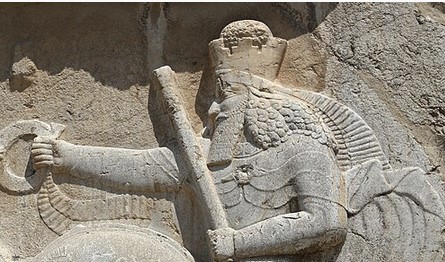
Attracted to rediscovering ancient Kyrgyzstan religions by a friend mariner visited while vacationing, he discovered that Judaism and Christianity didn’t invent anything – they copied ritual and theology from Zoroastrianism. Even Jesus rising on the third day was a standard belief for everyone. When a person died, their soul hung around for three days before being evaluated by Ahura Mazda, the unchallenged creator of all things, and then were raised to their afterlife.


Ahura Mazda


Mariner urgently recommends that the reader watch on YouTube, Zoroastrianism Origin by Book of World History.

Ancient Mariner


AI’s vision of society is a panopticon

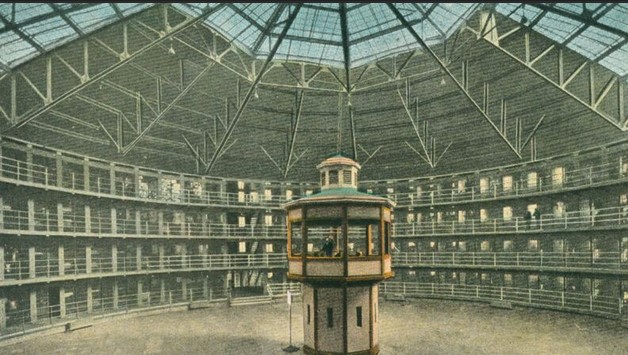
Atlantic Magazine published an article about AI’s perspective on the shape and function of society: it will perform in the manner of a panopticon.

The panopticon is a design of institutional building with an inbuilt system of control, originated by the English philosopher and social theorist Jeremy Bentham in the 18th century. The concept is to allow all prisoners of an institution to be observed by a single corrections officer, without the inmates knowing whether or not they are being watched.

Mariner did not realize how frequently this term is being used today until after the Atlantic article. Despite being originated as a philosophical metaphor, it is as popular as Schrodinger’s cat and Pavlov’s dog. It also is more interpretive as a description of the future than mariner’s two movies of similar prediction, 1984 and Matrix.

The single corrections officer can be interpreted as a bucketful of AI corporations in operations today. Just to mention a few – Nvidia, Microsoft, Amazon, Meta, Google, Adobe . . .  Already in active use are most search engines, Alexa, Facebook, etc.

All the futurists like Jeremy Bentham, the movies, the active user applications and social media gossip predict a social panopticon where all there is left for a human to do is sit in a room and conjure reality through their smartphone.

Enjoy looking at wilderness sites on your smartphone? Did it occur to you it would be a genuine experience if you actually went to one instead?

Armageddon proceeds.

Ancient Mariner

Same-o, Same-o

Hello Readers –

The reason all the honkies are getting behind Trump and his non-white deportation program (citizen or not)  and the idea of paying only honky women $5,000 to have a honky baby is because for several years now the population studies show that honkies will become a minority in 2045. Just wanted the readers to know that motive.

On to somewhat nicer stuff:

This definitely is the year of the dandelion. Mariner and his wife have spent several days removing dandelions from garden beds. Lawns can be treated chemically but garden beds are much more sensitive to chemicals and acidity. Dandelions are like mulberry tree seedlings = one must get the entire root, leaving not even a splinter. Otherwise, it will grow again. Maple trees are an insidious weed, too, but cutting it below the surface kills it.

It is hoped that there will be no more frosts. This past winter was unusually brutal. It was hard on roses and azaleas. Fortunately, the peonies and bulb flowers are bursting forth. Mariner has lots of irises and they all have big flower buds about to bloom. Spring has come. It seems in the Midwest that there have been regular occurrences of big stormy fronts with floods and tornado warnings. Fortunately, all his town gets is an occasional thunderstorm; he lives in a strip of Iowa that is declared a drought zone. Agriculture agencies have moved mariner’s side of Iowa from growing zone 4 to zone 6 suggesting warmer winters. He’ll believe it when it happens.

The title of this post is “Same-o, Same-o” because he has been watching a documentary series about early Rome during the age of unbridled, typically narcissistic emperors – like feeding typically lower class Christians to lions or murdering relatives to assure the proper succession. It is amazing how today’s President has mastered their style.

As to AI, everyone has been exposed to this new phenomenon enough that a rewatch of the film “The Social Dilemma” would be meaningful. It is available on Netflix.

Have a happy summer everyone!

Ancient Mariner


Phew! Lent is over

It’s Easter! Now we can get back to our jelly beans, Hershey bars, donuts, ice cream and wine! Jesus thanks you for your effort and wonders why he ever decided to rise again.

Don’t blame yourself for failing to understand the core values of your faith. Every religion erodes over time, subject to cultural shifts, personal conflicts and the state of the planet. One can imagine how strong one’s faith had to be when, as a mother, you left your baby behind to save it from being, as you will be, eaten by a lion. Then Alexander saw a cross in the sky made with a cloud and considered it to be the reason he had won his wars so he declared Christianity as the state religion. Since then Christianity, in whatever form, is society’s Department of Religious Affairs and even spends enough money on buildings and cultural politics that DOGE would love to get it’s hands on that department.

But things change. Today in the United States, two billionaire Christian ministers (a bureaucratic title) are trying to reinstall Alexander’s form of theocracy – similar to the Islamic theocracies in Iran and Afghanistan. Further, one’s approach to personal ritual, budget and life management does not seem to fit the needs of the wealthier nations. Consequently, overall attendance in Christian churches is shrinking.

The oversight in history is that Jesus was encouraging selflessness as a means of personal survival. Sharing isn’t only a physical act, it is a way to cope in difficult times. The theology of Jesus was personal – not to be dependent on worldly conditions that brought death, starvation, insecurity, inequality and abuse. Not only does sharing minimize hardship in others, it makes a person feel functional and useful – a healing act that may feel liberating, perhaps like sitting at the right hand of God who is above the fray of human reality.

There was only one religious organization in Jesus’ faith. There were three roles: God, as an unending source of love; Jesus himself as a human example (not a prophet); every human being who, by their spiritual commitment to ‘sharing’ brought God’s creative, gratifying love to a human’s sense of self. This religious ‘organization’ is called the Trinity. When humans engage in sharing, there is only one experience: the blessing of God’s love – a love that displaces all despair, insecurity and hardship.

Theologically, Lent and Easter aren’t about giving up gumdrops or promising to improve one’s own inadequacies, it’s about sharing with others who may need your help. In short, as a Christian, what is given for Lent is you giving yourself to the Trinity experience so that your faith and your self will expand God’s love in an imperfect world. Spiritually, one’s sacrifice is the power that lets Christ rise on Easter.

He has risen. Are you in?

Ancient Mariner


Trekking amid Armageddon

In these days, attempting to live a stable life is like being an empty trashcan in a tornado. All the headlines focus on what “Wanna be a dictator” is doing to the fabric of government; there are large situations like global warming, rational health care, personal civil rights, what schoolchildren will not be taught, the emerging isolationism of each state in the Union, and the precarious ripping apart of economic relationships between democratic nations.

That’s just one whirlwind in the storm. Another whirlwind swirls around the corporate freedom to dissemble independent human behavior and replace it with computerized corporate manipulations of behavior and intervene the interface between humans and genuine reality.

Having one’s own private perspective on how to engage in the community has been diminished and largely replaced by the new town square, Facebook – which is a behavior similar to smartphones, which requires no social intervention at all.

Corporations have automated out of existence places and activities where ‘community’ could be felt and engaged in – places like small storefront businesses, shopping malls, and computerized food services that have a negative effect on restaurants.

Slowly, humanity (in the wealthy nations only, there is no life to be had in poor ones) is being corralled into the world of one of mariner’s benchmark icons, the movie Matrix. The model is identical but Matrix says humans were put into wired coffins, their brains filled with artificial life experience and their bodies were used as batteries for the great “system”

In this reality it is the same model but for different reasons. Smartphones replace the coffins, social control replaces batteries. Remember Zuckerberg’s fantasy about everyone having their own online town? Sort of like the false life of humans in Matrix.

But the Armageddon swirl is closing in. Everyone must now store their personal computer backups on the ‘cloud’. Metaphorically, your smartphone provides verbs, your computer provides nouns. Your computer is no more than a data entry keyboard – sort of like a typewriter but wired to the corporate database.

Mother Nature will step in big time in a few years. Not that it will necessarily make things better; Mother owns the largest corporation – the planet.

Mariner is inclined to go looking for his two ponies and a cart. He has no smartphone, will not store his data in the ‘system’ database and continually searches for ways to shop face-to-face with other humans and to spend cash for purchases. He is a Homo sappien approaching extinction.

Ancient Mariner