
Humanism – a Threatened Awareness


The last post about not touching each other’s lives is symptomatic of our time. There was a time when a person needed another person to help with life, to generate a sense of wholeness. Granted and without question, a fulfilled life is still a universal experience but, for example, when one looks for a new friend recommended by Facebook, something subtle is missing. Increasingly, we tend to turn to frozen food solutions rather than bake from scratch.

Mariner certainly leverages the huge amount of free data available on the Internet. He can become, for practical purposes, knowledgeable in any subject. Does that define him as a valuable commodity? Does it reflect a life’s work through time commitment? Does it define him as a scholar with years of study, reading and human dialogue? No. The Internet and the cloud is a giant frozen food factory. The missing dimension is the three-dimensional experience as we move through time, space, commitment, people, and the finer edges of worthiness, sympathy, empathy and experiencing the ethos of humanness.

Anthony Bourdain had a television series called “Parts Unknown” wherein he traveled around the world visiting unique cultures and sampling the differences in cuisine. Mariner began watching the series in 2013. Tony freely admitted his difficulties with drugs and alcohol which set a framework for watching Tony as much as where he went. Over the years viewers watched as Tony mellowed, became less mechanical and eventually looked forward to the opportunity to share life with his series guests. Tony died on June 8, 2018. No matter how efficient a process is, it takes time for a human being to become valuable – not only to others but to one’s self.

The recognizable human creature has been around for about 200,000 years. The story of those years is one where very slowly humans mastered the environment and invented tools that expanded human capability. In recent times, say about the last 3,000 years, tools have become more sophisticated and have altered core behavior in humans. Just a few oversimplified examples reflect this: There was a time when electricity didn’t exist. Life was simple, time-consuming, and required dependence on others to survive. Then suddenly there were combustion engines; care and feeding of livestock and the time it took to maintain transportation for the family and the time it took to travel 25 miles to the nearest village to visit other humans suddenly required a few minutes at a gas station and a half-hour drive – no other human or animal interaction required.

Today, with the advances in telecommunication and labor-saving devices, humans live history on fast-forward. Humans don’t darn socks anymore; they don’t even take the time to go to a store to buy them, which requires human interaction, time spent and what today would be called inconvenience; just a click on a keypad – socks delivered. Soon, socks will have a tiny microprocessor that decides when the socks need to be replaced. Who needs a keypad? Further, who needs themselves? The socks run our lives, needing only to use our feet to sustain commerce.

Humanism is a belief that focuses on the potential value and goodness of human beings, emphasizes common human needs, and seeks solely rational ways of solving human problems. As humans move through to another era with many confrontations (overcrowding, elitism, racism, economic failure, environmental degradation, and displacement of human behavior and activity by robots and AI), our conscious awareness of worthiness, sympathy, empathy and experiencing the ethos of humanness is left wanting. If sensitivity to other humans as an end product, and the most important one at that, is not practiced, human society will diminish. Humans will be reduced to interactions with their socks.

This is the commercial. For all of the 200,000 years humans have been around, they have a tool for sustaining humanism. Pass it forward. Readers may overlook this term because mariner pushes it so incessantly. It is a tool for the human spirit. Deliberately look for a way to make another person’s human experience better. As walking is to exercise, passing it forward is to human spirit. Further, seek ways to participate in group activities – everything from Tai Chi to bowling to square dancing to parties for no reason.

We will defy the power of the sock.

Ancient Mariner
 

Touching without Touching

Mariner has never done this before but he feels an old post speaks directly to a latent disorder in our time. We as a nation, as a culture, even as a family member, have stopped touching other people – and other people have stopped touching us.

Who was the last person you feel changed your life? Who was the last person that taught you a maturing sensation about life? Who was the last person you considered wise – and without knowing shared that wisdom with you and made you a better person, a smarter person, a more mature person? It’s not physical touching that’s at risk, it’s learning through others, that your soul, your sense of self, your sense of human responsibility is changed. The old post:

The Power of Mentors

Posted on January 17, 2017 by skipper

Usually, in our late teens and early twenties, each of us comes across a special person. This person is a mentor; not necessarily a teacher from school but someone who enters your life in a direct way – perhaps someone you golf with or meet on the job or perhaps just an older neighbor you never really talked to before.

You learn some special wisdom from this person. Something that helps you finish growing up with a bit more wisdom and maturity; someone who may have enlightened you to what courage is about or what it means to be gracious or what it really means to take responsibility. Sometimes it’s a book or a trip. Sometimes, you just watch a special person perform in a special way that changes you for the rest of your life.

The mariner actually had two or three mentors. One, named Mike, was more or less a surrogate father for about five years. Being a scratch golfer, Mike taught him to play a decent round; he and mariner were leaders in the Explorer Scouts. We fished in the rushing rivers of the Appalachians. But most intensely Mike taught the mariner what courage was all about. At the age of 41, Mike had a massive heart attack. He was bedridden and limited to the first floor of his home. After a month or so, he advised his wife and children that he could not live like an invalid any longer. Knowing he was not going to live long, he asked the doctor to grant him a release. Mike went back to work; He played nine holes with his son and the mariner; He went to an Orioles game with friends; a week later he took off for two days of deer hunting with friends. It was a typical regimen for him. Two weeks later he died of a fatal heart attack.

Mike was greatly missed by many people. He was a gracious and caring person. He has remained mariner’s benefactor to this day. He taught mariner the value of sharing; he taught confidence; he taught the power of the human spirit.

– – – –

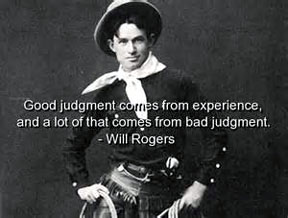
Mariner came by another mentor via public reading sources, books, and old timey movie clips. The reader likely knows him, too: Will Rogers. Will was a traveling humorist and writer. He was very popular with the national audience – constantly full of funny quips and derisive comments about any institution, especially government. Will had a way of making you laugh at yourself despite the sarcasm. He lived from 1879 to 1935, dying in a private airplane crash at 55 on the way to Alaska with Wiley Post. Will was born to Cherokee parents in Oologah, Oklahoma on a Cherokee reservation. In his young days he performed in Wild West shows, becoming an expert at cowboy skills and especially enjoyed doing tricks with lariats. He moved to Broadway shows, movies and writing – truly becoming a world famous author and speaker.
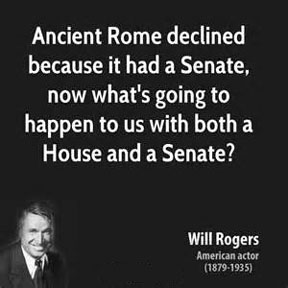
“Rogers increasingly expressed the views of the “common man” in America. He downplayed academic credentials, noting, “Everybody is ignorant, only on different subjects. Americans of all walks admired his individualism, his appreciation for democratic ideas, and his liberal philosophies on most issues. Moreover, Rogers extolled hard work and long hours of toil in order to succeed, and such expressions upheld theories of many Americans on how best to realize their own dreams of success. He symbolized the self-made man, the common man, who believed in America, in progress, in the American Dream of upward mobility. His humor never offended even those who were the targets of it.”[1]

It was Will’s personal economic philosophy of life that caught the mariner’s attention. In various periods of his life, Will lived on a ranch in California. He had his family and a number of Indian workers. Will followed the American Indian philosophy: The hunters go out on a hunt and when they return with the kill it is given to the tribe to distribute. The hunters do not own or control the kill; it belongs to the tribe and there are no requisites for anyone to have access to the kill. Simply, the kill belongs to everyone.

Will worked hard for his income; similar to tribal procedure, the profits of Will’s labors were, as simply as the hunters, turned over to the family. Will didn’t pay his workers, their sustenance was provided the same as with everyone – family, Indians, food, clothing, materials in general. Everyone on the ranch received the same benefits and was cared for in like fashion.

Conservatives call this a dole. Profit is earned and owned by the one who earns it. Handouts are unfair and signify laziness, cheating, and unworthiness. Note that the Indian culture, along with Will, did not confuse individual worth as a scale of value equal to the amount of profit at hand. Mariner remembers the day he had this insight. How novel, how caring, how fair, how sustainable. This economy which belonged to no one and everyone had immense capacity to sustain far more participants (not just the 1%).

Without hearing, mariner knows the selfish will lash out at those who seem to be working less than the mighty profit takers. Alas, conservatives, it is a complex world and not everyone has the same profile.

Will wrote during the depression: “Now everybody has got a scheme to relieve unemployment, but there is just one way to do it and that’s for everybody to go to work. ‘Where?’ Why right where you are, look around and you see lots of things to do, weeds to be cut, fences to be fixed, lawns to be mowed, filling stations to be robbed, gangsters to be catered to.…”

In reality, the variance in work capacity or in amount of income is not an issue. On Will’s ranch, no one was told they had to assist with sustenance; they knew it – without intimidation or belittlement. Everyone saw to it that some part of the ranch labor was attended to without condescension. The trick is to not bind hunting to self-worth.

Mariner is pleased to note that Sweden, as a nation, as everyone’s government, has just passed legislation to experiment with Will’s way. Several thousand people will receive about $600/month and not be required to work at a defined ‘job.’ It is not seen as a dole; it is seen as a way to stretch the kill across everyone even when resources become lean. Sweden understands that humans have been scarfing down the Earth’s wealth far beyond what will be available as humans expand their population by another 40% in 100 years. Don’t worry about working at a defined job – everyone will be working at something to better the tribe.

Isn’t it fascinating that a Stone Age civilization is showing modern man the right way to do things?

Ancient Mariner

[1] James M. Smallwood, “Will Rogers of Oklahoma: Spokesman for the ‘Common Man’”. Journal of the West 1988 27(2): 45-49. ISSN 0022-5169


Of Tomatoes and Immigration


֎It was, if you can believe it, only 11 million years ago that tomatoes split away from peppers, evolutionarily speaking. But now, thanks to gene editing technology, scientists may be able to activate genes already lying dormant in tomatoes to, yes, make tomatoes spicy again. [Gizmodo]

The seed catalogues must be drooling over the opportunity for yet another new tomato variety.

֎Last night between tennis matches, mariner tuned to The Last Word with Lawrence O’Donnell (MSNBC). Lawrence had Ezra Klein as a guest. Ezra provided an excellent interpretation of Donald which mariner thought was dead on. It is worth a check with the video collection at https://www.msnbc.com/the-last-word

֎In these times of overwhelming change, reason and necessity can be worlds apart. Both are real motivations and both are rational responses but in times of significant upheaval their solutions for managing change sprint away from each other. The immigration issue is a good example.

The majority of US citizens are pragmatic, dollar-conscious, and feel shortchanged by their changing culture. Their opinions reflect their concern for their immediate wellbeing and are, of necessity, urgent in nature. Hence, racism increases, identity politics emerges and everything NIMBY is the rule of the day. This is a valid response.

Some citizens are preoccupied with the long view, using reason rather than necessity to establish values. They ask questions like, “What effect does immigration have on the economy and GDP?” or, “Will additional people create overcrowding issues?” or, “What does the Constitution say about immigration?” One question that may be asked is based on the age of the US population. The US, along with Germany, France, China and Japan among others, has a rapidly aging population. Economists suggest that a few decades out there won’t be a large enough labor force to care for all the old people and further, GDP will drop precariously. This line of reasoning suggests that immigration is a good thing and will slow the aging curve.

If this is not enough to chew on, some may involve the effect of artificial intelligence (AI) on the work force and question whether there will be enough jobs to accommodate a new influx of immigrants, thereby shifting the core issue to “What do we do with all the old people?”

In any case, one can see that reason and necessity truly are worlds apart in their responses to extensive change.

Ancient Mariner

Power Corrupts

The last post, “The mice warned us,” dealt with the self-destructive nature of overcrowding. Calhoun’s mice experiments showed that unity broke down into have and have not classes, that violence erupted in self-destructive ways, and social mores disappeared. Eventually the physiology of procreation completely failed. Violence was common; illness and flagrant disregard for the wellbeing of other mice became universal. Across several experiments, the population fell to an average of 116 mice before beginning to grow again.

– – – –

Just to get the reference out of the way, it was John Emerich Edward Dalberg Acton who, in 1887, said “Power tends to corrupt and absolute power corrupts absolutely. Great men are almost always bad men.”

This post deals with an imbalance in power. “The Stanford Prison Experiment” (SPE) was a 1971 social psychology experiment that attempted to investigate the psychological effects of perceived power, focusing on the struggle between prisoners and prison officers. It was conducted at Stanford University between August 14–20, 1971, by a research group led by psychology professor Philip Zimbardo using college students. In the study, volunteers were randomly assigned to be either “guards” or “prisoners” in a mock prison, with Zimbardo himself serving as the superintendent. Several “prisoners” left mid-experiment, and the whole experiment was abandoned after six days. Early reports on experimental results claimed that students quickly embraced their assigned roles, with some guards enforcing authoritarian measures and ultimately subjecting some prisoners to psychological torture, while many prisoners passively accepted psychological abuse and, by the officers’ request, actively harassed other prisoners who tried to stop it.” [Wikipedia][1]

This experiment has been challenged because of questionable methodologies and unwarranted suggestions to participants by Zimbardo. In fact, other similar experiments with more disciplined methodologies suggest that the breakdown of social roleplay was caused by the manner in which Zimbardo exercised dictatorial control over participants, whether guards or prisoners. It was Zimbardo himself who proved Lord Acton’s quote.

In a similar experiment in England, it was found that tyranny (cruel, unreasonable, or arbitrary use of power or control) can only arise when groups become dissatisfied with their circumstances. Organized social structure that is fair and reinforcing will not let tyranny take form. In other words, fragmentation of society (we call it identity politics) will permit extreme reactions to occur in an effort to rebalance group ethos. Mariner found the English study highly relevant to the history of democracy in the US and those troublesome times when privileged groups took advantage (as in Calhoun’s mice studies) or when there was dissatisfaction on a broad scale (one example is the Vietnam War along with inflation). The conservative voters Reagan met that year became the core of his support in the decades ahead. They embraced Reagan not just for his moving pro-America rhetoric, but also for his anti-tax, small government policies and his strong stance against communism and the Soviet Union. Today, the issue again is economic imbalance as old style capitalism begins to fail in an international economy.

Forty years later, the US President seeks to restore Reagan’s policies by tyrannical behavior and disregard for a fair and reinforcing society.

Ancient Mariner

[1] For the 2015 film, see https://en.wikipedia.org/wiki/The_Stanford_Prison_Experiment_(film)

The mice warned us

The early pioneers in psychology, the standard list around the western world is Pavlov, Skinner, Jung, Maslow, Erickson, Rogers, Freud, and Piaget, focused on an individual’s response to reality. These folks helped us understand the physiology of the human brain and mind; they provided insight into the human response to love, fear, success, failure and a myriad other emotional behaviors. It wasn’t until the Second World War and after that psychology partnered with sociology and history to investigate group behavior. Similarly, management theory and economics incorporated psychology and sociology to uncover new approaches to management; one thinks of Deming, Drucker, Chandler and Aldrich among others.

An interesting observation is that the study of group behavior began about a decade before differences in individual behavior versus group behavior began to be documented in contemporary terms. Two world famous experiments were conducted that have become common knowledge. The first was one of a series of studies of mice by John B. Calhoun in 1972; the second was a college experiment performed at Stanford University in 1971 covered in the next post.

CALHOUN’S MICE

The mouse study was performed to answer the question, ‘what happens when overcrowding occurs?’ (The human brain is optimized for a social group of about 150-200 people). Calhoun was careful to eliminate the lack of resources as an influence and fed his mice with an endless supply of food, water and nutrition. Calhoun provided a mouse utopia with apartments and different levels called Universe 25; the initial number of mice was 8. The landings of the pilgrims and the first migration to the Middle East from the Rift Valley in Africa come to mind.

Brackets [] in the quoted material below are added by mariner.

At the peak population [2,200 by day 560], most mice spent every living second in the company of hundreds of other mice. They gathered in the main squares, waiting to be fed and occasionally attacking each other. [Nations live this way now on every continent except Australia and Antarctica] Few females carried pregnancies to term, and the ones that did seemed to simply forget about their babies. They’d move half their litter away from danger and forget the rest. [Forced migration] Sometimes they’d drop and abandon a baby while they were carrying it. [Closely approximates behavior in estranged communities and certain starving populations in Africa; mice had no chemical alternatives or voluntary abortions]

The few secluded spaces [owned territories] housed a population Calhoun called, “the beautiful ones.” [wealthy class] Generally guarded by one male, the females—and few males—inside the space didn’t breed or fight or do anything but eat and groom and sleep. When the population started declining the beautiful ones were spared from violence and death, but had completely lost touch with social behaviors, including having sex or caring for their young.” [Comparatively, humans in their teens and twenties today have significantly less sex than their elders at the same age] [Add to that the lessening need to socialize with other humans directly because of the smartphone, TV and other electronics]

A notable side effect as the population approached its maximum was that mice that still had a bit of territory chased other male mice into specific corners at the opposite end of the cage. Mariner wonders whether suppressed groups in Africa and other nonproductive locations are simply ignored because there is no forced limit of territory at this time. Oh to live in Silicon Valley….

Now, in 2015, interpretations of Calhoun’s work have changed. Esther Inglis-Arkell (UCSF) explains that the habitats he created weren’t really overcrowded, but that aggressive mice enforced territorial prerogative to keep the beautiful ones isolated. She writes, “Instead of a population problem, one could argue that Universe 25 had a fair distribution problem.

“In 1972, with the baby boomers coming of age in an ever-more-crowded world and reports of riots in the cities, Universe 25 looked like a Malthusian nightmare. It [collapse of society] even acquired its own catchy name, “The Behavioral Sink.” If starvation didn’t kill everyone, people would destroy themselves. The best option was to flee to the country or the suburbs, where people had space and life was peaceful and natural.

“The fact remains that it [Universe 25] had a problem, and one that eventually led to its destruction. If this behavior is shared by both mice and humans, can we escape Universe 25’s fate?” [Inglis-Arkell]

Mariner leaves the door open for readers to have further speculation about group behavior in unbalanced societies.

Next post, the effect of power.

Ancient Mariner

Think Abouts

Mariner watched an episode of Christine Amanpour when she interviewed Jon Stewart and Dave Chapelle. Both men are astute observers of human life and social discourse. One comment that stayed with mariner was a comment by Jon Stewart; he was alluding to the brashness and unthinking environment that marks our society today. He said our opinions don’t have time to mature because we live at a circadian pace driven by tweets. Think about the rapidness of our society. Does rapidity override social grace?

Words that stir thought from Amanda Kolson Hurley:
“Ah, suburbia, land of the bland. White-picket-fenced realm of white-bread people and cookie-cutter housing. That’s still the stereotype that persists in how many of us think about and portray these much-maligned spaces surrounding cities. But if there was once some truth to it, there certainly isn’t today.

“In the past several years, a much more complex picture has emerged—one of Asian and Latino ‘ethnoburbs,’ rising suburban poverty, and Baby Boomers stuck in their split-levels. And 2018 really drove home the lesson that, when Americans say they live in the suburbs, the suburbias they describe are vastly different kinds of places.

“A century and a half after Frederick Law Olmsted laid out one of the first planned American suburbs in Riverside, Illinois, and seven decades after the builders Levitt & Sons broke ground on the ur-tract ’burb of Levittown, New York, we haven’t fully mapped the contours of modern suburbia—not just who lives there and why, but the role that suburbs play in politics and society.”

Mariner once read in a forgotten sociology book that towns, suburbs and other neighborhoods have a cultural lifespan of sixty years. Since reading that passage, mariner is convinced by continuous examples that it is true give or take a few years. Mariner is old enough to remember the new instant neighborhoods, some large enough to be small cities. Economics required that only one or two models would be available else costs would be too high for profit. Given today’s situation, income and profit slowly have dwindled in these suburbs; new better housing is found elsewhere and newer prices and salary requirements have trapped residents in their homes, unable to move out of the old neighborhood. Think about your childhood neighborhood; is it culturally the same as you remember?
– – – –
In mariner’s home town things have changed dramatically over sixty years. Mariner lived in his town in the sixties, left and returned ten years ago. In the sixties, the town was booming and healthy with robust churches, agricultural employment, investment potential for banks and entrepreneurs, active social life with dozens of clubs and social activities. It was a good time to live in his town. But it was the last decade of growth. Since then, the town slowly dwindled; churches are on the verge of closing; the older folk are trapped because their economic model has yielded to relentless inflation; and significantly, the age of electronics, computers, and soon artificial intelligence will totally reconstruct the daily culture and economic model of town citizens. From 1960 to 2020 will be sixty years. . . Think about how a town in the middle of corn fields can energize itself. It is a necessary goal for 800 people – many of them are young with families.
– – – –
Now think about this. An increasing number of nations are considering paying a basic income stipend to every citizen. Mariner is neutral on this issue. However, to solve the rapidly growing injustice of income and economic injustice as money gravitates to the upper classes; as a growing poor increases day by day; as an aging population cannot keep up with inflation and earnings; as the ability to produce dwindles in most neighborhoods, towns and even cities (consider the rustbelt on one end and impoverished Native Americans on the other), there are no other recommendations with the dynamic effect capable of reducing class-based economic disparity. Let’s use the Swiss as an example:

“Switzerland has a very direct style of democracy. For example, changes to the constitution, or “popular initiatives,” can be proposed by members of the public and are voted on if more than 100,000 people sign them. If a majority of voters and cantons (Swiss states) agree, the change can become law. This system not only allows individual citizens a high degree of control of their laws, but also means that more unorthodox ideas become referendum issues.

“Recently, there has been a spate of popular initiatives designed to curb inequality in the country. Earlier this year Swiss voters agreed to an idea proposed by entrepreneur Thomas Minder that limited executive (in his words, “fat cat”) salaries of companies listed on the Swiss stock market. Next month, voters will decide on the 1:12 Initiative, which aims to limit the salaries of CEOs to 12 times the salary of their company’s lowest paid employee.

“Earlier this month, an initiative aimed at giving every Swiss adult a “basic income” that would “ensure a dignified existence and participation in the public life of the whole population” gained enough support to qualify for a referendum. The amount suggested is 2,500 francs ($2,800) a month.

“While most observers think that the vote is a longshot, it has certainly sparked debate — and not just in Switzerland. Writing for USA Today, Duncan Black said that a “minimum income” should be considered for the U.S.” [Business Insider]

If ever there were a curse word in capitalism, it is “guaranteed basic income.” Very much a socialist concept, today’s conservatives perhaps even more than the rich, will have apoplexy if such a bill were submitted to Congress. Still, is there another alternative which forces income into communities and individuals who are production negative?” Think about it.

Tangentially, ProPublica published a report saying:

“A new data analysis by ProPublica and the Urban Institute shows more than half of older U.S. workers are pushed out of longtime jobs before they choose to retire, suffering financial damage that is often irreversible.”

Ancient Mariner

The Right Spirit

A bit of thrust and parry about abolishing the Senate. The idea is emerging in magazines, books and even television commentary. Mariner again will proffer why the Senate distorts public discourse – an example taken from John Dingell’s book:

California has a population of sixty million people. The bottom twenty states in population together have less people than California. Yet, those twenty states have forty senators while California has two.

This imbalance in Senate representation echoes throughout many national policies, civil rights, and contemporary issues requiring, to be fair, a national perspective larger than the constraint caused by a minority of US citizens. Most political thinkers attribute the rise of identity politics to the ability of a few Senators representing a significantly small population to block healthy, rational compromise.

The Senate’s cousin, the Electoral College, twice in recent times has elected a president who lost the popular vote.

What forces this issue to the front is the massive changes in government, economy, civil rights, technology and class discrimination that are upon us. Compared to our cultural and economic stress, the Luddites had it easy.

Turmoil among rank and file citizenry has been growing since the riots at the Democratic Convention in Chicago in 1968 – just to name a contemporary starting point.

– – – –

Ahem. Allow mariner to straighten his tie, comb his hairs, and change the subject to one of cultural cure: It is the holiday season. For all cultural segments and religions participating in this most uplifting time of year, mariner steals lyrics yet again.

Have yourself a merry little Christmas

Let your heart be light

From now on our troubles will be out of sight.


Ancient Mariner


2018 Observations

    Speak to a member of Donald’s base and they will say “Donald is doing exactly what we want him to do.” The populist base wanted a grenade thrown at the Establishment. It did explode and has upset the status quo to a great extent – especially in Cabinet policy. In fact, the grenade exploded so strongly that it exposed the GOP for what it is: Republican Senators living foremost for selfish reasons; Senators holding on to Reagan economics which don’t work in today’s international economy; GOP Senators are conservative tribalists rather than national statesmen. Could a blue wave wash over the Senate in 2020? Mariner believes a few new democrats may make it but not enough to overturn the GOP majority. The Senate doesn’t work correctly in today’s Government consisting of 50 states, 350 million citizens and a modern computerized society. Mariner’s observation is to abolish the Senate completely or at a minimum combine the two houses thereby making every representative subject to proportional representation. And toss out the Electoral College while we’re messing with the Constitution.
   January 2018 had bouncy temperatures ranging from below zero to days in the sixties in the Southeastern part of Iowa. El Nino is forming in the Pacific; it appears the winter jetstream will offer slightly warmer weather in January 2019 than we had last year. If one lives in the Carolinas or New England, the same jetstream won’t be so nice with increased rain, snow and energetic storms. It is a fact that one cannot predict climate change with weather forecasts over a short time. However, mariner agrees with the observation of scientists who study the Earth in geologic terms: the climate change thing already is out of the bag and will have its way with us. Even if the international community meets the requirements of the Paris agreement, the Earth is a big place and large, slow moving planetary phenomena have too much momentum for us to steer. The main worry is what will rising seas, floods and droughts do to our economy?

   According to a Senate Intelligence Committee report, Instagram “was a significant front” in Russian election meddling, eclipsing even Facebook itself. Between 2015 and 2018, there were 187 million interactions with Instagram content from the Internet Research Agency, the Russian trolling operation, compared with 77 million interactions on Facebook and 73 million on Twitter. [Bloomberg]

A popular quote is in frequent use at the moment. The quote is Ben Franklin’s response to a woman’s question about what the founders had delivered: “A republic, if you can keep it.”

A democratic republic requires constant maintenance by its citizens. This means that managing our government at Federal, State and Local levels is a necessary chore that we must continually exercise by voting (but today only 47 percent vote), attending town hall meetings and other events that provide access to our representatives, participating in political causes and party affiliations (only 12 percent of citizens participate even minimally in civic activities). This is sophisticated stuff that requires an educated understanding of citizen responsibilities (civics is not taught in public schools).

It is mariner’s observation that US citizens duck responsibility and blame Russian influence on the Russians. There’s nothing stopping any citizen from taking ownership of their democratic republic at a cultural level and at a political level. Stop blaming others a la Donald and step up to ownership of a nation. If we Americans did that, the Russian issue wouldn’t exist.

Ancient Mariner


On The Atlantic and other Things

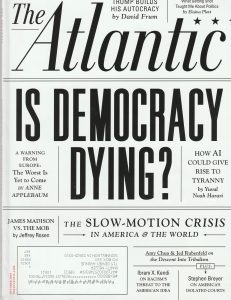
Regular readers will know that mariner’s favorite magazine is The Atlantic (TA). He has added a few to his personal library. There are several other magazines in its class that provide cogent insights in the social sciences and can be trusted to deliver balanced reality based on studied facts. TA often approaches scholarly levels in its presentation of the human experience.

Not everyone would want to spend the time and focus required to read TA. When TA focuses on an issue, it is a 3-credit course on the subject. An excellent example of this pattern is the October 2018 issue. The cover headline asks, “Is Democracy Dying?” Nine articles are referenced right on the cover that provides an excellent base for understanding the turmoil of contemporary society, politics and governance.

Reading TA cover to cover in one sitting is not recommended. Mariner keeps copies of recent magazines on his dining room table to be perused an article at a time. When the October issue is completely read, one is knowledgeable, capable of thematic reasoning about democracy, and aware of the human experience dependent on democracy.[1]

– – – –

Writing about life experiences often drops to melodramatic levels which  certainly are valid but limit the reader’s ability to contemplate broader views. One magazine that is unique in presenting holistic articles about reality that give a reader room to ponder is Smithsonian Magazine (SM).

Like TA, SM often promotes a theme for its articles but SM also includes articles about the world, interesting individuals, nature, and often, articles based on the Smithsonian Museum collection in Washington D.C. SM is a pleasant read.

The September 2018 edition focuses on moments in American history that have been forgotten or that provide insight into unknown situations. The issue also includes articles about Rhinos in Washington and a toy school bus.[2]

– – – –

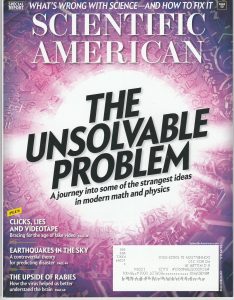
There are several magazines about science. Most are focused on one kind of science like astronomy or health or agriculture. Three magazines, Science, Nature and Scientific American, are widely read. Over time mariner has chosen Scientific American Magazine (SA) because it is totally comprehensive in its range of science and technology and at the same time provides reader-friendly articles and references. Every edition has an endless insight into diverse – and often surprisingly humanistic – branches of science that enrich the reader’s familiarity with science.

Like other recommendations, SA often sets a theme for an issue. In the October 2018 copy, the theme is “How to fix Science” It covers funding, enforcing the ability to reproduce research claims, dealing with government denial, and increasing interdisciplinary research. There is an article preparing us for fake videotape and fake audio.[3]

– – – –

Each of the above magazines has a strong Internet presence. Mariner and his wife enjoy reading books and magazines in print form but for many who are too busy or who prefer to pick and choose what to read, mariner recommends both the official websites and subscribing to their newsletters that arrive in your email.

Another source for intelligent, dependable dialog is the collection of National Public Radio (NPR) products and broadcasts. If one is more interested in good fiction than nonfiction, there is no better place to look for a good book than NPR’s Book Concierge at https://apps.npr.org/best-books-2018/ . On the other hand, the NPR news page avoids the hysterical advocacy of TV news; see https://www.npr.org/ . This home page will lead you to broadcasts, podcasts and other entertaining – and rational – information.

Remaining informed is similar to keeping fit. It requires commitment.

Ancient Mariner


[1] Fortunately, TA has an excellent archive. To read the articles in the October 2018 issue, see:

https://www.theatlantic.com/magazine/toc/2018/10/

[2] Find SM archives at https://www.smithsonianmag.com/issue/archive/

[3] Find archive issues at https://www.scientificamerican.com/store/archive/?magazineFilterID=Scientific%20American%20Magazine

Compassion, Damn It!

Well, well. Wasn’t the fur flying because young mariner had no traffic ticket for his accident. An entire article about compassion as the root of democracy was trashed because mariner did not get a ticket. So much for compassion over judgment.

Mariner understands that in these uncertain times citizens are chary and become judgmental about due process. Nevertheless, he stands by the principle that compassion without judgment is both restorative to personal happiness and productive as well. One thinks of the abused folks who constitute Donald’s base: The US economy has squeezed them for decades; there is little that comes easily to them. These folks are left only with defensive mechanisms similar to pride, judgmental attitudes, intense populist ethics that are destructive – in their minds as it should be – and intensely protective of what little they have.

Mariner assumes that most readers have read the parable about the Good Samaritan so he won’t repeat it here. Perhaps, though, you just might check out Luke 10:25. The context surrounding the Samaritan’s compassion is identical to the social conflicts present today. The US population has become increasingly conscious of class, even fragmented versions of class (identity politics). In the Samaritan’s situation, he was considered less than a proper Jew because Samaritans did not adhere to the racial requirements of proper Judaism; Samaritans allowed mixed marriages even though otherwise they practiced the Jewish faith.

Mariner’s wife read a book written by a homeless person, Lars Eighner, who walked across the country with his dog Lizbeth.[1] From the book she remembers a time when Lars, who had no source of income, would save the bit of change he came by to purchase dogfood for Lizbeth. Many times others in the stores would buy his dogfood for him. No one said “He ought to get a job” or “He should be picked up by the police.”

Often mariner has touted the practice of “Pass it forward.” It is a practice based on having a compassionate insight into another person’s need without judgment or prejudice. Use this simple gesture to practice compassion. What’s more important than ever is to look for ways to be compassionate toward someone from a different class – even a different political class.

Ancient Mariner


[1] Travels with Lizbeth, Lars Eighner, Ballantine Books, 1993