We must talk

Everyone is aware of the topic ‘climate change’ or ‘global warming’. The difficulty is that there is no actual definition, experience or data that defines these terms. Clouding the dialogue is conflict between naysayers, entrepreneurs, ostrich heads, unprepared government representatives and science. The casual attitude by most around the world is, “Well, maybe. But it’s too far in the future for me to worry about.”

The reality is that climate change officially began with the first report of atmospheric modification back in 1853. The primary culprit is known today as burning fossil fuels. What is hard to accept is the gradual change – ever so slight – of weather, planet behavior, environmental degradation and other subtleties such as the effect of eliminating forests, open chemical drainage and destroying estuaries and tidal plains in the name of real estate development.

A record-setting amount of damage has occurred across the planet – including the United States – that no longer can be denied. Something is different. It is destructive, expensive and takes lives. Storms are stronger; rain is heavier; drought is prolonged; atmospheric quality affects health. If mariner may use an analogy, visiting with a cow and calf is pleasant until more cows come running; and even more cows come running. A pleasant interlude with one cow becomes a life-threatening stampede. Since about 1970-90, the rate of change has shifted slowly from arithmetic to geometric, that is, the rate of change was moving along at 1,2,3,4,5,6…. Recently, the rate of change has shifted to 1,2,4,8,16,32….

Even the US Congress, bless them, is preparing a disaster relief bill with a budget in the billions and both parties are collaborating. Climate change must be serious!!! The cost of climate change perhaps is the most threatening aspect, capable of bringing the nation’s economy to its knees.

USNews just released an article that begins to provide measurable data. A summary is below; remember that when the term “in the next century” is used, that doesn’t mean it will start in the next century; it indeed already has begun. Metaphorically, the cows already are multiplying.

[USNews] A report released Tuesday in the journal Environmental Research Letters found that the homes of nearly 3.9 million Americans are at risk of flooding by the next century if the sea level rises one foot, as many climate scientists have predicted. While usual suspects such as New Orleans, southern Florida and the Manhattan section of New York City are at great risk, some more surprising areas also have large populations living less than a meter above sea level. Ben Strauss, director of the Program on Sea Level Rise at Climate Central, told us which states are most at risk of devastating floods during the next 100 years.

Georgia – 28,000 people living in 127 square miles of low-lying land are at risk of being flooded.

Massachusetts – Only about 32 square miles of Massachusetts is vulnerable to being flooded, but it’s a dense area, with about 52,400 people at risk.

North Carolina – 58,000 people living in more than 40 towns and municipalities in North Carolina are in danger of flooding, according to Strauss’ report. The state is prone to hurricanes, although it has largely avoided major damage in recent years.

South Carolina – In 1989, hurricane Hugo pounded downtown Charleston with five-foot high walls of water, damaging three quarters of homes in the historic district. Strauss says the area is especially vulnerable to flooding. In the state, 60,000 residents live in dangerous low-lying areas.

Virginia – Strauss says Norfolk is at the most risk in Virginia—about 75,000 people live in the state’s 120 square miles of low-lying dry land.

New Jersey – New Jersey only had 67 square miles of dry land in the “danger zone,” but more than 154,000 people live in those areas, putting the Garden State at risk.

New York – Last month, a researcher said that storm swells could easily devastate Manhattan over the next 100 years, and Strauss wrote that the city had a “one-inch escape from Hurricane Irene.” Manhattan has sea walls, but with 300,000 people living less than a meter above sea level, they’re at risk, Strauss says.

California – “In southern California, you never think of coastal floods,” Strauss says. Southern California often gets storms that push the high tide line three feet above sea level, but it rarely goes above that. “By middle century, when you have a foot of sea level rise, they’ll be seeing water to four feet regularly. There’s a lot of development and assets between three and four feet,” Strauss says, adding that relatively flat areas such as Huntington Beach and Long Beach are at the most risk. More than 325,000 people live less than a meter above sea level.

Louisiana – “The odds for extreme coastal floods have already increased dramatically for most locations we’ve studied,” says Strauss. No one knows that better than the people of Louisiana, who were devastated by Hurricane Katrina in 2005. More than 888,000 people live in the 1,180 square miles of dry land less than a meter above sea level, by far the largest vulnerable area in the United States.

Florida – More than 1.6 million people live in the 638 square miles of Florida’s coast that are less than one meter above sea level. Strauss says South Florida will likely have to migrate to higher ground, because the bedrock off the coast of Miami is “like Swiss cheese,” making it impossible to build a sea wall.

Globally, there are ten nations that may not survive economically:

Bangladesh – Climatic changes: A tropical monsoon country, Bangladesh is prone to floods, tropical cyclones, and tornadoes, which occur almost every year, and now the low-lying country is suffering increased rainfall, cyclones and rising sea levels. Over the coming decades it is estimated that 20 million climate refugees will emerge from Bangladesh.

Guinea Bissau – Not to be confused with Guinea, Equatorial Guinea, or Papua New Guinea, Guinea Bissau is soon to be placed on the map in its own right, no longer to be mixed up with other similar-sounding countries.

Guinea Bissau experiences a monsoon-like rainy season alternating with hot, dry winds blowing from the Sahara. Rainfall has become irregular and unpredictable. The coastal lowlands are exposed to increasing rising tides due to thermal ocean expansion, which in turn increases the risk of flooding. Damage to infrastructure and loss of water security are already felt keenly, as is the loss of food security due to the loss of fish stocks and coral reefs, soil degradation and decreased agricultural yields. Guinea Bissau already is heavily dependent on foreign aid.

Sierra Leone – Sierra Leone’s climate is tropical, with a rainy season and a dry season which brings cool, dry winds from the Sahara. The population is now threatened by climate change-related droughts, storms, floods, landslides, heatwaves and altered rainfall patterns. Crop production is highly vulnerable to prolonged droughts interspersed with heavy rainfall, rendering Sierra Leone another country at high risk from threats to food and water security.

Haiti – Haiti’s climate is characterized by two seasons: the wet and the dry. Heavier rainfall is now occurring in the wet season, hurricanes are more frequent and less predictable, and sea level rise is a major concern. Climate projections, however, indicate a hotter and drier future for Haiti with decreased precipitation overall. Unseasonable droughts have caused widespread crop failure in recent years. Less than 2% of Haiti’s forest cover remains since the 1915-1934 US occupation, which oversaw the majority of deforestation due to concentrated land ownership for plantations.

South Sudan – South Sudan’s climate is tropical equatorial with a humid rainy season – with vast amounts of precipitation – and a drier season. However, climate change has delayed and shortened the rainy season, and drought has become an increasing concern.

Nigeria – Nigeria’s oil-based economy is set to suffer greatly, likely impacting the funds required to address climate change. Nigeria is already experiencing drier weather, particularly in the northern Sahel region, and droughts are increasing in frequency and severity.

Democratic Republic of Congo (DRC) – The DRC is the richest nation on earth in terms of natural resources, and the most biodiverse African country, yet one of the poorest nations on Earth, with 70% of the population living below the poverty line. The predicted increase in frequency of floods, droughts and heatwaves, is expected to impact agricultural productivity and livelihoods. Deforestation and land degradation due to mining are exacerbating these climate-related disasters

Cambodia – Climate change is expected to amplify already existing problems of water scarcity, agricultural failure and food insecurity. Extreme flooding is predicted to endanger the agriculture that supports the majority of the population. Extreme heat is also predicted.

Philippines – The term super-typhoon is set to become a fixture in climate-related vocabulary. Rising sea levels place the Philippines in a particularly vulnerable position, and increase the threat of storm surges that inundate vast coastal regions, threatening their populations who will be forced to migrate en masse if they are to escape the effects of food insecurity and loss of shelter and livelihood that result.

Ethiopia – Small-scale farmers – which make up 85% of the Ethiopian population – are expected to bear the brunt of climate change-induced drought in Ethiopia, resulting in water scarcity and food insecurity. Crops have failed and cattle are dying; it is probable that Ethiopia will experience more famines on the scale for which the nation is famed.

Mariner is confident of two situations occurring: Even as the world has not figured out how to deal with emigration, emigration will continue to worsen especially in a decade or two when the effects of climate change dramatically change weather patterns; migration of US citizens will cost billions and affect everything from housing to jobs. The second is a global depression. GDP will suffer significantly at the same time the cost of climate change is beginning to affect national economies.

Thanks to USNews, Shift Magazine and Maplecroft.com for providing much of the detail in this post.

– – – –

OF NOTE

Barbara Res, a construction manager in the early 1980s, recalled:

“We met with the architect to go over the elevator-cab interiors at Trump Tower, and there were little dots next to the numbers. Trump asked what the dots were, and the architect said, “It’s braille.” Trump was upset by that. He said, “Get rid of it.” The architect said, “I’m sorry; it’s the law.” This was before the Americans With Disabilities Act, but New York City had a law. Trump’s exact words were: “No blind people are going to live in this building.” [June Atlantic]

Ancient Mariner

Illicit Conversion

This isn’t about religion. Illicit conversion is a class of fallacy in reasoning which, it turns out, is Donald’s favorite form of argument. Retrieved from one of mariner’s ancient college textbooks on logic, it is nonetheless recognizable today:

Donald would reason that criminals are Hispanics; therefore all Hispanics are criminals. Or, another reasoning, Donald likes rich white people and doesn’t like poor nonwhite people; therefore, what Donald likes is acceptable and what he doesn’t like is unacceptable.

Donald may assume crimes are synonymous with collusion; therefore no collusion means no crimes.

Obviously for Donald, all friends are useful; therefore all those not useful are not friends.

In simple terms, one assumes a premise then uses that premise in an inaccurate way to propose a second premise. A syllogism with a split middle is a specific construct within illicit conversion.

What makes Donald confusing is that he illicitly converts illicit conversions at the drop of a hat. His reporting on the North Korean issue is an example.

Certainly Donald is not the only person who uses illicit conversion. It just may be that everyone is guilty of the practice when it provides an easy answer to a complex situation. How many conservatives or conversely how many liberals must confess to using ‘what one likes is legitimate; therefore what one doesn’t like is illegitimate’? How many think the brand of car they purchased is a superior choice therefore all other brands are somehow inferior?

The loosely defined truths (or untruths) contained in illicit conversions inevitably lead to flawed judgment, prejudice, exclusivity, meaningless pride and in some conditions lead to violence and abuse. Even in strict scientific research, what may be construed as a valid assumption often turns out to be an illicit conversion.

Has one ever used an illicit conversion to justify procrastination or scheduling preferences or which school is best for the children?

Illicit Conversion is a practice that is a bad personal habit until it becomes common enough to influence society. Without illicit conversion, populism cannot exist; identity politics cannot exist; prejudice cannot exist, etc.

The best antidote is curiosity along with engagement. Why does one want to procrastinate? Why do the various financial classes discriminate and isolate? Why is government split between capitalism and socialism? Why does one like their neighbor from the other political party but dislikes everyone else in that party?

One for all and all for one dispels socially assumed illicit conversion – plus add some rational education. Yet, many in the electorate prefer to be guided by illicit conversions for every aspect of life.

Ancient Mariner


Did you know?

Day to day, we forget that if the billions of years of life on Earth were scaled to a twenty-four hour day, our settled civilizations began about a fifth of a second ago. [Falter, McKibben]

This implies that the existence of humanity, regardless of many years of human life ahead, is but a microscopic blip in the history of the Planet. The dinosaurs (during the Mesozoic Era inclusive of the Triassic, Jurassic, and Cretaceous periods) existed for over 170 million years. So far, the Homo clan has existed for 2.2 million years; modern humans, the troublesome sapiens kind, have existed only for 200,000 years.

There is scientific debate about the cause of extinction for dinosaurs. One or the other or both a large asteroid and/or excessive volcanic activity blocked the sunlight and caused atmospheric gases that made life impossible for dinosaurs – although virtually every other creature made it through this catastrophe in one way or another. The survival of other species suggests that the end of the Cretaceous Period was a slower change in the environment. Some scientists think while both catastrophes may have contributed to the extinction, they suggest the real cause was a more gradual shift in climate and changing sea levels.

Does that sound familiar? Humans are not blessed with asteroids but from time to time, large volcanoes have disrupted daily life around the planet. Just to be sure, though, humans have fossil fuels to create a warming climate and changing sea levels.

Another study suggests that the dinosaurs were overpopulated and suffering from disease and malnutrition during the end of the Cretacious. Humans have that covered, too, with excessive global population and intentional starvation across much of the Planet.

Mother Nature is not deterred from her strict laws for survival. Mother Nature is the spirit of the Planet – not of any life form per se. As to troublemaking humans, she says, “Capitalism, shmapitalism; profit, shmofit; AI, shmai – humans have never been in charge and never will be.”

Humans snub their noses and say they will leave Earth and live elsewhere in the cosmos. Where? On another planet?

Ancient Mariner


Dancing

Mariner wrote a post some time ago that defines a physical difference between liberal and conservative thinking (Red Brain, Blue Brain posted June 19, 2015). The difference is where decisions are made in the brain.

֎ From an Atlantic article by Dan Meegan

Conservatives Have a Different Definition of ‘Fair’ and liberals ignore it at their peril.

[Some people have more than they need, and others need more than they have. Even when liberal leaders describe policies that are beneficial to everyone, they make it clear that the most important beneficiaries are those whose needs are most urgent.

Conservatives tend to value equity, or proportionality, and they see unfairness when people are asked to contribute more than they should expect to receive in return, or when people receive more than they contribute. Consider a hypothetical comparison of two people who graduated from college five years ago with equal amounts of debt. Jessie successfully implemented a plan to pay off the debt in five years, while Sam still has much to repay. Warren’s plan forgives Sam’s debt, but offers nothing to Jessie, despite her industriousness and self-discipline. To add insult to injury, Jessie must contribute tax dollars to the $640 billion fund necessary to forgive outstanding loans, including Sam’s.]

 Sigh. ‘Pass it Forward’ must not be a conservative concept. Where are the Evangelicals when Christ needs them?

No doubt the example above proved to be a litmus test for the reader. One option will ring more true than the other. The conservative option is based on self-value while the liberal option is based on human value. The twain, as it is said, will never meet. When one gives it thought, one realizes this is the very core of the dysfunction of US governments. Conservatives are willing to eliminate the Affordable Care Act (ACA aka Obamacare) because they already have health insurance and balk at paying someone else’s health insurance as well – and gratis at that. Liberals, on the other hand see the imbalance of the human condition and seek to rebalance equality using the abundance of others.

In a more subtle sense, conservatives operate from a point of view that induces prejudice and classism; prejudice and classism simply are rules of the road that keep proportionality in place. Liberals on the other hand see the injustice of prejudice and classism as lack of concern for the human condition.

There are handy government philosophies for this conflict: capitalism and socialism. Mariner has said in the past that these philosophies don’t work if either is an absolute. It takes two to mambo . . .

Ancient Mariner

Gettysburg Revisited

Mariner has a mental image of walking across the Battlefield at Gettysburg during the Civil War. Over 7,000 dead bodies lay strewn across the field; over fifty thousand were wounded. Heavy smoke from gunpowder hangs in the air like fog; the stench of blood and death fills the nostrils. This image is a metaphor for citizens in today’s America – old and new concepts of government are in battle against one another. The difference is the citizens are the ones who will die and be injured.

[NEWSY] The Justice Department said in a filing Wednesday that it believes “the remaining provisions of the ACA should not be allowed to remain in effect.”

The Trump administration has joined a coalition of Republican-led states in asking a federal appeals court to strike down Obamacare in its entirety.

Should the Justice Department win this legal battle, many millions of US citizens suddenly will be left without health insurance, including virtually the entire Donald base. If this isn’t gunfire into the citizenry, causing many more deaths and injuries than at Gettysburg, then what is it? Old government forces (social conservatives) want to stymie inevitable change to the culture. The conservatives will cause a lot of pain and suffering both fiscally and emotionally but change is inevitable.

So it has been throughout history. Change means war. The innocent must die.

Ancient Mariner

The Creative Brain . . .

Over the years mariner has noticed a preference, even a celebration of the human brain’s dexterity and inventiveness. Mariner first noticed this bias in scientists. Remember Carl Sagan? He was famous for saying “billions and billions of stars, galaxies”, etc. Outer space was tantamount to Heaven itself. More recently, Neil de Grasse Tyson had an astronomy series where he blatantly described the wonderful phenomenon of physics, science and the creative mind. Any number of science specials on television tout the glorious, unburdened reality and the never ending benefits to humankind by the creative three dimensional world.

The other day mariner watched a special on Netflix called ‘The Creative Brain’ hosted by David Eagleman. He spoke of the special tool of the human brain, the Prefrontal Cortex, which allows humans to combine old knowledge and experience with new ones to create the art, tools, machines, technology, and abstract reasoning. Every example was a contribution to business, a three dimensional, arts and crafts creation.

Mariner reacts to the glorification of ‘things’ and ‘processes’ by asking a probing question: Who is in charge of these new things? His traditional example is Alfred Nobel; he invented dynamite in 1867. A premature publication of his obituary led him to establish the Nobel prizes in retribution. The obituary stated, Le marchand de la mort est mort (“The merchant of death is dead”) and went on to say, “Dr. Alfred Nobel, who became rich by finding ways to kill more people faster than ever before, died yesterday.) This motivated him to dedicate his estate to the Nobel Prizes in 1900.[1]

Of course Alfred did not mandate the killing of people faster than ever before. The question is who was in charge of Alfred’s scientific achievement?

The man credited with first having split the atom was Ernest Rutherford, who achieved the feat in 1917. Did he authorize the death of 280,000 Japanese in August, 1945? Who was in charge of this scientific achievement at that time?

Today, computer cloud technology receives similar praise as a wonderful invention. Who is in charge of this achievement? Business entrepreneurs and the military. Without his permission, the man on the street is creating billionaires by letting them steal his profile without remuneration.

The real point to this post is this: What good are all these advancements and business opportunities if the other part of the brain, the hypothalamus, hippocampus and amygdala are not capable of handling emotional judgment and ethics regarding the use of three dimensional inventions for human good? Perhaps a bit of wonderment should recognize human advancement in maturity and compassion, should it ever occur.

Ancient Mariner

[1] Detail by Wikipedia

A Seismic Shift

The United States, indeed the World, stands at the precipice of an historic change. Not just generational change; not just new electronic horizons; not just shifts in culture; not even the same climate. The United States as it has existed since the Second World War and especially since the 1980s will not exist in twenty years.

Mariner hasn’t surmised this future. It is the opinion of many intellectual and professional writers, leaders, scientists and philosophers – several with Nobel Prizes, many with Pulitzer prizes – all with concern whether we will be prepared for the seismic shift. At the moment, the US and State Governments, the oligarchical economy, the lack of plans for an economy that cares for the entire population not just the privileged, the standoff between climate change and fossil fuel economy, the dysfunctional education and job preparation institutions, and the symptomatic rise of identity isolationism all suggest the common man on the street is woefully exposed to the vagaries of change over the next twenty years.

If the citizenry is to minimize its exposure to poverty, environmental travesty and political failure, each citizen must make an effort to improve sociability in family, community and have a moral obligation to the nation and its citizens. Further, each person must educate themselves to the realities that will confront the nation over the next twenty years.

To suggest a tone for pursuit of quality understanding and insights, mariner offers three recent books that address the seismic shift. There are many more books and magazines that already provide a steady stream about the nation’s imminent future. Mariner also lists several broadcasting sources that are veritable libraries of quality discourse. Everyone must respond to the changes. Become conscious of social morality and become educated.

Rewriting the Rules of the American Economy: An Agenda for Growth and Shared Prosperity

by Joseph E. Stiglitz

Joseph E. Stiglitz is a Nobel laureate in economics, University Professor at Columbia University, and chief economist of the Roosevelt Institute.

“The United States bills itself as the land of opportunity, a place where anyone can achieve success and a better life through hard work and determination. But the facts tell a different story—the U.S. today lags behind most other developed nations in measures of inequality and economic mobility. For decades, wages have stagnated for the majority of workers while economic gains have disproportionately gone to the top one percent. Education, housing, and health care—essential ingredients for individual success—are growing ever more expensive. Deeply rooted structural discrimination continues to hold down women and people of color, and more than one-fifth of all American children now live in poverty. These trends are on track to become even worse in the future.”

Falter

By Bill McKibben.

Bill McKibben is recognized around the world for his dedication to the environment and health of the planet. He first warned of climate change 30 years ago and says its effects are now upon us: “The idea that anybody’s going to be immune from this anywhere is untrue.”

In his latest book, Falter, McKibben broadens the potential disruption to question whether the human race is in an end game.

The Second Mountain, The Quest for a Moral Life

By David Brooks.

David Brooks is a Canadian-born American center-right political and cultural commentator who writes for The New York Times. He has worked as a film critic for The Washington Times; a reporter and later op-ed editor for The Wall Street Journal; a senior editor at The Weekly Standard from its inception; a contributing editor at Newsweek and The Atlantic Monthly; and a commentator on NPR. Brooks is currently a columnist for The New York Times and commentator on PBS NewsHour.

“This book is meant to help us all lead more meaningful lives. But it’s also a provocative social commentary. We live in a society, Brooks argues, that celebrates freedom and choice, that tells us to be true to ourselves, to march to the beat of our own drummer at the expense of surrendering to a cause, rooting ourselves in a neighborhood, and binding ourselves to others by social solidarity and love. We have taken individualism to the extreme degree—and, in the process, we have torn the social fabric in a thousand different ways. The path to repair is through making deeper commitments.”

Other Media

Mariner’s opinion is that FOX, CNN and MSNBC are low quality sources for actual and meaningful information. Instead, try perusing the CSPAN video library or keep an eye for meaningful book reviews on CSPAN-BOOKS.

Check out NEWSY, a low budget news channel with no frills, just the facts, no pundits and ongoing insightful specials about issues of the day.

Check out PBS and NPR – not just the broadcasts but peruse the websites.

Mariner has mentioned previously The Atlantic, The Economist, The New Yorker and Scientific American Magazine as solid sources for insight into the reality of these times.

Check the New York Times for new books on important subjects.

How will Citizens prepare for the rapidly rising neo-Nazi presence in democratic nations? Even the US has a nationalist, racist President.

The bottom line – in the US at least – is an individual’s vote. Like a chess move, the vote must be played with insight and an awareness of future moves. Today’s US governments clearly are inept representations of a past that no longer applies. It is the reader’s job to vote for new values and knowledgeable representatives that will help everyone survive the seismic shift.

Ancient Mariner

Happenings

[HuffPost] Confirmed: Facebook, WhatsApp, Instagram, YouTube, Viber, Snapchat and Messenger blocked in #SriLanka following series of deadly church and hotel attacks.

The United States is fortunate that misinformation did not lead to bombing and killing during the political campaign. Social media remains an uncontrolled communication service unhindered by the scruples and regulations of America’s free press. While the US suffers racial hate in the bombings and killings in black churches, Sri Lanka suffers religious hatred fueled by racism and politics. Life in the US could be worse. So far citizens yell and curse one another but warfare is not a tool of our religions or politics except for the armed crazies who seem to have a bias toward school children.

The real cause in Sri Lanka and many other situations is the ability to broadcast untrue and unwarranted information. Mariner believes that fact-checking can be automated to the point that attempts to spin falsehoods could be trapped.

– – – –

Talk about violence on TV, did the reader watch Bernie Sanders on Fox television? A notable moment to remember and one that caught the debaters off guard was when Bernie asked the audience if they would rather have single payer health coverage or stay with insurers. A significant majority raised their hands for single payer.

– – – –

[NPR] More than 80% of parents in the U.S. support the teaching of climate change. And that support crosses political divides, according to the results of an exclusive new NPR/Ipsos poll: Whether they have children or not, two-thirds of Republicans and 9 in 10 Democrats agree that the subject needs to be taught in school.

It is true that society would be less argumentative if our children were educated in contemporary subjects that provide a common (apolitical) foundation for life. However, public education is subject to imposing political and religious influence. Civics isn’t taught anymore because political locals prefer less complicated, controlled campaigns; American history of minorities isn’t taught because of race prejudice; Religions of the world and the accompanying sociology isn’t taught because of conflicts between other religions, science and Christian bias. Health practices aren’t taught because of biased resistance to issues like sex, abortion and flu shots.


Imagine if there were a class called ‘Living Today’ or ‘Contemporary Living’ where the material covered how government works, factual presentation of long-standing, polarizing issues and videos of economic circumstances around the world. Nah, mariner is dreaming.

While Betsy DeVos’ economic model for education would wipe out public education, private contractors may be encouraged to teach contemporary subjects by dangling increased profits for the effort. Nah, mariner is dreaming.

But just imagine if Donald’s base had studied civics and economics. . . Mariner is following Alice down the hole. God bless the US electorate.

Ancient Mariner


Being Real

[“Real isn’t how you are made,’ said the Skin Horse. ‘It’s a thing that happens to you. When a child loves you for a long, long time, not just to play with, but REALLY loves you, then you become Real.’

‘Does it hurt?’ asked the Rabbit.

‘Sometimes,’ said the Skin Horse, for he was always truthful. ‘When you are Real you don’t mind being hurt.’

‘Does it happen all at once, like being wound up,’ he asked, ‘or bit by bit?’

‘It doesn’t happen all at once,’ said the Skin Horse. ‘You become. It takes a long time. That’s why it doesn’t happen often to people who break easily, or have sharp edges, or who have to be carefully kept. Generally, by the time you are Real, most of your hair has been loved off, and your eyes drop out and you get loose in the joints and very shabby. But these things don’t matter at all, because once you are Real you can’t be ugly, except to people who don’t understand.”

― Margery Williams Bianco, The Velveteen Rabbit.]

From the Atlantic:

 Can We Touch?

Physical contact remains vital to health, even as we do less of it. The rules of engagement aren’t necessarily changing—they’re just starting to be heard.

James Hamlin, April 10, 2019

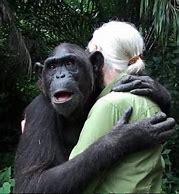
֎  Today’s post largely is a number of excerpts from James Hamlin’s article. Regular readers know that mariner is skeptical about modern technology, especially Artificial Intelligence (AI) which is cleaving human behavior away from interpersonal touching, hugging, conversation, and deliberate sharing of the intimate space – a column of space that extends about a foot from the body. Several studies are presented that show a human is dependent on touching and hugging not only for social acceptance but for healthy bodies and emotional development. Brackets [ ] encompass quoted material.

[ Tiffany Field has spent decades trying to get people to touch one another more.

Her efforts started with premature babies, when she found that basic human touch led them to quickly gain weight. An initial small study, published in the journal Pediatrics in 1986, showed that just 10 days of “body stroking and passive movements of the limbs” for less than an hour led babies to grow 47 percent faster. They averaged fewer days in the hospital and accrued $3,000 less in medical bills. The effect has been replicated multiple times.

Field, a developmental psychologist by training, went on to found the Touch Research Institute at the University of Miami’s Miller School of Medicine. She was a pioneer in highlighting the effects of “touch deprivation” among kids, famously those in orphanages. She explained to me that the effects are pervasive, influencing so many bodily systems that kids are diagnosed with “failure to thrive,” resulting in permanent physical and cognitive impairment, smaller stature, and social withdrawal later in life—which often includes aversion to physical contact. ]


֎ It is beyond question that hugging, touching, kissing, caressing, and many other intimate reinforcements are a biological requirement in primates – in fact all mammals require to some degree feelings of value, justification, affection, friendship, bonding, celebration and love.

[ Physical touch doesn’t make adults larger, but its effects are still coming to light. Field has published similar findings about the benefits of touch in full-term infants, and then children and pregnant women, adults with chronic pain, and people in retirement homes. Studies that involved as little as 15 daily minutes found that touch alone, even devoid of the other supportive qualities it usually signifies, seems to have myriad benefits.

The hug, specifically, has been repeatedly linked to good health. In a more recent study that made headlines about hugs helping the immune system, researchers led by the psychologist Sheldon Cohen at Carnegie Mellon University isolated 400 people in a hotel and exposed them to a cold virus. People who had supportive social interactions had fewer and less severe symptoms. Physical touch (specifically hugging) seemed to account for about a third of that effect. (The researchers conclude: “These data suggest that hugging may act as an effective means of conveying support.”) Cohen and his colleagues continued to show other health benefits of physical contact, such as a 2018 reveal in the journal PLOS titled “Receiving a Hug Is Associated With the Attenuation of Negative Mood That Occurs on Days With Interpersonal Conflict.” ]

֎ Everything mentioned to this point is critical to a healthy, mature sense of self. But there is another level of reality. Culture comes from human interaction; who we are among ourselves in a world of 7.7 billion people is reality. There is no way to identify and manage reality except through human interaction. Smartphones and iPads and computers are not reality. Let them take control and there will be no reality save ‘the cloud.’ Shades of “The Matrix”. We should have learned this on television: the fun parties in beer commercials are not real.

Reality comes from interaction with other people. The degree to which data mining distracts us from reality is damaging. Stop just to reinforce a friendship and hug them will enforce cultural reality. Giving the thumb a workout is time away from reality.

Ancient Mariner


When Migration becomes Immigration

In a recent post, mariner and Guru discussed migration. It was determined that migration is no more than a choice of action. One chooses migration because they can. There are many, many reasons that provoke the decision to migrate. The vast majority, however, would rather not have to choose migration. Migration is not class-specific; rich people migrate; opportunists migrate; poor people migrate; young people migrate; old people migrate; starving and life-threatened people migrate. Interestingly, the Internet is a new travel route for political motives and corporate investment – both forms of migration.

In this post, however, mariner and Guru explore the other side of the coin – immigration.

– – – –

Migration is replaced by the word ‘immigration’ when nationalism confronts the emigrant’s decision. An emigrant’s desire to migrate to another nation is no longer the deciding factor. Rather, it is the receiving nation that determines whether entrance is acceptable.

For obvious reasons across a range of issues, nations are obligated to have standards for immigration. Economic stability and military security clearly are good reasons to have standards for immigration; illegitimate practices in international commerce, black market products, diseases and animal/plant/insect controls are good reasons to check who and what comes and goes across a national border. Troublesome social issues like slave trade, drugs, and persons intent on criminal behavior also are a concern.

As a procedural relationship, migration and immigration work well. There are procedures in the nation of departure for applying for entry which match closely the standards set by the receiving nation. One cannot forget that government oversight and civil management are required in both nations for the procedural relationship to occur.

Successful immigration is similar to purchasing a plane ticket, passing through airport security and boarding the plane – all before one can depart the initial location. The immigration struggles that have become worse around the world during the twenty-first century will become more troublesome as the world changes on many fronts. In virtually every troublesome case, the decision to migrate starts in a nation that has no government oversight, no civility, and to cite the analogy, no airport.

The typical reaction of most nations is to confront excessive migrants at the border after the migration has been accomplished. Taking a cue from the immigration procedure when it works correctly, the emigrant should qualify at the beginning, not at the end. Mass migrations have legitimate cause to leave nations at war, starving, with collapsed economies and management by murderous gangs, residency applications notwithstanding.

Mariner has more to learn before he can foresee a solution to the global migration issue. Being global and being international, it seems an organization similar to the United Nations would be the only comprehensive enforcement agent to take the pressure off national immigration services and push residency applications back to the nation of departure.

Pulling a process out of the air, perhaps the UN would manage humane immigration at the front end, filling out forms, etc. This would require all nations to agree to the UN’s screening. While nations still have the last say, the experience at the border may flow better.

OBSERVATION SECTION

[Politico] HOW MUCH THE BANKS ON THE HILL TODAY SPENT ON LOBBYING: The chief executives of seven major bank and investment firms — Bank of America, Bank of New York Mellon, Citigroup, Goldman Sachs, JPMorgan Chase, Morgan Stanley and State Street Corporation — arrived on the Hill this morning to testify before the House Financial Services Committee. As you might expect, all of them have a presence in Washington.

The seven companies together spent $14.8 million on Washington lobbying last year, according to disclosure filings. Citigroup spent the most, at $4.5 million; State Street spent the least, at $1.5 million. All of them also have active corporate PACs that give to members of Congress — including, of course, members of the committee.

–> Be honest. Is your vote 100% influential? Is it $10,000 for each representative or is it one person, one vote?

This is just the banks . . . The term for this form of government is plutocracy or corporatocracy. Certainly not democracy.

– – – –

[538] $1,535 rent

Driven by millennials’ demand, job growth and rising wages, the median rent in the U.S. rose 3.4 percent in March compared to the year before, according to data from the online rental housing site HotPads. It’s now $1,535 a month. Phoenix was the big “winner,” where the median rent rose 6.7 percent to $1,520. The median rent in New York, on the other hand, ticked up just 1.5 percent — to $2,380. [Associated Press]

–> It’s good news that citizens are finding somewhere to work. The rent statistics show that the unemployment record doesn’t tell the whole story. Salaries have a long way to go before they return to realistic levels. The other implication derived from the high rents is that the US faces a growing housing issue.

Ancient Mariner