He is a sick man not fit to represent me

Trump Canceled 94 Million Pounds of Food Aid in the United States.

The cancellations began in mid-May, when over 100 orders of 2% milk bound for 31 states were halted.

The records show 4,304 canceled deliveries between May and September across the 50 states, Puerto Rico and D.C. Each truck here represents a delivery that would never arrive to feed communities.

All told, the deliveries accounted for nearly 94 million pounds of food. The true loss is likely greater, food banks said, because not all of the year’s deliveries had been scheduled.

The Trump administration canceled 10 orders for the food bank totaling over $400,000 of pork, chicken, cheese, dried cranberries, dried plums, milk and eggs, records show. The food bank has struggled to keep up with demand following the cuts and a decrease in private donations. Staff told ProPublica they used to distribute 25-pound packages of food, but over the summer, some packages shrank to about half of that weight.

Reported by ProPublica, a nonprofit, publically supported news agency.

This is the same person who sells Trump-branded Holy Bibles.

Ancient Mariner


Education in an AI world

Walton Family Foundation and Gallup’s latest Teaching for Tomorrow report finds that while most teachers engage in professional development, the most beneficial opportunities — like peer collaboration — are often engaged in at a lower rate. At the same time, many teachers lack the classroom resources and staffing support needed to do their jobs effectively.

This report from Walton Family Foundation is a common perspective about the future of education. Education, like medicine, community support for the indigent, and even the nation’s governments – all are subject to the fate of history, changing society and real world confrontation. It is true that education as a concept is under great stress; it is true that the the recent plague interrupted an entire generation’s sense of decorum in the classroom; it is true that internet communications have reshaped the center of informative social dialogue; it is true that a slowly decaying form of government is incompetent in its service to the nation’s educational need and other government-supported cultural need as well.

Mariner suspects the largest impact, especially in colleges, is books. Who needs them? He has written in past posts to the blog about why we need education, methods of education and even the management of education. In this post he focuses on how  humans must be educated in the future and even now as great shifts of the planet, technology and behavioral environments are bouncing about in the winds of change.

Education, in particular, is easily affected by culture and innovation. Note the following examples and how quickly and fully these examples modified ‘normal’ education practices.

֎  In 1910 only 79% of children enrolled in schools. Only 11 percent of all children between ages fourteen and seventeen were enrolled in high school, and only 8.8% graduated. By 1950, the age of fossil fuel emerged, two world wars occurred, and an economic restructuring changed the social structure of society. Education statistics immediately changed. In 1950 84% of children enrolled in school and high school graduation leaped to 59%. The GI benefit of a paid college education thrust colleges into the general public sphere and bachelor degrees were economically available.

֎  Ezra Stiles, a former president of Yale University, died nearly 230 years ago. It is Mr. Stiles that we owe the grading system that has prevailed since. His clear intention was to publicly rank and sort students according to their achievement, not to give them feedback on their learning or to suggest how they might improve before the next exam. This kind of class ranking was a mechanism for conveying status and privilege (or withholding them), oftentimes mirroring the social structures of the world beyond the ivy-covered university walls. (Some suggest this intent created the ‘woke’ class).

♦ ♦ ♦ ♦ ♦

Whether we accept it or not, Mother Nature outfits each and all her species with all the survival skills and behaviors needed to sustain a normal lifestyle for each specific species. In the case of mammals and many other branches of evolution as well, Mother outfitted them with ’emotion’. Emotion is the way humans integrate with one another, learn social values, develop compassion and reinforce safety. Emotion permits bonding not only to others but to the world around them.

Mariner looked back to our forefathers, the early Homo sapiens and the Neanderthals. No books. There was lots of art in caves, on stones and wood, even on pottery; perhaps art is a primitive form of writing, of documenting emotion.

Our forefathers learned through social bonding the need to build homes for shelter without the benefit of watching This Old House on PBS or the dozen books mariner bought in order to build his house. These primitives learned by watching, sharing and caring. – Call it peer collaboration.

Instructors of any subject no longer need to read a lot of books and be the only source of truth and knowledge. That form of respect is gone because students don’t need books any more. However, indeed very important, is the fact that today a student’s emotions are needed in order to build knowledge for survival. Instructors must use tools out of the emotions kit to build a world value system that is not available in today’s society.

Ancient Mariner


Local Press

Really LOCAL press. That is, press coverage if it were about YOUR life. Some examples to set the pace: first, mariner traveled a lot in his career; second is the never ending discounting of women’s lives.


If a few reporters were following you around every day, what would the headlines say?

֎ Bobbie’s husband leaves quickly leaving her alone to haul trash to the Dump.

֎ Bobby’s wife buys a pair of shoes costing $1,000.

֎ Sam completes furnace repair.

֎ Pam takes a day off to go shopping and has Chinese for lunch.

֎ Nickie is frustrated every morning because his underwear is too tight.

֎ Vickie is depressed because she didn’t win the scholarship.

֎ lost three years ago, Maude is ecstatic because she found her diamond necklace on the floor of the closet.

֎ Claude bought a new Buick with his bonus check.

֎ This evening all three children went to sleep early so Vickie and Nickie watched a romantic movie.

Given only as examples, is this your life in headlines? Grab a pencil for a moment and write three satisfied headlines and three unsatisfied headlines about your life. Study them for two minutes.

Are the headlines routine in nature or dramatic, life changing events? Should you get a different reporter or change your headlines?

Happy Trails.

Ancient Mariner


The Age Shift

Anyone who studies ancient history of any kind runs into a phenomenon called an Age. Ages are slow – really slow. Depending on which field of history one is studying, for example Earth science, Ages can last as long as millions, even billions of years. For most human periods since the last Ice Age, an Age will require 2-5,000 years to live its time. If one clocks in at the earliest existence of economic/political times in human history, an Age averages about 1.5 to 2 thousand years and is growing shorter at the speed of a half-life algorithm [the next step is approximately half the value of the previous step].

Abstruse, he knows. Let’s do a few examples:

֎ The last ice age lasted a little over 20,000 years.
֎ Bronze Age lasted 1,300 years.
֎ Iron Age lasted 700 years.
֎ Classical Era lasted 1,000 years (historians call them Eras now).
֎ Medieval Era lasted 1,000 years.
֎ Early Modern Era lasted 300 years.
֎ Modern Era has lasted 2,000 years but has begun shifting rapidly since about 1900AD.
֎ On their own initiative, current humans created a new age for us: the Anthropocene Epoch which replaces the Holocene Epoch, beginning at the end of the last Ice Age 11,700 years ago.¹

This is a lot to explain in order to suggest that religion is subject to the Ages as well.

– – – – – –

Was ‘religion’ part of all the ages? Yes, actually. In purely Homo terms, religion is part of the human survival makeup as much as dogs and wolves have an innate understanding of their role in the pack. One of the earliest discoveries of a caveman family, back before the Ice Age, showed evidence of caring and sharing: a male had a destroyed leg in the prime of his life. He was cared for for many years, being fed, sharing family time and, eventually, buried carefully in his cave. No Popes needed, no choirs, no congregation, no architecture. In its physiological role, religion is feelings and caring and sharing with others. This behavior is key to survival.

Funny that Jesus spoke of the same primitive behavior 20,000 years later as the path to salvation. Mariner has never forgotten the documented event where a mother gave her baby to another person to avoid having the baby eaten by lions in the coliseum – the mother’s fate. Religion is innate feelings necessary for survival – even if Interstates, airplanes and smartphones have stretched the definition of ‘family’.

So, religion as we know it has been waylaid by the Greeks who needed administrative positions for their ‘gods’ and especially the Romans who worshiped grandeur. Western Europe didn’t help much either with excess social discipline. Then the Age of War (20th Century) distracted everyone from innate survival practices because Homo was and is in the midst of an ‘industrial toy’ age. New is better.

Welcome to the Industrial Age or maybe the new version, the Technological Age. So how much are church buildings selling for these days?

Ancient Mariner

¹ Wikipedia.

Where the West began

Mariner’s normal inclination is to see the world through the eye of a sociologist. The core of sociology is the study of results from human social patterns and aspects of culture associated with everyday life.

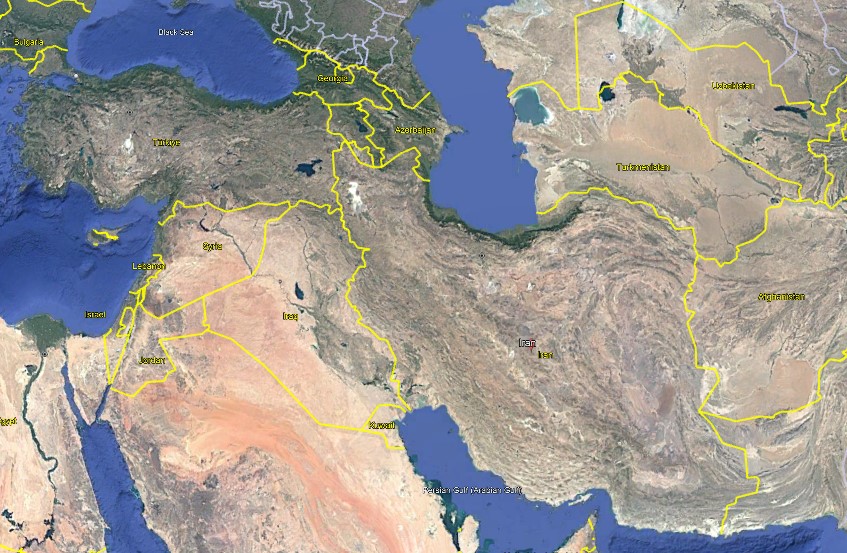
During the last few months in a very unhurried way he seems to be researching the Middle East as the birthplace of nationalism, the birthplace of comprehensive theology and the first region to openly implement neutral colonialism – all significant roots that support today’s cultural operations. What makes it even more interesting is the existence of East/West trade routes and the eventual social and economic incursion by Greece, Rome and Russia.

At its height, the Persian Empire encompassed all of the Middle East: modern-day Iran, Egypt, Turkey, and parts of Afghanistan and Pakistan. It was also known as the Achaemenid Empire. To make it convenient to this post, the term ‘PE’ will be the euphemism. In ancient times PE was controlled by czarist kings who proclaimed themselves Gods and ruled over the most brutal nations in history. It is fascinating when one realizes that virtually the entire social/political/economic/religious structure of today’s Western Alliance began in the Persian Empire.

Mariner’s favorite example is the first creation of an independent supreme God which began in Lycia, a small nation in the PE across the Aegean Sea from Greece. Her name was Cybele, the female god of creation [BLOG Apr 7, 2016] who later existed as Rhea, Mother of Gods in Greece, then as Sybil, Mother Of Gods in Rome, to Mary, Mother of Jesus in Christianity. In addition, many of today’s Jewish/Christian rituals and religious practices are similar to rituals in Zoroastrianism – the first unified religion in the PE – a time when Israel was one of the nations of PE.

The other creation of note, at least for this post, is the birth of colonialism. One of the  PE Kings, Cyrus II or Cyrus the Great [mentioned in last post], allowed all the nations within the PE to carry on with local practices in religion and daily life. This included allowing those nations to make trade deals between member nations with a general oversight from PE. If this insight were stretched a bit, it could also be the origin of republics – just like the United States!

Mariner apologizes for making the reader suffer such detailed stuff. It keeps him occupied while coping with another PE creation: Donald.

Ancient Mariner


Wow! A real religion debate

Salvation versus Grace. Both are defended by the Bible – Grace especially by Father Brown on PBS when he’s hearing confession from a murderer. The idea of Grace traces back to Cyrus The Great, King of Persia from 559-530 BC.

Cyrus was the leader of the Achaemenid Empire that overtook the Babylonians. There were four powerful kings with rule over the Jews during their captivity including Nebuchadnezzar, Belshazzar, Darius, and finally, Cyrus the Great. The first three kings chose to assimilate the cultures they conquered into their customs, their culture, and their ways of life, but Cyrus, instead, as leader of the Medo-Persians, chose to allow various cultural and religious groups to return to and maintain their own identities – an unusual act of Grace.

The Old Testament makes note of this in Ezra 1-4. The Jewish perspective was that God had banished the Jews for misbehavior but through Cyrus, had permitted the banished Jews to return. An act of Grace on God’s part as well as Cyrus II.

*****
Salvation relates to the narrative of God’s redemptive actions throughout human history, culminating in the life, death, and resurrection of Jesus Christ as depicted in the Bible. Here is a fun word for readers: Heilsgeschichte. It is the theological term that describes God’s plan to save humanity from sin and its consequences.

Since everyone has sinned, everyone eventually will face the death penalty. Since the wages of sin is death, salvation is the paycheck issued by God that people receive for what they have earned. Death is what we all have earned by our deeds. Consequently, when all of us die, we want God to grant us salvation because of the good deeds we have performed to compensate for our sins. Historically, Judgment Day was the third day after death, as was the case with Jesus and also a popular tradition begun in Ancient Persia. In the case of Father Brown’s murderer, that murderer has a lot of work to do to gain salvation. Grace only lets him try again.

Ancient Mariner

Judgment Day

Everyone talks about the day when Jesus will return to gather his deserving flock. Most of today’s Christians have a ‘good deed’ savings account to make sure they will be included. But mariner has a suggestion: you may need to read the Gospel Matthew and most of Gospel Luke to find out who gets to go and who doesn’t. Let’s take a simple test: In the Bible (Matt. 5:3-10) are ten types of people who will be saved on Judgment Day. Let’s see if any of us are in there. Hmm . . . Well, mariner doesn’t see a lot of names. Better check out the parables in Matthew and Luke to see what we need to do to get a ride to heaven.

Another issue that gets in the way of a trip out of here on Judgment Day is recognizing what the gift is. For example, many, many folks believe the gift is a piece of paper with a picture of an American President on it and heaven is a lot like Orlando Beach.

A third issue is that Christianity is a part time job. Many Christians give up Sunday morning to go to church when they actually wanted to sleep late (note that in the savings account). A fewer number give a meaningful amount participating in charities and even fewer participate in helping develop community participation. Well, at least there’s free coffee and donuts before the service.

Strip away thousands of years of accumulated Christian literature, politics, economics and social change. What is left is what Jesus wanted: God is the power of love. God’s love steers our life day in and day out. When we live our lives by using God’s power to love, Jesus said we are sitting at the right hand of God.

Given Jesus’s words, no Judgment Day is needed. Live by God’s love and you are experiencing the Promised Land. No waiting! Take a short trip this afternoon.

Which word does not belong in this list?

Caring
Sharing
Compassionate
Convenient
Sympathy
Empathy

Ancient Mariner

Tuvalu

A fascinating report in the AOL news strip gives an insight into the future of nationalism. Within this century, the Island nation of Tuvalu (9 coral atolls in the Pacific) is about to go under the ocean and completely disappear. The nation of Tuvalu already has set up political relationships with Australia and New Zealand that will allow Tuvalu citizens to live in these partner nations but sustain a Tuvalu political structure complete with its own voting rights and a shared economy.

Mariner has been struggling to find a transitional model for nations moving into the future of international economy and having to share sustainable agricultural regions; already national boundaries are of dwindling importance because of the Internet.

But Tuvalu has not taken the path of economic conversion. Rather, they have invented a new way to sustain nationality via social identification and a political structure that doesn’t need its own territory to exist. Their national model much more clearly defines how nationalism will transition to globalism. It is a truly insightful article that has broadened mariner’s thoughts about the future.

A quick and pleasant read with an extremely insightful perception of the future. See:

https://www.aol.com/disappearing-island-nation-plans-exist-152004992.html

Ancient Mariner


The deep side of knots

As mariner is wont to do, he fills empty time exploring the world of abstruse subjects. If one wants to get lost in a giant maze with no exit, check out quantum mechanics; or perhaps the process by which ions chase each other around to manage human bodies – all the pictures look like my granddaughter’s bead bracelets. In mathematics, there is a popular puzzle that asks for the shortest path to visit all the stops in an extended trip. Don’t try it, you’ll miss your flight.

A recent article about knot mathematics stirred his interest. He didn’t know a person had to know equations to tie knots. He was a Boy Scout and remembers learning to tie a dozen or so knots that made using knots a handy tool. He ties his shoes and dress ties – except bow ties; he uses the well known square knot and its petulant brother the granny knot for just about everything else. The bowline knot is supposed to never slip. The only use he had for it was as an emergency dog leash. Mariner remembers his grandmother tying a magic knot on a piece of thread just by rubbing two fingers together – voila! a sturdy knot to sew buttons.

It turns out that ‘knot theory’ is an important part of the science of topology – how stuff aggregates and disseminates. For example, when looking at a knot, is it just another example of that same knot somewhere else or is it truly a genuine one-of-a-kind knot? Knot tying is important to the study of things like DNA, chemical reactions and astronomic physics.

Mariner is in knots trying to figure out how to end this post so the reader can finish it at:

https://www.scientificamerican.com/article/new-knot-theory-discovery-overturns-long-held-mathematical-assumption/?_kx=HnWBlzyruBWdZk8zZJGqG9mGrSNMZd2cfq-kdkdOWgOqhVgSL-mWKHsx1HZSrrCW.WEer5A

Ancient Mariner

Jobs threatened by AI

On the CBS website, mariner found a detailed analysis of what types of jobs may be most threatened by automation. An easy way to understand the impact is to consider how the Internet has changed the reader’s shopping habits – what ever happened to malls?

Impact from GPT4 [Pre-trained software capable of dialogue and creative writing – including songs]

Customer services representatives
Accountants and auditors
Software developers
Secretaries and administrative assistants

Overall

Computer programmers
Financial managers
Accountants and auditors
Sales representatives (wholesale and manufacturing)

Automation

General and operations managers
Accountants and auditors
Receptionists and information clerks

Augmentation

Chief Executives
Maintenance and repair workers
Registered Nurses
Computer Systems managers

Mariner would offer an outlook if he could – no one can. We are in a fog without a map and must confront dysfunctional government, unbridled corporate behavior, tendency toward war as a solution and a dissatisfied planet..

Armageddon proceeds

Ancient Mariner