Clearer insight into future

Yesterday, mariner had one of those moments of clarity when deep wisdom falls upon a person. He saw the future as it will be. The moment occurred as he watched a clip of a man talking in English. Suddenly, the man was talking in a foreign language; it must have been him because the lips and facial muscles appeared to be synchronized to both languages. It was, of course, an example of what Artificial Intelligence (AI) can do – all by itself.

From mariner’s perspective, the real achievement was a finite and absolute separation of the relationship between fact and judgment. When is a fact in fact a fact and not a deliberate falsehood? How can humans make judgments without existential and verifiable fact?

Moments later a small child, perhaps age three, walked by him talking on a toy smartphone. It was then he knew what the future held for the human race: a human shape with a minion’s brain.

Ancient Mariner

Population

Regular readers may recall that mariner would mention rat and mouse studies done in the 1950s-70s. The focus was to document what happens when populations grow too large; the animals were given all the food and water they needed. For the mice, the cages were a 4 foot cubed cage; the walls were lined with little nest ‘condos’ from floor to ceiling. As the population grew, the mouse society began to show disarray. Continuous fighting, raping and disregard by females for birthed young became common. Eventually, the population topped out because most females did not become pregnant and any opportunity for nesting had disappeared. The population began to shrink back close to the original population.

Today, scientists have reevaluated the studies. Examining the films and behavior from a broader perspective, the habitats created weren’t really that overcrowded, but enabled aggressive mice to stake out territory and also isolated the ‘beautiful’ mice to live at the top of the cage above the fray. Instead of a population problem, one could argue that the experiment had a fair distribution problem. In other words, social stress created classes of separation. The ‘beautiful’ mice lived at the top of the cages and as the rows approached the floor of the cage, living standards dwindled because there weren’t enough condos to go around. On the floor, mice were homeless and lived in constant danger of physical abuse and death; the floor mice lived in a crowded and threatening society.

As he read the article, Chicago became a matching image. The upper condos were the luxury condos in the high rise downtown area; The better condos were the comfortable suburbs; southwest Chicago, with its gang-laden violence and lack of civil discipline was the floor. What seems more threatening is that, unlike the mice, not everyone has adequate housing, food or water.

Two circumstances come to mind: the size of the cage is planet Earth; the second is that the measuring stick is not condos, its nations. There are about a dozen countries rich enough to have a ‘balanced’ distribution of oligarchs, middle class, labor and disadvantaged poor – a circumstance of lacking enough resources. As nations grow poorer, the social stratification becomes more aggressive, often authoritarian, and the poorest nations, or those in deep social transition (Israel, Middle East, most of Africa) incur open warfare.

However, the mice had a stable environment that humanity lacks. Many nations will suffer economic collapse, e.g., Pakistan, as the weather and other environmental damages collapse national economies. Even wealthy nations will experience disruption and turmoil as the segregation of class wealth becomes too broad. Events such as mass migration, supply chain collapse and rich-nation bickering about the spoils of a new internationalism provided by the internet will stress the philosophies of government.

So the situation becomes one of starvation, homelessness, class warfare. The current evaluation of the mouse studies seems to be the better insight. We don’t have to wait for our population top-off at 11 billion; already there is too much population to sustain even cantankerous class distinction, let alone “all men are created equal”.

Happy Hallowe’en

Ancient Mariner

News can be distracting

McCarthy kicked out, eh. Talk about distraction! Today’s news is becoming so diverse and scattered across the subjects of human life that one may need advanced degrees to understand the nuance, detail and motivation of daily news – maybe even a cheat sheet with meanings for fancy words and acronyms. What follows are a few samples of distraction caused by diversity:

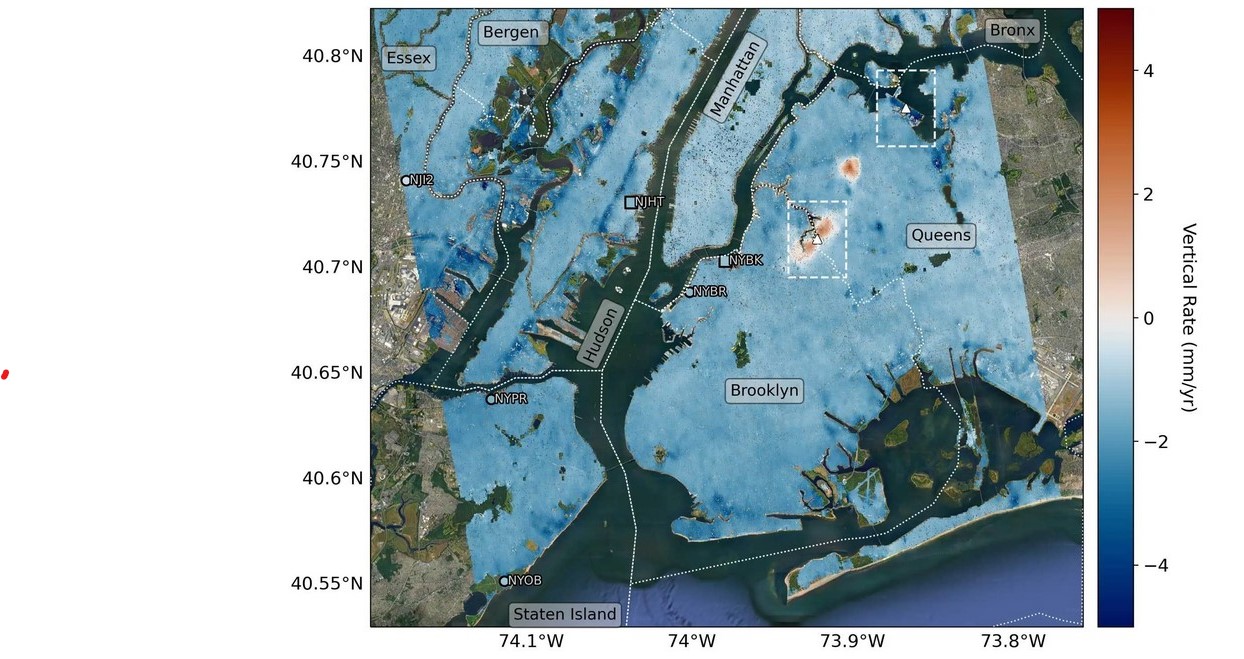
֎ Did you know New York City is sinking? Not just flooding but sinking, too. Here’s a clip from NASA:

“Mapping vertical land motion across the New York City area, researchers found the land sinking (indicated in blue) by about 0.06 inches (1.6 millimeters) per year on average. They also detected modest uplift (shown in red) in Queens and Brooklyn. White dotted lines indicate county/borough borders.”

֎ The new computer/human relationship. Computers are about to be released into the quantum physics world; bits and bytes are passe. Very soon computers will be able to make decisions at the speed of light. Information will not need algorithms, it will capture the shift of electron states. Yes, distracting because no one knows what that means. To assist, mariner copies from an old post metaphor about quantum physics:

Driving down a highway, in front of you a car enters the highway from a ramp; it appeared to you as a known entity called a car.

However, Quantum says, “No, not so fast”. The car just didn’t assemble itself out of nothing the moment you saw it; what events caused the car to appear at that moment?

For example, did the car turn on the highway just over the hill or has it been on the road for two days coming from New Jersey? How did the driver come to be in the car at that moment? Why is it a Subaru? Why is it on that highway? What time did it depart so that you would experience it at that moment?

Quantum computers know all these answers simultaneously. What quantum computers respond to is a change in electron relationships, not the electrons themselves – just like you did when, at the speed of light, you saw a car.

No busy person enjoys wandering around in quantum physics but the point here is that computers will think the exact same way humans do. Will computers do irrational things that Donald or Elon would do?

Ancient Mariner

The times they are a changing

Human society as we know it today began as the last ice age receded, about 20,000 years ago. The earliest known communal societies were during the Neolithic Revolution, a time when the plant environment began to reemerge. Vegetation was becoming sufficient to support stationery communities. The Near East was one of the earliest regions to escape the ice age.

֎ In the late 1980s, a drought caused a drastic drop in the Sea of Galilee in Israel, revealing the remains of a previously unknown archaeological site, later named Ohalo II. There, Israeli archaeologists found the burned remains of three huts made from brush plants, as well as a human burial and several hearths. Radiocarbon dating and other findings suggested that the site, a small, year-round camp for hunter gatherers, was about 23,000 years old.

This site exposed several elements: Humans are naturally inventive relative to their environment. One could surmise that the building of brush huts was the beginning of industrialization. Another element is that gathering more food than was needed at the moment meant that one did not have to remain a nomad; maybe donkeys and the Ford model A weren’t needed but not walking all day is worth hoarding some vegetables. Another element is that there were three huts; family was important although the economics of the time probably didn’t support whole generations. Finally, and easily overlooked, is that there was a burial; the earliest humans had a spirituous principal: life went beyond the existential experience.

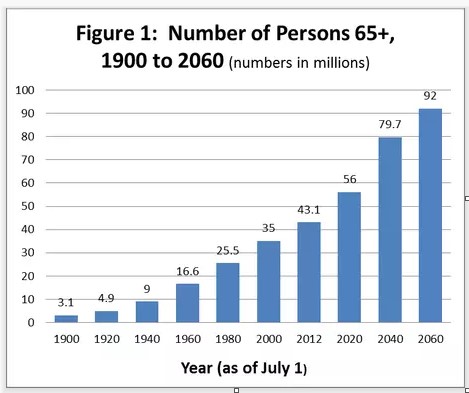
֎ Has the human genome changed in 20,000 years? Does evolution ever stop? A branch of zoology has become popular: Scientists are tracing behavioral and genetic modifications of all kinds of creatures as the creatures adapt (or die) to global warming. Are humans adapting? On average, humans live thirty years longer than they did in 1900. One could argue that medicine and modern industry, e.g., air conditioning, are not necessarily genetic – after all, our Neolithic ancestors built huts. The scientists may counter that living longer by itself induces genetic adaptations in human behavior and survival. Did our forefathers experience dementia? Would they have if they did live longer? What would the Continental Congress change if they saw this chart?

Aside from the fact that our chromosomes stop reproducing, thereby making death inevitable, humans have one characteristic that no other creature has: humans can change the environment. Think about the impact of changing nature. Opossums can’t do that, nor Monarch butterflies. If another ice age came, would we evolve with a hide and have a different fat structure under our skin or would we ask Amazon to send us a furnace?

Mariner has wondered whether a hunter gatherer could sit still for four hours like we can when we watch television. Perhaps today’s humans are different.

Ancient Mariner

On democracy

The premise of this post is to examine the impact of progress upon the cultural perceptions that existed in 1778 when the United States was born. Progress is not a bad thing; the benefits in comfort, health and functional prowess cannot be denied. What also cannot be denied is that progress has altered human behavior.

The ideals of democracy, its philosophy and manner of governing, is a product of the Great Awakening, the intellectual era that lifted Europe and America out of the dark ages. Similar to citizen behavior today, the public held a defiant resistance against the power structures of the Dark Ages. The transition to a new culture where each individual participated in society was led by religious liberation from the corrupt and powerful control of Roman Catholicism. The Reformation, led by religious leaders, preached that every person had an equal place in the eyes of God.

Sociologically, human behavior at the time still was constricted by the primitive forms of communication and travel. There were large cities where trading and governance occurred but generally the common citizen was bound to local and regional economics and self-reliance on a day-to-day basis. The term used to cite this culture is ‘communalism’. This was the nature of society in 1778.

What follows is the description of a series of historical moments that changed the economics and social behavior of the public. It can be argued that the troubles of the United States in 2023 are the unintended result of progress.

֎ In 1778 it was virtually impossible for a citizen to communicate with anyone even 50 miles away. Daily responsibility to sustain survival took an immense amount of time, which also limited communication. As a result, the Declaration of Independence and the Constitution proposed a distributed form of governance that would allow every citizen to have a say in that governance. Hence the creation of a democratic republic divided into states, counties and districts.

The intent, philosophically, was to have each district contribute political or legislative needs and elected representatives that would be submitted to the county, then to the state. Each state then met with all the other states to pass legislation that accommodated local needs for the entire nation. In 1778, this process allowed each citizen, in principal, to participate in governing the nation in a way that accommodated a locally isolated society. The flow of information and decision making rose from the local communities, processed by the next level of governance and finally to represent national policies.

֎ In 1827 The Baltimore and Ohio Railroad opened its lines. The isolated nature of communal economics changed rapidly. Especially in agriculture, it was possible to integrate farm produce in quantities that required processing companies and much wider distribution to the end user. The local farmer was not dependent just on local markets to sustain his financial security. The bottom-up politics of communal economy had been displaced; processing corporations influenced many different districts, counties and states, often appealing directly to states and the national government. Further, transportation was a new political force that influenced national politics without the need to follow the bottom-up philosophy of democracy.

֎ From April 12, 1861 – April 26, 1865 the American Civil War caused severe damage to the idea of local self-sustenance. The war destroyed many communities and killed more than 600,000 soldiers (comparable to 7 million in today’s population). At the end of the war many did not or could not return home. Despite the truce that ended the war, the philosophy of a democratic republic continued to suffer because of racism and unwanted intrusion in Confederate states by the national government. Communalistic representation suffered a permanent change in daily life.

Even today the political scars remain that cause the two-party system to operate inappropriately in light of the philosophy of a democratic republic.

֎ The next culture-changing advancement in progress was the telegraph and telephone. The first public network was organized in 1877. Before 1877, if one wished to talk to another, it had to be face-to-face. Today, in 2023, we can recognize this new telecommunication device to be the first version of the smartphone! One more reason not to harness the pony and ride a mile and a half down the road.

As with all types of progress that covered many voting districts, the job of Gross Domestic Product (GDP) was removed from communal economics and was, politically at least, in the hands of corporations. Retrospectively, one can see that the nation was quickly replacing democracy with corporatism.

֎ The ultimate collapse of communalism and bottom-up democracy was caused by the internal combustion engine. No one needed to keep the pony around anymore. State fairs became popular and represented the local remnants of communalism – just as they do today. Still, it was a burden to travel too far on two lane roads that meandered from town to town having followed old roads from one community to another (Remember Route 66? It was started by Indians.). The two World Wars facilitated shifts in population to support industries needed by the wars, causing a breakup and redistribution of communal families. But the final blow came when Ike created the Interstate system. One could travel on roads that were not managed by states – only by national government contracts.

A ghost of the past is sustained by air travel. Remember your parents who still live in the old home where you were born? It takes an airplane to get there and back in a reasonable time.

So here we are today with an electorate that has no voting power. Political opinion no longer comes from dialogue within a community. The power lies with corporations and the wealthy class who fund very expensive campaigns most local people cannot afford and forces the communal person to pick from television ads, biased news programs and gaming strategies like gerrymandering and avoiding term limits. One recent suggestion is rank voting, which may help with the act of voting, but will not repair communalism, aka democracy.

It is time to have a constitutional convention. Yes, the mariner is as afraid of such an event as anyone. The reality is, however, that democracy doesn’t work anymore. What is the new equality? What is the new ‘all men are created equal’? How do we get there from here? Will wearing a gaming goggle help?

Ancient Mariner


Getting bored with the same old news?

The reader can probably quote the subject of the top four headlines without turning the television on. Give it a try. Here is a sample: Trump, Biden, climate disaster and cost of living; there are variations. The news is tiring so let’s get some new news:

Peak solar activity is arriving sooner than expected, reaching levels not seen in 20 years. The Sun’s flare-ups can threaten satellites and electric grids, highlighting need for better forecasts.

Corporatism has arrived. Crazy Elon Musk has the same power to redirect the Ukraine war as crazy Vladimir Putin.

Meet your new gossipy neighbor ChatGPT: In April, lawyers for the airline Avianca noticed something strange. A passenger, Robert Mata, had sued the airline, alleging that a serving cart on a flight had struck and severely injured his left knee, but several cases cited in Mata’s lawsuit didn’t appear to exist. The judge couldn’t verify them, either. It turned out that ChatGPT had made them all up, fabricating names and decisions. One of Mata’s lawyers, Steven A. Schwartz, had used the chatbot as an assistant—his first time using the program for legal research—and, as Schwartz wrote in an affidavit, “was unaware of the possibility that its content could be false.”

A special on PBS explored the phenomenon that many species of fish, amphibians,birds and mammals are morphing themselves to meet new requirements to survive our man-made biosphere. After all, they have to pay cash . . .

For more unique news, turn to your local newspaper – if you still have one.

Ancient Mariner

All over again

We live in a time of change, no doubt about it. Not just the normal change between generations or the systemic changes brought on by cyclical weather eras or the changes in economics brought on by political shifts. Today it is a time of change commensurate with the first time, about 15,000 years ago, when humans discovered economic trade and the political advantages that went with it; nomadic cultures quickly disappeared.

Today is a time of change commensurate with the technology of the printing press when, for the first time, ideas and history were available to the common citizen, not exclusive only to the tiny elite of theorists and theologists. At a time when the Americas were discovered, the Great Awakening, the Reformation, and the Industrial Revolution rapidly emerged and changed human life around the world.

Today is a time of change commensurate with the invention of the internal combustion engine in a global moment when natural resources were unlimited – allowing global trade and global warfare, and the quick dissipation of tribalism replaced by a new wave of politics called colonialism.

Today, computer-based communication replaces the printing press; today, advances in travel, technology and economics have released a new age of exploration – not across the oceans but from the Northern Hemisphere to the Southern Hemisphere.

Today, global politics enters a new age when nationalism will be replaced by corporatism.

Today, an uncontrolled warming of the planet replaces cyclical weather eras.

Today, the number of humans on the planet exceeds the limits of the planet’s environment.

Today, the era of European white dominance will shift to a non-white majority, leaving the United States in a disadvantaged position because of its intense racism.

One wonders what the next era of change will look like, starting all over again.

Ancient Mariner

World of work

The following is a quote from Associated Press (AP):

Drescher told The Associated Press the moment is about the entire world of work, and a larger stand against corporate leaders who value shareholders over the people who create their product.

“At some point you have to say no more,” Drescher, the former “Nanny” star who is now president of the Screen Actors Guild-American Federation of Television and Radio Artists, said in an interview at the union’s headquarters Wednesday. “I think that it’s taken on a bigger scope, it’s greater than the sum of its parts. I think it’s a conversation now about the culture of big business, and how it treats everybody up and down the ladder in the name of profit.”

Ancient Mariner

Roller-coaster history

֎ The first significant example of a railroad train was in 1825. By the 1860s trains had replaced most canal and river trade. Unless one was engaged in commerce, daily life still was limited to how far a horse could travel, how fast, how much weight it could pull, how much it could lift, and was the only means to travel into town.

The first marketable automobile was built in 1886. It wasn’t until 1908 when Henry Ford began mass production of automobiles. Before then, daily society was dependent on the limitations of the horse to execute daily chores and social life.

In 1969, just 63 years later, men were walking on the moon. Interstates, automobiles, busses, trucks, trains, farm equipment, airplanes and shuttles left the horse and its associated cultures in a forgotten past.

֎ The first public radio broadcasting network was established in 1924 when AT&T linked 12 stations around New York City using telephone lines. The first global network using telephone technology was established in 1950. Televisions were a public utility by 1954.

A computer was taught to play checkers in 1951. The actual development for broad use of AI was in 1956.

The first satellite global network was launched in 1958.

The internet was launched by the military in 1965.

The first Global Systems for Mobile Communications (GSM) was implemented in Finland in 1991.

The original social media application occurred in 1975, Facebook began in 1995, Twitter in 2015.

In 2023, just 72 years after the first network, the entire planet is in the midst of a massive culture change affecting every behavior from war and the definition of a nation to everyday life with artificial humans. Will marriage to a sex doll become legitimate?

Oh, for the limitations of a horse.

Ancient Mariner

Let’s all get together

Mariner visited his primary care physician yesterday. He is an excellent doctor and has become a friend. The first thing he wanted to do in his office was show mariner photographs he had taken at the annual West Point Military Academy reunion where graduates return every year for a large get together that includes a hike of many miles. The photographs suggested there were thousands at the reunion. The doctor’s pictures reflected that he had a great time and really enjoyed meeting again with fellow compatriots, officers he had served under, and the professors at the academy. It was obvious that the experience reaffirmed his sense of self, of his image as equal among many.

The doctor’s enthusiasm led mariner to remember the good times he had when, as a teenager, he was a lifeguard at a church camp. The camp had five-day programs for various ages where students stayed in camp cabins for the whole program. On Monday, most students didn’t know one another; there were obvious cliques from the same church but the whole group did not reflect unanimity or familiarity. By Friday, the students had become animated, gregarious and liked nothing more than the camp-wide marshmallow roasts, free time mingling on the beach and having a camp-wide lunch on the lawn on Friday. Clearly, the campers experienced the same affirmation as the doctor did.

Mariner also was reminded of Ted Danson’s show ‘Cheers’. The theme for the show tells it all:
Making your way in the world today
Takes everything you’ve got;
Taking a break from all your worries
Sure would help a lot.
Wouldn’t you like to get away?

All those nights when you’ve got no lights,
The check is in the mail;
And your little angel
Hung the cat up by its tail;
And your third fiance didn’t show;

Sometimes you want to go
Where everybody knows your name,
And they’re always glad you came;
You want to be where you can see,
Our troubles are all the same;
You want to be where everybody knows your name.

Roll out of bed, Mr. Coffee’s dead;
The morning’s looking bright;
And your shrink ran off to Europe,
And didn’t even write;
And your husband wants to be a girl;

Be glad there’s one place in the world
Where everybody knows your name,
And they’re always glad you came;
You want to go where people know,
People are all the same;
You want to go where everybody knows your name.

There is a special affirmation that can only be experienced in a common, unified group. After all, we are a tribal species!

What creates the opportunity for reaffirmation is twofold: everyone is subject to a common discipline; the Academy and the camp staff set the rules. The lesson is this: Democracy is a bottom up philosophy. The common experience is each individual at a voting station. Democracy fails to provide reaffirmation when it is no longer a common experience and unity is no longer available. Today, democracy is weakened by top down, fragmenting actions caused by a government run by money and TV advertising instead of citizens gathering to discuss issues in a place ‘where everybody knows your name’. Weakened democracy is also caused by authoritarianism and excessive capitalism – practices where nobody cares what your name is. Forget the television and talk to neighbors and citizen groups, in a place where everybody knows your name.

Ancient Mariner