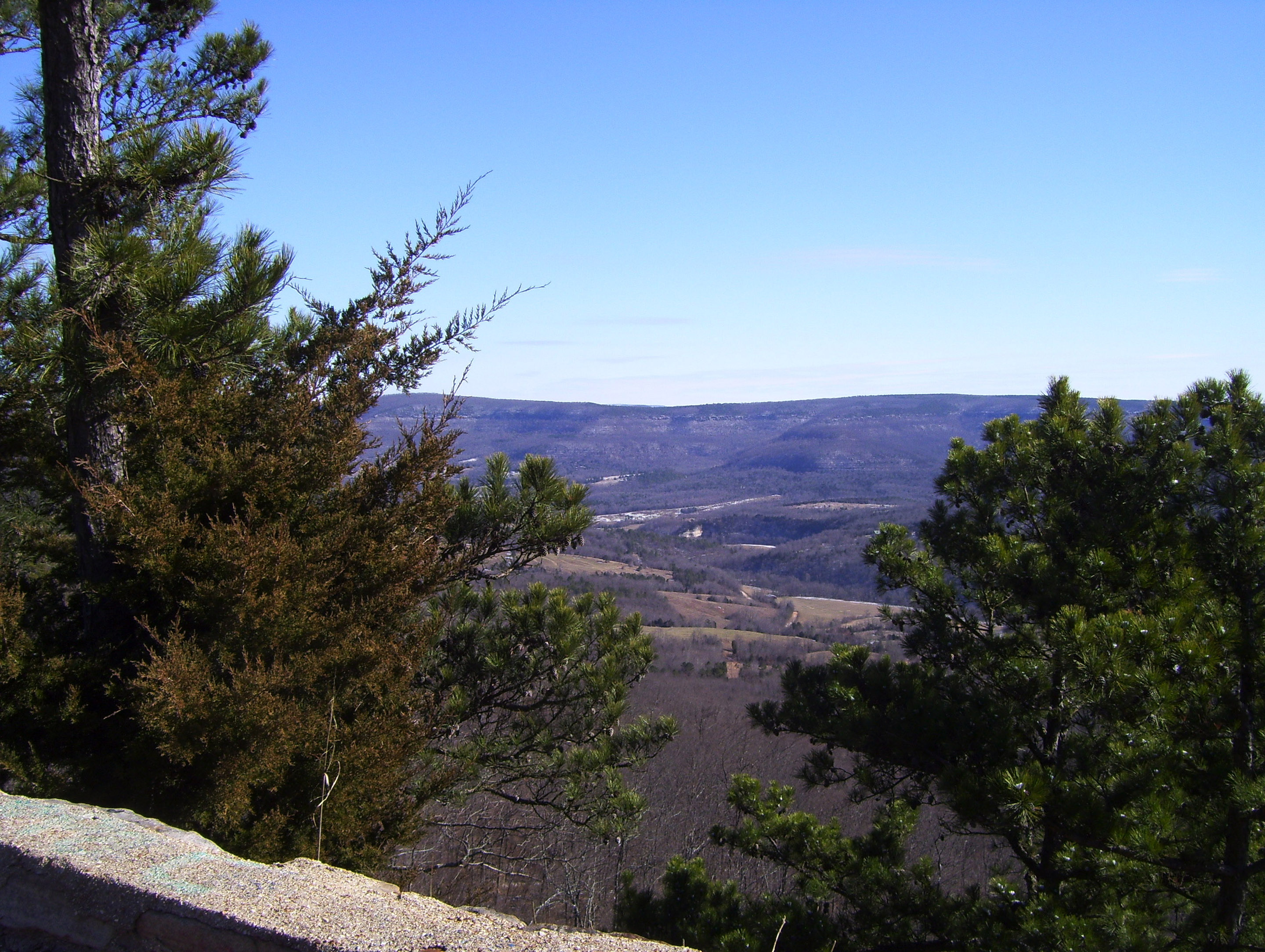
Mother Earth

The mariner came across this news item:

“Prince Charles has spoken exclusively to Sky News about his ongoing concerns about climate change, saying he believes there are links to the current refugee crisis and terrorism.

In his only interview ahead of COP21, the UN’s climate summit which opens next Monday, the Prince of Wales suggested that environmental issues may have been one of the root causes of the problems in Syria.

He said: “We’re seeing a classic case of not dealing with the problem, because, I mean, it sounds awful to say, but some of us were saying 20 years ago that if we didn’t tackle these issues, you would see ever greater conflict over scarce resources and ever greater difficulties over drought, and the accumulating effect of climate change, which means that people have to move.

“And, in fact, there’s very good evidence indeed that one of the major reasons for this horror in Syria, funnily enough, was a drought that lasted for about five or six years, which meant that huge numbers of people in the end had to leave the land.”

During the fourth millennium BC, about six thousand years ago, the Middle East was the first area to practice widespread agriculture. Slowly, over many centuries, weather patterns changed leaving mountains and harsh, crusty soil. The term “Fertile Crescent” is no longer applicable. Several debilitating floods and droughts occurred over the centuries as well as numerous wars. Governments and economies became minimal.

Then, in the nineteenth and twentieth Centuries, oil became profitable and has since provided 95% of the economy in the Middle East; the region was overrun by Western entrepreneurs who established weak local governments supported by oil profits. After the First and Second World Wars, the Middle East finally established permanent boundaries between countries except during the six year war between Iraq and Iran – a war for regional supremacy rather than for territory.

All this time, the weather worsened, leaving little in the way of economic disparity – it was oil and not much else. One wonders whether Prince Charles has a point. In the US, California suffered a drought for five years. Prices of fresh produce rose significantly. More produce was flown in from South America. North America is fortunate that another warming phenomenon came along in the form of El Nino – at the cost of floods and damaging storms. Already, 2015 is the warmest year on record. It hasn’t been thousands of years but is weather shifting? El Nino is a specific event but how can we tell that weather a hundred years from now may not be conducive to record corn and wheat crops?

Further, as with more of the Earth than we realize, fresh water is disappearing. Scientists are working hard at new ways to produce fresh, clean water. There are a few commodities that are provided by the Earth and as such should not be owned by proprietary corporations: a clean atmosphere free of carcinogens and chemicals that disrupt the chemical balance of our atmosphere. Another is water itself; corporations should never own water rights, whether natural or reproduced. Finally, while this is indirect, diversity of life is another commodity. Wildlife and plants service our planet and in the process, service us as well. Elizabeth Kolbert in her book, The Sixth Extinction, proves that humans are ravaging the Earth’s living family far more destructively than any terrorist attack by ISIL.

Very slowly, earthquake by earthquake, volcano by volcano, and our human contribution, excessive Carbon, the weather is bound to change. It’s an experience similar to living a lifetime: one is young and suddenly, almost by surprise, we wake up one morning to know we are approaching the end. It is hard to focus on large planetary issues far beyond nationalism – but the time has arrived.

Ancient Mariner

It’s Time

The most serious issue with Donald is not his bullish personality – a lot of that is for effect. It isn’t that he lies a lot – Brian Williams did, too, fortunately not when he was broadcasting the news. It isn’t Donald’s ego – although his ego is a candidate for the largest ego in the Guinness Book of Records. The most serious issue with Donald is his promotion of our base instincts: fear, prejudice, moral abuse, violence, and blatant favoritism – just to name a few.

At last, some voters have begun to recognize Donald’s dark side: a person with no scruples, no ethic, and no morality. He says it himself, “I don’t like to lose; I only win.” And we only will lose. One perceives that the Constitution, the Congress, the Supreme Court and the fifty States will temper his rash decisions. Even if that were so, our nation would throw away four years that are badly needed right now. If ever this country needed leadership, it’s needed now. The election in 2016 is far more important than a typical presidential election. The entire planet stands on the threshold of an unknown future. How we live together will be better or just as easily will be worse than we live together today. The world is shorthanded of forward looking statesmen.

Metaphorically, to walk amid the fallen US government is tantamount to walking through burning Atlanta during the Civil War. Federal and state governments are dysfunctional, crooked, and misanthropic. Do not discount this opinion because the reader suspects mariner may be speaking as Amos. Many wise authors and analysts from several lifestyles fear a misstep in handling the rapidly approaching issues of our future. One can imagine our current society looking like a bunch of loose dogs running about with no cohesive belief in who we are or what we stand for – future or past – and when we organize, we behave just like a pack of wild dogs.

There are some exciting frontiers waiting for us to implement them. The definition of work will begin morphing into something more pleasant if we just focused on that task. Freedom from 19th century ideas about travel, power grids, and food distribution is out there waiting for us to step forward. If we had the fortitude to make health and medicine functional at a fair price, millions of people may live better and have a dollar or two to spare instead of crashing into bankruptcy and despair. Restructuring the role of corporate profit and taxes on everyone will make untold wealth available for reshaping our future to be a pleasant experience.

The mariner is old enough to remember a better culture that existed before 1980. He misses that time. It wasn’t perfect, no culture is, but the nation defined itself by its common citizens. Comparatively, those were the good times.

The 2016 election is an historic moment in our history. Consider the ballot, from top to bottom, with one thought in mind: Will this public official lead us into a new era. If you have doubts, do not vote for that person.

Ancient Mariner


Joseph Campbell

Mariner became aware of Joseph Campbell in 1988 when the anthropologist was interviewed by Bill Moyers on PBS television. During that series of six interviews, Campbell provided interpretations of religious and social behavior in a way that was new to the mariner – frankly, new to most viewers. Many of Campbell’s interpretations, derived from decades of researching primitive cultures, provide a logical overlay for many human behaviors that seem to be universal. Mariner will share a few insights here but no matter how much is written, one must see the video of the Bill Moyers interviews; it is a significant event even today, 26 years later.

The mariner feels a visit with Campbell will have a calming effect on readers today. The cacophony of conflict, fear, financial instability, endless war, and weakened control of everything leaves us emotionally fatigued and we see no relief in sight. Joseph Campbell speaks pleasantly, unhurriedly but takes his audience to the core of their being. Whether we feel out of control or not, Joseph Campbell says things will turn out fine if we pay attention to our myths. All over the world, humans have similar needs and responses to religion, inspiration, enlightenment, phases of growth from birth to death, and many instinctive patterns that we perform automatically. Campbell has delved deeply into our common need for myths. He is famous for his advice to “find a blissful place.”

Joseph Campbell’s description of spiritual release: One piece of conversation mariner enjoys is a description of the spiritual metamorphosis that must occur in Christianity. Campbell said that everyone focuses on the pain and suffering of Jesus on the cross. That’s not it, he says. As Jesus approaches the cross, he is released from the bondage of his body; the cross is life. The body remains in a world of sorrow and pain but the spirit has transformed and releases the shackles that bind the spirit to the body. (So simply put but so hard to achieve.) See the video that talks about metamorphosis: http://www.bing.com/videos/search?q=joseph+campbell&view=detail&&qpvt=joseph+campbell&mid=40F1EF7847A31D484ED340F1EF7847A31D484ED3&rvsmid=40F1EF7847A31D484ED340F1EF7847A31D484ED3#view=detail&mid=40F1EF7847A31D484ED340F1EF7847A31D484ED3

Another approach to the experience of metamorphosis is described in the myth of the young Indian boy captured by an enemy tribe. He will be sacrificed at the tribal altar. As the boy approaches the altar, he is singing and happy. This confuses the chiefs because everyone is cheering the boy. See Campbell’s explanation at: http://www.bing.com/videos/search?q=Bill+Moyers+Joseph+Campbell&view=detail&&&mid=CD67110856225F7A474ACD67110856225F7A474A&rvsmid=CD67110856225F7A474ACD67110856225F7A474A#view=detail&mid=CD67110856225F7A474ACD67110856225F7A474A

Joseph Campbell’s approach to the experience of life: “Myth is a kind of scoreboard. The libido looks at the scoreboard and knows what the situation is.” He goes on to say a forty year old man is not afraid of a scolding by his mother; if he is, he hasn’t looked at the scoreboard – he hasn’t moved on. The same is true with an eighty year old man. He shouldn’t be looking back to see how he can improve his golf score; He’s already done that. At eighty, he has lived his life and should be at peace with himself, knowing he has accomplished the arc of life but still always looking forward with satisfaction.

Campbell was a consultant to the “Star Wars” trilogy. George Lucas wanted to use the power of myth in all of us as an enrichment of the series. One example is explained in a short clip from the movie. See:

http://www.savevid.com/video/joseph-campbell-and-the-power-of-myth-with-bill-moyers-star-wars-pbs.html

Joseph Campbell was prolific. There are many books by him that cover his insights more succinctly; there are dozens of free clips a search engine will find. His Bill Moyer interview and DVD lecture series is available inexpensively through the German search engine Stuccu: http://stuccu.com/s/Joseph+Campbell+Dvd-MbSLsTI-Buy-Exclusive-Deals-70-OFF-Save-Big-Lowest-Price-On-Joseph-Campbell-Dvd-Best-In-Stock-Fast-Free-Shipping?keyword=%2Bjoseph%20%2Bcampbell%20%2Bdvd&matchtype=b&querystring=dvd%20joseph%20campbell&netid=2&aaid=5553c17ab1b1c62d9040ccc0&oid=29335685738&caid=5553c17ab1b1c62d9040ccbe&device=c&msclkid={mscklid}

Official Joseph Campbell website: http://www.jcf.org/new/index.php

http://www.ebay.com/itm/like/191743028404?item=191743028404&lgeo=1&vectorid=229466&rmvSB=true   The Power of Myth for $27.00

http://www.compare99.com/compare.html?q=joseph-campbell&ort=Joseph-Campbell-Sale&adid=iaCkp56s0qSXo8mPppKfo8PHz51YosyfraClmNHKkHSToNHEyJ2eWdSfypKnpofFy5KkcMs%3D&baa=J&utm_source=bing&utm_medium=cpc&utm_campaign=J_3&utm_term=%2BJoseph%20%2BCampbell   Book versions of lectures for $12 to $20.

Complete DVD set of series on Amazon.com for $42.00

Individual DVD lectures on Amazon.com for $4 to $14.

REFERENCE SECTION

Joseph Campbell said, “Mythological images are the images by which the consciousness is put in touch with the unconscious.” To this point, he documented the use of animals in different myths. Below are a few animals used as mythic symbols. Using your own intuition, what representation do these animals provide? Example: the raven has a universal reputation for cunning; in Greece and China, the raven was a messenger between gods and humans.

In Europe, the dragon –

In Asia, the dragon –

Lakota tribe (North America), the bison –

In China, the boar –

Celts in Britain, the boar –

The United States uses many animals to represent a multitude of symbolic virtues. Name at least six animals, each from a different type of endeavor or belief; what does each represent? Mariner will help by naming two; what virtues do they represent? (this puzzle has an arbitrary air to it. Intuition may be more important than fact)

Elephant and donkey (or jackass) for political parties.

To record your answers, click “Leave a reply” at the bottom of this post. The mariner, too, will reply with answers to the first puzzle.

Ancient Mariner

Role Play on the Campaign Trail

The mariner watches the Presidential campaign from dockside. He is not an active soldier day to day in the campaign skirmishes – although he is active in some important advocacy groups. All the candidates play one role or another as they seek any advantage to move ahead. Now, as months have passed, the mariner is reminded of role play that is similar to labor union negotiations.

In 1975, the mariner was fortunate to have the Maryland Secretary of Public Safety as a mentor. Mariner had the opportunity to attend a number of top notch training courses in management, systems development and labor negotiations. The labor negotiations class was sponsored by the American Arbitration Association in Washington D.C. The class of ten was divided into two teams, one representing management and one representing a labor union. Each team had separate instructors who taught the methods and strategies of labor negotiation. After a few days, it was time to negotiate.

Each team had been coached about the various roles that each team member played at the table. The chief negotiator was the only one who could commit to contract terms. His role was to be calm, self assured, but very direct in his comments. Another member was responsible for being the guy the other side could talk to and befriend – usually away from the table; another member played the role of a fact checker who kept the other side honest; then there was “Mad Dog.” Mad Dog had to show simplistic aggression, demanding concessions that were beyond what the team actually would accept. As a footnote, after six days, mariner’s team won the concession battle and had a good contract.

It was an interesting and intense experience. Everything we did, even in the evenings, was filmed to be used in a debrief session after the negotiation.

Mariner is reminded of that training as he watches the candidates. Guess who the Republican Mad Dog is…. His outlandish opinions and poor manners make the rest of the Republicans sound reasonable and urbane; Donald does a good job! On the Democrat side, Bernie is Mad Dog. He forces the dialogue to include progressive ideas that are so removed from the Republican dialogue they seem to be in a different language. However, Bernie’s unexpected influence in the democratic race has pulled Hillary to a more liberal platform. Bernie’s outlandish demands for a rebellion make Hillary’s comments more acceptable.

As to other team roles, one should watch the Republicans to see who emerges as chief negotiator. Will it be Ted Cruz or Marco Rubio? Some say Chris Christie has a chance although Chris is a better mad dog by nature. Jeb will be the fact checker; Lindsey Graham could be the nice guy everyone can talk to – if he makes the team.

There are only two team members on the Democratic side. Post Election, Martin O’Malley could play a role in the Administration. As mentioned, Bernie is the Mad Dog. Hillary has a lock on chief negotiator. It’s as if she is the CEO of management and no one has the authority to unseat her.

The only issue is that the candidates aren’t negotiating a labor contract; it’s dog eat dog.

People watching is fun.

Ancient Mariner


Current Reality

Today’s post has a number of reflections. There is somewhat of a theme in that they all relate to current reality but are derived from separate disciplines.

The first reflection is derived from the mathematical theory of chaos. Chaos Theory is a real system in mathematics. The most popular example is: If a butterfly flaps its wings in Africa and other physical influences are present, the fluttering will be the beginning of a Hurricane in the United States – or not.

Not to indulge in mathematics too much, chaos is a measure of change. Certain events and conditions occur which change the value of currently accepted values. These new values are in turn influenced by changes in other values. Eventually, everything that was accepted has changed and new, unanticipated values emerge. The US is in a whorl of change; it is chaotic because so many events seem not to be what was expected; around every corner are new extremes, unexpected crises and turbulence. The changes come faster and faster and there are few dependable expectations; chaos will take its course with little regard for history.

For example, US citizens did not expect the rise and influence of the tea party movement. It changed the Republican Party in ways that were not expected. This led to a breakdown in the ability of Congress to achieve legislation as expected. One bill was passed by the House more than forty times in an attempt to overturn The Affordable Care Act. Something is changing. What are the new rules? Who would predict the US would be at war with the Middle East for twenty-five years? Who knew that perniciously the industrial age would bring the Earth to a state of unacceptable pollution? So many situations have new, unexpected consequences.

Has a presidential campaign ever had more than twenty candidates? Values have changed. What are the nation’s new values that Donald Trump can be so popular? An amazing phenomenon is that a Nazi-style authoritarian is running against a democratic socialist in the same presidential year! There obviously is change occurring in America’s gestalt.

In recent weeks, killing innocents has become de rigueur. In the West, French and American atrocities have held the headlines – should it be said the news organizations have held the headlines. Beyond the Western nations, terrorist attacks have killed 147 at a University in Kenya, 43 people were killed and 239 wounded in Beirut, Lebanon; in recent weeks, Al-Shabaab, a militant group based in Somalia, attacked a mall in Nairobi, Kenya, leaving 67 dead; 49 people died when rebels shot down an Ukrainian plane; 224 died in the Russian plane bombed in Egypt; suicide bombers killed 81 at a church in Pakistan; and the Taliban took credit for killing two police officers with a car bomb in Afghanistan. Terrorism is a recent phenomenon, widespread, and not necessarily acting in behalf of a religion. Something has changed. Will the world ever be able to restore civility? What values must change to reconcile random murder performed by third-nation rebels? No one knows yet. The entire world seems to be caught in a tornado of chaos.

REFERENCE SECTION

Recently, mariner offered a book by Gene Baur, Living the Farm Sanctuary Life: the Ultimate Guide to Eating Mindfully, Living Longer, and Feeling Better Every Day. The mariner suggested it was an upbeat book about animal rights and proper dieting – an unusual approach, that is, being upbeat. The mariner tinkers in the kitchen. He found the recipes – the largest part of the book – were unusual and intriguing. Many of us have read vegan books and find the recipes mundane and make an attempt at competing with omnivore diets. Baur’s recipes often are unique and out of the norm for a vegan recipe book. Vegan and vegetarian readers will be well served to give this book a read.

The Atlantic Magazine has an article describing reactions to Donald from around the world. It may be a comforting read. See:

“What the World Is Saying About Donald Trump’s Comments About Muslims”

http://www.theatlantic.com/international/archive/2015/12/trump-muslims-global-reaction/419343/

Expanding the Liberal Arts Mind:

In the 17th century, Thomas Hobbes was a proponent of determinism. Generally, this philosophy means that every act is the result of previous acts. The battle was about free will and whether it could exist if everything was deterministic. This dialogue went on for centuries. In 1960, Edward Lorentz wrote a computer program that mimicked weather. He discovered that each time he loaded the first values, he received a different prediction. In a word, there was an element of “chaos” that prohibited predictability. This is why we cannot predict infallible weather more than a day or two ahead. For a great presentation that is as entertaining as it is enlightening, see:

http://www.abarim-publications.com/ChaosTheoryIntroduction.html#.VmdWKxZdG01

Ancient Mariner

Will the Next Generation have Their Lives Lived for Them?

The mariner admits he is a privacy advocate. It stems from his first job in computer systems: he was responsible for a corporation’s system and data backups. Security was an aspect of the job. Throughout his career in systems, he was aware of the power of information in the automated world. The mariner has written many times about the disappearance of privacy.

Generally, the younger generations have less or no concern about individual privacy in exchange for the toys, correspondence, convenience, and social media. In this post, the mariner asks a few questions to demonstrate the kind of control and abuse a computer can impose on your personal life.

Assuming that most folks eventually will order groceries online, the grocery store wants to know your shopping preferences. At least grocery stores are willing to pay for this information with discounts on gasoline or sale prices. With your history of purchases, two things occur: first, the grocery store can trim its inventory overhead by providing only those items you are likely to buy. This seems reasonable but you will be offered fewer options to buy other items unless the grocery store wants to show them to you. It will be to the store’s advantage to offer only those items or brands they want you to see.

Second, you cannot price shop; the options are offered via the Internet showing the grocery store’s pricing to you, the individual buyer. Are your prices the same as everyone else’s? Are your prices competitive with other grocery stores? Will your income, bank balance or credit score determine how much you can buy? You have traded independence for convenience; you have surrendered private shopping preferences to anyone who wants to see them for their own purposes. Mariner wonders whether a shopper has lost control of grocery shopping decisions.

Anyone who owns a computer today, whether it’s a PC or the multitude of handheld devices, has experienced unwanted popups and other advertisements that almost trap the reader into making a purchase – wanted or not. How many inexperienced folks have bought computer cleaning software because they couldn’t get rid of the popup? Further, have you noticed that advertisements and email for automobiles are limited? They are limited because the seller knows your credit score, your entire history of auto purchases, and your income.

A store clerk will not see ads from Cadillac and Tesla; more likely, it will be Kia and Mitsubishi Mirage. On the surface, this limit of choices seems innocuous; on the other hand, someone else is deciding what car you will buy. In a subtle way, someone else is telling you what you can’t buy. Can’t is the operative word: today, interest rates are based on risk – not only your credit score but if the store clerk is buying a Cadillac, the interest will be higher because a Cadillac doesn’t fit the clerk’s profile.

Banks know your credit situation before they send you an offer for another credit card. Is your credit score high? You have the opportunity for a higher line of credit and many credit options; if your credit score is low, your line of credit will be low and your interest rate higher. You actually have little choice in the matter; the full array of credit card choices is not shown – someone else has selected your card for you.

The mariner receives thousands of junk email from boat suppliers, hardware companies, woodworking companies and especially plant nurseries. How do all these retailers know about the mariner’s propensity for boat, shop and gardening? The businesses have two external sources: they buy customer lists from other businesses and they buy from the worst lot of them all, the companies that control your access to the Internet.

That brings us to Google – the worst thief of the bunch that, usually without your knowledge or any recompense, takes your personal life and makes large profits selling that information to anyone who wants it. Why do others want your information? They want to live your life for you – using their products, of course.

I mentioned in a post a few years ago that I had written an email using an AOL account; Google was my link to the Internet. In that email, I used the word “depression.” The next day, when I launched Google, three separate ads for psychiatrists appeared. Google reads our mail even if we don’t use gmail. Google knows everything. It knows the brand, model and configuration of your device; it knows every website you ever visited; Google knows all the information available through government agencies like your birth certificate, driver license, social security number, and all your insurance policies. Google denies its obsession to know everything about everyone. Google says they don’t read people’s mail – but their computers do and the computers sort, select and bundle your information to obtain the highest price from information buyers.

Another growing use of your personal data is psychological evaluation. By cross-matching your computer activity over time, Google (and anyone wanting to pay for it) can determine the status of your life. The mariner knows for a fact that Google can deduce you had an increase in pay from your purchasing patterns; Google can deduce that a divorce is imminent; Google knows your political disposition and can determine who you will vote for by cross-matching the shows and channels you prefer on television, the neighborhood you live in, the car you own, your arrest record…need the mariner go on?

What provoked this post on privacy is the fact that Google again is caught red handed modifying settings in school PCs so that Google can monitor the use of the PCs unbeknownst to anyone. Further, a student cannot modify the setting to turn off Google’s snooping. The news article is a MUST READ. See:

http://www.zdnet.com/article/google-invading-student-privacy-with-chromebooks-eff/

Mariner says it again: Don’t worry about what NSA knows about you; it’s Google who knows a lot more than NSA ever will and can use it without accountability. Besides, at least the NSA doesn’t want to live your life for you.

A recent advancement in computer technology is the use of “clouds.” A cloud is a data storage service where you can leverage many processing devices to process your data. The cloud also stores your data. This is a boon for large companies and science research that need faster processing than possible in their own locations. These large scale users have IT specialists to assure security and accuracy – specialists that you may not have to protect your data for you. The issue of privacy is bound up in the cloud service because the smart phone companies store your smart phone activity on clouds whether you need high powered processing or not. However, the smart phone companies use the high powered processing to sort through your data just like Google always has.

The next chapter in limiting your choices in life will come soon when you can no longer buy your own processing system and programs. You will rent them from owners of the clouds. Like the child who picks up a dirty object and you say, “Don’t put that in your mouth – you don’t know where it’s been!” you may also be able to say that about your data.

Ancient Mariner

About Dots and Cats and Christians

The mariner asks forgiveness for allowing his Guru persona to reach the keyboard. The last three posts were written with traces of obfuscation. Mariner knows that Guru has the habit of taking giant leaps to keep up with where his thoughts are. The trouble is Guru doesn’t use turn signals; those attempting to follow from one sentence to the next are left at an intersection of thought with no directions.

Upon reevaluation and pointed criticism from the home team (actually a good editor), a grammatical pattern is determined wherein Guru will start a sentence with a given premise, then insert two parenthetical expressions comprised of twelve or thirteen points, ending with a conclusion that has little to do with the initial noun phrase. The reader is left to connect ethereal waypoints without a map.

Mariner’s wife is a librarian working in a public school. The library has a colored dot system called Accelerated Reading (AR) which is a counter intuitive name. Every library book has a dot on the spine, each with a given color that indicates that book’s rank of difficulty. A student who is learning to read must start at the lowest color, take a proficiency test and pass it before the student can move to the next higher color – a gradation measured in picograms (one trillionth of a gram). Had the reader and the mariner been forced to learn in this brain-numbing manner, I could not write a post and it wouldn’t matter because the reader couldn’t read it. Please understand the mariner speaks for himself; his wife notwithstanding.

Nevertheless, Adolf Hitler, had JEB Bush not killed him, could not devise a more abusive environment for young minds wanting to leap forward at a challenging pace. It is heartbreaking to see a student walk into the library and ask for a book about rocket ships. After looking along the shelves, the librarian advises the student that the nearest book about rockets is two colors above his current dot. By the time the student reaches middle school, reading is no longer a joy or a habit in the student’s life.

What is worse, the students learn the game. A number of books must be read in the current dot level before they can take the proficiency test. It is quite likely that the student need read only one or two books to advance to the next picogram but typically several books are required. The only game in town is to accumulate enough book points to be eligible to take the proficiency test. Consequently, students come to the library wanting only those books with the right dot color. Reading is not subject driven, not interest driven, not maturity driven, and not intellectually driven. “Give me a yellow – I don’t care what it’s about; I need my book points.”

During the mariner’s formative years in education, he remembers, in the second grade, that he had read the whole set of learning to read instruction books and was bored with the pace of the class. When mariner was little, teachers were about making sure everyone learned everything – a practice that slowed the curriculum to a standstill. Had he been forced to read only one dot color that had nothing to do with his curiosity, personal reality, or challenge him – all children want to be challenged in the second grade – he would have lost interest in reading and thinking in short order.

During mariner’s college days while working at the same time, mariner decided to take the Evelyn Wood speed reading course. The instructor chose a book that lent itself to the task of reading fast (The Sun Also Rises: Hemingway). It was clear, however, that we were to be taught how to read not by constraining subject matter like dots do, rather we will be taught to read anything we pick up. And read it quickly!

To share the phenomenon of Wood’s speed reading technique, mariner was pressed by the instructor to read a page in 60 seconds; then the instructor asked questions to test how much mariner had absorbed and remembered; then the next page was selected but time to read was reduced to 50 seconds. Further reduction in time occurred when the instructor was satisfied that mariner had captured all the information on the page in the allotted time. The transformation to Super Reader occurs when one is reading so fast that there is no time to say individual words in your head – AKA subvocalizing. At a minimum, one is reading whole phrases as if the phrase was only one word but it was read without saying it.

Mariner had nothing short of an epiphany. At the point a reader leaves subvocalizing behind, the increase in speed comes rapidly; it is comparable to an airplane leaving the runway, leaving the resistance of the wheels and crosswind behind. One must speed read regularly or reading falls back into subvocalization. The experience of speed reading enables the reader to read two or more lines in the same glance – literally a 20th second glance because we no longer interrupt reading cognition to speak the words. The better readers in the course graduated reading ten thousand words per minute. Sounds impossible but mariner is a witness. With Wood instruction, we all learned to read but after the first novel, we each chose our own. I picked a story about rocket ships.

Of course, AR has little to do with mariner’s childhood and his noted ability to screw up sentences. He’s just deflecting criticism….

REFERENCE SECTION

Was the reader successful in reconciling the paradox proffered by Schrodinger’s cat? In quantum physics, this is an important concept to master. When Einstein and other theoretical physicists proposed that subatomic particles could exist in a number of different states simultaneously, none of which was primary until some external event forced one and only one state to survive, Schrodinger scoffed and created the cat paradox. After an hour, as the classic experiment proposed, the cat would have a fifty-fifty chance of being dead or alive. No one would know which until the box was opened. Schrodinger proposed the cat paradox to show how silly it was to apply quantum values to complex systems much larger than atoms. Two excellent presentations that will clear the mind are at the following:

http://www.iflscience.com/physics/schr%C3%B6dinger%E2%80%99s-cat-explained

https://en.wikipedia.org/wiki/Schr%C3%B6dinger’s_cat

A liberal arts article was submitted by the mariner’s wife. It is about the disarray of Christianity and that one can claim that the US is not a Christian nation. It is likely that the reader’s subsequent conversations will be entertaining – in a serious way. Unlike Guru, Parker Palmer writes clearly and with a tight grasp of his ideas. The mariner believes it is mandatory reading; color of dot is moot:

http://www.onbeing.org/blog/parker-palmer-america-is-not-and-cannot-be-a-christian-nation/8162

Nate Silver is a famous statistician who is magically right whenever he predicts anything. A few years ago, Nate began tracking every topic influenced by prediction – especially politics. Nate is financially successful given his clients are some of the largest corporations in the world (and largest gamblers) – to speak nothing about US ragtag politicians. NATE SAYS IGNORE THE POLLS! Visit his website at: http://fivethirtyeight.com/tag/2016-presidential-election/

Ancient Mariner

A Well Rounded Education?

Mariner has been reading about the new movement in colleges that expresses empathy for individuals suffering any indication of racism, cultural suppression, campus abuse, and even offensiveness in comedy. On the good side, this is college students running things. On the bad side is a student mentality that appears to be over protective of even one student’s sensitivities. Several top ranked comedians like Jerry Seinfeld won’t do shows at colleges because of restrictions about their subject matter. Other campus speakers are screened before they are invited to speak at assemblies. (An earlier post recommended the September 2015 issue of The Atlantic Magazine http://www.theatlantic.com/magazine/ covering this topic)

What is disturbing about the student attitude is its tendency to foster cultism and isolationism in students who will leave the campus to step into the real world – a bit coarser than a campus. There are enough tea party folks to go around already. Will there be a generation of young people who reject the human condition and close their ears to reason, compromise and human frailty? The student attitude of purity or nothing is dangerous in a world full of turmoil, overcrowding, terrorism, and global warming. The students are opposed to negotiation right from the start. Nothing is more important in this century than teaching students the skills of negotiation, political reason and the pursuit of a better world for everyone.

The mariner understands their intent. The students are tired of racism and the enmity of cultural and religious bigots. They wish for a fair world where differences are accepted without turmoil. It may be a good thing that turmoil is not accepted but the real world, particularly at this moment, is not ready for piety. This is a hardnosed time when humanity must sort out conflicts affecting the entire world. It is a time when leaders must decide who will not die, who will not starve, who will not suffer genocide, who will not be sacrificed for a greater cause. The mariner suspects the students may not be fully prepared for reality. Still, things can change – the hippies of the 1960s became the capitalists of the 1980s.

On a second front, the gun-racist-terrorist sensitivity, the Mayor of Dallas, Mike Rawlings, confessed he is more afraid of white men with guns planning another mass shooting than he is afraid of a hidden terrorist among the Syrian refugees. See:

http://www.thespreadit.com/mike-rawlings-dallas-mayor-66591/

Third, for the last several days CSPAN broadcast from the Miami Book Fair. A Sunday broadcast presented the following:

Tracey Stuart, author of Do Unto Animals: A Friendly Guide to How Animals Live, and How We Can Make Their Lives Better, and Gene Bauer, author of Living the Farm Sanctuary Life: The Ultimate Guide to Eating Mindfully, Living Longer, and Feeling Better Every Day, present their thoughts on animal rights.

This is an upbeat, refreshing conversation about animal rights and our overdependence on meat in the human diet. Worth watching. While the reader is at the CSPAN video website, browse a bit; it is guaranteed the reader will find an interesting subject. See:

http://www.c-span.org/video/?400037-7/book-discussion-unto-animals-living-farm-sanctuary-life

Finally, if you haven’t been following John Oliver’s television show, you’ve missed his scrutiny of your favorite complaint in life. This episode questions the legitimacy of televangelists asking for money to buy 65 million dollar jet airplanes. Accommodate some coarse language – it’s HBO. Check him out at:

http://www.bing.com/videos/search?q=john+oliver+last+week+tonight&FORM=VIRE1#view=detail&mid=DF07448C20530777F6EEDF07448C20530777F6EE

REFERENCE SECTION

It’s time to drag out the old thought experiment called Schrodinger’s Cat:

You have at hand a sealed cardboard box. Inside is a cat, an ion detector (like a Geiger counter), and a flask of poison. If the ion detector detects a radioactive particle, the flask breaks and the poison kills the cat. Seeing only the box and no outside clues, is the cat dead or alive?

Give this some thought. Could the cat be both dead and alive at the same time? How would that be possible? If you can resolve this paradox, you are prepared to study quantum mechanics! Not fair to use the Internet although you’re allowed to find it in a book you already have in your own library.

Ancient Mariner


The West and the Middle East – in Conflict since 192 BC

The Roman-Seleucid War began the ongoing conflagration between the West and the Middle East during 192-188 BC. Since, there almost always has been conflict between nations that are the root of western civilization and nations, or caliphates of the Middle East. Since earliest times, when the Middle East was the crossroad of commerce and travel, the region became a melting pot of civilizations as impressive as American dependence on immigrants. It seems as if every nation-state in the Middle East took turns dominating an area reaching from the Aegean and Mediterranean Seas to the border of India, and from the Steppes of Eastern Asia to the southern border of Egypt and the Kush Desert on the African continent. Consequently, the heritage of the region’s population contains bloodlines of Indo Europeans, Armenians, Persians, Arabs (as mixed as any American bloodline), Greeks, Turks, Jews, Egyptians, and to keep the matter short, all previous nationalities in the Mesopotamian, Assyrian, Roman, and Seleucid Empires. Without exception, Islam was the dominate religion.

Often included are North African Mediterranean countries that comprised the ancient Egyptian Empire: Morocco, Algeria, Libya, and Sudan.

There was a time when the Western world was in an introspective stage, fighting among itself as European nations redefined themselves creating new borders, more organized governments, and more sophisticated cultural capabilities – especially in terms of Christian influence¹. Eventually, Europe turned its focus back to the Middle East as the Christian West came to believe that Jerusalem should be in Christian hands.

The first Crusade started in 1096 ending with the capture of Jerusalem and the Holy Land. In the third Crusade (1187-1192), Richard the Lionhearted led the Knights Templar into the Holy Land to recover Jerusalem from a conquest by Saladin, a powerful and popular Sultan ruling both Syrian and Mesopotamian regions. Saladin was a “gentleman” warrior to the point that he was respected in the West. The Crusade ended with a truce that recovered much of the Holy Land but left Jerusalem under the control of Saladin.

It should be noted that Saladin was a devout Sunni and was known for eliminating Shiite caliphates – a conflict that still complicates Middle Eastern religious and political relationships.

From 1830 until the end of the Second World War, the Middle East was overrun by colonialism from Japan, United States, Great Britain and France. Colonialism was so blatant that at the Berlin Conference of 1884, fifteen nations from the West and Russia met to negotiate which nations would own a piece of Africa. Africa was divided into fifty territories – no Africans were present at the meeting. While colonialism appears to be an orderly way of developing economic success, its price is the destruction of tradition, self government, and independence for the subject territories. Observe the political state of the Middle East and Africa today.

It is a fact that the Christian-Islamic differences fostered conflict in the eleventh and twelfth centuries; it is a fact that colonialism prevented the national maturation of an entire region of the planet for 150 years. To throw salt into the wounds in the Middle East, after the First World War in 1918, France and Britain divided the Middle East into a large region for each to dominate. The line was called the Sykes-Picot line. Subsequently, the Ottoman Empire, the international presence of Islam, collapsed, leaving unnatural boundaries for surviving Middle Eastern nations. Turks ended up living in Iraq and Syria, Sunni and Shiite regions were placed under one regime and finally, to end the history lesson, the Balfour Declaration in 1948 encouraged the international Zionist movement to push for a Jewish homeland in Palestine. How foolish was the West even to suggest such a thing. All of us, Israel and the West, are now paying for this conclusion.

Does everyone know why Middle Eastern Islamic nations hate the West and the United States in particular? The damaged international relations now suffered in 2015, caused by splintered Islamic sects, unnatural combinations of Shiite-Sunni governance, suppressed governmental self-reliance, and current abuse of oil profits primarily by western countries, leave a bitter taste. Further, it is a shame that the West’s Christian rejection of Islam over many centuries is that Islam – a palatable faith and religion – has become the rallying force for violence and terrorism.

Wise politicians, especially those aware of the years of history since 192 BC, know that war will not resolve the West’s relationship with the Middle East. The US, albeit heartlessly, created American Indian territories; the US paid retribution to the Japanese interred during the Second World War; what olive branch will heal the blatant anger of the Middle East?

[1] Also known as the Dark Ages; for sake of focus we ignore the Visigoths, Justinian, Moroccans, Bubonic Plague, and the Vikings.

Ancient Mariner

Pondering the Role of Corporations

As the world becomes smaller because of communication technology, transportation technology, international awareness of other nations, cultures, and geography, this smallness has changed corporate behavior. Because a corporation’s sole goal is profit, every act – however slight or invasive or rewarding – is an effort not intended to benefit any element of fairness, kindness, cultural improvement, employee rights, or to balance the economy. Every act is dedicated to that corporation’s wellbeing and ever to increase its own corporate profit. Today, as national boundaries soften in this smaller world, corporations have escaped national and local governance.

The conflict between government authorities and businesses is not new. The struggle for business independence likely goes back to the earliest civilized cultures. It is a natural conflict; a government ostensibly exists for the wellbeing of its citizens while a corporation exists only for its own wellbeing and profit.

To provide a quick history lesson, the following paragraphs are quoted from

http://reclaimdemocracy.org/corporate-accountability-history-corporations-us/ not for its advocacy but for its concise exegesis:


“When American colonists declared independence from England in 1776, they also freed themselves from control by English corporations that extracted their wealth and dominated trade. After fighting a revolution to end this exploitation, our country’s founders retained a healthy fear of corporate power and wisely limited corporations exclusively to a business role. Corporations were forbidden from attempting to influence elections, public policy, and other realms of civic society.

Initially, the privilege of incorporation was granted selectively to enable activities that benefited the public, such as construction of roads or canals. Enabling shareholders to profit was seen as a means to that end….

…. For 100 years after the American Revolution, legislators maintained tight control of the corporate chartering process. Because of widespread public opposition, early legislators granted very few corporate charters, and only after debate. Citizens governed corporations by detailing operating conditions not just in charters but also in state constitutions and state laws. Incorporated businesses were prohibited from taking any action that legislators did not specifically allow.

States also limited corporate charters to a set number of years. Unless a legislature renewed an expiring charter, the corporation was dissolved and its assets were divided among shareholders. Citizen authority clauses limited capitalization, debts, land holdings, and sometimes, even profits. They required a company’s accounting books to be turned over to a legislature upon request. The power of large shareholders was limited by scaled voting, so that large and small investors had equal voting rights. Interlocking directorates were outlawed. Shareholders had the right to remove directors at will.” (end quote)

One quickly notices the difference in the relationship between governments and corporations today. In the early days referenced by the quote, the US was still a pure democracy. Society was an all inclusive concept that included freedom of religion, the power of the vote, and any organized activity that may affect the citizens. Today, with the Supreme Court’s blessing of Citizens United, the untold wealth used to buy every aspect of government authority, and the resultant unbridled power of corporations, the only restraint on corporations is money. Control by government has been weakened to the point of uselessness. Capitalism trumps democracy. Capitalism is a religion, not an economic theory. It is more important and culturally acceptable for a corporation to ignore the wellbeing of human beings as it pursues more profit.

The mariner is reminded of when the Holy Roman Church was more powerful than the governments of its time. Unbridled power enabled the HRC to engage in brutal inquisitions, suppress scientific advances, and approve heads of state. First Baron Acton was right about power.

Today, the fossil fuel corporations suppress the growth of renewable fuel industries, attack the Clean Air Act, and, until the public had enough abuse from pipelines destroying property and claiming right of way, ran pipelines across the continent with no constraint or liability.

Today, corporations – not governments – negotiated the Trans-Pacific Partnership (TPP) encompassing nine nations; TPP permits corporations to ignore constitutional law, civil rights and avoid taxation.

Today, communications corporations grow wealthy by usurping personal information, personal associations, family links, friend circles, medical history, credit history, and retail history. Did corporations ask permission? Did they even tell you they were collecting information without your knowledge? Did corporations tell the reader they were selling your history and preferences about everything to other corporations who want to know things and do things the reader may not want disclosed? On the other side of the issue, an old battle about the rights and accountability of content providers versus service providers continues. The difference has been smudged by mergers between the two and the evolving Internet broadcasting market. It is impossible to manage what is broadcast on social media and across the Internet. The National Security Agency is not the one to fear; Google knows a lot more about you. Even China cannot block Google. All these abuses are without accountability.

Sounds like the old days when HRC was omnipotent instead of corporatism.

Stick a pin in a communication CEO and they leap into arguments about freedom of speech. Similar to the gun issue, the Constitution and the Bill of Rights are showing their age. Some might say the same about the Supreme Court (That’s another post). The founding fathers sought to constrain oppression of speech, not to encourage access to one’s privacy. However, there was a lot of space between one town and the next and reproducing pictures and words was somewhat difficult. In the eighteenth century, privacy was an environmentally protected phenomenon. Consequently, privacy as a concept drew short shrift in legislation as communication advanced through the centuries to the omnipresent state it is today.

Three examples have been examined to demonstrate the issue of corporatism. There are many more examples: banks that can destroy the US economy; lack of citizen-wide participation in the military; conflict of interest between elected officials and private enterprise – whether bought by lobbyists or sitting on legislative committees that govern personal interests.

The mariner chose the enclosed quote because it demonstrates clearly the transition from democracy to corporatism.

REFERENCE SECTION

In case the reader does not follow replies to the mariner’s posts, a reader (Robert) provided us with an inexpensive source for less recent publications: A great source of cheap books is Edward R. Hamilton that sells remaindered books in Connecticut. Check out their huge catalog at:

http://www.hamiltonbook.com/

Ancient Mariner