Humanism

Someone suggested mariner should expound on humanism, referenced in his last post about ABBA. He proposed that computer intelligence was damaging the humanistic elements of society.

Generally, humanism refers to a focus on human wellbeing and advocates for human freedom, autonomy, and progress. It views humanity as responsible for the promotion and development of every human, advocates the equal and inherent dignity of all human beings and has concern for humans in relation to the world not only politically but in the human relation to the planet as a whole. Wikipedia uses the word ‘agency’ which means capability to perform as intended.

Humanism has no theology; the core ethic is the responsibility of humans to do what is best for humans. Humanism often is compared to secularism because both philosophies espouse a human-based morality that includes self-imposed responsibility for the wellbeing of humans, including the reality within which humans must exist.

The difference between the two is that secularism focuses more on the separation of church and state while humanism has no argument with the existence of theological beliefs – as long as it improves the agency (ability to perform as intended) of its believers. Humanism depends on science and existential circumstances to define both reality and moral agency.

What is important to humanism is its concern for success in life for all people and extends that concern to all of reality such that humans and reality are in concert. A large part of that position is the inclusive nature required. Many of the ethical principles are similar to those in the New Testament, that is, respect everyone without prejudice, do no harm, bond with humanity using compassion and assuring one’s agency is focused on the wellbeing of humanity.

Caring for humans is a natural instinct for the species. The ability to read the emotional state of a person by the expression on that person’s face, without even realizing one is analyzing, is a simple example of how important human emotion is. Compassion is a particularly strong emotion in humans but it is damaged by being abused or by constricting normal behavior. Humanism is a political advocate for equality and freedom and it promotes the agency of society generally.

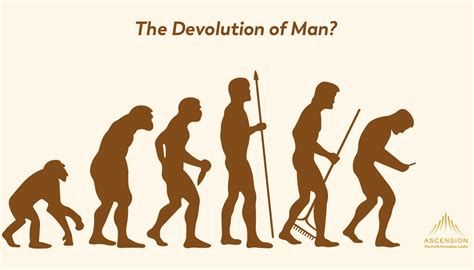
When an individual frequently withdraws from interaction with humans in order to focus on a smartphone, does that improve the wellbeing of humanity? When the information on that smartphone is unreliable or manipulative, does that improve the wellbeing of humanity? When too many trees are cut down and it affects global warming, does that improve the wellbeing of humanity? When economic policy is unbalanced by classism, does that improve the wellbeing of humanity? Whatever the issue, humanists will ask: Does that improve the wellbeing of humanity?

Ancient Mariner

It’s Happening

The musical group ABBA is cutting its first album in forty years as part of a stage performance – as digital avatars! Sigh. . . ABBA, the most popular pop singing group in the seventies, is one of mariner’s favorite singing groups. But as digital avatars? Mariner has never watched the movie ‘Mama Mia’ because no one can replicate the ABBA sound – especially not Pierce Brosnan and Meryl Streep. Mariner listened to a couple of new songs that will be on the album. They still have the same sound but he isn’t sure he wants to see them in their avatar world.

How much sacrifice and damage is digital ‘reality’ causing the normal human experience? Mariner is reminded of occasional events when mirrors and photographs were shown to primitive tribes that were not part of the modern technical world. They reacted fearfully and suspected that their spiritual self had been stolen; certainly the image of self was altered if not stolen. So, too, mariner is suspicious.

Television used to be a handy tool as a remote camera. Mariner was a fan of the Baltimore Colts back in the days of John Unitas; the television broadcast away games. That was handy and appreciated. Now the television camera and telephones have been invaded by surreal reality, loaded with false imagery, false information and false ABBA.

Documentaries have warned us time and again about digital tomfoolery especially when it involves political information or marketing; it is hard to produce a hit movie today without outrageous digital monsters, scenery and abuse to rational comprehension. Where is Bela Lugosi when you need him?

Humans should have known this would happen, that their real human world would be distorted and leveraged. It is only fair, though, because humans have been distorting and leveraging the biosphere for 20,000 years.

It is the spirit and philosophy of humanism that suffers damage. Humanism can be traced to ancient Greek philosophy, which prioritizes human morality. Humanism is the prevalent philosophy embedded in democracy; humanism is the core of compassion; humanism is required for a cohesive society.

But the technical world of computer intelligence feels no need for these qualities. Just as we have plundered the planet’s biosphere, so is computer intelligence plundering humanism. Artificial intelligence is not bound by morality; it is bound only by whether it can be done – without regard or accountability to the human-only world of emotions and 200,000 years of evolutionary responsibility as a tribal species.

Goodbye, ABBA. You are missed.

Ancient Mariner

Life in the fast lane

It is too fast for mariner and other elderly folk. It is common knowledge that the beginning of the twenty-first century is a tumultuous border between a disappearing culture and an emerging one. Computers began the transition seventy years ago, and then the internet emerged. These two advances alone changed how a person views daily reality. In fact, reality itself is subject to revision.

Mariner read in his email today that the hottest market in software-related purchases is to buy and register an avatar that represents you while you are logged on. First, accessing the internet required a simple password; then it was a password and a clue; then the passwords had to be extraordinarily complex; then many services required the names of relatives; then a four-digit pin was added. Taken together these identifications assured others on the internet that the linked person was actually the real person. But now all that folderol will be unnecessary because you will be an animated creature or thing when you are logged on.

Two movies come to mind: The Matrix and Avatar. At least Neo retained his human form in The Matrix. In Avatar Jake Sully had to have blue skin and a funny nose. Facebook has been in the news for its aggressive pursuit of metaverse, a three-dimensional internet that seems lifelike similar to your representation in an online game. When you log on to Facebook, you won’t just be logged on; you will be one of the creatures in a bizarre zoo.

Ironically, mariner is reading a book about how we define factual reality.[1] The central point is that truth is not a finite object. The human perception of truth is just that – an ever changing perception based on what is judged to be the most dependable information at that moment. Unfortunately the computer combined with the internet has loosed Pandora’s Box in the form of unsubstantiated ‘truths’. Social media is the evil device that can use false information flamboyant enough to sway our perception of reality.

The clue that hints at the future culture is the dependence on unsubstantiated information – including an electronic shaping of our interaction with reality. Google makes billions of dollars selling access to our personal profiles, shaping what we know, believe and depend on as a full and truthful reality. Mariner often makes the point that opinion doesn’t need facts; today, manipulating opinion is out of control and is the biggest threat to the new culture.

Ancient Mariner

[1] The Constitution of Knowledge, A Defense of Truth by Jonathan Rauch. Published by the Brookings Institution 2021, ISBN 9780815738862.

GIG Work

Mariner is acutely aware that the Internet and its future iterations definitely will change the world of work. One of the new work models emerging is the GIG world of employment. GIG means that jobs are in response to corporate need rather than in response to career development and all the trappings of lifetime security that the +60 crowd understands.

Gig workers, generally, enjoy the freedom of earning an income providing the link between corporate automation and the corporate need to have personalized service. A simple but common example is food delivery services. With the Internet as a tool, GIG workers have unparalleled  opportunities to live where they want, with their lifestyle from living in cars with an Internet link to living in Thailand to enjoy better benefits than are available in the U.S.

Statistical studies have shown that the freedom to travel, to live eccentric lifestyles, to earn just enough to sustain their lifestyles, is all that’s needed. While it is a world of independence, it suffers from the lack of unions, standardized employment models that provide insurance, retirement and minimum wage. In the United States, a more traditional labor relations society, these shortcomings have become a court issue.

In some respects the GIG movement and the homesteader movement have a lot in common: Society has become an intense competition for assets – not lifestyle. It is not possible for everyone to be successful in the world of dollar security; especially not in the world of self-identity and personal gratification in life.

Mariner discovered a pleasant review of GIG work (that is, not politically abused) on PBS Passport/ROKU. It may be available as a local PBS documentary – mariner doesn’t know since he switched to a smart TV. The program is titled “The World Of Work – The Next Generation: Why I choose to live and work in my car”. It provides an insight into the conflict of pressurized economics versus the desire to live an unencumbered life.

Check it out.

Ancient Mariner.

Consumers have control

Here’s an interesting quote from ProPublica about the two-decade long drought conditions affecting several western states and the disappearing Colorado River:

“A majority of the water used by farms — and thus much of the river — goes to growing nonessential crops like alfalfa and other grasses that feed cattle for meat production. Much of those grasses are also exported to feed animals in the Middle East and Asia. Short of regulating which types of crops are allowed, which state authorities may not even have the authority to do, it may fall to consumers to drive change. Water usage data suggests that if Americans avoid meat one day each week they could save an amount of water equivalent to the entire flow of the Colorado each year, more than enough water to alleviate the region’s shortages.”

It isn’t just cows. Mariner knows for certain that blue crabs in the Chesapeake Bay have a shrinking population; Maine Lobsters are moving to cooler waters in Canada; the wild salmon are threatened by new open faced mining near the Arctic Circle; Australia has drought conditions, too, so there goes ostrich and emu; Has anyone priced bison lately?

What consumers need to do is have cities and towns change their ordinances so consumers can raise rabbits, chickens, geese and invasive species like the Burmese python or the Tegu lizard – both in Florida.

But give up thick, juicy T-Bones or country ribs? It’s a lot to ask but consumers are now in charge of climate change.

Ancient Mariner

Wife versus smart TV

Mariner often publishes the fine poetry his gifted wife produces. He has always claimed she should make a living as a poet. But now, his wife is showing that she is multi-talented. She wrote an accounting of our introduction to a new smart TV. She sent the piece to the Fort Madison Daily Democrat, a newspaper published in Fort Madison. The editor was pleased with her description of our adventure and encouraged my wife to send more articles.

Her article was headlined across the top of the opinion page and took more than half of the page. Below the article is printed in its entirety:


Adventures in the Brave New World of Television

When a thin purple line appeared down the middle of our TV screen, it didn’t seem too ominous.   Within a few days, the thin line became a thick stripe of purple and we knew the end was near.  I suppose we could have watched it that way for a long time–like using up the last of the shampoo in the bottle–but  we had already cut the cord of our DISH subscription, and we were ready to step into the new world that awaited us with a smart TV.

Have you bought a new TV recently?  I went online to read reviews.  We wanted to replace our massive 43 inch screen with one of the same size.  It turns out that 43 inches is no longer considered massive.  It is the size you buy for a second bedroom or a dorm room.  If we wanted to stay with that same puny size, we would not have all the bells and whistles that are available on larger screens that start at the small end at 50 inches and go up to 85 inches or larger.

We decided we did not need all the bells and whistles or have room for a theater experience in our living room,  so we ended up buying  a 43 inch TCL Roku TV that we found at Walmart.  Did I mention that it is a smart TV?  Did I mention that we had cut the cord to our satellite service?  We thought we knew what we were doing as we had used a Roku stick on the old TV to get free streaming TV from the internet.   We plugged in the new TV and it said “Welcome!  Let’s get started setting up your new Roku TV.”  That was a good sign.  Then it asked us to find the internet using our wifi password.   We knew our wifi password and typed it into the box on the TV screen using the remote control.   We were feeling fairly confident that we were just as smart as our new TV.  Then the TV screen said, “Great.  Now let’s set up your Roku Account.  Type in the email address linked to your existing account.”

The Roku stick that went with our old TV was a gift from our California son in law.  He had bought the stick, stuck it into the back of the old TV and set up a Roku account.  We did not know what email he used to set up the account.  We did not want to start a new account as we had saved a number of channels and we did not want to start over from scratch trying to find them again.  The screen said, if you do not know the email that is linked to your Roku account “go to settings/account/help.”  We couldn’t find a settings link anywhere on the TV.  I thought maybe settings was on the Roku account on the internet so I googled Roku.com.  In order to sign in to my account I needed….the email address that was attached to it.

Fortunately there was an 800 number to call if all else failed.  You may be wondering why I did not call my California son in law who had set up the account.  He was at that very moment on an airplane somewhere over the Atlantic Ocean and we did not want to bother him.  Instead we bothered Vineesha, a young woman who was possibly somewhere in India.  She asked for the number on the Roku stick from our old purple stripe TV.  Vineesha stayed on the line while we found the old Roku stick in the mess of cables behind the new TV.  With the number from the Roku stick Vineesha was able to give us the email address linked to our Roku account.  It was my daughter’s email account.

My daughter was not on a plane, but she was far away in California.  I called her to explain that she would be getting the code numbers to type into her computer that would link our new TV to the old Roku account.  She got an email from Vineesha with the code, she typed it in to her computer in California and instantly our Iowa TV said, “Success!   Now there is just one more step.  Type in your Roku password.”

Do you see the problem with smart TV’s?  They are a little condescending in their helpful tone.  They are a little smug in their assumption that we had all of our passwords in place.  Our password was, in fact, flying somewhere over the Atlantic Ocean.

My daughter in California  texted her husband on the plane, he texted the password back to her,  she called us with the password, we typed it in on our Iowa remote control and our TV was finally, finally set up and running.  It did not have a purple stripe down the middle of the screen.  It had all of our channels in place.

So what have we learned?   We learned that it takes a village to set up a smart TV.  A global village that spans the globe across multiple time zones from Iowa to India to California to a transatlantic flight somewhere in midair over the ocean.  It is a humbling experience to realize that your household devices can be controlled from a few lines of code transmitted from thousands of miles away.

And yes, we learned to use old fashioned paper and pencil to write down the email and password to our own TV.   Our wonderful new TV that is smarter than we are.

Multi-talented, indeed.

Ancient Mariner

Removing Polarity

Mariner was challenged to describe how polarity could be overcome. He did imply a few things that need to be corrected but it is true that he did not address ‘how’. So here are a few examples; some already are ideas that have been discussed in the press and documentaries.

֎ About colleges. Already a ‘socialist’ issue in Congress is legislation that would abate or eliminate the cost of a student’s tuition. If college administrators were smart, they would know the swings in population and the races of that population are swinging away from the white, financially capable market served today. However it occurs, colleges will be forced to step back in line with inflation. And students haven’t been asked yet to pay their student athletes’ salaries.

Mariner and his father went to a high school that had a full community college on the top floor so this is not a new idea but it may become popular. Mariner is aware of several small liberal arts colleges that are considering mergers with other colleges, community colleges and even independent locations; examples include public libraries, large corporations, labor unions and other agencies that focus on special careers. One mariner is familiar with is agribusiness classes taught in state department of agriculture offices.

Another idea already being discussed is a student body selected not only by grades but balanced by appropriate representation based on where the students live – even to the extent of which neighborhood. Public schools already abuse representation selectively by using it to keep unwanted students out; the intent of the new college version is to assure representation from every quarter. This instantly would correct several issues:

֎ The implied failure of nonwhites because they have no college degree.

֎ Reduce by a significant amount the tendency for a person to say “I’m successful, you’re not.”

֎ Focused more on public schools, build curricula based on real-life interest and talent, e.g., shape classes around teams of students with a curriculum that includes dealing with life experiences along with the abstract subjects that are typical today. If nothing else, the student experiences what a team relationship is, thereby softening much of the identity conflict present today.

Mariner has been reading about Anabaptists. Each colony is such a tight team that no individual is paid for their labors and everyone receives support from all members. Admittedly, Anabaptists practice a communist economy that would not work in open markets but the United States could use a little ‘communisty’ accountability.

֎ Perhaps another old but good idea is to require that a police officer live on his beat and/or walk the beat. Mariner has made this suggestion before; the change in behavior of the policeman can only be positive. Not that cruisers would disappear but the beat cop would be the first contact for residents and for crime response. With a beat policeman on a response team, incidents like entering the wrong house and killing Breonna Taylor may not happen.

֎ As to reforming the government, mariner is quite positive that regular readers already know his attitude toward American governments. He will not pursue further abuse to his readers in this post.

Ancient Mariner

Polarity

Given the impressive article by David Brooks that has laid the issue of social conflict at the foot of the Democratic Party, there are several issues that lend themselves to why there is class conflict in the United States today. Colleges, for example, have increased tuition costs at a rate close to three times the inflation rate thereby assuring that individuals from lower income families cannot participate in the college requirement for entry into the ‘creative’ class.

Other examples are private schools and charter schools which cull students with talents that may not be academic in nature or even worse, may be racist or are denied attendance because of jurisdictional limitations. Last but not least, is the grading system in the U.S. which focuses on individual scoring but ignores group scoring. (Much of mariner’s work in his career required team-building before progress could be made). Education, it seems, is the defense mechanism to keep mainstream culture from joining the one class that feels it can claim success.

The reader may recall from an earlier post the Trump election victory map that showed 2,547 of America’s 3,056 counties voted Republican but the popular vote was the opposite, showing 81,268,924 for Biden versus 74,216,154 for Donald. Apparently, being successful means living in a city and having a non-agrarian career.

This post could run on and on about cultural structures that have caused conflict in the United States today. For example, one could dig into a sociological argument claiming that the nuclear family emerged because so many children moved from the countryside so they could be a ‘success’ in the city; one could say the image of success began with the GI bill in the 1950s; one could say that not resizing Congressional representation and political gerrymandering has caused a false representation of cultural ideology in government.

It’s all about polarity. Everything on the planet has polarity. Polarity works fine from atoms to stars but when one pole has a lot more of something than the other pole, that’s when sparks fly. If the United States wants to avoid sparks, it must balance social polarity.

Ancient Mariner

Sharia Law

Mariner was reading his daily mail this morning when he read an article about the Taliban takeover of Afghanistan. The new leader of the government encouraged women to join the new government – as long as they followed Sharia Law. This statement is far beyond anything Donald would say. No woman in her right mind would voluntarily support Sharia Law.

Comparatively, Sharia Law is a guidebook for Muslim judges to use when hearing cases brought before them. The cases are similar to cases brought before lower courts in the United States.

While other legal codes regulate public behavior, Sharia regulates public behavior, private behavior, and even private beliefs. Compared to other legal codes, the Sharia Law also prioritizes punishment over rehabilitation and favors corporal and capital punishments over incarceration. Of all legal systems in the world today, the Sharia law is the most intrusive and restrictive, especially against women.

Thanks primarily to Wikipedia and the billionbible website, below is a list of specific mandates included in Sharia Law:

  • Theft is punishable by amputation of the hands.
  • Criticizing or denying any part of the Quran is punishable by death.
  • Criticizing Muhammad or denying that he is a prophet is punishable by death.
  • Criticizing or denying Allah is punishable by death.
  • A Muslim who becomes a non-Muslim is punishable by death.
  • A non-Muslim who leads a Muslim away from Islam is punishable by death.
  • A non-Muslim man who marries a Muslim woman is punishable by death.
  • A woman or girl who has been raped cannot testify in court against her rapist(s).
  • Testimonies of 4 male witnesses are required to prove rape of a female.
  • A woman or girl who alleges rape without producing 4 male witnesses is guilty of adultery.
  • A woman or girl found guilty of adultery is punishable by death.
  • A male convicted of rape can have his conviction dismissed by marrying his victim.
  • Muslim men have sexual rights to any woman/girl not wearing the Hijab.
  • A woman can have 1 husband, who can have up to 4 wives; Muhammad can have more.
  • A man can marry an infant girl and consummate the marriage when she is 9 years old.
  • Girls’ clitoris should be cut.
  • A man can beat his wife for insubordination.
  • A man can unilaterally divorce his wife; a wife needs her husband’s consent to divorce.
  • A divorced wife loses custody of all children over 6 years of age or when they exceed it.
  • A woman’s testimony in court, allowed in property cases, carries ½ the weight of a man’s.
  • A female heir inherits half of what a male heir inherits.
  • A woman cannot speak alone to a man who is not her husband or relative.
  • Meat to eat must come from animals that have been sacrificed to Allah.
  • Muslims should engage in Taqiyya (saying something that isn’t true but supports the Muslim position) and lie to non-Muslims to advance Islam.

There is a moderate wing of Muslims who have incorporated a modern ethical code into their beliefs but still generally accept the principles underlying the Sharia.

In nations which have Islam as national law, at a minimum the Sharia reaches across all nations ending in –stan [seven and Iran which should be a –stan except for a shift in dominant language at the time] .

Yet another new situation in these changing times.

Ancient Mariner

Living like bears

A recent article from Science Magazine reported on a study performed on the west coast of Canada that wanted to know why, over thousands of years there were distinct genetic differences between bears that existed in close proximity. The environment was rich in food and environmental support; bears did not travel much over thousands of years. The geography, in part, has many large islands.

What made the study intriguing was that when the human genome of several indigenous human tribes from the same area was examined, there were genes that appeared similar to those in the bears and, interestingly, in the same part of the genome.

The conclusion by the scientists is that we are closer to our environment than we may think. Over generations, our bodies adapt to the environment – not just globally but regionally!

The finding contributes to the observed quick differentiation between human races that did not intermingle for many thousands of years. The concept even applies to smaller regions where the Irish, Germanic and Spanish tribes lived, for example. What is most fascinating is that the genetic changes for bears, the Irish and racial differences are located in the same part of the genome. Mariner wonders whether there is racial prejudice among the different bear colonies.

Oh well, this is fascinating science but it no longer applies generally to humans. Humans invented ships, planes, cars, highways; intermingling is inevitable. Perhaps, however, class distinction over many generations still may be a cause for adaptation. This is not as presumptuous as it sounds. In the latest edition of The Atlantic, David Brooks wrote an article that suggests that very thing.

David wrote an excellent commentary about what has brought the United States to the circumstances found today. Largely, it is a separation of what is defined as ‘successful’ among the various classes of society. It turns out that assumptions about what defines successful living have a direct effect on the society as a whole. David says that today in the U.S. culturally, the only successful lifestyle is the meritocracy built on being educated, smart, inventive and contributing to society through some form of creativity. He calls it the ‘creative’ class and is largely represented by today’s Democratic Party and very wealthy Republicans.

Society in the U.S. suggests that those who work with their hands, do monotonous work and have no need to indulge in ‘smart’ stuff cannot by definition be successful. This has led to the many variations of class war that are present today. The national turmoil will increase because the creative class is too small to survive in politics – the only frontier where being smart is not an absolute virtue.

So look forward to attacks on big data, socialist issues, tax advantages, science in general and the ideological fantasy of freedom and success – as in guns, law enforcement, racism and any other issue – even to the extent of whether one ‘must’ participate in fighting the pandemic that is now playing out in more conservative states.

Why can’t a gun-toting stevedore be seen as successful as a computer programmer?

Ancient Mariner