Trans-Pacific Partnership (TPP) Corporations Paid Congress Richly for Fast Track Vote

The mariner’s post is a word-for-word copy from thegaurdian, a British newspaper with operations in Australia, Canada and the United States. It was written by C Robert Gibson and Taylor Channing. The links can be identified by an underscore. If you would like to pursue a link, go to:

http://www.theguardian.com/business/2015/may/27/corporations-paid-us-senators-fast-track-tpp

The article contains concerns of organizations, economists, political supporters of Obama and others who fear a fast track of the trade agreement will not represent the best interests of working people in the US and other countries as well. Fast tracking TPP means there will be no opportunity to modify the agreement. Further, how passage was bought in Congress shows how little, how very, very small, is the influence of the common citizen. Candidates stand for election to Congress only for one reason: to become rich – or richer. To be a statesman and show concern for any aspect of the US and its citizenry is intentionally suppressed. The article follows:

“A decade in the making, the controversial Trans-Pacific Partnership (TPP) is reaching its climax and as Congress hotly debates the biggest trade deal in a generation, its backers have turned on the cash spigot in the hopes of getting it passed.

“We’re very much in the endgame,” US trade representative Michael Froman told reporters over the weekend at a meeting of the 21-member Asia-Pacific Economic Cooperation forum on the resort island of Boracay. His comments came days after TPP passed another crucial vote in the Senate.

That vote, to give Barack Obama the authority to speed the bill through Congress, comes as the president’s own supporters, senior economists and a host of activists have lobbied against a pact they argue will favor big business but harm US jobs, fail to secure better conditions for workers overseas and undermine free speech online.

Those critics are unlikely to be silenced by an analysis of the sudden flood of money it took to push the pact over its latest hurdle.

Fast-tracking the TPP, meaning its passage through Congress without having its contents available for debate or amendments, was only possible after lots of corporate money exchanged hands with senators. The US Senate passed Trade Promotion Authority (TPA) – the fast-tracking bill – by a 65-33 margin on 14 May. Last Thursday, the Senate voted 62-38 to bring the debate on TPA to a close.

Those impressive majorities follow months of behind-the-scenes wheeling and dealing by the world’s most well-heeled multinational corporations with just a handful of holdouts.

Using data from the Federal Election Commission, this chart shows all donations that corporate members of the US Business Coalition for TPP made to US Senate campaigns between January and March 2015, when fast-tracking the TPP was being debated in the Senate:

Out of the total $1,148,971 given, an average of $17,676.48 was donated to each of the 65 “yea” votes.

The average Republican member received $19,673.28 from corporate TPP supporters.

The average Democrat received $9,689.23 from those same donors.

The amounts given rise dramatically when looking at how much each senator running for re-election received.

Two days before the fast-track vote, Obama was a few votes shy of having the filibuster-proof majority he needed. Ron Wyden and seven other Senate Democrats announced they were on the fence on 12 May, distinguishing themselves from the Senate’s 54 Republicans and handful of Democrats as the votes to sway.

In just 24 hours, Wyden and five of those Democratic holdouts – Michael Bennet of Colorado, Dianne Feinstein of California, Claire McCaskill of Missouri, Patty Murray of Washington, and Bill Nelson of Florida – caved and voted for fast-track.

Bennet, Murray, and Wyden – all running for re-election in 2016 – received $105,900 between the three of them. Bennet, who comes from the more purple state of Colorado, got $53,700 in corporate campaign donations between January and March 2015, according to Channing’s research.

Almost 100% of the Republicans in the US Senate voted for fast-track – the only two non-votes on TPA were a Republican from Louisiana and a Republican from Alaska.

Senator Rob Portman of Ohio, who is the former US trade representative, has been one of the loudest proponents of the TPP. He received $119,700 from 14 different corporations between January and March, most of which comes from donations from Goldman Sachs ($70,600), Pfizer ($15,700), and Procter & Gamble ($12,900). Portman is expected to run against former Ohio governor Ted Strickland in 2016 in one of the most politically competitive states in the country.

Seven Republicans who voted “yea” to fast-track and are also running for re-election next year cleaned up between January and March. Senator Johnny Isakson of Georgia received $102,500 in corporate contributions. Senator Roy Blunt of Missouri, best known for proposing a Monsanto-written bill in 2013 that became known as the Monsanto Protection Act, received $77,900 – $13,500 of which came from Monsanto.

Arizona senator and former presidential candidate John McCain received $51,700 in the first quarter of 2015. Senator Richard Burr of North Carolina received $60,000 in corporate donations. Eighty-one-year-old senator Chuck Grassley of Iowa, who is running for his seventh Senate term, received $35,000. Senator Tim Scott of South Carolina, who will be running for his first full six-year term in 2016, received $67,500 from pro-TPP corporations.

“It’s a rare thing for members of Congress to go against the money these days,” said Mansur Gidfar, spokesman for the anti-corruption group Represent.Us. “They know exactly which special interests they need to keep happy if they want to fund their reelection campaigns or secure a future job as a lobbyist.

“How can we expect politicians who routinely receive campaign money, lucrative job offers, and lavish gifts from special interests to make impartial decisions that directly affect those same special interests?” Gidfar said. “As long as this kind of transparently corrupt behavior remains legal, we won’t have a government that truly represents the people.” ”


The mariner has advice for anyone living in US-held territory: You’re on your own – finance, health, environment, safety, security, and lifestyle. There are many countries where life is more pleasant and more secure. You may consider moving to another country. In every bulleted item below, the US is dropping in rank.

  • The US ranks 36th in education. At the top of the heap were the usual from East Asia: Singapore, Taiwan, South Korea, and three Chinese cities—Shanghai, Hong Kong, and Macao. Education systems in these countries, including college and post graduate studies, are free. The United States trailed nations such as Estonia and the Slovak Republic.
  • The US ranks 38th in health care, just ahead of the Slovak Republic. France is number one followed by Italy, San Marino, Andorra, Malta and Singapore.
  • The US economy ranks 12th in terms of GDP, population and unemployment.
  • The US ranks 33rd in environment behind Belarus.
  • The US ranks 26th in life expectancy behind the Slovak Republic and Denmark.

Don’t look for improvement any time soon. If all you want is money, run for Congress.

Ancient Mariner

Po Pouree

Know Thyself – Read the Comics

Today, Sunday May 24, 2015, the mariner’s local newspaper defined him, in his entirety, with only two comic strips, one following the other on the same page. The first strip was Peanuts, a rerun from 1968; the second was Dilbert.

The mariner has maintained throughout his life that comic strips and single-pane cartoons are the most important section of the newspaper. The comics have a sly way of slipping through one’s prejudice, ignorance, and lack of emotional maturity to plant the seed of a new insight. Think for a moment how comics reflect basic angst that often affects each of us. Think for a moment how comics can reflect an entire segment of our culture in one cartoon. Think for a moment how narrow minded we would be if we could not laugh at ourselves. Simultaneously, comics are irreverent, biased, simplistic, insightful, hilarious and wise.

Each of us is a complex conglomeration of evolution that began billions of years ago. It is no exaggeration that we entered life as no more than a cluster of chemicals that could replicate and today we are warm blooded, mammalian, intelligent (relative to other creatures although we lack the skills they possess) and now we stand on the edge of a future that will allow us to manage our own evolution. God forbid.

We have brains that use deduction and induction in an unbelievably powerful way, reducing complex knowledge to a few simple terms; who defined motion across the entire universe with the formula E=MC2 ? Each of us can read a thousand words in a momentary facial expression. Each of us – well, most of us – can deduce years of history from a single cartoon. As complex as we are, each of us can be fully defined in one comic strip with faster speed and more acuity than if defined by a psychiatrist.

John Nash

Tragically, John Nash and his wife Alicia were killed in an automobile accident yesterday. Do you remember the movie A Beautiful Mind starring Russell Crowe as John Nash? The mariner became a big fan of the movie, John Nash, and the subtleties of game theory. Nash won the Nobel Prize for Mathematics in 1994. Game theory studies interactive decision-making, where the outcome for each participant or “player” depends on the actions of all players individually. Consequently, whether an individual, business, government or sewing circle, we play game theory in virtually every activity – even buying groceries, a game between us, the market and the producers. Nash was able to prove mathematically that ‘equilibrium’ is an actual state of being at all times, like a chess board is always present no matter who wins the game or how they play it. However, the chess board limits squares in such a way that a player must consider what the opponent’s strategy is in order to make his or her own best move.

The most familiar demonstration of game theory is applied in virtually every cop show on television. It’s called The Prisoner’s Dilemma:

The police interrogate two suspects separately, and suggest to each that he or she should snitch on the other and turn state’s evidence. If the other does not snitch, then you can cut a good deal for yourself by giving evidence against the other; if the other snitches and you hold out, the court will treat you especially harshly. Thus, no matter what the other does, it is better for you to snitch than not to snitch — snitching is your uniformly best or ‘dominant’ strategy. This is the case whether the two of you are guilty or innocent. Of course, when both snitch, they both fare worse than they would have if both had held out; but that outcome, though jointly desirable for them, collapses in the face of their separate temptations to snitch.

The mariner apologizes for being pedantic; his dominant strategy was to share why John Nash is important to everyone. The mariner snitched.

Oh, Those Promiscuous Neandertals

The following is an excerpt from Scientific American letters to the editors. The mariner sent it to a few family members in an email. They just will have to read it again. He included the writer’s response because it shows how we can be caught up in our own value system without including peripheral knowledge simply because it doesn’t fit easily into our values:

When the mariner was in his thirties, the scientific explanation for red-headed Homo sapiens was due to occasional inter-species sex with neandertals. It has been proven by DNA studies that we do have a small piece of neandertal in us. However, “occasional inter-species sex” has been thrown out. Read the response to a woman who wrote of neandertal ‘dalliances’ in her February article in Scientific American.

“OUR MURDEROUS ANCESTORS
Kate Wong’s suppositions about what brought about neandertals’ extinction in “Neandertal Minds” are contrary to the known history of anatomically modern Homo sapiens (that is, us). Her assertions that neandertals were just out competed and that the 1.5 to 2.1 percent neandertal DNA within people outside of Africa is the result of occasional “dalliances” would be historically unlikely.

The most likely scenario would involve waves of immigrating anatomically modern humans taking over land and causing death by plunder and disease, as Europeans discovering the New World did. And it would be naive to think that our neandertal DNA was the result of consensual dalliances when rape went hand in hand with the pillage of every other civilization.

It would be wise for us to give up the notion that we are, or our ancestors before us were, a benevolent and sharing species.

ROBERT E. MARX
University of Miami Miller School of Medicine”

Ancient Mariner


The Brain Knows More than it can Handle

Note that this post is in the musings category; neither advocacy nor nostalgia is present. Rather, it is the brain’s incapacity to integrate percentages with empirical reality that has always intrigued the mariner. He was reminded of this recently when the mariner and his wife sent a birthday card to our son advising him that every year that passes, he grows closer to the mariner’s age.

Empirically, this is not true – our ages remain the same number of years apart in arithmetic terms. However, convert the difference to a percentage and one can make the case that our ages are converging.

Hypothetically, let’s say the mariner’s son was born when the mariner was 20 years old. On the son’s 5th birthday, he is 20% as old as his father. On the son’s 10th birthday, the son is 33% as old as the mariner. On the son’s 40th birthday, he is 66% as old as his father. As a percentage, the son is growing old faster than his father!

Humans can understand percentage values only after their brains interpolate percentage values to an approximate empirical reality, that is, an absolute event. The mariner knew a person who believed that when the weather report said 30% chance of rain, it meant the person would receive 1/3 of all the rain that would fall – an absolute value.

This inability to rationalize probability in terms of absoluteness is what makes lotteries work. Simply say, “You gotta play to win,” And the brain thinks that if one plays, one wins. Never mind that as a probability, one may win once in 17 million tries. But even that is not guaranteed. One may win 17 million times or may never win at all or win any number in between. That’s the problem: probability is not empirically guaranteed. The brain is much more comfortable coping with the absoluteness of empirical reality.

The brain can override probability (percentages) very easily by replacing a percentage with one that is an unrelated empirical situation that has completely different probability. A common example is ignoring the probability of an automobile accident by responding to the empirical urge to answer a text on the cell phone. The odds that someone will be on the other end of the call are very high both empirically and statistically. The absoluteness of the texting seems more dependable than the absoluteness of having an accident. A fair trade off, wouldn’t you think?

The obvious conclusion is that the brain has difficulty evaluating percentages. The brain is much more comfortable comparing empirical relationships. True, over evolutionary time, the skill of evaluating empirical absoluteness is more useful, else, lions, tigers and panthers would have eaten all our ancestors while the ancestors calculate the probability of whether they actually will be eaten.

One may argue that the brain actually accepts percentages and alters empirical behavior. One can train oneself not to respond to the cell phone while driving. An intellectual victory but not an empirical one; a dog will accept heeling intellectually but, all things said empirically, would rather be running off doing what dogs like to do best – answer the cell phone.

Over the years, mariner has given countless presentations to managers, planners, project teams and others who must develop decisions that most graphically affect the empirical world but in the beginning are decisions based on percentages, statistics, base expectancy and gut feelings. Human society cannot live without probability. Still, probability is a foreign value until it is interpreted as an absolute event.

Think of all the things that face probability in your life – starting with the color of your eyes and hair and whether your middle finger is as long as your ring finger. What is the probability that you would meet the person you married? No judgment intended, what is the probability that you did not meet the person you should have married? How fortunate are you to have the job you have? You may never have had the chance for that job if you reacted to 30% of the rain that was going to fall on that fateful day.

The truth is, probability shapes our reality in every way – even to the fact that life would not exist without the moon. How fortunate we are that, against all probability, the pieces of Earth that formed the moon did not fly off into a scattered belt of asteroids – as percentages would have predicted. We are not conscious of the influence of probability because the brain does not notice probability until it is converted into an empirical event. What if you were told that the son’s age is 66% of his father’s age? Does that help with your understanding of the family relationship?

What is the probability that this post is important to the empirical circumstances of its readers? Probably not worth mentioning but the mariner had a good time writing it – a victory for empirical judgment in spite of probable value. Just don’t call him while he’s driving.

Ancient Mariner


Lingering Themes

The mariner hasn’t written much lately. It’s a combination of spring gardening labor and the tsunami of events around the world. There are several old sayings that go along the lines of “What you think isn’t worth a spit in the ocean.” Sadly, that is true. The only tool any one of us has is our vote and our desire to volunteer beyond a normal commitment.

When Justice Roberts said money is the same as speech, he cleared the last obstacle to oligarchy. Some can speak much more loudly than others.

Well, one has seen the benefit of voting. The mariner wonders how untrustworthy his fellow voters have been given election results and the fact that millions follow Fox Broadcasting, Hannity, Rush Limbaugh and Glenn Beck. Laura Calder doesn’t bother the mariner because all she can do is character assassination; little of what she says has content. Then there’s Sarah and Michele Bachman. Only the presence of Jon Stewart has kept us sane – and Jon ends his show August 9th.

We will see what the future brings as 22 republicans and 1 democrat vie for the next Presidential term. The mariner says one democrat because the few democrats running beside Clinton are more interested in raising liberal issues and keeping Hillary as far left of center as possible. In retrospect, history has shown that the Clintons are survivalists first, pragmatic centrists second, and ideologues last.

If you are a regular reader, you know that the mariner is firmly opposed to fast tracking the TPP (Trans Pacific Partnership). The reason that progressives, unions and liberal organizations like AARP and women’s advocacies are opposed to fast tracking is the fact that no one in the negotiations represents the common man; the worker; the issues of minimum wage and benefits.

The argument presented by Obama is that TPP will create more jobs in the US and provide more opportunity for export – not to mention that most American workers won’t make much more than minimum wage. There is no opportunity to discuss worker issues similar to equal pay, employee-owned, retirement benefits, profit sharing and other economic devices that will lift the middle class to where it belongs.

Another issue in the news, that sadly shows the nasty side of capitalism, is the number of oil wells and railroads built within 1,000 feet of ICBM silos in North Dakota. Properly, this alarming situation can’t be represented here. The mariner suggests you watch Rachel Maddow’s video report at

http://www.msnbc.com/rachel-maddow-show/watch/oil-trains-alarmingly-near-nuclear-missiles-444408387996

Six workers have died due to lax (and illegal) safety regulations.

Lastly, climate change speaks more loudly as the days roll by. Nothing will be done by the United States until the ranking democratic member (Barbara Boxer (D)) becomes chairman of the Senate Committee on Environment and Public Works. Currently the chairman is Jim Inhofe (R) Oklahoma – the senator who threw the snowball in Senate chambers, who scoffed at the existence of climate change. Does the mariner sense the influence of oil contributions? Inhofe received a 5% approval rating from environmental advocates.

Enough of dipping one’s toe into the tsunami wave of current events. Perhaps the mariner is safer just limiting his engagement to spitting.

Ancient Mariner


Wheat, Rice and Corn

Wheat, rice and corn are considered the three food sources that enabled humans to develop as a species, to establish advanced cultures, and to begin economic relationships. Wheat has been identified as a primary food source for Asia, Europe and the Middle East as long as 12,000 years ago. Ancient Egyptians became renowned bakers.

Rice was and is the mainstay food product that sustained the Far East and India since 4500 BC. In the Western Hemisphere, maize, an ancestor of corn, was a primary food source and a major trade item since prehistoric times.

Each of these starchy grains provided protein and carbohydrates that enabled our ancestors to live healthier lives and enabled surpluses to be traded, establishing early economic relationships long before anyone had an idea about starting a nation or hassling with trade agreements like the Trans-Pacific Partnership (TPP).

Today, however, wheat is bad for one’s health. Corn in all its forms is bad for one’s health. Rice is bad for one’s health.

What happened? Have humans fooled themselves for thousands of years that these grass seeds were good for them?

The mariner is chary about dieticians and food standards. Dieticians have more in common with the weatherman then they may think. Folks like to point at overweight people, people with diabetes or intestinal issues and celiac simply to say we eat too much.

Many say supplements are necessary; others say supplements do nothing but pass expensive urine. Don’t eat red meat. Hasn’t the mariner been taught all his life that the protein from red meat is what allowed the prehistoric human brain to grow?

Now we must be vegetarians and vegans – huge rabbits. Rabbits don’t live very long. Ever try to eat a BLT without the bread? If we want to live longer, we could go to sea and eat what sea turtles eat. The record life span for a sea turtle is 152 years. There is speculation that people who eat sea turtles live longer.

New science completely obfuscates what we should eat. It is de rigueur to point to genetic causes, e.g., “Your family history is prone to heart disease, diabetes, obesity, peanut allergies, etc.” Some years ago, the mariner’s doctor suggested he did not process Magnesium very well and he should take a supplement. According to dieticians, halibut, mackerel, boiled spinach, bran breakfast cereal, and almonds are the richest sources of Magnesium. This seems an acceptable diet until one is told the amounts one would have to eat to meet minimum daily requirements. That’s another conundrum: minimum daily requirements. What happens to the mariner if he misses the minimum daily requirement for vitamin K? Is there a remedy?

Recently, anthropologists have sought out isolated societies where everyone lives to ages approaching 100 and beyond. Places like islands, northern Russia, and mountain cultures. There are no vitamin pills so a shortage of vitamin K can’t be too bad.

To be serious for a moment, the anthropologists agree on two points: If one’s ancestors, especially from both maternal and paternal histories, lived a long time, chances are he or she will live a long time, too. Secondly, if one lives in a stable culture without strife (unlike starting wars and crooked banks) and one has a legitimate purpose in the society well into one’s 80’s and 90’s, this reduces the stress on one’s sense of self. Scientists would translate this phenomenon into less production of oxidants, less anxiety and depression, and, of course, the advantage of one’s DNA bred under constrained circumstances.

Another theory about stretching one’s healthy life is that, as a species, our Paleolithic genetic structure suggests that we should be healthy and vigorous, no matter what we eat, until that time we call ‘midlife crisis’. From that point on, staying healthy becomes more and more difficult. The mariner muses that were there no medical industry, the death rate would jump in one’s forties and most would not see the age of 65. There are always a few who live to ripe old ages but statistically, they would be a rarity.

Forgetting all the snake oil salesmen and fitness narcissists, there seems to be something more important to our health than what we may eat. Given we are bound to our ancestral influences, and given age is an undeniable influence, it seems that the most influential element on our health is, for lack of a better word, “happiness”. We do not live in happy times. Our income is not secure; our role in life is not secure; prejudice abounds against each of us. The future is more unknown and threatening to our society than ever before. There is pressure on each of us to win or be tossed aside.

But that’s another post. The mariner is going back to the kitchen to finish his pancakes with berries and whipped cream – a bit of happiness.

Ancient Mariner

About Rights

The mariner was skimming through internet news sources when he came upon the following news item:

“For the first time in U.S. history, a supreme court has granted a writ of habeas corpus on behalf of two lab chimpanzees, effectively recognizing them as legal persons. While the future of the chimps has not yet been decided, it’s a huge step forward in establishing personhood status for highly sapient animals.

http://io9.com/a-new-york-judge-has-granted-legal-person-rights-to-chi-1699160192

The chimps, Hercules and Leo, are being used for biomedical experiments at Stony Brook University on Long Island, New York…..Animals granted legal personhood status would be subject to many of the rights naturally afforded to human beings, including the right to not be detained without cause, to not be experimented upon, or to have to perform against their will.”

This is the latest attempt at giving smart animals their rights. Incidents already exist for circus elephants, seals, walruses and whales, pets who are heirs, and, for common animals used for pets or consumption, there are innumerable cases involving specific treatment or abuse. A recent issue is the sow stalls for pigs that are pregnant. A corpse has more room in a casket.gestation cages copy

[A gestation crate, also known as a sow stall, is a metal enclosure used in intensive pig farming, in which a female breeding pig (sow) may be kept during pregnancy, and in effect for most of her adult life. The enclosures measure 6.6 ft × 2.0 ft (2 m × 60 cm) and house sows that weigh up to 900 lbs (408 kg). Source: Wikipedia]

Chris Christie(R) , New Jersey’s Governor, was about to sign a bill banning this practice when he backed off because Iowa Governor Terry Branstad(R) and the American Future Fund (pronounced Koch) asked him to veto the bill. The mariner assumes Iowa pig farmers use sow stalls, too.

Australia has banned the use of sow stalls.

Back to the chimpanzee habeas corpus, the judge removed the habeas corpus language the next day but the lawsuit still will be heard with the original intent. The mariner is befuddled because sapient animals, as smart as they are, don’t read. Further, they don’t speak human languages, although a complaint was filed by a neighbor against a parrot that would not shut up. Does a chimpanzee know its rights? Does a pig know its rights? They are at the mercy of the humans that own them. Would they prefer not to be around abusive humans? Of course. However, preferences are not rights. The mariner imagines that until the African slaves could speak English and observe white behavior, they also had preferences but no rights and likely suffered similar abuses.

He has the thought that if the chimpanzees knew about all the wars of history, all the killing, slavery, stealing, murders, rapes, cheating and family abuse, the chimps may think twice about having human rights. The advantage of being sapient but not human is that bad happenings are more rational than they are for humans. Sapient species don’t need presidents, congress, courts, dictators, terrorists or money. Sapient species don’t need torture or death, either – Homo sapiens’s contribution to their lives.

Abuse goes beyond hands-on maltreatment by humans. Humans also have little regard for the ecosystems that are required by every kind of specie. For many years, developers in Maryland bought estuaries of the Chesapeake Bay, backfilled them and built houses and factories. Finally, but too late, the legislature passed laws that restricted conversion of estuaries. The Chesapeake Bay, once an unbelievably rich source of marine life, is no more.

The mariner had another thought about habeas corpus. It won’t be too many decades before sapient robots exist. Granted, robots will be manufactured with specialized intelligence but in some ways, they may be more sapient then we are. We ourselves may be part robot! Perhaps we should go to the movies and watch a few of these futuristic robot movies. For the mariner, the Matrix is scary enough!

Ancient Mariner


The Gardens

It is mid April, now. Don’t put a lot of meaning into that as far as Iowa weather is concerned; Southern Iowa, in particular, is quite fickle. Planting zones generally classify Iowa as a zone 4. In reality, it is zone 2-6.

This spring is well behaved. The flower gardens are poking herbaceous noses through the soil – causing the mariner to think hard about whether or not he planted it and what is its name. This year the mariner built a table with grow lights for starting the annuals. Being warned about the probable rise in vegetable prices, the mariner plans to plant a full array of vegetable families from potatoes, shallots and beets to six different herbs, tomatoes, garlic, spinach, squash and some others he doesn’t remember. Does anyone remember “canning”?

The mariner knows gardeners who can name every plant, how many leaves it has, when it blooms, when it’s ripe and know the vagaries of fertilizers and watering schedules. All this is kept in ledgers. He is proud of these gardeners because they go the extra mile to turn their garden into a reason to engage in bookkeeping. Alas, the mariner is no bookkeeper. If he were, he would be fired.

The mariner takes the intuitive route. Some sweet yellow banana peppers with onions seems tasty. So he started several pots of banana peppers under the grow lights. Rhubarb always is a treat so it has a permanent place in the flower garden. Same with potatoes; they’re in the flower garden, too.

The apple and cherry trees are in full bloom. They give nice color to the back yard. The redbud looks better every year.

Last year, the mariner’s brother-in-law gave him an odd and somewhat flimsy plant that didn’t seem to be something one would notice among larger plants and flowers. Surprisingly, by autumn’s end, it had spread itself daintily among the roses, irises and marigolds that were near it. The mariner was pleased it took the Iowa winter in stride and this year already is spreading small dainty leaves. Even though the flowers also are small and dainty, they catch one’s eye (Indian feather plant (Gaura lindheimeri)).

In about three weeks, when all the desired plants have gained height and presence, the mariner will take on the task of hands-on cleaning of the gardens. No weed bothers him as much as Creeping Charlie! Every other weed seems more civil than Creeping Charlie. Then there are the rabbits; he mentioned that in another post. Putting up the fence is the next task as spring takes over. Just a reminder: the last frost date is May 8th. Cross your fingers, count your beads and do a good deed. Buy a voodoo doll – maybe we’ll make it.

Ancient mariner

Spring

Spring is the season of hope because the Earth has come back for the summer. Spring, like fall, introduces a mountain of work. Spring cleaning, repairing and cleaning the house inside and out, taking a first look at your flower garden to see what’s left after the rabbits have used it for a cafeteria during the winter. How many shallots survived the squirrels?

In the mariner’s town, there are laws that say all dogs must be on a leash or well penned. Cats don’t settle in as unofficial vermin hunters like they do back on the farm. Coyotes are not encouraged; the largest owl is the barn owl – good for mice, voles, etc. but too small for rabbits and squirrels. One rabbit had the audacity to spend the winter in the flower garden leaving behind evidence of a small warren behind an Iris. A foot away, beside a pile of rabbit pellets is a Spirea eaten to the ground. By now, the Spirea should be four feet tall.

Consequently, the mariner must build a rabbit fence around the back yard. Squirrels are on notice – he owns a .177 caliber air rifle with a great scope set to 30 yards.

In his town, the Ash Borer wasp has invaded much like ISIS: take no prisoners. 80% of the trees in the town are old Ash Trees. The mariner has six. Three already are stressed.

The hardest work for these old sea legs is standing on a ladder. Painting, trimming trees, cleaning gutters, topping fruit trees, all are an accident waiting to happen. If the ladder would sway a bit, like a boat does, it would be much easier – but he does all the swaying. There definitely is opportunity for a chaotic moment!

The mariner bought a chain saw that is on the end of a shaft that can extend to ten feet. That makes incidental trimming possible. When he was training to be a sailor, he learned how to rig a bosun’s chair to climb the mast. He thinks this may not work among the branches of an Ash tree. The mariner may have to pay someone to drop the infected trees – something he would have done himself only a decade ago.

There is a phenomenon in his town. There is a constant hum of two-cycle gas engines every day, all day. It starts at 8:30am and is ceaseless until well after sunset. The source is lawnmowers, leaf blowers, trimmers, cultivators, chainsaws, and power washers. It started officially on April 11. The mariner’s good friend and neighbor started the season by cutting his lawn. The mariner walked over to him to complain that he has broken the silence and for the next five months, the two-cycle drone will be endless.

The neighbor acknowledged this with a grin and added, “I know. Now my next door neighbors will have to cut their lawns so they don’t look ragged next to mine.” He knew, of course, as all the mariner’s neighbors know, the mariner lets his grass grow to four or five inches because the mariner thinks grass should look like grass rather than someone’s living room carpet. The mariner has always suspected keeping grass under control is some form of psychological power; grass is easier to control than other things in life.

The King of droning noises is the dirt track at the Fairgrounds. Every weekend, modified street automobiles without mufflers race around the track all evening. It seems almost like a ritual. All week the two-cycles drone as if paying tribute to the raucous noise at the dirt track.

The mariner lived on a country farm too long. Then, one could actually hear birds singing during the day; on many days, he could actually feel the silence. What the mariner needs is a good passage sail – maybe from St. Croix to Barbados, stopping by St. Kitts and Martinique along the way.

Ancient Mariner

Water

The mariner is a member of Food and Water Watch, an advocate for clean, fresh water around the world, making water available to all human beings, and opposed to privatized management of food and water policy, that is, food and water should be managed by governments, not corporations. Food and Water Watch (FWW) is a watchdog for all sorts of wasteful food and water practices, especially the pollution of the fresh water that is available and the unnecessary cost of  ‘bottled’ water. Corporate advertizing contends than bottled water is better for you than tap water – which is not true, and also has a high profit margin.

Last night he watched C-SPAN coverage of a FWW conference. The main speaker was Maude Barlow, who was instrumental in forming FWW in 2005. Ms Barlow is Chair of the Board of Directors. She has a remarkable reputation. Ms Barlow has a standing in food and water issues similar to that of Martin Luther King in the Civil Rights movement or Ralph Nader in auto safety.

The mission statement for FWW is:

“Food and Water Watch champions healthy food and clean water for all. We stand up to corporations that put profit before people, and advocate for a democracy that improves people’s lives and protects our environment.”

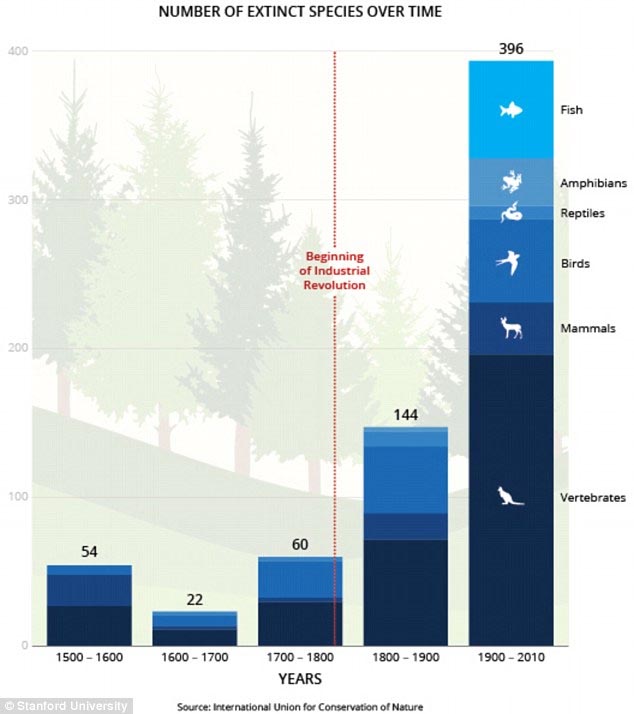
An environmental phrase often heard is climate change. Food and water issues are intertwined with climate change. For example, the excessive amount of carbon dioxide settles into the world’s oceans. This causes acidification of ocean waters that in turn kills just about everything that lives in the oceans. In her book, The Sixth Extinction, Elizabeth Kolbert points out that ocean acidification is the cause of the Permian extinction (third great extinction). 95% of all marine species went extinct. Coral reefs did not return for 10 million years.

Very much in the news is the debate over fracking (hydraulic fracturing) – the process of forcing natural gas to the surface by sending water underground at high pressure. Similar to the damage caused by strip mining for coal, the water doesn’t stay where it’s put and turns up in all the wrong places. Even the Great Lakes, the largest source of fresh water in the world, are not immune to fracking pollution. Many of us may have seen the news clip where a man could set his kitchen tap water on fire.

FWW looks into many food situations. In her presentation, Ms Barlow said everyone should stop eating meat because it is not an efficient use of water, given the amount of meat per unit of water the animals require.

FWW is an advocate of home grown organic vegetables. Have you planted your bell peppers yet?

The mariner could go on but everything you want to know – or in some cases would rather not know, is on the FWW website. The material is presented well and if the reader has never thought about the big issues in food and water, it will be enlightening.

http://www.foodandwaterwatch.org/about/

He ends with one statistic: Not counting the ‘permanent’ ice at the poles, only 1% of Earth’s water is drinkable.

Ancient Mariner

How to Fix a Declining US Economy

Corporations and the federal and state governments have trained us well. In the United States, it isn’t in good taste to mention progressive or socialist ideas about economics. This is not the case with conservative capitalism, which the media reports on daily; consider the love/hate relationship with the Tea Party. This imbalance in propriety is one of the signs that the US is in financial trouble. So are its citizens.

In 1936, the US had a 100% tax for any income over $25,000 (about $350,000 today); today, the highest tax rate is 36%. Only 11% of the US work force belongs to a union, down from 28% in 1954. Bankruptcy laws have been revised so they can be used as a tactic to close one business and open another identical business – leaving all the employee benefits behind. As corporations become multinational and with the advantage of computers and modern telecommunications, a corporation can now relocate to a country where the salaries, taxes and cost of living are less expensive. The American generation still in school will not have enough jobs to go around.

By its nature, capitalism accumulates profit. The news programs tell us that 1% of the population holds 37% of the nation’s wealth and 74% of all stock holdings. The rich are getting richer and simultaneously, the poor are getting poorer. These statistics are common knowledge – and still getting worse.

In the 1950’s credit cards were rare. Most worker salaries were sufficient to stay out of serious debt, buy the home and car, pay for insurance and taxes and even send children to college without the children carrying the cost. The last sixty years slowly forced the middle class into serious debt because they tried to continue the American standard of living. But they continued by using credit cards and home refinancing to sustain purchase power. The reason was that salaries were not keeping up with the cost of living. Salaries have, in real spending power fallen over the last 60 years while at the same time, business profits have climbed at a 45° angle. All this extra profit has been accumulated by the 1 percenters.

90% of US citizenry is suffering from dropping wages, being forced to take lower paying jobs, and leaving college with tuition debt that predicts never escaping serious indebtedness. Just because employment is dropping to a respectable 5% doesn’t mention the loss of benefits, hours, misplaced job skills and salaries that are well below their economic capability.

It is obvious to everyone that the Congress is dysfunctional – certainly not in line with the growing anxiety of American citizens. The Republican party, at this moment of severe financial vulnerability to citizens, wants to cut taxes, stop entitlement benefits and relieve corporations from oversight by the EPA, FAA, FDA and any other department that gets in the way of corporate profit – American health and the planet be damned.

We are not in sight of the end of the 2008 recession – not by years. Corporate plans and legislators bought by the corporations plan to abandon the US because it is an old market. The fast money is gone. The new trade agreements with BRIC and China’s new super bank will push the dollar aside. The dollar will not buy as much as it used to.

What can be done to turn away from slow depreciation of our country? Perhaps the one most dynamic act than can be taken is to remove the capital model from our businesses. Business should allow the workers – to the last man – to have a vote on how the company is run, what it makes, the quality, etc. In other words, let the workers do the job of the Board of Directors. It’s called Democratic Socialism. We take charge of our country’s gross national product. If the employees don’t want to move to Bangladesh, they don’t have to. Stopping the escape of corporations in their tracks will boost the economy immediately. The new model for businesses is called Employee Co-ops.

Ancient Mariner