Old is Tough

A very old man lay dying in his bed. In death’s doorway, he suddenly smelled the aroma of his favorite chocolate chip cookie wafting up the stairs. He gathered his remaining strength and lifted himself from the bed.  Leaning against the wall, he slowly made his way out of the bedroom, and with even greater effort forced himself down the stairs, gripping the railing with both hands. With labored breath, he leaned against the door frame, gazing into the kitchen. Were it not for death’s agony, he would have thought himself already in heaven. There, spread out on newspapers on the kitchen table were literally hundreds of his favorite chocolate chip cookies. Was it heaven? Or was it one final act of heroic love from his devoted wife, seeing to it that he left this world a happy man?  Mustering one great final effort, he threw himself toward the table. The aged and withered hand, shaking, made its way to a cookie at the edge of the table, when he was suddenly smacked with a spatula by his wife.

“Stay out of those,” she said. “They’re for the funeral.”


A little, silver-haired lady calls her neighbor and says, “Please come over here and help me. I have a very difficult jigsaw puzzle, and I can’t figure out how to get started.”

Her neighbor asks, “What is it supposed to be when it’s finished?”

The little lady says, “According to the picture on the box, it’s a rooster.”

Her neighbor decides to go over and help her with the puzzle. When he arrives, the old lady shows him the puzzle spread out all over the table. He studies the pieces for a moment, then looks at the box, then turns to her and says:

“First of all, no matter what we do, we’re not going to be able to assemble these pieces into anything resembling a rooster.” Then he takes her hand and says, “Secondly, I want you to relax. Let’s have a nice cup of tea, and then…” and he says this with a deep sigh…


“Let’s put all the Corn Flakes back in the box.”

Three seniors are out for a stroll. One of them remarks, “It’s windy.” Another replies, “No way. It’s Thursday.” The last one says, “Me too. Let’s have a soda.”


On an overseas flight, a lawyer and an older man were in adjoining seats.

The lawyer asked the senior if he’d like to play a little game. The older man was tired, and he told the lawyer he only wanted to sleep.

But the lawyer insisted the game was a lot of fun.

“Here’s how it works,” he said. “I’ll ask you a question. If you can’t come up with the answer, you have to give me a dollar. Then it’s your turn to ask me one. But if I can’t answer it, I have to give you $20.”

The senior figured if he just got this over with, maybe he could get some sleep. So he agreed to play.

The first question from the lawyer was “How far apart are the earth and the moon?”

The senior stayed completely silent, reached for a dollar, and gave it to the lawyer. Then he said, “My turn. What walks upstairs backward and comes downstairs forward?”

The lawyer was stumped. He thought and thought. He tried to remember all the riddles he knew. He searched every corner of his brain.

He even cheated and asked the flight attendants and other passengers.

Finally, he gave up. He woke up the older man and gave him a twenty. The senior stuffed the twenty in his coat and immediately went back to sleep.

The lawyer couldn’t stand it. He woke up the older man and said, “I have to know. What walks upstairs backward and comes downstairs forward?”

The senior got out his wallet, gave the lawyer a dollar, and went back to sleep.

  • –   –   –   –   –


Old folks live in a different society. Virtually none of them work and have days to fill. Memories and maladies are their stock in trade which leaves them free to invent their own world, their own way to cope.

One thing seniors do very well is remember entire family trees that go back to the Cleveland administration and even sometimes to the first President Adams. They consider it fun to debate each other to prove what really was the name of the son of Sadie Mathers who was divorced from the uncle of Harry Thompson who lived in the green house next to the Smiths – the family everyone was really talking about.

Younger folk often aren’t aware of the reality that seniors experience. There are simple things, somewhat debilitating but not worth advertising: that bit of arthritis that keeps the hand from lifting the fry pan; weakened sphincters that require Depends or antacids; a hip that can’t be repaired because they don’t earn enough at the part-time job to take time off for an operation; slack muscles that can’t keep one’s balance when they walk – requiring a cane or walker; the waning vision and hearing that reduce social interaction; months or even years coping with impending death, and, despite excellent memories of people long past, dealing with confusion about the last ten minutes.

The mariner is an old fogey, too. It grates him that those with the power to support seniors, to give them ease from time to time, to prop up their self esteem and financial security, instead ignore them. Mariner speaks of governments who bargain with health services as if they were auctioning tobacco and too many would shut down all senior entitlements if they could. He speaks of pharmaceutical providers that have worse social ethics than big banks. He speaks of insurance companies who are more interested in profit margins than proper benefits and coverage. He speaks of the entertainment industry that marginalizes senior’s television shows because advertisers want shows for younger folk who still spend money.

Mariner knows an elderly man who still has a sharp mind but is crippled and subject to seizures. His daughter, unemployed, did not want him to stay in her home. The other daughter did not maintain much contact with the father. One day, the two daughters put the man in the car and dropped him at a nursing home. No one thought to pack clothes; no one thought about the nursing home environment. No one asked the elderly man what he thought. Did the man feel like he was trash taken to the dump? No doubt.

The daughters were excessively thoughtless but an underlying chasm exists between younger, purposeful, healthy, engaged-in-life folks and senior citizens who virtually live in a different dimension. The young know newer things, absorb the leading edge of culture while the old folk know older, well, useless things and cannot fathom nor participate in the leading edge of culture. Even a horse put out to pasture has a better daily life than too many lonely, ailing, dying seniors.

The worst prejudice is one we don’t know we have. Mariner fears that such a prejudice sits between the young folks and the old folks – even with parents and other relatives. One forgets, or perhaps doesn’t even know, how much an old person has contributed to the betterment and stability of the young person’s world. One example that is seen frequently is the lame old guy looking for handouts. No one knows he was a war hero awarded the Medal of Honor. All seniors are heroes. They have laid down their lives for the betterment of society.

Consider old people when you vote for every office on the ballot in 2016.

Ancient Mariner
There is Change in the Air

Today is the first cold day. Sharp winds from the Northwest blow past at fifteen knots plus – fast enough to make whitecaps on open water. The flower and vegetable gardens wilted a week ago in a night frost. Grass has yielded to the cool temperatures. Time to store the lawn mower and bring out the lawn rake to herd fallen, tumbling leaves.

Within the space of a week or two, there is an abundance of outside chores: take cuttings or roots for plants that will not make it until spring; pull summer bulbs for dormancy until spring; plant garlic and some new bulbs for next year; clear the table under the grow lights for winter seedlings and cuttings.

In addition to winterizing outside spaces, the place where the three old trees stood is barren and covered with mounds of plant material waiting for the compost box to be completed. The four leopard frogs in the small makeshift pond will hibernate in the sunken debris, only their noses showing. Rabbits will try to winter in the gardens – a no-no; they will be rousted from their warrens. This year is the year for pruning fruit trees.

There was a time in mariner’s life when he heated with wood; six cords had to be cut to last the winter. Six cords is six stacks of quartered wood stacked four by four by eight feet. It is a time to reminisce about but never to experience again. Each to his own: Dick Proenneke spent winters in the Alaskan wilderness.

Inside, the attic will receive new insulation replacing the original material put there in 1954. The 1954 windows will receive a stuffing of cotton or silicon to eliminate drafts. The furnace will be cleaned. Blankets will appear at the foot of beds.

The clocks will be set back this weekend. It is the official act that says it is wintertime; the daylight will be gone long before supper. Winter is here.

There are many who enjoy the winter with its briskness; many even like the snow; many favor winter sports. But there is no mistaking the grey, sunless skies, the biting wind, the need for an omnipresent sweater and an extra heater here and there.

The mariner will hibernate similarly to the frogs by staying inside until spring with his nose peering out the window. He will venture outside for necessities and to travel to Phoenix when winter is at its worst. If mariner had a coat of arms, it would have a palm tree on it.

REFERENCE SECTION

Clear Food is a laboratory that examines food with genomics, that is, food is studied at the molecular level and each ingredient is identified by its genome. A headline grabbing detail is that Clear Food found human DNA in 2% of the hotdogs studied. See:

http://www.clearfood.com/

Who could think that lions could be erased from the world of living things? Lions once were the premiere predator across all the African Continent. They are about to be extinct because of human activity. See:

http://www.newsweek.com/lion-populations-likely-decline-half-next-20-years-much-africa-387471

It’s not only lions

http://www.smh.com.au/environment/climate-change/forecast-for-persian-gulf-a-heat-too-hot-for-human-body-20151026-gkj3do

Ancient Mariner

Poor Amos

First and foremost, the mariner appreciates and is grateful for each reader.

Regular readers know the mariner has two alter egos. One is Chicken Little, a character that runs about saying disaster is at hand. The other is the prophet Amos, a character ill fit socially but nevertheless decries the behavior of the masses for not following God’s commands. There is a third alter ego, the guru, but he seldom appears because no one understands what he says.

Over the years, only two complaints about mariner’s blog are repetitive. One is the posts are always doom and gloom; the other is mariner should provide solutions for his complaints. Just yesterday, I challenged readers to write some haiku. The following is a reader’s reply to that challenge:

Ancient Mariner:

Your voice and the canary

Foretell disaster.

Mariner has no defense. His Meyers-Briggs says he is an ENTJ. Even so, the mariner reads many blog sites – many receive recompense for their posts. He has not found any substantive blog that reflects Pollyanna, Helen Steiner Rice or Norman Rockwell (if he wrote instead of painted). There are endless blogs that talk about the personal life of the blogger. Many of these are similar to War and Peace; a few, like Dave Barry, are comedic; the rest are sitting in their garden reflecting on the meaning of the universe. Mariner has no doubt that virtually all these blogs belong on social media.

While we are examining the Blog of the Ancient Mariner, note that regular readers are from ten countries (47 cities) around the world. Periodic readers are from twenty countries. On a regular basis, each post is read by at least 158 readers. The highest count of readers is in the US and Brazil followed by France and the Philippines.

Solutions are both direct and indirect. Most often, the solution to an issue is to use one’s vote wisely or to correct one’s deportment. The indirect solution is that the mariner has added to one’s perspective.

The mariner appreciates and is grateful for each reader.


REFERENCE SECTION

A new science is emerging regarding how accurate our ability is to predict what will happen in the future.

Expert Political Judgment: How Good Is It? How Can We Know? by Philip E. Tetlock Paperback, 2006.

“The intelligence failures surrounding the invasion of Iraq dramatically illustrate the necessity of developing standards for evaluating expert opinion. This book fills that need. Here, Philip E. Tetlock explores what constitutes good judgment in predicting future events, and looks at why experts are often wrong in their forecasts.”


In the news today, the World Health Organization stated that processed red meat may, on occasion, cause cancer. The report focused on processed meats like hotdogs, hamburger, sausage and canned meat. Diet books have emphasized for some time that meat should be reduced and vegetables increased. Visit the following:

http://money.cnn.com/2015/10/26/news/red-meat-processed-cancer-world-health-organization/index.html

http://www.webmd.com/diet/a-z/flexitarian_diet

http://dailyburn.com/life/health/flexitarian-diet-less-meat-better-health/

http://www.scientificamerican.com/article/caveman-diet-secret/

Your library may have several books on this subject.


Ancient Mariner

Stealthy Transition


A fascinating phenomenon to watch is the silent shift of culture from one era to another. Why did flappers become flappers in the 1920’s? Where did they go? What effect on people occurred because in 1933 income tax was 94% on the rich and businesses were required to pay a straight profit tax of 52% (35% today with further deductions through loopholes)? As a consequence, our culture changed. The taxes continued to improve for the wealthy (39% today). Meanwhile, since 1940, inflation has increased 2,283%; from 1940 to 2008, salaries show an increase of 455%.

What once was a grand democracy that represented equal opportunity (the American Dream) gradually became an oligarchy but we were not aware that this change in cultural value was happening. Election precinct captains were replaced by billionaires and corporations; voting rights were displaced by increasingly severe gerrymandering. But were we aware? Were we aware of the disappearance of fairness, of equal opportunity, of the slow strangulation caused by worker salaries that haven’t risen with inflation or Gross Domestic Profit for 75 years? Are we aware of the changes in corporate law that slowly drain the existence of freedom? Our culture has changed. Yet, as each day passes, as we live our daily lives, we are aware only of the occasional bellwether – still unaware that our core culture has changed.

We have changed many times in the past 75 years. As a visual analogy, most can measure cultural change with music. Do we remember big bands, swing, the Charleston, J-hop, meringue, jitterbug, and line dancing? Today, dancing has become a herd motion of subtle bouncing and shuffling – often as couples, often not. Music and dancing obviously have changed. Why? There is nothing wrong with change; it is precisely comparable to the growth zones in a plant: If a plant doesn’t produce new leaves and roots, the plant will die. The concern with humanity is that, unlike the plant, there is no control of new growth. Human change is willy-nilly and too often not beneficial to humanity in general.

There is a silent change occurring today. Privacy is disappearing. Personal freedom to choose is disappearing. Even government and corporations change policy based on a presumption of what and who you are without your input.

Blame it on the power of computers and electronic communication combined with high-profit greed. The institutions, whatever kind, want to control the financial aspects of our lives. Your opportunity for simple things like the interest available to you for a loan is predetermined by FICO, income, and asset value. This model may make sense to an accountant but it lacks in human spirit, ingenuity, and human purpose. The financial institutions don’t take into account your personal existence.

If one applies for a job, one is given a human-to-human interview only after a series of searches into your income, deportment, credit, neighborhood, and places one has lived, marital status, criminal activity – including traffic violations – education grades and sometimes even one’s immediate family. Again, there seems to be an interest in one’s deviation from a predetermined profile – not the substance of the applicant and the wellbeing of the human spirit.

Do you sneak a peek at pornography once in a while? Do you use email? Especially, do you use social media? Do you gamble online? Do you buy clothes, hardware, books, groceries, chocolate, or look for an automobile? Google knows. Even if you use Bing or Yahoo, Google knows. Google will sell your personal information for profit. Google knows who your friends are. Google can sense changes in your personal life. The end result is, in a very subtle way, that you will be given access only to information that fits your profile. If you want to buy a Cadillac but your profile says you should own a Chevrolet, you’ll have to dig up Cadillac data on your own and the loan officer will add a point or two to your loan interest because your deviation from your profile suggests risk.

Just for the experience, the mariner suggests the reader pay a few dollars to have an online detective service search your background. Using nothing more than public records, your entire life will be laid out in front of you. And Google knows, too.

An entertaining article about privacy is in the current Atlantic magazine for November 2015 titled “If you’re not Paranoid, You’re Crazy” by Walter Kern. Read it online at:

http://www.theatlantic.com/magazine/archive/2015/11/if-youre-not-paranoid-youre-crazy/407833/

REFERENCE SECTION

An interesting study that shows the black plague has been around since 2900 BC. Modern history is familiar with the bubonic plague in Europe that eliminated as many as 200 million people between 1346 and 1353 AD. The plague has occurred often enough to suggest it is the reason for massive migrations in Eastern Europe and Russia. See:

http://www.nature.com/news/bronze-age-skeletons-were-earliest-plague-victims-1.18633

Snow leopards face imminent extinction as global warming changes environment farther up mountain slopes. Many mountain villages depending on snow melt face water shortage. See:

http://phys.org/news/2015-10-climate-leopards-edge.html

For improvement in liberal arts awareness through biographies:

Forty Ways to Look at Winston Churchill: A Brief Account of a Long Life by Gretchen Ruben. Publisher: Ballantine Books, 2003.

One of the best biographies of Churchill. Only a few dollars from several book sites online; mostly used. Barnes and Noble has a few copies in stock.

Churchill was one of the leaders in modern history that truly was multidimensional in life, politics and in personal conflict. This biography delves into the time of Churchill and his evolving impact on British history.

Exercise your mind:

A different form of poetry is Haiku, a Japanese poem of seventeen syllables in three lines of five, seven, and five, traditionally evoking images of the natural world. Some think writing Haiku is similar to solving a three-dimensional crossword puzzle but with nuance. Try writing your own. Sample:

New moon on the lake.

Your voice and the nightingale

serenade springtime.


Full moon on the lake.

Your voice and the waterbirds

celebrate summer.

Ancient Mariner

Time in Maryland

While visiting the Middle Atlantic States a few weeks ago, the mariner visited the Patuxent Research Refuge (PRR) in Laurel, Maryland. The refuge is operated in part by the U.S. Fish and Game Service and by the U.S. Geological Service. PRR, with 12,841 acres, is the largest science and environmental center run by the Department of the Interior. PRR is the only National Wildlife Refuge in the United States established to support wildlife research.

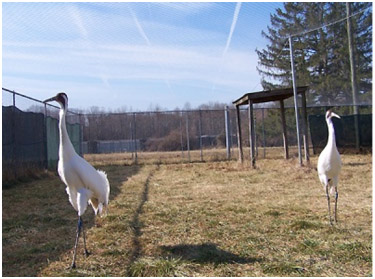
For example, in 1942, only 16 whooping cranes remained in the flock that Whooping Cranesannually migrates from Wood Buffalo National Park in Canada to Aransas National Wildlife Refuge in Texas. An additional six cranes were located in Louisiana, bringing the total global population to just 22 individuals. Unfortunately, the Louisiana flock died out a few years later, so all the whooping cranes now alive derive from the original 16 birds from the Aransas-Wood Buffalo flock. As of October 2013, an estimated 434 whooping cranes exist in the wild – a significant improvement – thanks in part to the captive breeding program at Patuxent.

Mariner was impressed by the quality of the dioramas in the visitor’s center. The many rooms have themes that cover many habitat areas, life-sized wildlife, the importance of food, fresh water, and the many facets of global warming.

Mariner travelled to Annapolis, Maryland where he has sailed many times. When sailing, he particularly enjoyed watching the Naval Academy’s ‘Navy Navy 44MKII copy44MKII’ as they left the Academy to sail to all parts of the world. These boats are schooners built with special requirements for the Naval Academy. Annapolis is a wonderful destination for a trip to Maryland and Virginia. The location fits well in a trip to Washington, D.C. The Annapolis State House is famous in Continental history as the US National Capital in 1783-84; the Treaty of Paris ending the Revolutionary War was signed in Annapolis. A visitor must practice driving roundabouts (circles); Annapolis has two connected together for your driving pleasure.

Just a block from the Naval Academy is Saint John’s College. Readers may recall the mariner’s chagrin regarding disbandment of liberal arts studies in many colleges. At St. John’s, however, one enters a bastion of liberal arts education. The following is an excerpt from their website:

Statistics show that St. John’s College students excel in their endeavors both at the college and after graduation. Almost 70 percent of St. John’s graduates pursue advanced degrees—many enter the nation’s leading humanities, science, business, law, and medical programs. St. John’s College is in the top 2 percent of all colleges in the nation for alumni earning PhDs in the humanities, and in the top 4 percent for earning them in science or engineering.

One element of St. John’s curriculum is that every student must read and report on a predetermined list of fifty classic humanities texts.

Mariner took his first sailing lessons in Annapolis. He finished his captain requirements in Florida. On his last sail to the Caribbean with his family, he visited St. Vincent and the Grenadines and an island belonging to Granada. At a small inlet on the west side of St. Vincent is the shooting location for the first Pirates of the Caribbean movie. These islands are far enough south to have local cultures yet to be overrun by tourism. Often, schools (or pods) of dolphins will race with the boat for a mile or so. In the mariner’s opinion, Caribbean weather is much nicer than many places located along 40°38”42.62’ N.

In addition to points of interest, Maryland seafood is outstanding – especially Crabcakesthe blue crab in every possible style. When the mariner and his wife visit family and friends, somehow several meals involve crab. The photograph has two, half-pound crab cakes flavored and cooked to perfection – one entrée from the menu.

REFERENCE SECTION

Nate Silver, the probability star, maintains all his odds and prognostications from sports to politics on a website called “538.” His political articles are easy to read and show his reasons for his predictions. Nate himself is not very political, which is good; his thought processes have little or no ideological basis – just the numbers. If you are tired of the narrow and sensational news from news channels and pundits, check out Nate Silver at:

http://fivethirtyeight.com/politics/ It is refreshingly apolitical.

Also on 538 is an article about patent rights in big pharma that reads a lot like the manipulations by NRA and the gun manufacturers. Unusual light shed in TPP negotiations bares the conflicts and suggests that the pharmaceutical arrangements in TPP are worth billions in profits and was the last point to reach agreement among the nations. See:

http://fivethirtyeight.com/features/the-problem-with-tying-health-care-to-trade/

Finally, a new book hot off the presses is a book about the Israel-Palestine conflict that has raged for many decades. The ambassador to the Middle East, Dennis Ross, is the author of Doomed to Succeed: The U.S.-Israel Relationship from Truman to Obama, published in October 2015 by Farrar, Straus and Giroux, LLC. The book isolates the history of the US/Israel relationship based on each President’s relationship with Israel. Mariner suggests reading an excerpt from the book rather than purchasing it. See:

http://www.msnbc.com/the-last-word/excerpt-doomed-succeed-fmr-us-amb-dennis-ross

Ancient Mariner


He Gives us all His Love

“A mother and father whipped their 19-year-old son to death with an electrical cord during an all-night spiritual counseling session triggered by his desire to leave their church, a New York court has heard.

Lucas Leonard was subjected to a 12-hour ordeal by his parents, sister and fellow church members at the Word of Life Christian church in New Hartford, New York, on Sunday, police and witnesses alleged.

His 17-year-old brother Christopher was also beaten and was admitted to hospital in a serious condition. See full story:”

http://www.theguardian.com/us-news/2015/oct/17/new-york-church-beating-teen-whipped-word-of-life

An antidote is needed before we discuss the above story. See:

http://www.usatoday.com/story/news/nation-now/2015/10/16/dog-who-stood-guard-over-friend-week-receives-award/74061712/

Given no other solution, how many people would stay with a family member without food and shelter for six days?

Back to the Christians. What is it about religion? Europe was plagued with one religious war or another for more than a thousand years. Richard the Lion Hearted waged war with Muslims for no historically relevant reason. Jews and Arabs have attacked one another since before recorded history and continue to this very day. Now, terrorists, presuming instruction from the Quran, roam the world seeking mindless destruction. Muslims fight Muslims between Sunni and Shia. Even among the ‘civilized’ Roman Catholics and Protestants, there is an obvious competition. During the last half of the 17th century, Massachusetts Puritans split open the noses of Quakers and cut off their ears – just because they were Quakers.

As it is with our 33rd cousin the chimpanzee, Homo sapiens likes to mix it up every once in a while for some materialistic cause – worthy or not. Chimpanzees don’t have religion. Humans developed religion to explain the unknowable universe; religion is based on having respect and love and compassion. Yet, as a single cause, religion has started more wars than any other cause. What is it about religion that two boys will be beaten by their parents for twelve hours until one dies and the other is in serious condition? What happened to the two Great Commandments, the Beatitudes and the Ten Commandments?

Mariner certainly doesn’t understand. He notes, however, that when Christians leave their New Testament to roam around in the Jewish Old Testament, something strange happens.

He gives us all his love
He’s smiling down on us from up above
And he’s giving us all his love

Lyrics by Randy Newman, from Cold Turkey, written and directed by Norman Lear (1971).

Ancient Mariner


Absolute Power Corrupts Absolutely

There is a sign of cultural collapse that is growing. Consider the following headlines – headlines that are common and forgotten in one month:

Police Officer shoots [teenager, African American, traffic violator, boy with toy, wife…]

US citizen shoots [30,000 other people]

Los Angeles teacher sues school system for 1 billion dollars for targeting older teachers for dismissal to avoid paying pensions. See:

http://www.cnn.com/2015/10/15/us/los-angeles-teacher-class-action-lawsuit-rafe-esquith/index.html

9 incidents where crazed gunman shoots many innocent victims.

Big banks cause US recession by trading questionable derivatives using customers’ cash.

VW deliberately fools emission tests.

2.1 trillion dollars tax free held overseas by corporations. See:

http://www.reuters.com/article/2014/04/09/us-usa-tax-offshore-idUSBREA3729V20140409

Social Security receives no COLA adjustment because of inexpensive gasoline. Retirees do not use much gasoline but other costs rise.

A former hedge fund manager purchased the rights to a drug that’s been used for 62 years to treat parasitic infections, and then hiked the price from $13.50 per tablet to $750.

The mariner quickly typed the above incidences from memories of news headlines. With little effort, he could fill pages with similar headlines which allude to the excessive abuse of authority and a corresponding lack of concern for the wellbeing of others. One wonders why a police officer can’t defend himself without suddenly emptying his pistol into a troublesome individual. A gun versus a knife isn’t quite a fair confrontation – especially six bullets later. Nor is shooting a fleeing individual in the back – six bullets later.

If one wants to live in a society where corrupted power prevails, buy a home in Syria. We in the US aren’t quite that bad; remember that Reagan budgeted research for a bomb that would kill people but not hurt buildings.

The cultural collapse is becoming a permanent patina in our lives. One could claim without exaggerating that no governments, federal, state, or local, have the best interests of the citizens within their jurisdiction. Examples abound where politicians espouse the importance of education while slashing education budgets first. There are ways to fix this issue but likely they aren’t popular with the citizenry at large (I don’t have kids; why should I pay a school tax?). Goodness! Is each of us endowed with indifference? May as well join ISIL. The NRA will be glad to arm us.

It began unnoticeably when Maytag moved to Mexico in 2003. Since then, Iconic American companies such as Coca Cola, Ford, RCA, General Motors, General Electric and Nokia have opened up assembly plants in Mexico. In fact, GE employs 30,000 Mexicans in 35 factories in the country. The difference in wages between the US and Mexico is $30,000 per year per employee. Mariner suspects the profit stays with the corporation. When mariner was young, he believed that businesses were obligated to remain in their location – even changing the product if necessary, to provide continuous support to the workers who otherwise would lose their jobs. Silly mariner.

All this information points out that business, too, abuses its authority at the cost, or corruption, of our wellbeing, AKA our culture.

Do we abuse our authority with other individuals? Words that allude to our abuse are greedy, indifferent, vain, cheat, vindictive, unfair, opportunist, prejudiced, selfish, unempathetic and unsympathetic. Someone somewhere must care for our wellbeing. All that is left is us.

Perhaps via the 2016 election, we can try to fix the governments who then can fix the businesses – but it is up to you and the mariner to fix ourselves.

Ancient Mariner


Nobel Prize for Economics

Dr. Angus Deaton won the Nobel Prize for Economics. His methods for determining the wellbeing of an economy start with the poor and disadvantaged classes – a new attitude among economic theorists.

Mariner remembers a television show hosted by Bill Moyers that aired several years ago. His guests were three economists. Mariner was aghast at the indifferent attitude toward those who lose their jobs because of a major change in the economy. All three economists agreed that fifteen percent of the job market disappears in a major economic shift. That’s just how it is. Sure, there are some unhappy people but that’s how economics works.

A year ago, on Global Public Square (GPS), Fareed Zakaria also had three economists who had the same attitude about the loss of jobs caused by an economic shift. Again, it was estimated, matter-of-factly, that fifteen percent of the work force becomes unemployed.

In common for all the economists mentioned and most others are the formulas and data used to determine the health and efficiency of a given economy. Simply, to avoid pages of economic jargon, economists use bulk data drawn from major industries; they use corporate growth and productivity; they use Gross Domestic Product and trade balances. All this summarized data is plugged into various formulas that provide the measure of success for a given economy.

Angus Deaton won a Nobel Prize for his analysis of poverty, welfare and consumption to determine the health and efficiency of a given economy. His data is compiled from interviews with thousands of individuals rather than summations from corporate and government sources. Deaton measures wellbeing rather than profit. Don’t tell other economists there is a humanist among them; an economist is supposed to have the attitude of an individual with aspergers syndrome – zero empathy. That’s how economics works…

Dr. Deaton’s research is very broad, covering microeconomics, econometrics, macroeconomics and development economics. Mariner will cover interesting bits and pieces but it will require more than one post. The reader may find the mariner referring to Deaton insights from time to time. For now, mariner found observations about the very poor to be insightful and he will share just a few bits and pieces here.

While macroeconomists had been satisfied that their theories could explain the relationship between the total level of consumption and total income in the economy, Mr. Deaton showed that those same theories struggled to explain what individual households were doing. This has spawned a large and productive continuing research program trying to understand the spending patterns of actual households. Angus Deaton is the leading expert on the economic behavior of the extremely poor. In this post, the mariner will describe economic behavior among those earning between $1.08 per day and $2.16 per day. Much of the information is taken from a Deaton-related study, The Economic Lives of the Poor by Abhijit V. Banerjee and Esther Duflo published in the Journal of Economic Perspectives, Volume 21, Number 1—Winter 2007.

The first insight for the mariner was how entrepreneurial the abject poor are. An example is the women of Guntur, India living in the biggest slum. At 9:00AM, many women are sitting in front of their homes with a kerosene stove and a round griddle. For 15¢ (US value), a woman will cook a dosa, a rice and bean pancake; dipped in a sauce and placed in a banana leaf, it is a common breakfast. An hour later, the stoves are gone. One woman is walking door to door selling saris she has decorated with beads and sparkling objects the day before. Income is accrued from other activities including but not limited to labor, collecting trash and making pickles to sell. Women in this large slum have no stable economy, no banks, no lending institutions but they maintain a day-to-day economy solely with their own ingenuity. The economy is virtually penniless but is sustained by simple entrepreneurship providing a cultural stability that allows everyone to participate on a level playing field and to earn enough among each family to survive.

In the United States, there is an intense disdain for the abject poor. The reader can’t survive a day without hearing someone say, “They ought to get off their asses and get a job!” Deaton wrote that the very poor behave the same all over the world. Without meaningful assets, without the ability to borrow, without permanent salary, without decent clothing and with no health care, the poor are more nimble at finding a living where none should exist. What lies in the way of economic equalization from either side is a large abyss between funded culture and the penniless poor. As it turns out, the very poor in Guntur are happy!

Ancient Mariner

An Eclectic Post

Inspiration comes from many sources, in this case from road kill. Carcasses lie abandoned on the side of the road which led the Mariner’s wife to write this poem:

Elegy for a Dead Raccoon

The body lies beside the road

A furred lump hit by a passing car

Left like refuse, unremarked.

We in the cocoons of our cars

Pass by without a second glance

Without a second thought.

If we gave it a second thought

We would have to recognize

That we, too, will become a lump

Beside the road.

Our mammal bodies are not different:

A baby raccoon was born, suckled,

Stretched his paws, struggled to walk,

Learned to eat, to drink, to clean himself,

Wrestled with his brothers and sisters,

Explored the same world we live in

With the same five senses.

The only difference is that when he died,

In a sudden, tragic accident

His body was left as a furred lump

Beside the road.

There were no remarks at a solemn funeral

And no elegy

Except for this one.

REFERENCE SECTION

Getting the most out history is an art form. History books that deliver dates, events and event correlations are full of facts but leave out the human condition, the three dimensional reality that makes history real and provides the reader with human substance. One trick to expand one’s understanding of history is to read biographies of those who played a role in history but may not have been on the front page. As a bonus, biographies are easy to read and almost like reading fiction. Below are four biographies spread across a wide spectrum of history.

Lucy by Ellen Feldman, W,W, Norton, 2011.

One of the most important romances in the last century. Although their relationship was heavily constrained, their love lasted. Lucy was with FDR when he died. Arthur Schlesinger gave a review:

“It is a story which reminds us of the code of another day, of the complexity of human relationships, of the human problems of statesmen bearing the heaviest responsibilities and of the capacity of mature people to accept the frustrations of life and, perhaps, to make of frustrations a sort of triumph. Eleanor Roosevelt, Franklin Roosevelt, and Lucy Mercer all emerge from the story with honor.

And, if Lucy Mercer in any way helped Franklin Roosevelt sustain the frightful burdens of leadership in the Second World War, the nation has good reason to be grateful to her.”

Arthur M. Schlesinger, Jr.

The Sixth Extinction, an Unnatural History by Elizabeth Kolbert, Henry Holt & Co. 2014.

Mariner has referenced this book in past posts. It is an accounting of Kolbert’s travels around the world visiting scientists and living creatures. However, it is a biography of us and our association with the Earth’s life forms. Written in a story-like style, it is mesmerizing.

Paul Newman, A Life by Shawn Levy, Random House, 2009.

Historian Shawn Levy gives readers the ultimate behind-the-scenes examination of the actor’s life from his merry pranks on the set to his lasting romance with Joanne Woodward to the devastating impact of his son’s death from a drug overdose. This definitive biography is a fascinating portrait of an extraordinary man who gave back as much as he got out of life and just happened to be one of the most celebrated movie stars of the twentieth century.

Frederick the Wise by Sam Wellman, Concordia Press, 2015.

Little is known about one of the most powerful individuals in the Reformation, Frederick III, Elector of Saxony. Blessed by a translation of German works by Sam Wellman, Frederick’s life and influences are readily available. Frederick was the protector of Martin Luther as Saxony battled the Holy Roman Church during the 15th and 16th centuries.

Ancient Mariner

Time to Act against TPP

The infamous Trans-Pacific Partnership (TPP) is on its way to congress. Details finally have been released through several channels. The TPP is heavily tilted toward increased power for corporations. If TPP passes, it will be a new era where business begins to dictate to government regarding the rights and wellbeing of the citizenry. Church and state is small potatoes compared to the corporate intrusion into the Constitution and Bill of Rights.

Since World War II, the generic corporate model began to operate between nations; tax evasion, hidden funds, no allegiance to workers, no need to sustain environmental or product quality – all are indicators that corporations have become a new kind of nation not bound by traditional government authority. The TPP is the same as a military invasion aimed at taking away the authority of target nations. Plain and simple, the US is under attack to increase corporate profit and to avoid responsibility for citizen wellbeing.

This week, Wikileaks released the long-secret investment provisions of the Trans-Pacific Partnership (TPP) that revealed the trade deal would give big business the ability to sue governments for protecting the public interest – confirming our worst fears about the trade deal being pushed by the business community, Republican leadership and the Obama administration.

Mariner asks for a small inconvenience from his readers. Will you please write or call all federally elected politicians, especially your senators, that represent you; tell them to veto the TPP. There are different ways to do this:

Write a letter using the US Postal Service.

Write an email; the address of your representatives can be found using searches for Congressional Representatives.

Call your representatives; phone numbers are on the same websites as addresses.

Use the following link to Food and Water Watch to use the convenient procedure for sending your opinion to your representatives. Do not feel hesitant about providing your information; elected officials want to know you live in their district and may want to respond. Uncheck the boxes if you do not want FWW to contact you in the future.

https://secure.foodandwaterwatch.org/site/Advocacy?cmd=display&page=UserAction&id=1777&s_src=blg#_ga=1.267545422.1527426085.1431442204

Visit your representatives in their home offices.

The precedents set by TPP will create a world-wide culture where citizens are not the first priority – profit is.

Thank you very much for this favor.

Ancient Mariner