Befuddlement

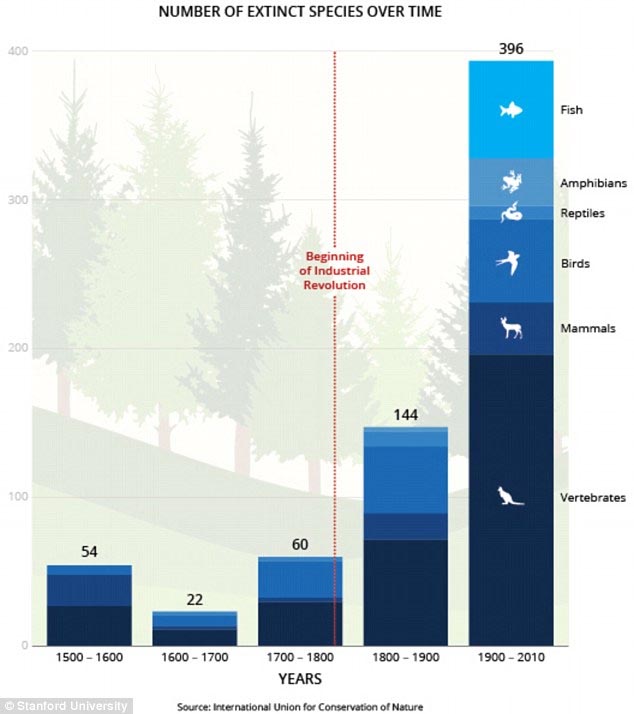
On Friday, Stanford University released a study by internationally prestigious scientists that declared planet Earth is well into the sixth mass extinction (Holocene). The report has charts and other references that indicate the fabric of the planet’s ecosystem is collapsing at an ever increasing rate. The report predicted the collapse would occur in about three human lifetimes (315 years+or-). The report further suggested that humans will be one of the earlier extinctions because of human dependence on so many environmental and specie services, e.g., naturally cleaned water, pollination by bees, and stable weather patterns for vegetation.

The mariner is befuddled that no television outlet grabbed this issue. If the reader hadn’t come across an article on a few websites, the reader would never know that extinction of Homo sapiens has become a statistical reality – near enough that today’s elementary school children will have their lives disrupted in significant if not fatal ways. Despite what the Bible says about Armageddon, it will not occur in one day. It will occur faster and faster over time. For the most part, symptoms will involve starvation, disease, economic collapse, vandalism and true anarchy as governments will not have the resources to quell the collapse of rule by law.

There is a book on this subject published recently by Naomi Klein, This Changes Everything: Capitalism versus the Climate. (The mariner’s town library has a copy as well as a copy of The Sixth Extinction by Elizabeth Kolbert). Klein has written several books on the subject of economic greed destroying the planet. Following is an excerpt from the New York Times book review for This Changes Everything:

“Klein diagnoses impressively what hasn’t worked. No more claptrap about fracked gas as a bridge to renewables. Enough already of the international summit meetings that produce sirocco-quality hot air, and nonbinding agreements that bind us all to more emissions. Klein dismantles the boondoggle that is cap and trade. She skewers grandiose command-and-control schemes to re-engineer the planet’s climate. No point, when a hubristic mind-set has gotten us into this mess, to pile on further hubris. She reserves a special scorn for the partnerships between Big Green organizations and Immense Carbon, peddled as win-win for everyone, but which haven’t slowed emissions. Such partnerships remind us that when the lamb and the lion lie down together, only one of them gets eaten.

In democracies driven by lobbyists, donors and plutocrats, the giant polluters are going to win while the rest of us, in various degrees of passivity and complicity, will watch the planet die. “Any attempt to rise to the climate challenge will be fruitless unless it is understood as part of a much broader battle of worldviews,” Klein writes. “Our economic system and our planetary system are now at war.”

The point is, there is a mountain of resistance to change – especially on capitalist philosophy and the ingrained demand for ever increasing profits. How long will it take Earth’s humans to break the most successful profit engine in history? The Mass Extinction report implies that everything must be corrected in two lifetimes to prevent full collapse of the environment.

The mariner includes one chart from the report that ties the development of the mass extinction, or conversely, the destruction of the global environment, back to the beginning of the industrial age.
extinct animals

An easy to read article is available at the following link:

http://www.washingtonpost.com/blogs/wonkblog/wp/2014/02/11/there-have-been-five-mass-extinctions-in-earths-history-now-were-facing-a-sixth

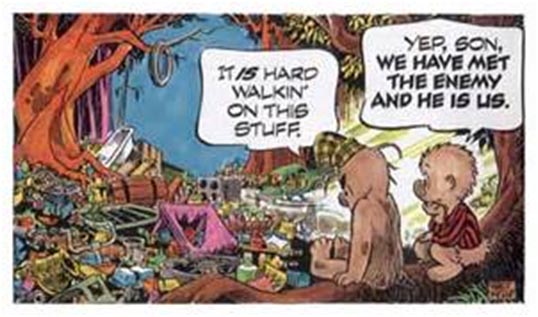
As Naomi Klein pointed out (and Pogo), our own perceptions of what is good, better and best for each human, each of all species, and the planet environment itself, is a myth. We do not have a model of human behavior that matches the reality around us – nor will reality accept it. Yet, humans are delinquent and tardy in how they manage their own place on the planet.

How many years will it take for humans to eliminate arrogance and hubris and recognize that we are not the reason for the Earth to exist?

How many years will it take for core cultural values to recognize that Homo sapiens is not, by a high count, the superior species. We are more dependent on many other species than they are on us.

How many years will it take to dismantle capitalism and nationalism? If history serves correctly, once a nation has cured its unstable situation of war and abuse, it won’t be until the third generation thereafter before that nation will have leaders unscarred and unbiased in their decisions about national policy and culture.

The mariner will have more on the Holocene as matters develop. He presents only high level concepts and ideas in this post; he depends on the reader to pursue links and news sources that will add more substance to this issue.

Ancient Mariner
The Sixth Extinction has Begun

An irrefutable and respected report was just published in the Science Advances journal. A blue ribbon team of scientists working at Stanford University, headed by Paul Ehrlich and lead researcher Gerardo Ceballos, a professor of conservation ecology at the National Autonomous University of Mexico and a visiting professor at Stanford University, predicts that humans could be extinct in three lifespans. Three lifespans is three generations each separated by about 25 years plus the average lifespan of each generation – assume 80 years. 75 years plus 240 years = 315 years.

We wouldn’t all expire together at the last moment. Starvation would increase day by day as water, food and environment would take their toll faster and faster over time. The mariner was amazed that this report didn’t take over the news media in every quarter. Other than the browser results, there was no mention of the coming extinction of humans – in only three generations.

The mariner strongly urges that the reader browse “sixth mass extinction” and read the news article on.MSN.com or other news websites.

Ancient Mariner

Gifting, Giving and Sharing

Many years ago, the mariner gave a sermon on the values of gifting, giving and sharing. He had forgotten about that sermon until today when he had a shared moment with a friend.

To gift someone requires two entities that usually are not equal in some way. One may gift (bestow to) a child an automobile; one may gift (contribute to) a charity; one may gift (grant permission) internal organs; one may gift (enable) a jobless person by sponsoring them to a potential employer. The inequality is apparent. The inequality is usually what generates the act of gifting. Gifting is a good thing all of us should do more often. However, one can’t help but notice how procedural the experience is; participants don’t necessarily even know one another.

Giving is slightly different. While not necessary in every instance, the participants usually know one another because the difference between gifting and giving is the presence of empathy when one gives. Giving is a deliberate attempt to lend a hand in some personal way. Still, there’s a bit of protocol when one gives; perhaps it’s giving a birthday present or lending one’s second car to a neighbor. The giver must, in some manner, approach and present what is given. Many people have trouble accepting something given to them that was not earned. God bless Max Weber.

Sharing is not gifting. Sharing is not giving. Sharing requires a profound respect that requires no protocol. No one need say a word. Sharing requires some form of bonding. Nothing is expected; nothing is presented. There is no visible inequality. Sharing is highly sophisticated because each participant must be sensitive to what is required; empathetic to when to share and when not to share; understand that reciprocity is not based on protocol or is a way of “balancing things.”

When the mariner was taking a college class about theology, he learned that, in the New Testament, the ancient Greeks had three words for “love:” EROS, which is romantic love; PHILEO, love among friends; and AGAPAO, unconditional love. At a minimum, sharing requires phileo.

Good marriages – the ultimate in sharing – are based on agapao. Time steals a great deal of romanticism. Real life circumstances can put the marriage through some tough patches when friendship may be difficult to manage but if the bottom line is to be unconditionally supportive, the marriage will last.

Ancient Mariner


Red Brain, Blue Brain

The following information was published in the PLoS ONE journal on February 13, 2013:

“Red Brain, Blue Brain: Evaluative Processes Differ in Democrats and Republicans

Liberals and conservatives exhibit different cognitive styles and converging lines of evidence suggest that biology influences differences in their political attitudes and beliefs. In particular, a recent study of young adults suggests that liberals and conservatives have significantly different brain structure, with liberals showing increased gray matter volume in the anterior cingulate cortex, and conservatives showing increased gray matter volume in the in the amygdala.

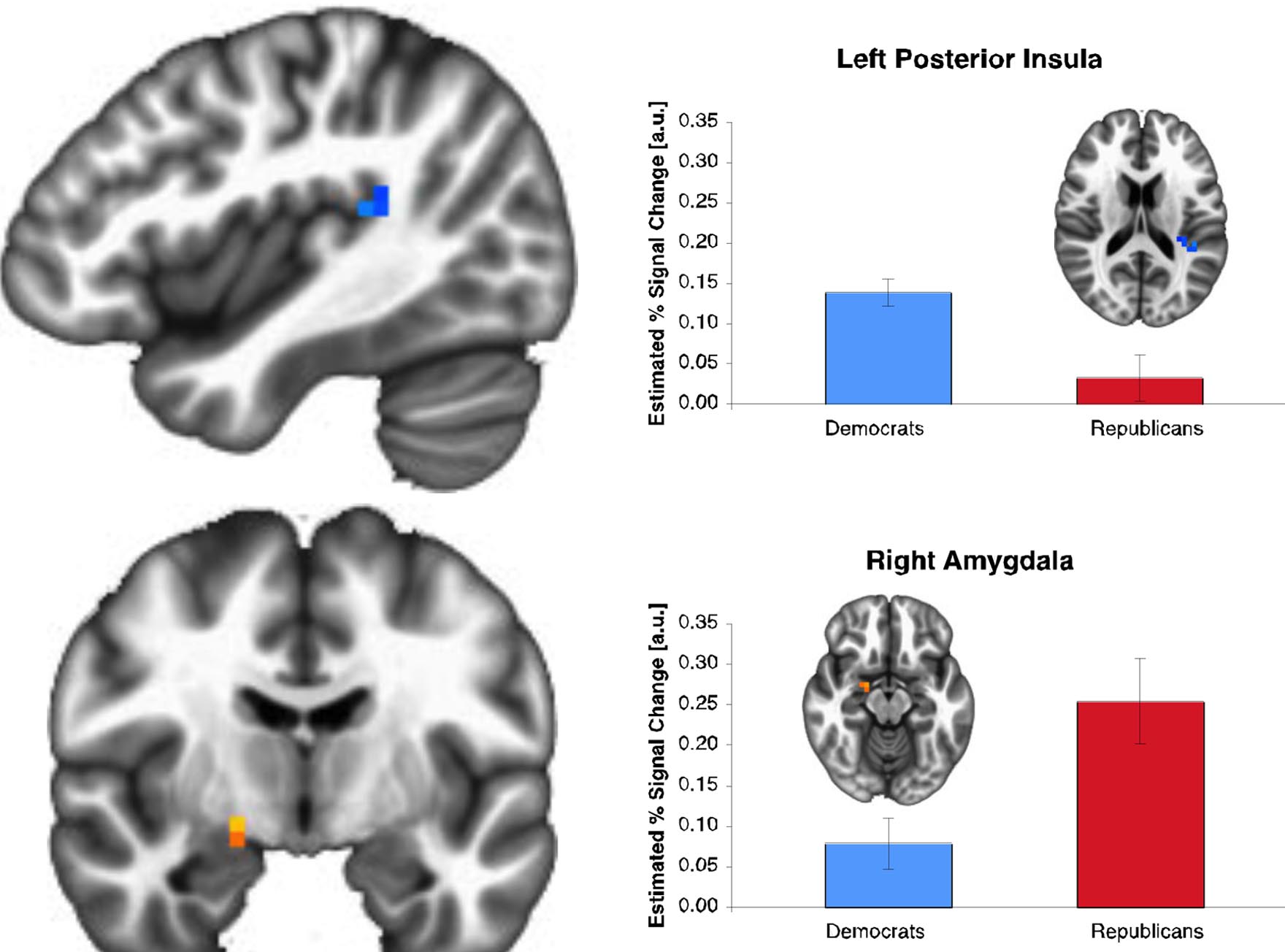
Here, we explore differences in brain function in liberals and conservatives by matching publicly-available voter records to 82 subjects who performed a risk-taking task…. Although the risk-taking behavior of Democrats (liberals) and Republicans (conservatives) did not differ, their brain activity did. Democrats showed significantly greater activity in the left insula, while Republicans showed significantly greater activity in the right amygdala….. These results suggest that liberals and conservatives engage different cognitive processes when they think about risk, and the results support recent evidence that conservatives show greater sensitivity to threatening stimuli….. Conversely, liberals had stronger responses to situations of cognitive conflict than conservatives.”

Red brain art

The mariner apologizes for the scientific journal lingo – rather dry reading. He will paraphrase while contemplating what this means in the world of politics and beliefs in general. His comments easily can be interpreted too literally; the reader should consider the mariner’s informal interpretations as parables.

Republicans orient attention to external cues. What this means is Republicans find it less important to understand how they feel inside; more important is their control of potential risk outside.

On the other hand, Democrats orient attention to perceptions of internal feelings – how they feel about the external cues. This orientation also borders the temporal-parietal junction, and may reflect the perceptions of internal feeling and motivation in others as well.

Now the reader has a clear and firm understanding of the difference between a Republican and a Democrat. The mariner perceives this may not be true. Let’s take a real example but remember that simply saying something for clarity may be overstated and may not be wholly true in the first place.

Republicans are good managers because they are risk averse. Republicans are sensitive to anything that blocks their range of decisions in dealing with risk. Therefore, Republicans do not like labor unions because labor unions have the ability to limit what the Republican may want to do regarding job profiles and salary – risk-laden issues in any business. This does not mean Democrats aren’t good managers, too. Remember the statement in the journal lingo: “Although the risk-taking behavior of Democrats (liberals) and Republicans (conservatives) did not differ….” In other words, a good manager will deal with risk appropriately – liberal or conservative.

The Democrat manager, however, is sensitive to his/her feelings about jobs and salary and, because the temporal-parietal junction is nearby, empathy may play a role in how the risk is perceived. As long as labor unions play by fair rules, the Democrat is more likely to accept why being in a union is important to the employees’ perception of risk.

How are we doing? Maybe one more example. But to keep it simple, no elected government folks are allowed:

Bah, Humbug! People have nothing to do with global warming! Republican or Democrat? We don’t really know for certain but several surveys show that this is a Republican. Global warming is nothing if it is not constrictive, behavioral (the right amygdala doesn’t know about behavioral) and interferes with profit strategies across the board. A Republican would run from the restrictive regulations that cure global warming. The same is true of the fossil fuel industry, the banking industry and a myriad of other corporate interests that do not want to be curtailed in their decision making regarding risk to profit.

What is the future of humanity if it all boils down to Left Posterial Insula versus right amygdala?

Ancient Mariner

Labor Unions

It’s time for someone to say something nice about labor unions. Recent generations have forgotten the bloody, indeed murderous conflicts which our grandfathers and great grandfathers fought to gain humane working environments for employees. In those protests, larger companies sent thugs to beat protestors with clubs – even to the point that many died while protesting. That horrendous time was at the turn of the century. Franklin Roosevelt provided cover for twenty years. However, since the 1980’s there has been a concerted effort on the part of corporations and state governments – consider Scott Walker as Governor of Wisconsin who pushed through anti-union laws:

NBC News, March 9, 2015

“Wisconsin Governor Scott Walker signed into law anti-union legislation that prohibits union workers from being required to pay union dues. The so-called right to work law is an effort to reduce the power of unions in the Midwestern state and is one that will give Walker additional conservative bona fides in his likely presidential bid.

Walker refused to indicate during his reelection campaign in 2014 if he would support the legislation. His signature Monday morning makes Wisconsin the 25th state to implement the ban that was passed by the Republican legislature earlier this month.

Opponents of the bill say it will decimate unions and have a ripple effect of suppressing the ability of workers to organize while supporters, including Walker, say that this will lead to economic growth.

“Adjusted for cost of living, employees in forced unionization states have almost $2,000 less in disposable income. Bottom line, this reform is pro-freedom and pro-work for Wisconsin,” Walker wrote in a recent opinion piece for the conservative website Red State. [Still, he did not mention reduced health and retirement benefits and vulnerability to tax cuts affecting jobs.]

This is the second major anti-union legislation that Walker has supported. In 2011, he ushered through highly controversial legislation titled Act 10 that reduced the bargaining power as well as health care and pension benefits of public sector unions. The move led to a recall election, which Walker won.”

Well, Wisconsin gets what it deserves with its vote. But the workers of Wisconsin clearly are not better off when their health care and pensions are cut; their right to negotiate a fair wage and benefits is negated, and the right to work law virtually denies any union votes to organize in the workplace.

Twenty-two states have right to work laws. The name is deceptive. It means one has the right to work for a company without having to join a union. It also means, depending on the language in most states, that unions cannot solicit a worker to join a union.

Just about every common citizen agrees that middle and lower class workers are being screwed. The United States is an oligarchy, not a democracy. There are only so many ways for workers to participate in the profit curve denied them at this time:

  • Have union representation.
  • Have a fair profit sharing system based on hours and tenure, not salary.
  • Have employee-owned corporations with comparable seats on the board of directors.
  • Have unions bid on job creation opportunities.

The first and last options go together. Unions have retirement funds that can be leveraged to bid against corporations. An example, provided by Bill Clinton, is for a union to bid on the reconstruction of LaGuardia Airport in New York. This has moved forward. The reconstruction belongs to the union, not a corporation. Fifteen thousand jobs will be created for a long term project and it will be owned by the union.

There are dangers in this kind of arrangement. The mariner has written in the past that power corrupts. Nevertheless, at these moments in history when income is so imbalanced in the US, maybe it’s better for unions to manage corruption than the Congress and state legislatures.

Ancient Mariner

NASA Website

A very interesting place to visit once in a while is the website of the National Aeronautics and Space Administration (NASA). There are many articles shedding light on global conditions around the planet. The mariner lists three to whet the reader’s appetite:

(NASA) released a study of the Earth’s aquifers using new satellite technology that studied the 37 largest aquifers from 2003 to 2013. The study reported that one-third of the aquifers are stressed. The most stressed are in heavily populated and frequently poor areas. To see map and report go to:

http://www.nasa.gov/jpl/grace/study-third-of-big-groundwater-basins-in-distress

Another study reported that it would take 11 trillion gallons of water to replenish California’s loss during the four-year drought. Go to:

http://www.nasa.gov/press/2014/december/nasa-analysis-11-trillion-gallons-to-replenish-california-drought-losses

Study shows increasing carbon emissions could increase US droughts. Droughts in the U.S. Southwest and Central Plains during the last half of this century could be drier and longer than drought conditions seen in those regions in the last 1,000 years, according to a new NASA study. Two very good videos are available showing the drought regions:

http://www.nasa.gov/press/2015/february/nasa-study-finds-carbon-emissions-could-dramatically-increase-risk-of-us

There are many more NASA reports about the condition of the Earth. It’s worth a visit once in a while.

Ancient Mariner


Carbon Dioxide in the Atmosphere

The mariner was reading one of his touchstone websites http://esciencenews.com/ when he came across an article about the effect of carbon dioxide in the atmosphere. It turns out that there is little trace of dinosaurs in the tropics. The only life in the tropics was small predecessors of alligators and crocodiles.

This was due to the high fluctuations in weather, going from extended periods of drought and devastating fires to extended periods of wetness. Most dinosaurs were unable to survive the variability and stayed away from the tropics.

The carbon in the atmosphere was six times what it is now. For reference, that is 2,400 parts per million 200 million years ago and 400 parts per million today. Nevertheless, we have an insight as to how weather patterns will slowly change as carbon levels increase. The Amazon rain forest is in the tropics….

A closer analysis that comes from current data suggests that energy in the atmosphere will continue to grow in coming decades. This means weather will have more severe differences between high pressure systems and low pressure systems. Further, big storms like hurricanes, monsoons and shear wind speeds (along with the accompanying tornadoes) will occur more frequently and more intensely.

The weather in Texas and Oklahoma (where much fossil fuel is produced – is there poetic justice here?) this year is not a measure of long term consequences. Individuals often mistake one year’s activity as a trend (consider Jim Inhofe throwing a snowball in Congress, suggesting that global warming is a myth).

But the warning flags are up. It will take a long time to bring together enough nations to control Big Oil. It will take decades. All the while, carbon builds in the atmosphere. Even if we humans can live with it (have you seen news clips that show Chinese citizens wearing breathing masks?), the creatures in the oceans cannot. Carbon Dioxide is absorbed from the atmosphere by the ocean. The ocean can only absorb so much Carbon Dioxide before acidity becomes a destructive environment. Coral reefs already are dying at an alarming rate; reefs are the source of life for literally millions of creatures in the oceans.

The mariner, a lover of the ocean and all that is in it, fears the indifference of Homo sapiens. He knows if the oceans die, humans will be extinct. Don’t let computers and technology fool the reader – the Earth is in charge.

Ancient Mariner

Standing in the Penumbra of Advocacy at Home

Penumbra is the word of the day. The mariner doubts it will be replaced by “get” or “got.” The general meaning is to stand in the shadow of something. More than just a shadow, it alludes to a shadow that doesn’t have an edge like our shadow or the shadow of a building. An example may be an eclipse or, on a sunny day, standing beneath an altocumulus cloud – high enough that its shadow line is diffused by the time it reaches the ground.

The mariner will confess that penumbra is not one of his usual words. He doubts there are very few except scientists who need a word like penumbra. It is a word the mariner remembers from something he read long ago; it comes to mind whenever the word “eclipse” is mentioned.

It is the appropriate word for our thoughts about the Advocacy at Home (AH) series of posts. AH has advocated a form of behavior; it has set standards for that behavior. AH is, in fact, a law book. It is a law book without an end.

There is no line between advocacy and no advocacy. We may have a lifestyle that involves low grade advocacy, that is, taking note of an issue and having an opinion, and then have something else catch our attention. We may have strong feelings about a subject, idea, or activity and may physically react in some way to counter the situation. But there always is advocacy; else, prejudice and accomplishment would not exist.

The mariner looks back at the brutality and stupidity of Homo sapiens referenced in AH. Humans are no different than any other animal except humans are capable of malice aforethought, destroying just to destroy, or destroying because it is easier than assuring optimum or fair conclusions. Defenders of this characteristic claim it is done in the name of progress – akin to Darwin’s ‘survival of the fittest.’ Progress for whom? Perhaps not progress for humans. Malice aforethought is part genetic and part sociopathic.

Referenced in the post, Po Pouree, from letters to the editor in Scientific American, Robert E Marx responded to an article about why neandertals became extinct (apologies for repetition of earlier posts):

“Kate Wong’s suppositions about what brought about neandertals’ extinction in “Neandertal Minds” are contrary to the known history of anatomically modern Homo sapiens (that is, us). Her assertions that neandertals were just out competed and that the 1.5 to 2.1 percent neandertal DNA within people outside of Africa is the result of occasional “dalliances” would be historically unlikely.

The most likely scenario would involve waves of immigrating anatomically modern humans taking over land and causing death by plunder and disease, as Europeans discovering the New World did. And it would be naive to think that our neandertal DNA was the result of consensual dalliances when rape went hand in hand with the pillage of every other civilization.”

Pogo-1

From Walt Kelly’s comic strip, Pogo, April 22, 1970.

Putting aside our treatment of other species, consider how we treat human beings – our own species.

John Emerich Edward Dalberg Acton, first Baron Acton (1834-1902). The historian and moralist, otherwise known simply as Lord Acton, expressed this opinion in a letter to Bishop Mandell Creighton in 1887: “Power tends to corrupt, and absolute power corrupts absolutely. Great men are almost always bad men.”

The letter was written at the end of the Victorian era when the Edwardian era was emerging and which peaked during the years of 1901 – 1910, then slowly disappearing as the First World War drew near. That was a time very similar to the United States today: a very few were incredibly wealthy and the rest of Great Britain was in a crisis.

Is it true that if the reader or the mariner were given absolute power, we would be “bad men?” At the least, would we be immoral? Would our arrogance and indifference be obvious? Vladimir Putin has absolute power. Would he be less immoral if he had no power? Assume we had absolute power over one person. Would we abuse that person? Would we, in a twisted desire for absolute power be like Phillip Garrido, who kidnapped and kept Jaycee Dugard in a backyard shed for 18 years and had two children by her? Famous studies of power over another person show that, indeed, immoral if not violent behavior will occur.

What is it about power that is so destructive?

The oldest reference to rule by law was written by the reformist King Urukagina of city-state Lagash in Mesopotamia during the 24th century BC. It consisted of a list of rules that were generally beneficial to the very poor and the labor class. The rich were curtailed in their abuses by what the mariner calls “Clintonesque restraints,” that is, in exchange for paying silver to their laborers, one could have 1,500 sheep instead of 500. Good people die young – King Urukagina was overthrown seven years later by his neighbor city-state Urek.

The reader would think, after 4,600 years, humans would have mastered the three elements of ruling by law. The three elements are power, intervention of power, and individuals. If intervention or individuals weren’t present, who would need rule of law? Perhaps the less powerful would lust after those who may be more powerful. Intervention would become battles between powerful people and individuals would become a commodity like chickens. Isn’t that called the Dark Ages (500 – 1100 AD)?

The reason for this run around Robin Hood’s barn is to highlight the similarities between AH and rule by law. We must be firm, committed and assertive in our AH laws. It is the only way to fix our dysfunctional nation.

Earlier it was mentioned that there were three elements to rule by law: power, intervention of power, and individuals. The dysfunction in the US is that it is the powerful that write the rules for intervention of power. Individuals are out of the loop. So AH is a beginning. The more individuals that create their AH rule books and enforce them, the sooner individuals may take their place in the triumvirate known as rule of law.

Ancient Mariner

Advocacy at Home – Local Organizations

In this final section, the point is made that one soldier is a good soldier – even a hero. However, one soldier will not win a war. Toward the end of the last segment, neighborhood organizations were mentioned as a form of vitality, a force that sustains a good gestalt. Many of these local organizations have outreach components that go beyond the neighborhood to address state, national and global issues. Add to the local organizations the many larger organizations that focus on various issues, and one has assembled an army of good soldiers.

Local organizations with established outreach include the majority of churches, particularly connectional denominations, where many local churches contribute to a fund-raising distribution center. Many social organizations adopt a cause beyond the neighborhood from simple causes like the Lion’s Club eyeglass redistribution to widespread campaigns like the Methodist Church’s “No More Malaria” campaign. At the following website, 51 veteran support organizations were listed:

https://www.nrd.gov/other_services_and_resources/veterans_service_organizations/chartered_veterans_service_organizations

For  virtually endless numbers of wildlife organizations, use:

http://www.bing.com/search?q=List+of+wildlife+protection+Organizations&go=Submit+Query&qs=n&form=QBRE&pq=list+of+wildlife+protection+organizations&sc=0-31&sp=-1&sk=&cvid=9fedf1e8b48949c097ef6008f02d68a8

For organizations dedicated to improving the environment, see:

http://www.nrdc.org/reference/environGroups.asp and

http://webecoist.momtastic.com/2008/09/24/25-environmental-agencies-and-organizations/

Further, government agencies abound:

http://www.grinningplanet.com/5005/government-agencies-environmental.htm

If the reader is serious about stemming the tide and extending the day of Armageddon, one is in constant communication with many of these organizations. They are the reader’s army. They will be glad to receive one’s participation and financial support. The mariner endorses all of them as helping in some way although some may be better organized than others. A list of efficient organizations follows but may not cover one’s specific interest:

http://www.fundraiserinsight.org/articles/environmentalfundraising.html

Do not forget the sportsmen organizations. While they may be self-serving in goals, they improve the environment to sustain the wildlife they hunt. Often on counterpoint to sportsmen is:

http://www.humanesociety.org/ which is involved in a plethora of animal rights and abuse issues around the world – not just pets.

To provide a concise wrap up to the series on Advocacy at Home, the list is briefly revisited:

Utilities (water, gas, travel): Virtually all the issues in utilities can be improved by improving your own home. Consider some modern upgrades that will reduce the use of fossil fuel byproducts. If your vehicle has a few years on it or is a larger vehicle for when you had children, consider replacing it with something more efficient. Use cloth shopping bags. Some national issues are the legislative battles between pipelines, oil wells and environment, fossil fuel versus renewable fuel, and international trade agreements that directly affect oil prices.

Global ecology (air, water, use of chemicals):  Water is the most critical resource on the planet. Secondly, carbon emission already is killing sea life. Finally, the Environmental Protection Agency needs triple the budget it has to police the many chemical violators (speak constantly with vigor to each of your representatives at all levels of government). They are all sizes from gasoline stations to Dukes Power Company and the coal, gas and oil industry at large. Advocacy and policing by citizens is very effective in this issue.

Food (water, quality, chemicals, land use): Commercial food production consumes immense, almost unbelievable amounts of water. The greatest reduction of water use is to grow your own vegetables or buy home grown at farmers markets – enough to store in the freezer or can. Purchase protein products from a local butcher/locker or directly from the wharf – an interesting experience if one has never purchased fresh seafood. Finally, cut back on red meat. Land use is legislated in favor of farmers and developers; many regulations are local and hearings are open to your attendance and wise advice.

Specie ecology (Microsystems, estuaries, wildlife): You MUST step out and be an active advocate of your cause. Belong to an organization that will extend your influence. Jump in and “save a whale or a bear or a fox, etc.” with your own hands.

Neighborhood gestalt (trash, abandoned housing, loose pets – and your house!) It takes more than owning a tract in a neighborhood to contribute to a good neighborhood gestalt. Be part of the neighborhood through interaction with neighbors, organizations and charitable behavior.

Local organizations (scouting, youth clubs, nursing homes, PTA, Lions Club): There are many, many volunteer organizations in the reader’s community. In many communities, there are volunteer fire and first responder companies; dozens of volunteer organizations exist from preschool to high school; every neighborhood has unofficial neighborhood watch groups for people in difficulty on the street. Interestingly, the various motorcycle brands publish handbooks full of volunteers within a half hour of wherever the reader’s bike fails. If the reader has a bike, pass it forward and put the reader’s name in the handbook. Lastly, but importantly and entertainingly, get to know one’s police officers on a personal basis. The reader eventually will meet them while on a walk.

The mariner worked many years ago with the Maryland State Police. He joined the Fraternal Order of Police (FOP). At the time, he was an independent consultant in the law enforcement sector and traveled around the country. He was able to use the FOP as his private ORBITZ and once in Washington, DC, was put up on FOP premises and treated like royalty. It takes a village – AKA neighborhood. For broader perspectives, see the list above in this post.

Tools

Many newspapers, even if online versions and especially local newspapers: Read the news headlines from Bing (news not show business), Google (news, not show business), Huffington Post, Atlantic, New York Times and other known and respected news sources. The content is better presented, more relevant, and more diverse than any television station. Local issues will be found only in local newspapers.

Two or three respected soft cover journals, even if they’re at the library: These are the journals that can be boring if the subject is not one you are interested in. However, if the subject pushes your button, there is no better source to become informed. Try:

Agenda (for your reading pleasure – excellent poetry)

American School Board Journal

Education Week

InfoWorld (computer news)

National Journal

Scientific American

The Atlantic

The Economist

Washington Post

Neighborhood walks: Once a week, if not more, walk all the streets of your neighborhood. If nothing else, it’s good for your health. Make a mental note of changes of any kind. Do not hesitate to introduce yourself and start a conversation with individuals you meet who obviously are not in a hurry. Ponder a future conversation that may need to be had with someone in an organization who may be interested in that change. Make note of something you and your family can do to improve a situation.

Discerning eyes: Eyes help during your walk, of course, but discerning eyes look beyond the instance to see emerging patterns and ramifications, even projecting the impact of government and zoning futures. Perhaps a park is needed for children or simply green space for other creatures.

Personal blog and twitter communication: Talk to people all the time! Email, voice, twitter, facebook, your congressmen and other government individuals, your neighbors, your fellow workers, your extended family, your merchants. If a high functioning recluse like the mariner can do it – so can you.

Physical effort (scheduled time, communication, achieve goals): It’s time for discipline. Get out of your #%@$!&!! house and do something.

Ancient Mariner

Advocacy at Home – Neighborhood Gestalt

Remember in the post, “Advocacy at Home – Overview,” an example was to pick up a trash cup in the gutter and having done so, improved the entire street? Neighborhood gestalt is about stuff like that but much more multidimensional. What can the reader do in one’s own neighborhood, even one’s home – that will provide a satisfactory gestalt?

Main Entry:ge£stalt

Pronunciation:g*-*st*lt, -*sht*lt, -*st*lt, -*sht*lt

Function:noun

Inflected Form:plural ge£stalt£en  \-*st*l-t*n, -*sht*l-, -*st*l-, -*sht*l-\ ; or gestalts

Etymology:German, literally, shape, form

Date:1922

 : a structure, configuration, or pattern of physical, biological, or psychological phenomena so integrated as to constitute a functional unit with properties not derivable by summation of its parts.

For example, a neighborhood’s government service infrastructure consists of water, gas, electricity, adequate law enforcement, fire response, education, health services, sewage, trash collection, tree trimming, replacing streetlights, collecting unwanted junk, maintaining streets and sidewalks, clearing street snow and maintaining common space shrubbery and lawns – all of which create a neighborhood that seems orderly and provides a nice neighborhood in which to live. In other words, the gestalt is pleasant and respectable, creating an atmosphere that is greater than just performing government services.

Gestalt is more than government infrastructure. It includes the reader’s home and property. Does the reader care for personal appearance in the same way the city cares for the neighborhood? Does your lifestyle reflect the rest of the neighborhood? Does the reader keep yards and porches free of junk, trash, and odd lot paraphernalia? Trimmed shrubs and cut grass? Does the reader paint and repair the outside of the home?

This tendency to comply with one’s surroundings is an evolved survival behavior that depends on normalization and tribal trust for security. Gestalt turns out to be more than government services. Some communities create Home Owner Associations to assure normalization. The mariner thinks this is a bridge too far, having a sense of the Third Reich looking over one’s shoulder. Free expression, too, is a form of normalization.

It turns out that gestalt is found everywhere, even in the worst slum – although normalization and tribal trust conform to different tribal behaviors. The super rich have gestalt, too. Who dare not have a gardener?

Gestalt includes specific tonal and dialectic differences that signal one’s neighborhood – even within a block or two. The reader could vacation in parts of Baltimore, Philadelphia and Chicago where those from one neighborhood can barely understand those from another. “Skoeet. Whameano?”

Yet, gestalt is even more multidimensional. There are expectations within a neighborhood to behave with a given set of “manners;” the way one steps aside on the sidewalk, or parks one’s automobile carefully to not infringe on the neighbor’s spot, or in a slum neighborhood, ignoring theft charges when a young person (or an old one for that matter) walks by the sidewalk fruit stand and grabs a couple of oranges without paying. Can the reader sense a form of “manners” on the part of the store owner? Life can be tough.

The behavior of the store owner leads to another dimension of gestalt. Set aside the role of government. There is an obligation for the reader to help keep the neighborhood vibrant; keep the neighborhood dynamic and meaningful in society. There is an expectation for neighbors to participate in sustaining the vitality of the neighborhood. In a middleclass neighborhood, one feels the need to participate in babysitting clubs, little league, service organizations like the scouts, Rotary and Lions, support the churches, synagogues and mosques, the local library and even be patrons at local businesses. Are you old like the mariner? Do you participate in meals on wheels or provide transportation to those who cannot fend for themselves?

The reader gets the idea. We are closely involved in the gestalt of our neighborhood. But. But – far out on the horizon, there are greater gestalts which are addressed in other posts in this series. The reader’s obligation is not only to sweep the porch steps, it is to improve the troublesome circumstances on the horizon that eventually will reach the reader’s neighborhood – and perhaps not in a pleasant way.

There are many steps to sweep, many dimensions to repair.

Ancient Mariner