What is faith, really?

Faith is a brain function that helps humans survive. Faith is a decision maker that is necessary for human survival because humans can imagine anything – reasonable or not – and claim it as real. Without faith, there would be no way to measure quality, importance, danger or conversely happiness, satisfaction, reward or personal value. In short, faith is a judgment function that helps humans live the best life possible.

Quickly, one is aware that faith is vulnerable. It is vulnerable because each human must construct the morals of their faith in the midst of genetic dysfunction, life experience and daily assumptions based on one’s own unique confrontations with reality.

Religious faith is based on one’s perceptions of universal association, that is, there is a force beyond human physiology that implies moral behavior. A common gesture in this regard is the phrase “What would Jesus do?”

Social faith, that is, the belief that society requires a set of moral behaviors that provide a fair life for everyone does provide guidance but not as an absolute morality because the issues are deeply ingrained in individual need.

Most affective is personal faith that is tuned to each individual’s morality about what is the best decision that will bring “life, liberty and the pursuit of happiness” to the matter at hand. Mariner described such an action in a recent post when an unknown individual driving down the street stopped to help him lift a heavy box.

One’s faith is not written in a hardbound book or even in the depths of Google. Faith acts a lot like muscles. Faith needs continuous faith-building exercises to keep it focused on contemporary situations. Remember that in human societies, the happiness of everyone affects one’s own satisfaction with themselves.

Ancient Mariner


Remember liberal arts?

As regular readers know, mariner spends a lot of time in Nosey Mole’s tunnels, thereby avoiding broadcast TV news. He spends his time reading and watching more cogent and thoughtful reports in professional journals, non-profit news organizations and has burned a candle short looking for interesting entertainment shows.

One of his sources is YouTube which he calls Junk University. Name a topic, a person, an ideology, a trade skill, health, comedians or any flower no matter how scarce, and Junk University has a series on it. Mariner is a lingering fan of boogie woogie. There are endless hours of boogie woogie clips.

But whence what we used to call ‘liberal arts’?

Colleges are abandoning liberal arts because it isn’t focused specifically on career preparation. It has been decades since public schools made a serious attempt to introduce academic classes on history, politics, sociology, language, philosophy, psychology or religion. Trump et al are wiping out any evidence that there was something erroneously called ‘slavery’ in the American past. If a student isn’t pursuing STEM, they are out of luck.

Guess what? There is a top class liberal arts university on television! It is a TV series on PBS called NOVA – 50 years of liberal arts episodes covering all the implied information one would want to learn in a liberal arts program. There are insightful episodes about society, ancient history, the future of education, the future of industry, all the Earth Sciences, even mariner’s oft quoted ‘Hacking your mind’ 4-part series.

So if your soul is shriveling in this tumultuous, unfocused world, refresh yourself browsing 50 years of NOVA; orderliness will return to your psyche.

And don’t forget to chip in as a member to offset one of the wonders of political history who certainly will have a place on future NOVA episodes: The Trumpeter has killed Federal support to PBS.

Ancient Mariner

Homo sapiens is like a garden

Mariner is a gardener. He has a Masters from Junk University (YouTube). So right off the top, he will acknowledge that most Homos are weeds. To give credit where credit is due, some weeds can be useful and attractive; In some cases, it is not the fault of some very attractive and useful plants that they become weeds.

For example, the mulberry tree is attractive and produces tasty, edible berries. The issue is that tens of thousands of birds eat the berries and discard hundreds of thousands of seeds across God’s Kingdom – which includes every existing gardener. As every Junk University graduate knows, there will be a fast growing, lanky and aggressive mulberry tree every six inches in the flower bed. Like dandelions, the entire root must be recovered or it grows back.

Social Media is a weed. Like the mulberry tree, it is a controllable tree that can be useful. But it’s those damned thousands of wrens and sparrows who use the tree to spread crap all over the world that make it a disruptive weed.

Some weeds are like some members of a family where most members of the family are normal and behave in acceptable ways. Then there are the weeds – obnoxious, aggressive, selfish, disruptive members of the family. Consider crabgrass.

Crabgrass is a member of the Digitaria genus, which is part of the Poaceae family, commonly known as the grass family. This family includes over 10,000 species of flowering plants, many of which are cultivated for lawns and agriculture.

Everyone knows how beautiful a well kept lawn can be. It is also true that in the Homo family, many families are bred (educated) to produce grasses that are helpful and make the world a better, more attractive place. But there are members of the family, like harebrained Presidents and weird growing Representatives from Georgia that can tear up a nice lawn in weeks. These family members grow fast by spreading seeds with the same sparrows and also are more discreet in that they send out unseen aggressive roots to push aside existing grass.

Well, it’s October. Time to use a carefully prepared weedkiller (violence, conflict) but more effective is for you political gardeners to get out the trowel and the secateurs, get involved and clean out the weeds. In Homo terms, be physically involved in local political activities, guarantee a fair election and pull the weeds out. Always reseed your lawn after this operation (vote in some good grass).

Ancient Mariner


Alone at last

It’s one of those times again when mariner’s wife has gone visiting for a few days. There are several related responses to his sudden isolation. On the first day, there is a sense of free space where decorum is ignored. Eat when one wants to eat – and what one wants to eat; don’t make the bed; don’t shave; sleep often; tinker with small projects; if one is a reader, read; maybe go shopping for that odd item that normally isn’t worth the overhead. The street term for this response is called ‘Batching’, short for bacheloring – although the behavior is practiced by males and females.

After the first day, time is invested in bottom-of-the-jar tasks like fixing the storm door; making the laptop behave correctly; paint the basement; potting and propagating garden plants; clean the attic. Although unusually motivating, these tasks are huge and may end in an unfinished quagmire.

By the third day, one is aware that control of daily life has been lost. Maybe one should make a list of mandatory tasks to be done daily, like make the bed, do the dishes, feed the pets, etc. Slowly, however, loneliness begins to set in.

On the fourth day, loneliness sets in big time – especially in the evenings. One realizes how irrelevant televisions are; Alexi just doesn’t measure up as company; to many, the smartphone is a secret tunnel into Neverland (or netherworld) – just for awhile.

So the new life is quiet, unengaging and unrewarding. Slowly, the mind begins to adapt to a new life dedicated to survival. It is a quiet life with no big rewards and no acknowledgement for that life, either. This is the critical time when one must reach out to the community or severe depression creeps in. If nothing less, go to a public event of any kind or volunteer to help someone with a task or visit your nearest (within reason) relative (within reason).

Before the spouse departs, an agreed communication process should be arranged. One day can be spent traveling to a desired place like a forest, a beach, or even tour a museum – just a quiet, time consuming visit.

Hooray!! the spouse returns. Did you empty the trash in time? make the bed? sweep the floor? clean up the kitchen? shower, shave, shampoo, and trim your toenails?

Fortunately, love is blind (almost).

Ancient Mariner

Bits from home

Mariner’s philologist friend and he have a special dictionary of stressed or highly truncated words that are intriguing. His friend’s latest contribution is ‘supwier’. Usually, mariner gives the reader time to deduce these aberrations for themselves but supwier may require immediate assistance:

SUPWIER (supp’ wi-err) — “What’s up with her?”

A view of mariner’s garden will observe that it has not rained in his town for more than two weeks so he has had to water his nine little gardens. The plants, however, have not been fooled by temperatures in the nineties and have begun to close shop for the season – only special autumn flowers and every known weed continue as usual. As all the garden catalogues suggest, now is a good time to plant the brassica family of green vegetables.

Since establishing four new toad ponds (trays), his garden looks more like a zoo. Coupled with the ripe pecan tree, squirrels abound. The countless crowds of sparrows and wrens have discovered every pond and have new neighborhood pubs to frequent. A new visitor is a feral Aegean house cat (grey with vague stripes).

Mariner calls on his religious friends to take up the slack and immoral behavior of our governments regarding the homeless and indigent; they who have been viciously and without cause cut off from food. One would think our destitute citizens understand that living in a Gaza world is normal. Remember that the word ‘convenient’ is not part of the process. Do something today!

Ancient Mariner


He is a sick man not fit to represent me

Trump Canceled 94 Million Pounds of Food Aid in the United States.

The cancellations began in mid-May, when over 100 orders of 2% milk bound for 31 states were halted.

The records show 4,304 canceled deliveries between May and September across the 50 states, Puerto Rico and D.C. Each truck here represents a delivery that would never arrive to feed communities.

All told, the deliveries accounted for nearly 94 million pounds of food. The true loss is likely greater, food banks said, because not all of the year’s deliveries had been scheduled.

The Trump administration canceled 10 orders for the food bank totaling over $400,000 of pork, chicken, cheese, dried cranberries, dried plums, milk and eggs, records show. The food bank has struggled to keep up with demand following the cuts and a decrease in private donations. Staff told ProPublica they used to distribute 25-pound packages of food, but over the summer, some packages shrank to about half of that weight.

Reported by ProPublica, a nonprofit, publically supported news agency.

This is the same person who sells Trump-branded Holy Bibles.

Ancient Mariner


Education in an AI world

Walton Family Foundation and Gallup’s latest Teaching for Tomorrow report finds that while most teachers engage in professional development, the most beneficial opportunities — like peer collaboration — are often engaged in at a lower rate. At the same time, many teachers lack the classroom resources and staffing support needed to do their jobs effectively.

This report from Walton Family Foundation is a common perspective about the future of education. Education, like medicine, community support for the indigent, and even the nation’s governments – all are subject to the fate of history, changing society and real world confrontation. It is true that education as a concept is under great stress; it is true that the the recent plague interrupted an entire generation’s sense of decorum in the classroom; it is true that internet communications have reshaped the center of informative social dialogue; it is true that a slowly decaying form of government is incompetent in its service to the nation’s educational need and other government-supported cultural need as well.

Mariner suspects the largest impact, especially in colleges, is books. Who needs them? He has written in past posts to the blog about why we need education, methods of education and even the management of education. In this post he focuses on how  humans must be educated in the future and even now as great shifts of the planet, technology and behavioral environments are bouncing about in the winds of change.

Education, in particular, is easily affected by culture and innovation. Note the following examples and how quickly and fully these examples modified ‘normal’ education practices.

֎  In 1910 only 79% of children enrolled in schools. Only 11 percent of all children between ages fourteen and seventeen were enrolled in high school, and only 8.8% graduated. By 1950, the age of fossil fuel emerged, two world wars occurred, and an economic restructuring changed the social structure of society. Education statistics immediately changed. In 1950 84% of children enrolled in school and high school graduation leaped to 59%. The GI benefit of a paid college education thrust colleges into the general public sphere and bachelor degrees were economically available.

֎  Ezra Stiles, a former president of Yale University, died nearly 230 years ago. It is Mr. Stiles that we owe the grading system that has prevailed since. His clear intention was to publicly rank and sort students according to their achievement, not to give them feedback on their learning or to suggest how they might improve before the next exam. This kind of class ranking was a mechanism for conveying status and privilege (or withholding them), oftentimes mirroring the social structures of the world beyond the ivy-covered university walls. (Some suggest this intent created the ‘woke’ class).

♦ ♦ ♦ ♦ ♦

Whether we accept it or not, Mother Nature outfits each and all her species with all the survival skills and behaviors needed to sustain a normal lifestyle for each specific species. In the case of mammals and many other branches of evolution as well, Mother outfitted them with ’emotion’. Emotion is the way humans integrate with one another, learn social values, develop compassion and reinforce safety. Emotion permits bonding not only to others but to the world around them.

Mariner looked back to our forefathers, the early Homo sapiens and the Neanderthals. No books. There was lots of art in caves, on stones and wood, even on pottery; perhaps art is a primitive form of writing, of documenting emotion.

Our forefathers learned through social bonding the need to build homes for shelter without the benefit of watching This Old House on PBS or the dozen books mariner bought in order to build his house. These primitives learned by watching, sharing and caring. – Call it peer collaboration.

Instructors of any subject no longer need to read a lot of books and be the only source of truth and knowledge. That form of respect is gone because students don’t need books any more. However, indeed very important, is the fact that today a student’s emotions are needed in order to build knowledge for survival. Instructors must use tools out of the emotions kit to build a world value system that is not available in today’s society.

Ancient Mariner


Local Press

Really LOCAL press. That is, press coverage if it were about YOUR life. Some examples to set the pace: first, mariner traveled a lot in his career; second is the never ending discounting of women’s lives.


If a few reporters were following you around every day, what would the headlines say?

֎ Bobbie’s husband leaves quickly leaving her alone to haul trash to the Dump.

֎ Bobby’s wife buys a pair of shoes costing $1,000.

֎ Sam completes furnace repair.

֎ Pam takes a day off to go shopping and has Chinese for lunch.

֎ Nickie is frustrated every morning because his underwear is too tight.

֎ Vickie is depressed because she didn’t win the scholarship.

֎ lost three years ago, Maude is ecstatic because she found her diamond necklace on the floor of the closet.

֎ Claude bought a new Buick with his bonus check.

֎ This evening all three children went to sleep early so Vickie and Nickie watched a romantic movie.

Given only as examples, is this your life in headlines? Grab a pencil for a moment and write three satisfied headlines and three unsatisfied headlines about your life. Study them for two minutes.

Are the headlines routine in nature or dramatic, life changing events? Should you get a different reporter or change your headlines?

Happy Trails.

Ancient Mariner


The Age Shift

Anyone who studies ancient history of any kind runs into a phenomenon called an Age. Ages are slow – really slow. Depending on which field of history one is studying, for example Earth science, Ages can last as long as millions, even billions of years. For most human periods since the last Ice Age, an Age will require 2-5,000 years to live its time. If one clocks in at the earliest existence of economic/political times in human history, an Age averages about 1.5 to 2 thousand years and is growing shorter at the speed of a half-life algorithm [the next step is approximately half the value of the previous step].

Abstruse, he knows. Let’s do a few examples:

֎ The last ice age lasted a little over 20,000 years.
֎ Bronze Age lasted 1,300 years.
֎ Iron Age lasted 700 years.
֎ Classical Era lasted 1,000 years (historians call them Eras now).
֎ Medieval Era lasted 1,000 years.
֎ Early Modern Era lasted 300 years.
֎ Modern Era has lasted 2,000 years but has begun shifting rapidly since about 1900AD.
֎ On their own initiative, current humans created a new age for us: the Anthropocene Epoch which replaces the Holocene Epoch, beginning at the end of the last Ice Age 11,700 years ago.¹

This is a lot to explain in order to suggest that religion is subject to the Ages as well.

– – – – – –

Was ‘religion’ part of all the ages? Yes, actually. In purely Homo terms, religion is part of the human survival makeup as much as dogs and wolves have an innate understanding of their role in the pack. One of the earliest discoveries of a caveman family, back before the Ice Age, showed evidence of caring and sharing: a male had a destroyed leg in the prime of his life. He was cared for for many years, being fed, sharing family time and, eventually, buried carefully in his cave. No Popes needed, no choirs, no congregation, no architecture. In its physiological role, religion is feelings and caring and sharing with others. This behavior is key to survival.

Funny that Jesus spoke of the same primitive behavior 20,000 years later as the path to salvation. Mariner has never forgotten the documented event where a mother gave her baby to another person to avoid having the baby eaten by lions in the coliseum – the mother’s fate. Religion is innate feelings necessary for survival – even if Interstates, airplanes and smartphones have stretched the definition of ‘family’.

So, religion as we know it has been waylaid by the Greeks who needed administrative positions for their ‘gods’ and especially the Romans who worshiped grandeur. Western Europe didn’t help much either with excess social discipline. Then the Age of War (20th Century) distracted everyone from innate survival practices because Homo was and is in the midst of an ‘industrial toy’ age. New is better.

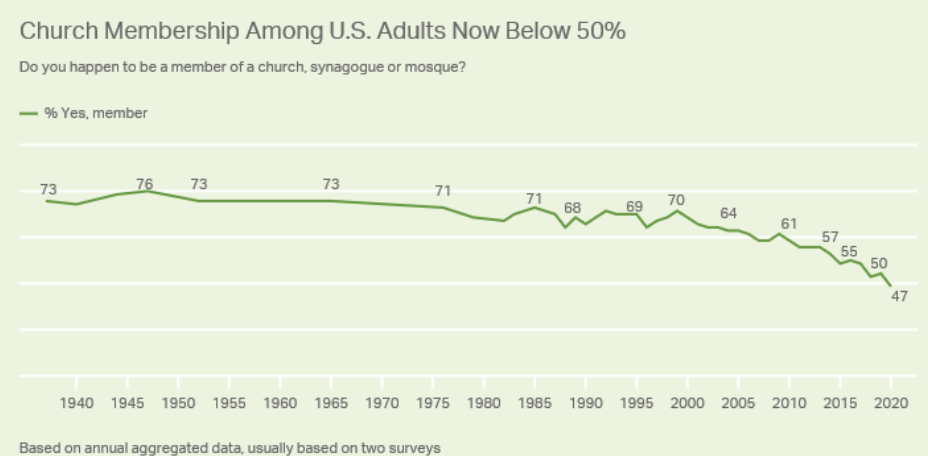
Welcome to the Industrial Age or maybe the new version, the Technological Age. So how much are church buildings selling for these days?

Ancient Mariner

¹ Wikipedia.

Where the West began

Mariner’s normal inclination is to see the world through the eye of a sociologist. The core of sociology is the study of results from human social patterns and aspects of culture associated with everyday life.

During the last few months in a very unhurried way he seems to be researching the Middle East as the birthplace of nationalism, the birthplace of comprehensive theology and the first region to openly implement neutral colonialism – all significant roots that support today’s cultural operations. What makes it even more interesting is the existence of East/West trade routes and the eventual social and economic incursion by Greece, Rome and Russia.

At its height, the Persian Empire encompassed all of the Middle East: modern-day Iran, Egypt, Turkey, and parts of Afghanistan and Pakistan. It was also known as the Achaemenid Empire. To make it convenient to this post, the term ‘PE’ will be the euphemism. In ancient times PE was controlled by czarist kings who proclaimed themselves Gods and ruled over the most brutal nations in history. It is fascinating when one realizes that virtually the entire social/political/economic/religious structure of today’s Western Alliance began in the Persian Empire.

Mariner’s favorite example is the first creation of an independent supreme God which began in Lycia, a small nation in the PE across the Aegean Sea from Greece. Her name was Cybele, the female god of creation [BLOG Apr 7, 2016] who later existed as Rhea, Mother of Gods in Greece, then as Sybil, Mother Of Gods in Rome, to Mary, Mother of Jesus in Christianity. In addition, many of today’s Jewish/Christian rituals and religious practices are similar to rituals in Zoroastrianism – the first unified religion in the PE – a time when Israel was one of the nations of PE.

The other creation of note, at least for this post, is the birth of colonialism. One of the  PE Kings, Cyrus II or Cyrus the Great [mentioned in last post], allowed all the nations within the PE to carry on with local practices in religion and daily life. This included allowing those nations to make trade deals between member nations with a general oversight from PE. If this insight were stretched a bit, it could also be the origin of republics – just like the United States!

Mariner apologizes for making the reader suffer such detailed stuff. It keeps him occupied while coping with another PE creation: Donald.

Ancient Mariner